Plot Explained Spoilers guaranteed!
Plot Explained

Browse by genre

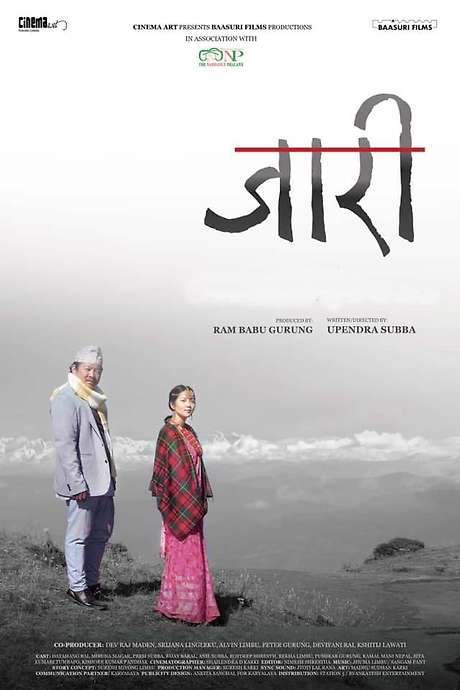
Jaari (2023) movie poster

Timeline

Jaari (2023) Timeline Explained – Every Event in Order

Release, runtime and language
2023 · 127 mins · Nepali
Echo score 83
Starring
Dayahang Rai, Bijay Baral, Upendra Subba, Kamal Mani Nepal, Miruna Magar, Pushkar Gurung

Namsang and Hangma, a Limbu couple, find their relationship tested when a disagreement leads Hangma to return his sacred coin, Yuparung, and marry another man. This act triggers a traditional claim, the jaari, demanded by Namsang and his family. When Hangma’s family refuses to fulfill the obligation, she is forced into a period of servitude within Namsang's household, bound to work until the jaari is settled.

On this page (5)
  1. 1 Events in order (13)
  2. 2 Timeline questions answered
  3. 3 Movie threads
  4. 4 Movies like Jaari
  5. 5 Every angle

13 events in order · contains spoilers

Jaari Timeline: Events in Chronological Order

Every key event of Jaari (2023) in order, scene by scene, with when and where it takes place. Use it to untangle flashbacks, time jumps and parallel storylines, to refresh your memory before the sequel or to find the exact scene you are thinking of.

  1. A volatile, childless marriage

    Namsang and Hangma's five-year marriage is fraught with anger and conflict, set against the backdrop of a rural Limbu community in Eastern Nepal. Namsang's bitterness over infertility fuels verbal and physical abuse, and he threatens to take a second wife to produce an heir. Their home becomes a tense stage where pride and tradition clash with personal happiness.

    When
    circa 1995
    Where
    Namsang and Hangma's home, rural Limbu community, eastern Nepal
  2. Yuparung returned; bond severed

    After a violent argument, Hangma returns the Yuparung, severing their traditional bond and returning to her parent's home. Namsang's pride blocks any chance of reconciliation or bringing her back. The couple's separation marks a turning point that sets Hangma on a new path.

    When
    shortly after the argument
    Where
    Namsang's home and Hangma's parental home
  3. Palam fair brings a new connection

    Hangma stays with her family and attends a local cultural fair, where she participates in the Palam dance, a Limbu folk tradition. It is at the Palam competition that she meets Serang, a charming young man who captures her attention. The festival becomes a catalyst for new possibilities beyond her marriage.

    When
    during the Palam festival
    Where
    Local Palam cultural fair
  4. Love and elopement with Serang

    Hangma and Serang quickly fall in love and decide to marry, with Hangma eloping to formalize a second union. Their choice challenges social expectations and the family’s authority. The elopement marks the beginning of Jaari-triggered consequences for Hangma and her family.

    When
    shortly after meeting
    Where
    Palam grounds and Serang's community
  5. Jaari demands deplete the family purse

    Namsang and his family invoke Jaari, pressing for a hefty monetary compensation from Hangma's parents. Unable to meet the debt, Hangma returns to Namsang's house not as his wife, but as a servant who will work off the debt. The debt-culture tension casts a long shadow over both households.

    When
    after elopement
    Where
    Namsang's home; Jaari proceedings
  6. A second wife plan meets social limits

    Still driven by ego and anger, Namsang enlists Mangal Singh to find a girl for a second marriage. The plan falters because of his infamy and lack of social legitimacy, underscoring how pride can backfire in a tightly knit community.

    When
    shortly after Hangma's return
    Where
    Namsang's home
  7. Hangma endures servitude in the shed

    Hangma is confined to a small shed and subjected to relentless labor under the watchful, conflicted eyes of her former in-laws and Namsang. The harsh conditions test her resilience and symbolize the heavy cost of pride and failed reconciliation. Her quiet endurance compounds the emotional stakes of the tale.

    When
    during the debt period
    Where
    Small shed at the in-laws' compound
  8. Bardhoj raises the funds with Chyabrung

    Bardhoj decides to pay the Jaari debt by manufacturing and selling Chyabrung as many as possible. He endures financial risk and personal strain to secure the necessary funds for Hangma's freedom. His sacrifice becomes a pivotal act that reshapes the family's future.

    When
    midpoint of the debt period
    Where
    Bardhoj's workshop and village marketplace
  9. Mother's death sparks transformation

    Namsang's mother's death becomes a catalyst for change, as he witnesses Hangma's suffering and begins to question his own pride. His anger slowly dissolves into guilt and empathy, signaling a shift toward tenderness. The emotional core of the film deepens as transformation takes root.

    When
    after mother's death
    Where
    Namsang's home
  10. Funds arrive; Jaari payment nears

    Bardhoj arrives with the funds to pay Jaari, bringing Hangma closer to freedom. Yet the dynamics have already begun to shift, as Namsang's changed heart complicates the straightforward payment. The scene marks a turning point where repayment intersects with personal growth.

    When
    after Bardhoj's fundraising
    Where
    Village central scene / Jaari payment setting
  11. Namsang reclaims Hangma

    Publicly, Namsang rejects the Jaari payment and steps forward to reclaim Hangma, signaling a reversal of his earlier demands. The community witnesses a confrontation between pride and renewed commitment. This act lays the groundwork for a fragile reconciliation.

    When
    immediately after funds arrive
    Where
    Public setting, central square or home
  12. Palam contest seals reconciliation

    Hangma challenges Namsang to a Palam contest to win back her hand. Namsang sings the traditional verses learned from his late mother, expressing remorse and devotion. Seeing the sincerity of his transformation, Hangma deliberately loses the contest, culminating in a renewed bond between them.

    When
    during the reconciliation period
    Where
    Palam festival grounds
  13. Sequel tease and new life

    In the mid-credits scene, a sequel Jaari 2 is announced, signaling that their story continues. It also reveals Hangma has given birth to a baby girl, suggesting the long-awaited fulfillment of their family’s desires.

    When
    mid-credits scene
    Where
    Mid-credits scene (location unspecified)

Last updated: November 29, 2025 at 00:47

Was this helpful?

Timeline questions answered

Jaari Timeline Explained: Your Questions Answered

When does it happen, and why in that order? The questions people ask about the chronology of Jaari (2023): time jumps, flashbacks, cause and effect between scenes and the correct order of events, each answered with spoilers.

Q1

Why does Hangma return the Yuparung to Namsang?

Hangma returns the Yuparung, the sacred coin that symbolizes her marriage bond, after a particularly fiery argument with Namsang. The coin represents the traditional connection between a Limbu husband and wife, and returning it is her way of formally severing that bond. This act signals her decision to leave the abusive, childless marriage and return to her parents' home, choosing dignity over continued suffering.

  • yuparung
  • sacred coin
  • limbu tradition
  • marriage bond
  • divorce
Q2

What is Jaari and why does it demand compensation?

Jaari is a traditional Limbu custom that obligates a woman's family to compensate her husband or his family when she marries another man. When Hangma elopes with Serang, Namsang's family invokes this right, demanding a hefty monetary sum from Hangma's parents. The custom reflects the cultural view that a woman's second marriage causes loss of face and financial for the first investment husband's family.

  • jaari
  • limbu tradition
  • compensation
  • elopement
  • custom
Q3

Why does Hangma become a servant in Namsang's house?

Hangma becomes a servant because her family cannot afford to pay the Jaari compensation demanded by Namsang's family. To settle the debt, she voluntarily returns to Namsang's household not as his wife but as a laborer who will work until the debt is repaid. This arrangement reflects the oppressive weight of the jaari custom, trapping her in a painful cycle of servitude.

  • servitude
  • debt
  • jaari payment
  • forced labor
  • limbu custom
Q4

Why does Namsang threaten to take a second wife?

Namsang threatens to take a second wife primarily because of his bitter obsession with producing an heir. Throughout their five-year childless marriage, he repeatedly uses this threat as emotional weapon against Hangma, combining cultural pressure with his abusive nature. The threat reflects both his desire for progeny and his desire for control over his wife.

  • second wife
  • infertility
  • heir
  • abuse
  • threats
Q5

What causes Namsang's transformation?

Namsang's transformation is triggered by his mother's death, which forces him to witness Hangma's continued suffering in his household. Watching her endure hardship as a servant, after the marriage has effectively ended, slowly erodes his toxic pride and awakens buried guilt. This emotional shift transforms his anger into empathy, eventually leading him to reject the Jaari payment and seek reconciliation.

  • namsang change
  • transformation
  • mother death
  • guilt
  • redemption
Q6

Why does Bardhoj decide to pay the Jaari debt?

Bardhoj, Hangma's brother, decides to pay the Jaari debt out of love and desperation to free his sister from servitude. Unable to watch her suffer indefinitely, he takes on the financial burden himself by manufacturing and selling Chyabrung, working tirelessly to raise the substantial sum needed. His sacrifice represents familial loyalty and becomes a pivotal turning point in the story.

  • bardhoj
  • brother
  • chyabrung
  • sacrifice
  • family debt
Q7

How does the Palam contest lead to reconciliation?

The Palam contest works as a traditional mechanism for winning back a spouse's hand. Hangma challenges Namsang to sing the Palam, a Limbu folk song, and he must prove his sincerity through the performance. For the first time, Namsang sings verses taught by his late mother, expressing genuine remorse. Recognizing his authentic transformation, Hangma deliberately loses the contest, allowing their renewed bond to form beneath the framework of tradition.

  • palam contest
  • reconciliation
  • folk song
  • limbu tradition
  • singing competition
Q8

Why does Namsang reject the Jaari payment when Bardhoj brings the money?

When Bardhoj arrives with the funds to pay the Jaari, Namsang surprises everyone by rejecting the payment. By this point, his character has fundamentally shifted, he no longer wants compensation but instead wants Hangma herself back. His rejection signifies that his pride has been replaced by genuine love and commitment, marking the climax of his transformation.

  • rejection
  • payment
  • reconciliation
  • pride
  • namsang change
Q9

What triggers Hangma to elope with Serang?

Hangma meets Serang at the Palam cultural fair, where the charming young man captures her attention during the dance competition. Drawn to him after years of abuse and unhappiness in her marriage, Hangma makes the bold choice to elope, a decision that defies social expectations but represents her pursuit of genuine happiness and love outside her troubled marriage.

  • serang
  • elopement
  • palam festival
  • love
  • new relationship
Q10

Why is the Palam dance important in the story?

The Palam dance serves as both a plot catalyst and symbolic framework for the story. It is at the Palam competition that Hangma meets Serang, triggering her elopement and the subsequent Jaari conflict. Later, the Palam contest becomes the arena for reconciliation between Hangma and Namsang, making it central to both the destruction and rebuilding of their relationship.

  • palam
  • limbu dance
  • folk tradition
  • festival
  • competition
Q11

What does the mid-credits scene reveal about their future?

The mid-credits scene reveals that Hangma has given birth to a baby girl, suggesting the couple finally achieved what Namsang once obsessively wanted, an heir. The scene serves as a hopeful conclusion, implying their arduous journey through abuse, servitude, and reconciliation has produced the family they once sought, though the happiness is tempered by the extensive trauma they endured.

  • baby girl
  • sequel
  • jaari 2
  • ending
  • hope

Movie threads

More Movies Like Jaari, by Mood & Story

Curated lists built around what makes Jaari tick: the same mood, the same kind of story or the same emotional payoff. Each list explains why these movies belong together.

Redemptive stories like Jaari

Stories where characters rebuild love and trust after causing deep personal suffering. If you liked Jaari's story of Namsang's difficult redemption, explore movies with similar arcs of personal growth. These films feature characters seeking forgiveness after causing deep hurt, often within intense, emotionally heavy dramas about rebuilding broken relationships.

  • guilt-ridden
  • cathartic
  • hopeful
  • emotional struggle
  • transformative
  • forgiveness
  • Tone: bittersweet, hopeful
  • Pacing: steady, character-driven
Why these movies?

The story pattern: This thread follows a specific character arc: a protagonist, often flawed or prideful, commits a grave act that deeply wounds another. The story then charts their gradual awakening to the harm they've caused, their internal struggle for change, and the arduous external journey to make amends, culminating in a hard-won reconciliation or personal peace.

Why they belong together: Movies are grouped here based on their shared focus on the redemption arc itself. They feature a similar emotional mix of guilt, hope, and catharsis, a steady pacing that allows for believable character transformation, and a tone that balances the heaviness of past actions with the possibility of future healing.


Movies about cultural oppression like Jaari

Dramas where rigid traditions imprison characters, testing their spirit and will to survive. Find movies like Jaari that explore the clash between personal freedom and rigid cultural tradition. These similar dramas often focus on female protagonists enduring servitude or oppression within their communities, featuring heavy emotional weight and themes of resilience and struggle.

  • oppressive
  • cultural struggle
  • female resilience
  • slow burn
  • tragic
  • hopeful
  • Tone: bitter, oppressive, hopeful
  • Pacing: steady, slow burn
Why these movies?

The story pattern: The narrative pattern centers on a protagonist, often from a marginalized position, who is bound by the weight of cultural expectations, laws, or customs. The plot follows their struggle within this confined space, highlighting their endurance, small acts of defiance, and the emotional toll of their situation, often leading to a climax where they challenge or find a way to survive within the system.

Why they belong together: These movies share a powerful common element: the setting itself—a world of specific, inflexible traditions—acts as the primary antagonist. They are united by a high-intensity, oppressive mood, a steady pacing that builds psychological tension, and a central theme of resilience against a backdrop of cultural struggle.

If you liked this

Movies Like Jaari

Similar movies to Jaari: the same genre, themes or kind of story. Each one comes with its own plot summary, timeline and ending explained.

Browse all movie summaries

Every angle

Jaari (2023) Explained: Plot, Timeline & Characters

Everything about Jaari in one place: what happens in the plot summary, the timeline in chronological order, the characters and meaning and a spoiler-free summary. What's After the Movie adds the cast, box office and post-credit scenes.

Coming soon on iOS and Android

The Plot Explained Movie Summary App

Plot summaries, endings explained and timelines on your phone. Catch up on any movie in minutes, save your favorites and never miss a twist again.

Be the first to know when we launch. Your email stays private, always.

Learn more about the app