Plot Explained Spoilers guaranteed!
Plot Explained

Browse by genre

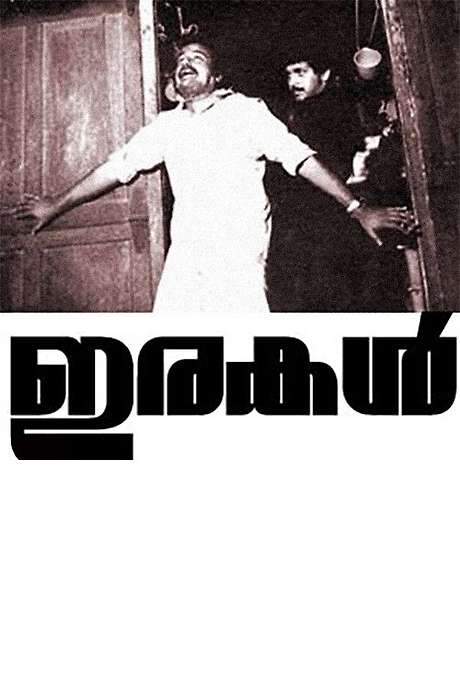
Irakal (1985) movie poster

Plot Summary

Irakal (1985) Plot Summary Explained

Release, runtime and language
1985 · 137 mins · Malayalam
Loading streaming availability…
Directed by
K. G. George
Starring
Shammi Thilakan, Innocent, Thilakan, K. B. Ganesh Kumar, Ashokan, Nedumudi Venu

The film delves into the psychology of violence, following Mathews, a ruthless rubber baron who is involved in criminal enterprises. His son, Baby, absorbs the brutal environment and begins to act increasingly aggressively. When Baby’s descent becomes evident, Mathews is compelled to confront his own cruelty and seek repentance for his deeds.

On this page (5)
  1. 1 Where to watch
  2. 2 What happens: full plot
  3. 3 Plot questions answered
  4. 4 Movie threads
  5. 5 Every angle
Loading streaming availability…

Full plot summary · contains spoilers

What Happens in Irakal: Full Plot Summary

The whole story of Irakal (1985) explained, from the opening scene to the final frame: every key event, every twist and what it all adds up to. Read it as a quick recap before the sequel, to check a scene you missed, or to finally understand what really happened.

Last updated: October 09, 2025 at 14:21

Was this helpful?

Plot questions answered

Irakal Plot Explained: Your Questions Answered

The questions people ask most about Irakal (1985): what happens in the confusing scenes, why the characters do what they do, the twists, hidden details and what the ending means. Each answer contains spoilers.

Q1

Why did Baby become violent and start killing people?

Baby's violence stems from growing up in a household dominated by his father Mathukutty's criminal empire and Koshy's brutal enforcement. As an engineering student, he absorbed the violent environment psychologically, first demonstrating this by ragging a college junior with an electric wire, which became his murder weapon. His violent fantasies intensified after witnessing Annie's affair, triggering his first actual murder. The family code of silence and willingness to eliminate problems essentially validated and mirrored his own impulses.

Foreshadowing: Baby's college attack with the electric wire foreshadows his later murders, showing his psychological trajectory before any formal trigger.

  • baby violence
  • psychology of violence
  • family influence
  • environmental factors
Q2

Why did Baby kill Unnunni the rubber worker?

Baby discovered his sister Annie's affair with Unnunni, a rubber estate employee, while spying from the tools shed. Rather than exposing the affair, Baby chose to murder Unnunni, strangling him with the same electric wire he used on his college junior. He staged the death as suicide by hanging the body. This act marked his transition from fantasy to actual murder, driven by a sense of moral judgment combined with his emerging violent impulses.

Foreshadowing: Baby's earlier attack on the college junior with an electric wire establishes his pattern of using strangulation as his preferred method.

  • unnunni death
  • baby murder
  • affair consequences
  • staged suicide
Q3

Why did the family cover up Baby's crimes instead of turning him in?

The family protected Baby to preserve their reputation and criminal empire. After Unnunni's death, they disposed of the body and staged it as suicide to avoid police scrutiny. This cover-up reflected the family's broader approach to handling problems through force and silence, mirroring how they ran their illegal businesses. By shielding Baby, they enabled his escalation, demonstrating how their own moral corruption directly contributed to his transformation.

Foreshadowing: The family's pattern of using bribery and violence to solve problems foreshadows their decision to protect Baby.

  • family cover-up
  • criminal empire
  • protecting criminal
  • family loyalty
Q4

Why did Baby murder Balan, the shop owner?

Baby killed Balan because Balan was engaged to Nirmala, the woman Baby loved. When Nirmala ended her relationship with Baby due to class differences and became engaged to Balan, Baby strangled Balan with his electric wire and staged it as a robbery. This murder demonstrated how Baby's violent behavior escalated beyond moral judgment of others to include personal rejection and jealousy.

Foreshadowing: Baby's earlier violent fantasies about killing Annie when handling his father's rifle showed his pattern of eliminating those who disappointed him.

  • balan murder
  • nirmala love triangle
  • jealousy killing
  • class difference
Q5

Why did Mathukutty kill his own son Baby?

During the final confrontation, Baby returned with a revolver and shot at Koshy and Mathukutty. Koshy was wounded, but Mathukutty escaped being shot. In the chaos, Mathukutty used his rifle to shoot Baby dead. This act represented the patriarch's final violent solution to a problem he created, by failing to check Koshy's violence or control his environment, he produced a son who turned that violence inward. The ending suggests Mathukutty finally confronted the consequence of his own cruelty, though his method remained violent.

Foreshadowing: The family's pattern of solving all problems through violence, established throughout the film, culminates in this father-son confrontation.

  • father kills son
  • final confrontation
  • patriarch violence
  • cycle of violence
Q6

Why did Baby try to kill Raghavan at his engagement ceremony?

Baby attempted to strangle Raghavan, Nirmala's new fiancé, because Nirmala's mother arranged her wedding to Raghavan, a rubber tapper, another man who was taking someone Baby wanted. During the attack, Raghavan managed to remove Baby's mask and see his face. Raghavan later reported this to police, initiating the manhunt that led to Baby's final confrontation with his family.

Foreshadowing: Baby's pattern of targeting men connected to Nirmala shows his inability to accept rejection or move on.

  • raghavan attack
  • engagement ceremony
  • nirmala wedding
  • attempted murder
Q7

What was the significance of the electric wire in Baby's crimes?

The electric wire was Baby's signature murder weapon, first used during a college ragging incident where he strangled a junior, nearly killing him and landing himself suspended. He kept the wire as a memento. He later used the same wire to strangle both Unnunni and Balan, making their deaths appear similar. The wire symbolized his transition from academic violence to criminal murder, and represented his psychological connection to the act of killing.

Foreshadowing: The college incident establishes the wire as Baby's preferred weapon before he commits any murder.

  • electric wire
  • murder weapon
  • strangulation
  • signature killing
Q8

How did Koshy's behavior influence Baby's violent development?

Koshy served as Baby's model for ruthless enforcement within the family business. The timeline describes Koshy as running operations with brutal efficiency, mirroring his father Mathukutty's ruthlessness and becoming the enforcer for the family's illegal activities. The dynamic between Koshy and Baby centered on fear and loyalty, suggesting Baby observed and absorbed Koshy's violent methods as the acceptable way to handle problems within their world.

Foreshadowing: Koshy's role as enforcer establishes the family template for violence that Baby later adopts.

  • koshy influence
  • family violence
  • role model
  • brutal efficiency
Q9

Why did Nirmala confront Baby by the river?

Nirmala suspected Baby was responsible for Balan's murder after he ended their relationship and she became engaged to Balan. She confronted him by the river seeking answers or confession. Baby attempted to kill her to silence her suspicions, but Nirmala escaped. This confrontation represented the moment Baby's violence threatened someone he claimed to love, revealing the depth of his psychological break.

Foreshadowing: Baby's earlier violent fantasies about killing Annie while handling his father's rifle showed his pattern of turning against loved ones.

  • nirmala confrontation
  • river scene
  • attempted murder
  • nirmala escape
Q10

Why did Baby return to the family estate despite the police hunt?

Baby returned to the family estate with a revolver, likely seeking a final confrontation with his family, possibly to force them to stop hiding him or to confront them about their role in his transformation. The police were actively hunting him, and his return represented either desperation, a desire for resolution, or a final act of rebellion against the family that shaped him. The confrontation turned fatal when he shot at Koshy and his father.

Foreshadowing: Baby's earlier violent dreams and fantasies about killing family members anticipated this final violent return.

  • baby return
  • police manhunt
  • final confrontation
  • family estate
Q11

Why did Annie have an affair with Unnunni?

Annie lived a life of hedonistic frivolity, paying little attention to her husband Andrews or their daughter. During her monthly visits to her maternal family on the rubber estate, she slept with Unnunni, a rubber employee. Her lifestyle remained a secret from her husband and in-laws. The affair reflected her broader disregard for family obligations and her self-indulgent nature, which existed alongside the family's criminal enterprise.

Foreshadowing: Annie's secret lifestyle demonstrates the family's culture of hidden sins beneath their criminal respectability.

  • annie affair
  • unnnuni relationship
  • marital infidelity
  • family secrets
Q12

How did the family business influence Baby's psychology?

Growing up in Mathukutty's rubber empire exposed Baby to criminal enterprises including bribery, marijuana, and illicit liquor operations. He witnessed Koshy acting as brutal enforcer and saw his father maintain power through violence and corruption. This environment taught Baby that problems were solved through force and that family loyalty meant protecting criminal activities. His psychological absorption of this violence eventually manifested in his own murderous behavior.

Foreshadowing: The empire's foundation on crime and violence establishes the breeding ground for Baby's descent.

  • rubber empire
  • criminal family
  • dysfamily dynamics
  • environmental corruption
Q13

What did the ending suggest about Mathukutty's potential repentance?

The ending shows Mathukutty shooting his own son to stop Baby's violence, suggesting a painful recognition of the monster he created through his own actions. The film notes indicate this represents a sliver of moral complexity, Mathukutty confronting his cruelty, though his method remains violent. By killing Baby with his own rifle (the same rifle Baby previously handled in violent fantasies), Mathukutty completes a tragic cycle where his final act of violence is directed at the product of his environment. True repentance remains ambiguous, as his solution is still murder.

Foreshadowing: The father's potential redemption arc was seeded early through hints of his awareness of his crimes' consequences.

  • ending interpretation
  • repentance
  • cycle of violence
  • tragic father son

Movie threads

More Movies Like Irakal, by Mood & Story

Curated lists built around what makes Irakal tick: the same mood, the same kind of story or the same emotional payoff. Each list explains why these movies belong together.

Films about the cycle of violence like Irakal

Stories where cruelty is passed down through generations, forcing a moral reckoning. If you were captivated by the grim exploration of inherited brutality in Irakal, you'll find similar themes here. This collection features movies like Irakal that delve into the dark legacies of crime and violence passed down through families, forcing characters to confront the consequences of their environment.

  • grim
  • psychological
  • brutal
  • harsh
  • oppressive
  • intense
  • Tone: dark, grim, psychological
  • Pacing: steady, relentless
Why these movies?

The story pattern: Narratives in this thread typically follow a character who is a product of a violent world, often mirroring the sins of a parent or mentor. The plot revolves around their descent into or perpetuation of this violence, culminating in a confrontation that forces a painful examination of their origins and the possibility, or impossibility, of redemption.

Why they belong together: These movies are grouped together because they share a core thematic focus on the psychological and moral consequences of generational trauma. They create a heavy, oppressive atmosphere by examining how violence is absorbed and replicated, making the story a tense and morally complex character study.
Character studies of moral collapse like Irakal

Character studies of a gradual but inevitable slide into brutality and moral decay. For viewers who appreciate the intense psychological descent of a character like Baby in Irakal, this section highlights similar movies. Explore other films like Irakal that offer a steady, grim pace and delve deep into a character's psyche as they spiral into violence and moral decay.

  • psychological
  • intense
  • grim
  • brutal
  • brooding
  • oppressive
  • Tone: dark, intense, oppressive
  • Pacing: steady, character-driven
Why these movies?

The story pattern: These stories unfold with a steady, often inevitable pacing, focusing on the cause-and-effect relationship between a harsh environment and a character's deteriorating psyche. There are few external plot twists; the main drama is internal, witnessing the erosion of morality and the embrace of a darker self.

Why they belong together: Movies in this thread are united by their central focus on a character's psychological transformation. They share a dark, intense tone and a steady pacing that allows the audience to feel the grim, oppressive weight of the character's environment and their subsequent moral collapse.

Every angle

Irakal (1985) Explained: Plot, Timeline & Characters

Everything about Irakal in one place: what happens in the plot summary, the timeline in chronological order, the characters and meaning. What's After the Movie adds the cast, box office and post-credit scenes.

Coming soon on iOS and Android

The Plot Explained Movie Summary App

Plot summaries, endings explained and timelines on your phone. Catch up on any movie in minutes, save your favorites and never miss a twist again.

Be the first to know when we launch. Your email stays private, always.

Learn more about the app