Plot Explained Spoilers guaranteed!
Plot Explained

Browse by genre

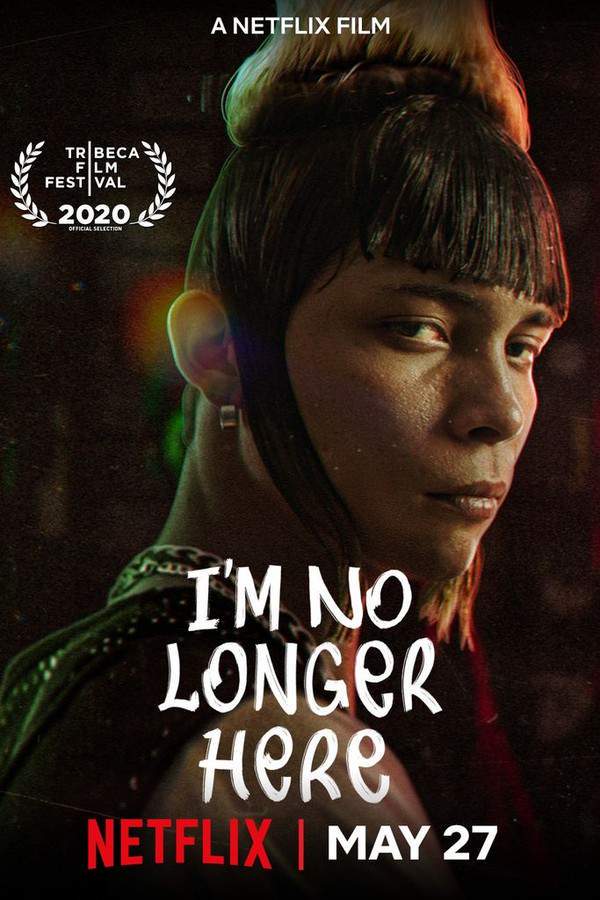
I'm No Longer Here (2020) movie poster

Plot Summary

I'm No Longer Here (2020) Plot Summary Explained

Release, runtime and language
2020 · 112 min · Spanish
Echo score 80
JustWatch #19,741 9
Starring
Adriana Arbelaes, Brandon Stanton, Coral Puente, Fanny Tovar, Federico Mallet, Jonathan Espinoza
Budget
$849.1K

A tenderhearted drama tells the story of a young man whose life is tragically disrupted by an accidental encounter with a dangerous cartel. He's forced to leave behind his loved ones, community, and sense of self, embarking on a poignant journey of self-discovery. Faced with immense challenges, he must navigate a world where loyalty and belonging are constantly tested, forcing him to confront his identity and find a new path forward.

On this page (6)
  1. 1 Where to watch
  2. 2 What happens: full plot
  3. 3 Plot questions answered
  4. 4 Movie threads
  5. 5 Movies like I'm No Longer Here
  6. 6 Every angle

Where to watch

Where to Watch I'm No Longer Here (2020)

Where can you watch I'm No Longer Here? Stream, rent or buy it in the US, including on Netflix and Netflix Standard: current JustWatch availability with up-to-date prices.

Streaming availability powered by JustWatch

Full plot summary · contains spoilers

What Happens in I'm No Longer Here: Full Plot Summary

The whole story of I'm No Longer Here (2020) explained, from the opening scene to the final frame: every key event, every twist and what it all adds up to. Read it as a quick recap before the sequel, to check a scene you missed, or to finally understand what really happened.

The film unfolds through a nonlinear narrative, weaving together the life of Ulises, a 17-year-old gang leader of Los Terkos in Monterrey, with his experiences in the United States. Here’s a more structured look at the plot:

In 2011, Ulises finds camaraderie among his gang, who embrace the vibrant Kolombia counter-culture—characterized by Cumbia rebajada, a slowed-down version of Cumbia. The gang’s signature style includes bright, baggy attire and outrageous hairstyles, as they revel in colorful dance parties.

A routine money collection from students takes a turn when Ulises and his crew encounter members of a rival gang, Los F, who attempt to intimidate them. The situation escalates when a member of Los F is apprehended by the police, and one of the Terkos snatches a hand radio from the criminal. In a moment of mischief, the gang uses the radio to prank Los F, only to be threatened by armed gang members who warn Ulises and his friend Jeremy to abandon their carefree lifestyle or face dire consequences.

A shocking drive-by shooting of Los Pelones, another gang, exposes Ulises to the grave dangers surrounding him. A survivor, misinterpreting Ulises's possession of the stolen radio, declares him a traitor and demands his swift departure, or else his family will be in grave danger. Fleeing the turmoil, Ulises's mother arranges for his illegal smuggling into the U.S., strongly advising him to steer clear of crime. In a heartfelt goodbye, his gang member Chaparra gifts him the much-coveted MP3 player.

Upon arriving in Queens, Ulises finds himself at odds with a group of day laborers due to language barriers and cultural differences. This friction culminates in a fight at a party, prompting him to take up a cleaning job at a store owned by Mr. Loh, a generous Chinese man. His grandniece, Lin, takes an interest in Ulises and befriends him despite his troubled past. She provides him with a dictionary to help him with his English and a place to stay in a shabby rooftop shed.

In his quest for easy money, Ulises attempts to dance in public spaces but is met with police scrutiny. One night, he goes to a party with Lin, but after feeling overwhelmed and nostalgic, he leaves alone. A call home reveals his mother’s fears of Los F, closing the door on his return. Seeking solace, he converses with a Colombian sex worker at a local bar, yet is ultimately told they cannot meet again. Feeling lost, Ulises turns to paint thinner, indulging in intoxication and impulsively cutting his hair.

As fate would have it, his situation worsens when he is caught by the police while homeless and subsequently deported back to Mexico after a stint in prison. Back in Monterrey, he discovers the grim reality: Los F has usurped control over the area, and many former Terkos are now aligned with the criminal group. After attending a funeral of a former comrade, Ulises encounters Jeremy, who has found his faith and preaches to the youth in the slums. Despite an invitation to stay with him, Ulises chooses the solitude of the streets.

In a poignant moment of reflection, he dances once more, letting the melodies from his MP3 guide his movements until its battery finally dies. He then witnesses a surge of local residents rushing to hide from law enforcement, cleverly diverting attention to allow Los F members to escape arrest, encapsulating the desperate reality of his environment.
Last updated: November 16, 2024 at 15:22

Was this helpful?

Plot questions answered

I'm No Longer Here Plot Explained: Your Questions Answered

The questions people ask most about I'm No Longer Here (2020): what happens in the confusing scenes, why the characters do what they do, the twists, hidden details and what the ending means. Each answer contains spoilers.

Q1

Why was Ulises forced to leave Monterrey?

Ulises was forced to leave after a survivor of a drive-by shooting mistakenly believed he was a traitor. The survivor saw Ulises holding a stolen radio that had been used to prank Los F, interpreting it as a sign of collaboration with rival gangs. Fearing retaliation against his family, Ulises's mother arranged for him to be smuggled into the United States.

Foreshadowing: Earlier scenes showed Los F members threatening Ulises and his friend Jeremy, warning them to abandon their carefree lifestyle.

  • Ulises
  • Monterrey
  • Los Terkos
  • Los F
  • drive-by shooting
  • forced to leave
Q2

What did the radio incident lead to for Ulises?

During a confrontation with rival gang Los F, one of the Terkos members snatched a hand radio from an arrested Los F member. The gang used it to prank Los F, but this act, combined with Ulises being seen with the radio during the drive-by shooting, made him appear complicit with the police or rival gangs. The survivor's accusation directly triggered the chain of events that forced Ulises to flee.

Foreshadowing: The radio was stolen during a routine money collection that already had heightened tensions with Los F.

  • radio
  • Los Terkos
  • Los F
  • prank
  • accusation
  • betrayal
Q3

Why did the drive-by survivor think Ulises was a traitor?

The survivor saw Ulises holding the stolen radio during the chaos of the drive-by shooting. Since the radio belonged to Los F and Ulises was present at the scene, the survivor misinterpreted this as evidence that Ulises had betrayed Los Pelones and was working with Los F or the police. This误会 led to the demand that Ulises leave town immediately.

Foreshadowing: The scene where the Terkos stole the radio and used it to prank Los F planted the seed for this misunderstanding.

  • drive-by shooting
  • Los Pelones
  • survivor
  • traitor
  • radio
  • misunderstanding
Q4

Why was Ulises deported back to Mexico?

After arriving in Queens, Ulises struggled to find stable employment and fell into homelessness. While homeless, he was caught by police, imprisoned, and subsequently deported back to Mexico. His illegal immigration status and lack of documentation made him vulnerable to this outcome.

Foreshadowing: Earlier scenes showed Ulises having difficulty finding work due to language barriers and cultural differences, setting the stage for his financial decline.

  • Ulises
  • Queens
  • deportation
  • homeless
  • prison
  • immigration
Q5

Why did Ulises cut his hair in Queens?

After a series of setbacks including losing his job, being rejected by the Colombian sex worker, and feeling completely isolated and lost in Queens, Ulises turned to paint thinner intoxication. In a moment of emotional crisis and self-destructive behavior, he impulsively cut his hair, a stark departure from the extravagant hairstyles that were part of his Kolombia identity. This act symbolized his rejection of his former self and the loss of his cultural identity.

Foreshadowing: The extravagant hairstyles were introduced as a key part of Los Terkos' distinctive style in the early Monterrey scenes.

  • Ulises
  • hair cut
  • paint thinner
  • identity
  • Kolombia
  • self-destruction
Q6

Why did Ulises choose to live on the streets instead of staying with Jeremy?

When Ulises returned to Monterrey, he found that Los F had taken over the area and many former Terkos had joined them. His old life was gone. Though Jeremy offered him a place to stay and a path toward faith, Ulises felt he couldn't reconnect with that side of his life. He chose solitude because he felt disconnected from both his gang past and Jeremy's religious present, he belonged nowhere.

Foreshadowing: The film showed Ulises attending the funeral of a former comrade, which highlighted how much the community had changed during his absence.

  • Ulises
  • Jeremy
  • solitude
  • Monterrey
  • Los F
  • faith
  • belonging
Q7

What happened to Los Terkos after Ulises left?

After Ulises was forced to leave Monterrey, Los F expanded their control over the territory. Many former Terkos members either joined Los F or were displaced. By the time Ulises returned, the gang he once led had essentially dissolved, and Los F dominated the neighborhood.

Foreshadowing: The drive-by shooting and the threat from Los F earlier in the film set the stage for this outcome.

  • Los Terkos
  • Los F
  • Monterrey
  • gang
  • Ulises
  • control
Q8

Why couldn't Ulises return to his old life in Monterrey?

Ulises couldn't return because Los F had taken over the area and his family was still under threat. Additionally, when he finally returned after deportation, he discovered that his entire community had transformed, his gang had disbanded, and former members had joined the rival group. The social fabric that defined his identity no longer existed.

Foreshadowing: Early scenes established how central the gang and Kolombia culture were to Ulises' sense of self.

  • Ulises
  • Monterrey
  • return
  • Los F
  • identity
  • community
Q9

What was the significance of the MP3 player in the story?

Chaparra gifted Ulises the MP3 player as a farewell present, representing his life, friends, and cultural identity in Monterrey. The device contained the Cumbia rebajada music that defined the Kolombia counter-culture. Throughout his time in Queens, the MP3 player served as his connection to home. At the end, when it dies while he dances, it symbolizes the final loss of his past and his inability to reclaim who he once was.

Foreshadowing: Cumbia rebajada was introduced as the soundtrack of Los Terkos' vibrant dance parties.

  • MP3 player
  • Chaparra
  • Cumbia
  • Kolombia
  • Monterrey
  • memory
  • identity
Q10

Why did Ulises leave the party with Lin?

Ulises attended a party with Lin in Queens but became overwhelmed by nostalgia for his life in Monterrey. The music, the atmosphere, and the social setting reminded him of the Kolombia dance parties he once led. Unable to reconcile his past identity with his present circumstances, he left the party alone, seeking escape from the emotional pain of displacement.

Foreshadowing: Earlier scenes established how central dancing and the Kolombia culture were to Ulises' sense of belonging.

  • Ulises
  • Lin
  • party
  • Queens
  • nostalgia
  • dancing
  • Kolombia
Q11

What does the ending mean when Ulises dances alone in Monterrey?

In the final scene, Ulises dances to his MP3 player in a moment of bittersweet freedom. The dance represents a fleeting return to his true self and the joy he once knew. However, when the battery dies, it signals the death of his past identity and any hope of reclaiming his former life. He's left alone in a changed world, having lost both his home and his sense of self.

Foreshadowing: The film opened with vibrant Kolombia dance parties, establishing dancing as central to Ulises' identity.

  • Ulises
  • dancing
  • ending
  • MP3
  • battery
  • identity
  • loss
  • Monterrey
Q12

What was the Kolombia counter-culture that Los Terkos practiced?

Kolombia was a counter-culture movement in Monterrey characterized by Cumbia rebajada, a slowed-down version of traditional Cumbia music. Los Terkos embraced this through vibrant dance parties, distinctive bright baggy clothing, and outrageous hairstyles. It was more than just a style; it represented a sense of community, identity, and youth expression that stood in contrast to mainstream society and rival gang culture.

Foreshadowing: The opening scenes prominently featured the colorful dance parties that defined this culture.

  • Kolombia
  • Los Terkos
  • Cumbia rebajada
  • Monterrey
  • gang
  • culture
  • dance

Movie threads

More Movies Like I'm No Longer Here, by Mood & Story

Curated lists built around what makes I'm No Longer Here tick: the same mood, the same kind of story or the same emotional payoff. Each list explains why these movies belong together.

Movies about cultural displacement like I'm No Longer Here

Stories of profound alienation and the bittersweet search for identity in a new land. If you were moved by the themes of alienation and identity in I'm No Longer Here, discover other films that explore the melancholic journey of displacement. These movies share a heavy emotional weight and bittersweet endings, focusing on characters searching for belonging after being forced from their homes.

  • alienating
  • nostalgic
  • rootless
  • thoughtful
  • lonely
  • atmospheric
  • Tone: melancholic, bittersweet
  • Pacing: variable, reflective
Why these movies?

The story pattern: Narratives in this thread typically center on a protagonist whose life is violently or abruptly disrupted, forcing them into an unfamiliar environment. The core conflict is internal: a battle against loneliness and the erosion of identity. The story structure often contrasts memories of a vibrant past with the stark, alienating present, emphasizing the emotional chasm between two worlds.

Why they belong together: Movies are grouped here for their shared focus on the psychological toll of displacement. They possess a consistent melancholic tone, a heavy emotional weight, and explore universal themes of cultural identity, belonging, and the painful process of building a new life from fragments of the old one.

Atmospheric youth dramas like I'm No Longer Here

Atmospheric stories where a young protagonist's world is shattered by harsh realities. Fans of the atmospheric and melancholic vibe of I'm No Longer Here will appreciate these movies. They share a similar focus on youth subcultures, a gritty aesthetic, and a heavy, thoughtful mood, often exploring how young lives are tragically shaped by their environments.

  • atmospheric
  • gritty
  • melancholic
  • youthful
  • thoughtful
  • alienating
  • Tone: melancholic, gritty
  • Pacing: variable, atmospheric
Why these movies?

The story pattern: These stories often unfold in a non-linear or vignette-style structure, allowing the atmosphere and character study to take precedence. The protagonist's journey is one of gradual disillusionment, where their identity and community are threatened. The plot serves the mood, using music, visual style, and slow, reflective moments to build a powerful sense of place and emotional resonance.

Why they belong together: This grouping is defined by a cohesive atmospheric quality and a shared thematic concern with imperiled youth. The movies share a melancholic or bleak tone, variable pacing that allows for reflection, and a gritty, immersive aesthetic that makes the character's emotional journey feel visceral and authentic.

If you liked this

Movies Like I'm No Longer Here

Similar movies to I'm No Longer Here: the same genre, themes or kind of story. Each one comes with its own plot summary, timeline and ending explained.

Browse all movie summaries

Every angle

I'm No Longer Here (2020) Explained: Plot, Timeline & Characters

Everything about I'm No Longer Here in one place: what happens in the plot summary, the timeline in chronological order, the characters and meaning and a spoiler-free summary. What's After the Movie adds the cast, box office and post-credit scenes.

Coming soon on iOS and Android

The Plot Explained Movie Summary App

Plot summaries, endings explained and timelines on your phone. Catch up on any movie in minutes, save your favorites and never miss a twist again.

Be the first to know when we launch. Your email stays private, always.

Learn more about the app