Plot Explained Spoilers guaranteed!
Plot Explained

Browse by genre

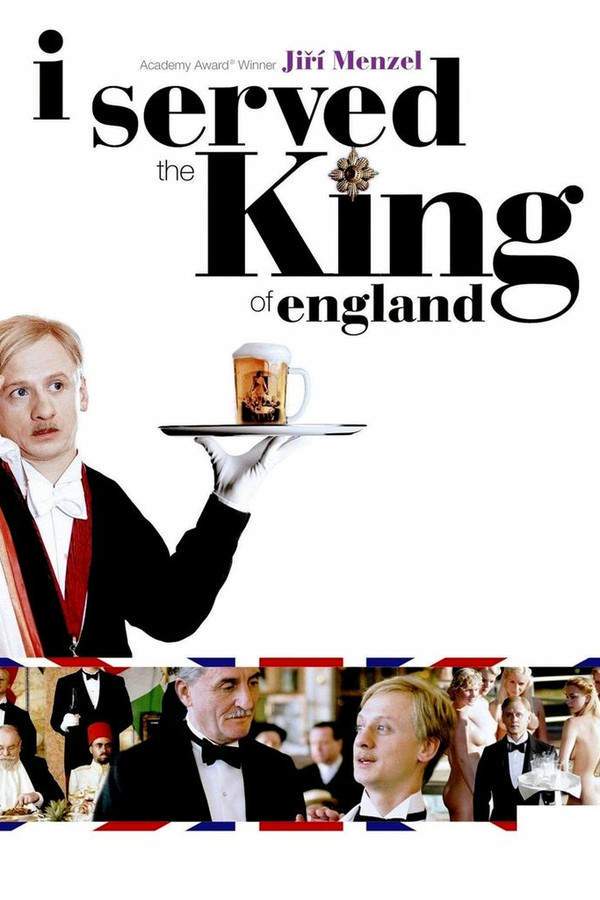
I Served the King of England (2008) movie poster

Timeline

I Served the King of England (2008) Timeline Explained – Every Event in Order

Release, runtime and language
2008 · 120 min · Czech
Directed by
Jirí Menzel
Starring
Julia Jentsch, Ivan Barnev, Oldrich Kaiser

During the turbulent years of Nazi occupation in Czechoslovakia, an ambitious young waiter named Jan Dít? seizes an unexpected opportunity to build a successful black market business. Rising from poverty through resourcefulness and a willingness to adapt, he accumulates wealth and power, but must also confront difficult choices and navigate dangerous loyalties. Ultimately, he faces the repercussions of his actions in the challenging aftermath of the war.

On this page (5)
  1. 1 Events in order (15)
  2. 2 Timeline questions answered
  3. 3 Movie threads
  4. 4 Movies like I Served the King of England
  5. 5 Every angle

15 events in order · contains spoilers

I Served the King of England Timeline: Events in Chronological Order

Every key event of I Served the King of England (2008) in order, scene by scene, with when and where it takes place. Use it to untangle flashbacks, time jumps and parallel storylines, to refresh your memory before the sequel or to find the exact scene you are thinking of.

  1. Jan's Release from Prison

    Jan Dítě is released from a Czech prison after serving nearly 15 years of his sentence. With only three months left before his release, he finds himself in a new environment, filled with both possibilities and the shadows of his past.

    Where
    Czech prison
  2. Settling in a Small Town

    After his release, Jan settles in a small town near the Czechoslovakia-Germany border. Here, he begins to revive an abandoned house, reflecting on his aspirations and contemplating his desire to become a millionaire.

    Where
    Small town near Czechoslovakia-Germany border
  3. Becoming a Frankfurter Vendor

    Jan starts his new journey as a frankfurter vendor at a bustling railroad station. Through this job, he begins to understand the significance of money and how it influences people's lives and interactions.

    Where
    Railroad station
  4. Meeting Marcela

    A young woman named Marcela arrives in Jan's vicinity, accompanied by an older professor. Although an attraction sparks between Jan and Marcela, their connection remains largely unfulfilled, leaving both characters yearning for something more.

    Where
    Small town
  5. Affairs and Ambitions

    In a local restaurant, Jan engages in brief affairs with various women, including an actress and a prostitute. This phase of his life is marked by a growing ambition to improve his status in society as he takes on more prestigious roles.

    Where
    Local restaurant
  6. Hotel Tichota

    Jan secures a position at the Hotel Tichota, where he quickly forms a romantic relationship with a maid. His new role provides him with a taste of the high life, allowing him to navigate the social scene more freely.

    Where
    Hotel Tichota
  7. Serving the Emperor

    When Jan finds himself working under the enigmatic Maître d', Skřivánek, he experiences an unexpected turn of events. He ends up serving the Emperor of Ethiopia during a ceremonial occasion, showcasing his adaptability and opportunistic nature.

    Where
    Ceremony at Hotel Paříž
  8. Captivated by Liza

    As the political climate shifts with the annexation of Czechoslovakia, Jan becomes enamored with Liza, a fervent supporter of Adolf Hitler. Their relationship takes a serious turn when Liza demands proof of Jan's Aryan lineage as a condition for marriage.

    Where
    Czech Republic
  9. Dismissal and Defiance

    Jan is ultimately dismissed from his job at the hotel due to his compliance with the Nazis, while his colleagues express their resentment through passive resistance. A confrontation with Skřivánek leads to a symbolic act of defiance, leaving Jan isolated and disillusioned.

    Where
    Hotel Paříž
  10. War and Compromise

    During World War II, Jan takes a job at an institute repurposed from Hotel Tichota, where he witnesses drastic changes due to the war. The women initially working there are replaced by injured soldiers, marking a significant shift in the atmosphere of the establishment.

    Where
    Former Hotel Tichota
  11. Tragic Loss of Liza

    As the war reaches its climax, a tragic attack leads to an evacuation at the institute. In a heartbreaking twist, Liza perishes when the building collapses, leaving behind a box of invaluable stamps that Jan clutches as a connection to her.

    Where
    Institute (Former Hotel Tichota)
  12. Rise to Wealth

    Despite the tragedy, Jan utilizes the stamps he recovered from Liza to rebuild his life and become a wealthy hotelier in the same location. This twist of fate illustrates his resilience and the harsh realities of post-war life.

    Where
    Czech Republic
  13. Communist Takeover

    After the Communist takeover in 1948, Jan's newfound wealth becomes his downfall as he inadvertently reveals it to the authorities. This leads to a harsh sentence of 15 years in prison, highlighting the dangers of his previous ambitions.

    Where
    Czech prison
  14. Life Behind Bars

    Inside the prison, Jan encounters familiar faces from his past, including Brandejs and other former elites. Despite his attempts to reconnect, he realizes that his status has diminished and he is now an outcast among them.

    Where
    Czech prison
  15. Closure with the Stamps

    As Marcela and the professor leave the area, Jan finally finishes restoring his home. In a symbolic gesture, he releases the stamps into the winds, signifying the closure of a tumultuous chapter in his life and a newfound sense of freedom.

    Where
    Restored home

Last updated: November 15, 2024 at 17:01

Was this helpful?

Timeline questions answered

I Served the King of England Timeline Explained: Your Questions Answered

When does it happen, and why in that order? The questions people ask about the chronology of I Served the King of England (2008): time jumps, flashbacks, cause and effect between scenes and the correct order of events, each answered with spoilers.

Q1

Why did Jan receive the medal meant for Skřivánek when serving the Emperor of Ethiopia?

When the Emperor of Ethiopia tried to honor Skřivánek with a medal, he couldn't reach Skřivánek's neck due to their height difference. Quick-thinking Jan stepped in and received the award in Skřivánek's place, symbolizing his opportunistic nature and willingness to take credit from others.

  • medal
  • Skřivánek
  • Emperor of Ethiopia
  • opportunity
Q2

Why did Liza demand proof of Aryan lineage for marriage?

Liza was a fervent Sudeten German supporter of Adolf Hitler. She agreed to marry Jan only if he could prove his Aryan lineage through a medical examination, as she was deeply committed to Nazi ideology and wanted to ensure her children would be considered 'racially pure' according to Nazi standards.

  • Liza
  • Aryan
  • Nazi
  • marriage
  • lineage
Q3

Why was Jan dismissed from Hotel Paříž?

Jan was dismissed because he remained compliant with the Nazi occupiers while his colleagues expressed their disdain through passive resistance by being unhelpful. His willingness to cooperate made him a target, and he was banned from any further employment in Prague's hospitality industry.

  • dismissal
  • Nazis
  • Hotel Paříž
  • compliance
  • banned
Q4

What happened to Skřivánek after Jan's dismissal?

After Jan was dismissed and later patronized the hotel with Liza, Skřivánek reacted to Jan's comment that serving the King of England had been of no benefit by pouring food over him in a final act of defiance. Shortly after, the authorities took Skřivánek away, leaving an ominous end to the man who once boasted of serving royalty.

Foreshadowing: Skřivánek's earlier claim about serving the King of England foreshadows his ultimate fate, he loses everything despite his proud service.

  • Skřivánek
  • authorities
  • taken away
  • defiance
Q5

Why did Liza die in the building collapse?

Near the end of the war, the institute (formerly Hotel Tichota) was attacked and required evacuation. Liza perished when the building collapsed around her while she was desperately trying to save the box of valuable stamps she had plundered from Polish-Jewish households. Her obsession with the stamps led to her tragic death.

  • Liza
  • death
  • stamps
  • building collapse
  • war
Q6

How did the stamps make Jan wealthy after the war?

After Liza's death, Jan pried the box of valuable stamps from her grasp. These stamps, plundered from Polish-Jewish households during the war, became his pathway to wealth. He used them to rebuild his life and become a wealthy hotelier in the very location where the institute once stood.

  • stamps
  • wealth
  • hotel
  • plunder
  • Jewish
Q7

Why was Jan sentenced to 15 years in prison after the Communist takeover?

After the Communist takeover in 1948, Jan inadvertently revealed his wealth to the Communist resistance. He was sentenced to 15 years in prison, one year for each of his purported millions. His previously accumulated wealth, built through opportunistic dealings during the war, became his downfall under the new regime.

Foreshadowing: Jan's earlier ambition to become a millionaire directly led to his harsh sentence.

  • Communist
  • prison
  • 15 years
  • wealth
  • sentence
Q8

What was the institute that replaced Hotel Tichota during WWII?

During WWII, Hotel Tichota was repurposed as an institute for breeding what the Nazis called a 'master race.' Mr. Tichota, now in a wheelchair, had been ousted from his ownership. The facility was initially staffed by women, later replaced by injured soldiers as the war progressed.

  • institute
  • Hotel Tichota
  • master race
  • Nazi
  • Tichota
Q9

Why couldn't Jan reconnect with Brandejs in prison?

When Jan was imprisoned after the Communist takeover, he encountered familiar faces from his past, including Brandejs and other former hotel elites. Despite his attempts to reconnect, he found himself cast out from their circle. His status had diminished, and he was now just another prisoner rather than someone worth associating with.

  • Brandejs
  • prison
  • rejection
  • elites
  • outcast
Q10

Why did Jan release the stamps into the wind at the end?

After finishing the restoration of his home and as Marcela and the professor departed, Jan symbolically released the stamps by letting the winds carry them into the valley. This gesture represented his release from the burdens of his past ambitions and complicity, marking his path to peace and closure.

  • stamps
  • release
  • freedom
  • closure
  • valley
Q11

What was the relationship between Jan and Marcela?

Marcela arrived in the small town near Jan's home with an older professor. A flicker of attraction sparked between them, but their connection remained largely unfulfilled. While Jan pursued various affairs throughout his journey, his potential relationship with Marcela represented something more meaningful that never fully developed.

  • Marcela
  • attraction
  • professor
  • unfulfilled
Q12

Why did Skřivánek pour food over Jan during their final encounter?

When Jan and Liza patronized the hotel after Jan's dismissal, Jan commented that serving the King of England had been of no benefit to him. This dismissive remark about Skřivánek's proudest accomplishment prompted the maître d' to pour food over Jan in a final act of defiance and personal hurt.

  • Skřivánek
  • food
  • defiance
  • King of England

Movie threads

More Movies Like I Served the King of England, by Mood & Story

Curated lists built around what makes I Served the King of England tick: the same mood, the same kind of story or the same emotional payoff. Each list explains why these movies belong together.

Satirical Historical Dramas like I Served the King of England

Ironic stories of individuals navigating the absurdities of major political shifts. If you enjoyed the blend of history and satire in I Served the King of England, explore more movies like it. These films use wit and irony to tell stories of survival and moral compromise during times of political turmoil, offering a unique perspective on major historical events.

  • satirical
  • historical
  • ironic
  • picaresque
  • reflective
  • melancholic
  • Tone: satirical, bittersweet, reflective
  • Pacing: steady, episodic
Why these movies?

The story pattern: These narratives typically follow a picaresque protagonist—an opportunist, a survivor, or an everyman—through a period of intense historical change. The plot focuses on their often-absurd attempts to prosper or simply endure, highlighting the clash between personal ambition and impersonal political forces, leading to morally complex outcomes.

Why they belong together: Movies in this thread share a distinctive tone that mixes sharp observation with a melancholic undertone. They are united by a focus on how large-scale historical events impact individual lives, often using a steady, episodic pace to chart a character's rise and fall against a grim backdrop.


Movies About Moral Compromise and Ambition like I Served the King of England

Stories of ambitious rises fueled by compromise, set against a troubled backdrop. For viewers who appreciated the exploration of ambition and ethical dilemmas in I Served the King of England, this collection highlights similar stories. These films follow characters who achieve success through questionable means, leading to a bittersweet reflection on the true cost of their choices.

  • morally complex
  • ambitious
  • regretful
  • psychological
  • reflective
  • nostalgic
  • Tone: bittersweet, melancholic, morally complex
  • Pacing: steady, character-driven
Why these movies?

The story pattern: The narrative arc follows a determined protagonist from humble beginnings to a position of influence, but their ascent is facilitated by their willingness to ignore or participate in the corruption of their environment. The story's focus is less on triumph and more on the lingering consequences, culminating in a reflective, often bittersweet ending where the character confronts the emptiness or guilt of their achievements.

Why they belong together: These films are grouped by their central theme of a morally complex social climb and its psychological fallout. They share a medium emotional weight and a bittersweet sensibility, focusing on the internal conflict of a protagonist who achieved their goals at a great personal or ethical cost.

If you liked this

Movies Like I Served the King of England

Similar movies to I Served the King of England: the same genre, themes or kind of story. Each one comes with its own plot summary, timeline and ending explained.

Browse all movie summaries

Every angle

I Served the King of England (2008) Explained: Plot, Timeline & Characters

Everything about I Served the King of England in one place: what happens in the plot summary, the timeline in chronological order, the characters and meaning and a spoiler-free summary. What's After the Movie adds the cast, box office and post-credit scenes.

Coming soon on iOS and Android

The Plot Explained Movie Summary App

Plot summaries, endings explained and timelines on your phone. Catch up on any movie in minutes, save your favorites and never miss a twist again.

Be the first to know when we launch. Your email stays private, always.

Learn more about the app