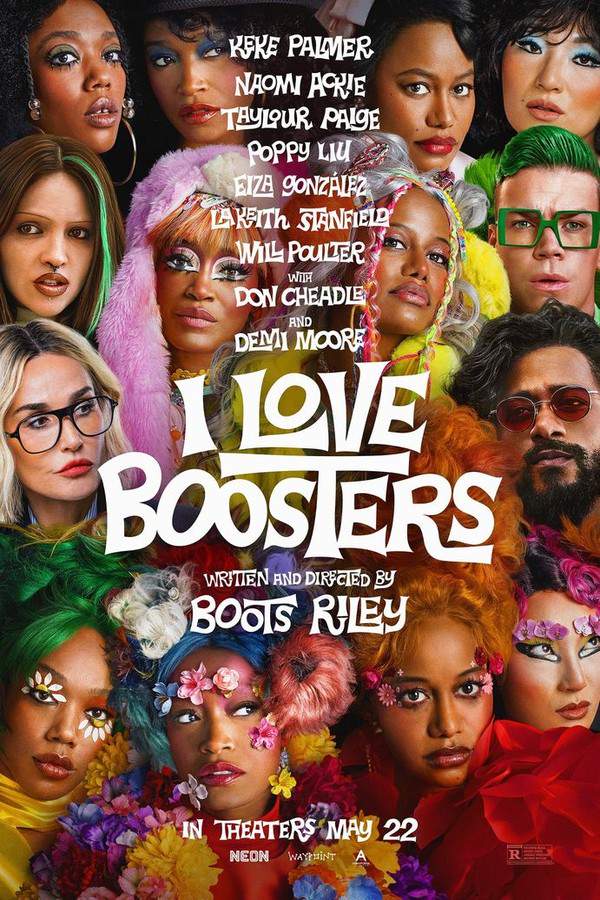
I Love Boosters

I Love Boosters

Year: 2026

Runtime: 1 h 55 m

Language: english

Director: Boots Riley

Echo Score: 53

Budget: $20M

AdventureComedyDramaSci-Fi

A crew of professional shoplifters take aim at a cutthroat fashion maven.

Where to Watch I Love Boosters?

Find where to stream, rent, or buy I Love Boosters (2026) in the US with current JustWatch availability, up-to-date pricing, and platform listings for subscription, rental, and digital purchase options.

Warning: spoilers below!

Haven’t seen I Love Boosters yet? This summary contains major spoilers. Bookmark the page, watch the movie, and come back for the full breakdown. If you're ready, scroll on and relive the story!

I Love Boosters (2026) – Full Plot Summary & Ending Explained

Read the complete plot breakdown of I Love Boosters (2026), including all key story events, major twists, and the ending explained in detail. Discover what really happened, and what it all means.

The film opens with Corvette, played by Keke Palmer, in the glow of a club where desire collides with risk. She leads a man back to her apartment, but the encounter quickly shifts from seduction to a sharper, colder purpose: Corvette is a “booster,” someone who steals high-end clothes and sells them at a steep discount. The time-worn thrill of the score is tempered by a glimmer of something more ambitious in Corvette’s eyes, and the man’s initial annoyance gives way to a reluctant agreement to buy a pair of shoes. What starts as a routine hustle ignites a spark that goes beyond the next payday.

Corvette’s world centers on The Velvet Gang, a tight-knit trio built around her and two best friends, Sade, portrayed by Naomi Ackie, and Mariah, played by Taylour Paige. The three women operate from a squat in an abandoned fast-food restaurant, channeling their street savvy into fashion heists and rapid escapes. Corvette harbors a personal dream that stretches beyond the thrill of the grab: a serious desire to design fashion that speaks with its own voice. The film threads in a strange, haunting motif—the sight of a colossal ball of trash rolling toward Corvette, a surreal image that will recur as a symbolic forecast of the world closing in on her ambitions.

Their next movement brings them to Metro Designers, a store chain owned by the fashion titan Christie Smith, wonderfully embodied by Demi Moore. Christie is no naive target; she recognizes The Velvet Gang’s fingerprints all over the chain’s thefts and dismisses the trio with chilling contempt, calling them “low class urban bitches.” The trio executes a distraction using an orchestrated brawl and the help of Stevie, a white employee whose role in keeping them under the radar becomes crucial. The encounter sharpens the tension between the glamour of high fashion and the brutal arithmetic of exploitation behind the scenes.

A pivotal turn comes when Sade invites Corvette to a seminar led by the enigmatic Dr. Jack, a self-help guru brought to life by Don Cheadle. The seminar hints at a pyramid-like scheme that lures people with the promise of empowerment, but the real draw is the sense that these characters are trying to climb higher than their given stations. The stakes rise when a second heist is planned at a different Metro Designers location. This time, Mariah’s risk-taking—she attempts to hold her breath so she can pass as light-skinned—creates a distraction that lets Corvette smash a window and strip the mannequins of their outfits. The sequence blends audacity with a critique of colorism and representation that threads through the entire narrative.

Christie’s world is a skyline of power—her offices sit in a tilted skyscraper on the San Francisco Bay, with a harried assistant named Jamie in constant tow. A key moment of the story glimpses what Christie is truly selling: a $100,000 suit, a status symbol that conceals labor, pressure, and control. Corvette’s attempt to slip into Christie’s office through an espresso cart reveals a tense cat-and-mouse dynamic; Corvette names herself as the CEO of the espresso company in a bid to charm the room, but Christie remains cool and unimpressed, underscoring the adversarial distance between them.

At Metro Designers, two employees, Violeta, played by Eiza Gonzalez, and Mansion, played by Najah Bradley, express their frustrations about wages. They press the store’s manager, Grayson, about pay, but the manager dismisses their appeal, insisting the company is about delivering “an experience” rather than fair compensation. The store becomes a hub for new alliances as Corvette, Sade, and Mariah sign on to work there, and Corvette discovers a dress in the window that turns out to be one of her own designs—Christie has stolen it.

The plot thickens as the group learns more about the so-called “Pinky Ring Guy,” a mysterious figure who radiates danger and allure. The man is a complex presence on a screen in one of the store’s rooms, a rumor brought to life that hints at a dangerous, otherworldly power. The Velvet Gang’s plans intensify, and a larger theater emerges: the fashion world as a battlefield where the clothes themselves become currency. When the group tests a mysterious device aboard a proposed heist, Violeta identifies it as a situational accelerator with a deconstruction setting. The device can mutate materials—turning fabrics into gold or cubic zirconium, or even deconstructing an object back to its raw elements. The ethical weight of such power ripples through the crew, especially when Mariah is literally deconstructed by the device in a startling demonstration of its potential—and its risk.

The trio’s effort to infiltrate a high-profile fashion show hinges on a staged protest organized by Violeta, and Pinky Ring Guy’s help as a model in the show becomes crucial. Inside the venue, a chorus of characters from the public-facing world appears on screens: Dr. Jack’s followers, and figures like the Crying Black Mother, portrayed by Kara Young; the Based Young Dude; and an Upstanding Community Member, played by Jason Ritter. When pressed about the suits, the crowd reveals that the outfits are more than costumes—they are skins that reflect the industry’s demand for control. Corvette wants to deconstruct them to strip away Christie’s exploitation, while Sade sees a chance to monetize the power for her children’s future.

A dramatic chase erupts as the Velvet Gang splits to pursue their plan. Corvette and Sade grab the suits and sprint from the fashion show, pursued by the police as Corvette uses the device to morph a police car into a futuristic, weaponized vehicle of escape. A chase roars through a mall, with Sade driving the van up an escalator and out a window, then Corvette leverages the device again to hop between China and San Francisco with help from Jianhu’s cousin, as authorities close in on both sides of the globe. The team’s momentum culminates at the fashion show and a clandestine stockpile of Christie’s garments in a warehouse, where they deconstruct the clothes and accelerate the resulting materials into a full-blown strike.

The finale ties the personal with the political. Strikes against Christie’s company and the factory conditions become public, leading to the cessation of sandblasting and a reassessment of hours and pay. Jianhu returns to China, bringing the good news that her mother’s cancer has been reversed by the deconstruction process that reversed the damage done to the fabric, and the workers reveal themselves to the public through the broader use of the power they uncovered. Corvette, Sade, and Mariah establish a community center to sell clothes and to support workers’ rights, turning their hustle into a catalyst for lasting change. The Velvet Gang’s victory feels both personal and societal, aligning fashion with justice.

In a quiet, final moment, Corvette is drawn once more to the pinky-ring demon who has haunted her journey. Pinky Ring Guy, in a reveal that echoes the film’s themes of power and humanity, admits he is a soul-sucking demon, but he believes that a real connection with Corvette could redeem him. She declines, choosing independence and integrity over a relationship that would compromise her autonomy. As the scene settles, the recurring image of the giant trash ball returns, shrinking at her feet—an emblem of the confidence and certainty she has earned. The film closes on Corvette’s steady resolve to shape her own future, with the Velvet Gang cemented as a force for workers’ rights and creative expression.
Last updated: June 09, 2026 at 07:36

Was this helpful?

I Love Boosters (2026) Plot Questions Answered – Summary FAQ

Explore frequently asked questions about I Love Boosters (2026) with spoiler-rich answers covering the full plot summary, major story beats, character motivations, hidden details, and ending meaning. This movie summary FAQ helps explain confusing scenes, plot twists, and narrative decisions in clear, searchable detail.

Q1

Who is Pinky Ring Guy and what is his role in the story?

A.

Pinky Ring Guy is a supernatural being who appears throughout the film as a mysterious, alluring figure. He helps the Velvet Gang infiltrate Christie's fashion show by serving as a model, but his true nature is revealed at the end when he admits to being a soul-sucking demon. Despite this dark identity, he expresses genuine interest in connecting with Corvette romantically.

The film drops hints early on through gossip about his demonic nature and the 'soul-sucking' incident mentioned at dinner.

pinky ring guydemonsupernaturalromancevelvet gang
Q2

How does the material mutation device work?

A.

The device, introduced by Jianhu, has two main functions: mutation and deconstruction. The mutation setting can transform fabrics into valuable materials like gold or cubic zirconium. The deconstruction setting reverts fabrics to their pre-woven raw elements, effectively reversing any damage or labor that went into creating them. This power becomes central to the gang's strategy against Christie.

Jianhu demonstrates the device's healing properties early on when a cut on her hand heals after testing the deconstruction setting.

devicemutationdeconstructionJianhuteleportationmaterial transformation
Q3

What does the recurring trash ball imagery represent?

A.

The giant rolling ball of trash appears repeatedly as a surreal visual motif throughout the film. It symbolizes the world closing in on Corvette's ambitions and the overwhelming pressures of the fashion industry. In the final scene, the ball shrinks at her feet, signifying her achieved confidence and control over her own future.

The trash ball first appears early in the film, rolling toward Corvette in a haunting vision that hints at her subconscious anxieties.

trash ballsymbolismconfidencevisual motifsurreal
Q4

Why does Mariah try to hold her breath to appear light-skinned?

A.

During the second Metro Designers heist, Mariah attempts to hold her breath to pass as light-skinned as part of a distraction scheme. This scene comments on colorism within the fashion and retail industries, critiquing how lightness is often rewarded and used as a strategic advantage.

The moment reflects broader themes of representation explored throughout the narrative.

Mariahcolorismheistdistractionlight-skinned
Q5

How does the Velvet Gang's heist lead to the workers' strike?

A.

The gang uses the device to deconstruct Christie's garments at the fashion show and in a warehouse stockpile, reversing the exploitation embedded in the clothing. This public demonstration exposes the harsh factory conditions, including sandblasting, which sparks a workers' strike. Christie is forced to end sandblasting and meet demands for fair hours and pay.

Violeta and Mansion's earlier complaints about wages at Metro Designers plant the seed for worker activism.

workers strikesandblastingChristiefactory conditionsexploitation
Q6

What are the 'skins' that Christie uses in her fashion show?

A.

The $100,000 suits worn at Christie's fashion show are revealed to be 'skins', literally the wearers' own bodies transformed into living clothing through some process. The characters explain that these outfits reflect the fashion industry's demand for total control over workers' bodies. Corvette plans to deconstruct these skins to strip away Christie's exploitation.

Christie's office discussion of the suits as status symbols hints at their unusual value.

skinssuitsfashion showChristiedeconstructioncontrol
Q7

Why does Jianhu's mother get cured by the device?

A.

Jianhu returns to China after the final heist with news that her mother's cancer has been reversed. The deconstruction function of the device, when applied to fabrics, somehow reversed the damage done to the workers who made them. This unexpected healing effect demonstrates the device's power to undo harm beyond just material transformation.

Jianhu reveals early on that workers suffer from sandblasting sickness caused by the manufacturing process.

Jianhumothercancercuredevicehealing
Q8

Why does Corvette reject Pinky Ring Guy at the end?

A.

Corvette declines Pinky Ring Guy's romantic advance despite his claim that a real connection could redeem him. She chooses independence and integrity over a relationship that would compromise her autonomy. This decision reflects her character arc from hustler to self-determined leader who doesn't need supernatural salvation.

Throughout the film, Corvette consistently demonstrates her independence and refusal to be controlled by others.

CorvettePinky Ring Guyrejectionindependencedemon romance
Q9

What is Dr. Jack's seminar and why does Sade invite Corvette?

A.

Dr. Jack leads a self-help seminar that operates like a pyramid scheme, promising empowerment while luring people with ambitions beyond their current stations. Sade invites Corvette to expand their horizons beyond simple boosting, hinting at bigger opportunities and the film's theme of people trying to climb socially and economically.

The seminar foreshadows the film's exploration of hustling as a broader social phenomenon.

Dr. Jackseminarpyramid schemeSadeself-help
Q10

How does Corvette discover that Christie stole her design?

A.

While working at Metro Designers, Corvette spots a dress in the window and realizes it's one of her own original designs. This revelation confirms Christie as the true antagonist, she has been stealing independent designers' work and selling it for massive profit without credit or compensation.

Corvette's personal dream to design fashion was established early, making this discovery a direct attack on her ambitions.

Christiestolen designdressMetro Designersfashion theft
Q11

Where does The Velvet Gang operate from and how do they function as a team?

A.

The Velvet Gang, Corvette, Sade, and Mariah, operates from a squat in an abandoned fast-food restaurant. The three women function as a tight-knit unit, combining their street savvy with coordinated heists. Corvette provides the leadership and ambition, Sade brings strategic connections, and Mariah takes bold risks during operations.

The opening scene establishes their dynamic and the cramped, improvisational nature of their operations.

Velvet Gangbasesquatrestaurantteam operations

Ending Explained – What Happens at the End of I Love Boosters?

Still wondering what the ending of I Love Boosters (2026) really means? Here’s a spoiler-heavy breakdown of the final scene, major twists, and the deeper themes that shape the film’s conclusion.

The ending of I Love Boosters culminates in a vibrant act of rebellion that prioritizes collective well-being over personal gain. The central conflict resolves during Christie Smith’s high-stakes fashion show, where the protagonists—Corvette, Sade, Mariah, and the factory worker Jianhu—deploy stolen sci-fi technology to dismantle the mogul’s empire. While the group initially unites for profit, the stakes shift when Corvette discovers Christie stole her dress designs, tempting her to prioritize revenge. However, in a crucial moment of clarity, she heeds Sade’s reminder that the struggle is bigger than her individual grievances; it is about the livelihood of Jianhu’s fellow factory workers and the unionization efforts spearheaded by a character named Violeta. By using the device to accelerate the union’s formation and deconstruct the fashion line, the heroes secure a victory that goes beyond simply humiliating the antagonist, effectively sparking a global movement for workers’ rights.

This triumph is underscored by the exposure of the film’s more surreal antagonists, revealing the depth of the systemic corruption the characters are fighting. Dr. Jack, previously thought to be a mere pyramid scheme leader, is unveiled as a willing agent of Christie’s oppressive system, tasked with manufacturing conflict within working-class communities. In a striking visual metaphor, he and his cohorts literally shed their skin to reveal their duplicitous nature, symbolizing how those in power often present a false face to manipulate the public. Similarly, the enigmatic Pinky Ring Guy, a demon who consumes souls, represents the ultimate trap of self-interest. He offers Corvette a romantic escape that would free him from his demonic nature, but she recognizes that accepting would mean abandoning her friends. By rejecting him, she cements the film’s thematic stance that true fulfillment comes from solidarity rather than selfish desires or supernatural shortcuts.

The film concludes by grounding these high-concept elements in a poignant emotional reality for its lead character. Throughout the movie, Corvette is visually hounded by a giant, metaphorical wrecking ball representing her overdue bills and past mistakes—a burden she could previously only run from. In the aftermath of the heist, having embraced her community and helped instigate real change, the ball miraculously shrinks small enough for her to pocket. This final image serves as the ultimate thesis of I Love Boosters: when individuals choose to fight for one another and build a union, the crushing weight of their personal struggles becomes manageable. The heroes may not have stripped Christie of her wealth, but they have stripped her of her power over them, finding a happier ending in the strength of their chosen family.

Last updated: June 09, 2026 at 06:43

Was this helpful?
Mobile App Preview

Coming soon on iOS and Android

The Plot Explained Mobile App

From blockbusters to hidden gems - dive into movie stories anytime, anywhere. Save your favorites, discover plots faster, and never miss a twist again.

Sign up to be the first to know when we launch. Your email stays private, always.

Explore Movie Threads

Discover curated groups of movies connected by mood, themes, and story style. Browse collections built around emotion, atmosphere, and narrative focus to easily find films that match what you feel like watching right now.

Rebellious heist movies like I Love Boosters

Eccentric teams using unconventional methods to take down corrupt corporations.Discover movies similar to I Love Boosters featuring quirky heist crews fighting corporate exploitation. If you enjoyed the fast-paced, satirical take on fashion industry greed, you'll love these stories of unconventional rebels taking on the system.

rebelliousquirkyenergeticsatiricalhopefulplayfulcleverunconventional

Narrative Summary

These narratives follow a crew of misfits or professionals with unique skills who target corrupt institutions through elaborate, often unconventional heists. The journey typically involves planning and executing their scheme while developing found family bonds, facing corporate antagonists, and ultimately achieving a symbolic victory against systemic injustice.

Why These Movies?

These films share a specific blend of heist mechanics, social satire, and quirky character dynamics. They maintain a balance between serious themes of exploitation and a playful, energetic tone that makes the rebellion feel both meaningful and entertaining.

Surreal satirical movies like I Love Boosters

Whimsical stories that use fantasy elements to critique modern society.Explore movies similar to I Love Boosters that mix social satire with supernatural elements. If you liked the film's use of surreal concepts to critique fashion industry exploitation, you'll enjoy these imaginative takes on modern societal issues.

surrealsatiricalimaginativethoughtfulplayfulhopefulunconventionalsocial commentary

Narrative Summary

These stories typically introduce a supernatural or surreal element into an otherwise grounded social critique, using this device to heighten the satire and provide unique solutions to real-world problems. The narrative follows characters discovering and leveraging these unusual elements to challenge corrupt systems, often resulting in unconventional but satisfying resolutions.

Why These Movies?

These films are grouped by their unique approach to social commentary—using whimsical, surreal elements to explore serious issues without becoming overly heavy. They share a specific tone balance where fantasy enhances rather than distracts from the satire, creating memorable critiques that remain entertaining.

Unlock the Full Story of I Love Boosters

Don't stop at just watching - explore I Love Boosters in full detail. From the complete plot summary and scene-by-scene timeline to character breakdowns, thematic analysis, and a deep dive into the ending - every page helps you truly understand what I Love Boosters is all about. Plus, discover what's next after the movie.

I Love Boosters Timeline

Track the full timeline of I Love Boosters with every major event arranged chronologically. Perfect for decoding non-linear storytelling, flashbacks, or parallel narratives with a clear scene-by-scene breakdown.

I Love Boosters Timeline

Characters, Settings & Themes in I Love Boosters

Discover the characters, locations, and core themes that shape I Love Boosters. Get insights into symbolic elements, setting significance, and deeper narrative meaning - ideal for thematic analysis and movie breakdowns.

Characters, Settings & Themes in I Love Boosters

I Love Boosters Ending Explained

What really happened at the end of I Love Boosters? This detailed ending explained page breaks down final scenes, hidden clues, and alternate interpretations with expert analysis and viewer theories.

I Love Boosters Ending Explained

I Love Boosters Spoiler-Free Summary

Get a quick, spoiler-free overview of I Love Boosters that covers the main plot points and key details without revealing any major twists or spoilers. Perfect for those who want to know what to expect before diving in.

I Love Boosters Spoiler-Free Summary

More About I Love Boosters

Visit What's After the Movie to explore more about I Love Boosters: box office results, cast and crew info, production details, post-credit scenes, and external links - all in one place for movie fans and researchers.

More About I Love Boosters