










Plot Explained Spoilers guaranteed!
Plot Explained

Browse by genre

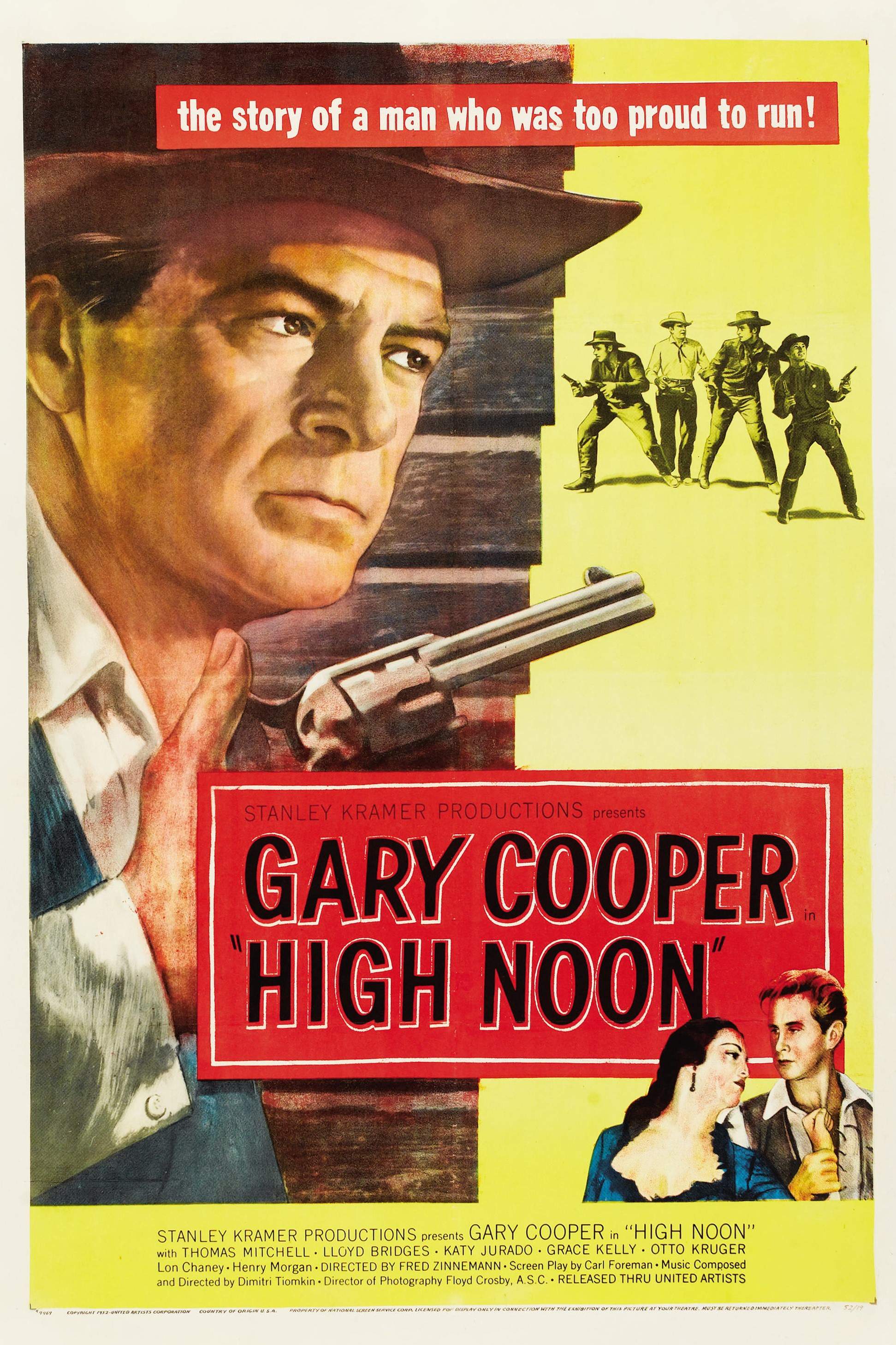
High Noon (1952) movie poster

Timeline

High Noon (1952) Timeline Explained – Every Event in Order

Release, runtime and language
1952 · 85 min · Chinese
Directed by
Fred Zinnemann
Starring
Thomas Mitchell, Harry Morgan, Lon Chaney Jr., Gary Cooper, Grace Kelly, Katy Jurado

In a quiet Western town, a determined marshal finds himself facing a dangerous gang of outlaws seeking retribution. With no backup and as the clock approaches high noon, he must overcome his personal demons and find the courage to confront them alone, hoping to protect the town and its citizens from impending violence.

On this page (5)
  1. 1 Where to watch
  2. 2 Events in order (12)
  3. 3 Timeline questions answered
  4. 4 Movie threads
  5. 5 Every angle

Where to watch

Where to Watch High Noon (1952)

Where can you watch High Noon? Stream, rent or buy it in the US, including on Fawesome, Hoopla and Kanopy: current JustWatch availability with up-to-date prices.

Streaming availability powered by JustWatch

12 events in order · contains spoilers

High Noon Timeline: Events in Chronological Order

Every key event of High Noon (1952) in order, scene by scene, with when and where it takes place. Use it to untangle flashbacks, time jumps and parallel storylines, to refresh your memory before the sequel or to find the exact scene you are thinking of.

  1. Deputies resign; Kane stays on duty

    In Hadleyville, Kane's deputies all resign, but he stays as chief marshal due to his sense of duty. He continues to enforce the law alone, bearing the responsibilities without the support of colleagues. The town looks on as the marshal faces rising threats without backup.

    When
    Late 1890s
    Where
    Hadleyville
  2. Amy urges retirement to become a farmer

    Amy, a Quaker and pacifist, pleads with Kane to leave the marshal's post and become a farmer. She fears violence and wishes to avoid bloodshed. Kane's commitment to duty complicates her plea.

    When
    Before noon
    Where
    Hadleyville
  3. Miller pardoned; noon train arrival planned

    Kane learns that Frank Miller has been pardoned and will ride into Hadleyville on the noon train. Miller's old gang has returned to back him, promising trouble. A message warns that Miller intends to murder Kane as vengeance for his conviction.

    When
    Noon train arrival
    Where
    Hadleyville
  4. Miller's arrival escalates the threat

    The town braces for violence as Miller's train is due and his plan to kill Kane becomes clear. Kane prepares for confrontation, knowing his enemies include Miller and his gang. The threat of a deadly showdown hangs over Hadleyville.

    When
    Afternoon
    Where
    Hadleyville
  5. Kane seeks help from deputies; they refuse

    Kane reaches out to his former deputies for help, but they refuse either out of fear or loyalty to Miller. Their refusal leaves him isolated and vulnerable. He realizes he cannot count on official support to repay the debt he once expected.

    When
    Afternoon
    Where
    Hadleyville
  6. Posse attempts fail; townspeople reluctant

    Kane attempts to form a posse to face Miller, but the townspeople are reluctant to stand up to a feared gunfighter. Some residents see the town's fame as a curse and blame Kane for bringing trouble. Those who volunteer are turned away for being too young, old, or unfit to fight.

    When
    Afternoon
    Where
    Hadleyville
  7. Judge Mettrick warns Kane to leave

    Kane seeks advice from Judge Mettrick, who has already resigned. Mettrick tells him to abandon Hadleyville as he originally planned. Kane refuses to abandon his post despite the warning.

    When
    Afternoon
    Where
    Judge Mettrick's office
  8. Kane decides to face Miller alone

    Unable to secure support, Kane resolves to stay and confront Miller alone. He chooses duty over safety, preparing for a violent confrontation. Amy's presence remains a quiet source of support.

    When
    Afternoon
    Where
    Hadleyville
  9. Amy returns; saves Kane by shooting a henchman

    Amy decides not to board the noon train and returns just in time. She shoots one of Miller's men in the back, turning the odds in Kane's favor. Her action proves she will not abandon him to violence.

    When
    Just before the confrontation
    Where
    Hadleyville
  10. Kane kills Miller after threat to Amy

    Miller threatens Amy during the confrontation, prompting Kane to shoot him down in a decisive moment. The showdown ends with Miller's death and the immediate danger to Kane and Amy removed. The town braces for the aftermath.

    When
    Afternoon
    Where
    Hadleyville
  11. Town congratulates Kane; he remains silent

    With Miller dead, the townspeople come out to congratulate Kane and acknowledge his sacrifice. Kane, however, remains quiet and reserved, unrewarded and unflinching. The town's gratitude feels hollow against the cost of his lone stand.

    When
    Evening
    Where
    Hadleyville
  12. Kane discards the badge and rides away

    Without a word, Kane tosses his marshal's badge into the dirt and mounts his horse to ride away from Hadleyville. He has sacrificed status for his principles and chooses a solitary path forward. The badge-dirt moment seals the end of his era as marshal.

    When
    End of day
    Where
    Hadleyville

Last updated: October 09, 2025 at 15:42

Was this helpful?

Timeline questions answered

High Noon Timeline Explained: Your Questions Answered

When does it happen, and why in that order? The questions people ask about the chronology of High Noon (1952): time jumps, flashbacks, cause and effect between scenes and the correct order of events, each answered with spoilers.

Q1

Why does Will Kane decide to face Frank Miller alone?

Kane decides to face Miller alone because of his deep sense of duty as a lawman. Despite being abandoned by his deputies and refused help by the townspeople, he cannot bring himself to abandon Hadleyville and let Miller roam free. Judge Mettrick advises him to leave, but Kane refuses, believing it would be a betrayal of everything he stands for as the town's marshal.

Foreshadowing: Early in the film, Kane continues serving as chief marshal even after all his deputies have resigned, establishing his unwavering commitment to duty.

  • will kane
  • duty
  • marshal
  • frank miller
  • stand
Q2

Why won't the townspeople of Hadleyville help Marshal Kane?

The townspeople refuse to help Kane for several reasons: some fear Frank Miller and his gang, while others are actually sympathetic to Miller because his notoriety brought fame to the town. Many residents blame Kane for ruining their comfortable situation by convicting Miller years earlier. Those who do volunteer are rejected by Kane as too young, old, or physically unfit to fight.

Foreshadowing: The town's initial reaction to Miller's notoriety hints at their ambivalence toward law enforcement.

  • hadleyville
  • townspeople
  • refuse help
  • miller gang
  • fear
Q3

Why does Amy, a Quaker pacifist, end up shooting one of Miller's men?

Amy, who had threatened to leave on the noon train because she deplores violence, returns just before the confrontation. She shoots one of Miller's men in the back to save Kane's life when she sees him being overwhelmed. Her action demonstrates that her love for Kane overrides her pacifist beliefs in that critical moment, though she remains fundamentally opposed to violence.

Foreshadowing: Amy's earlier threat to leave on the train establishes her internal conflict between her pacifist values and her commitment to Kane.

  • amy
  • quaker
  • pacifist
  • shooting
  • save kane
Q4

Why does Will Kane throw away his marshal badge at the end?

Kane throws his badge into the dirt as a symbol of his disillusionment with the town that abandoned him. Despite defending Hadleyville and protecting its citizens, not one person stood with him against Miller. The badge represents the office that he served faithfully, but which offered him no support when he needed it most. By discarding it, he rejects both the town and the duty that kept him there.

Foreshadowing: The townspeople's collective refusal to form a posse foreshadows Kane's ultimate rejection of the community.

  • badge
  • disillusionment
  • abandonment
  • duty
  • leave town
Q5

Why do Kane's former deputies refuse to help him against Miller?

Kane's former deputies refuse to help for two main reasons: fear of Frank Miller and his gang, and a sense that Kane's integrity prevents them from getting special treatment. Kane had always enforced the law equally and fairly, so they know he won't grant them exceptions or rewards for assisting him. Their refusal leaves Kane completely isolated.

Foreshadowing: The deputies' resignation early in the film signals their unwillingness to stand with Kane.

  • deputies
  • resign
  • fear
  • miller
  • loyalty
Q6

What happens to Frank Miller at the end of High Noon?

Frank Miller is killed by Will Kane during the showdown. When Miller threatens Amy during the confrontation, Kane shoots him dead in a decisive moment. Miller's death ends the immediate threat to Hadleyville and avenges the murder he planned to commit.

Foreshadowing: The warning message stating Miller's first order of business would be to murder Kane establishes the deadly stakes.

  • frank miller
  • death
  • shot
  • killed
  • confrontation
Q7

Why does Amy return to Hadleyville after threatening to leave?

Amy returns to Hadleyville because she cannot abandon Kane to face Miller alone, despite her strong opposition to violence. She had threatened to leave on the noon train with or without him, but her love for Kane proves stronger than her fear of violence. Her return enables her to save his life by shooting one of Miller's henchmen.

Foreshadowing: Amy's plea for Kane to retire and become a farmer shows her deep desire to build a peaceful life with him.

  • amy
  • return
  • love
  • sacrifice
  • quaker
Q8

What warning does Will Kane receive about Frank Miller?

Kane receives a message warning him that Frank Miller has been pardoned and will arrive in Hadleyville on the noon train. The message states that Miller's first order of business will be to murder Kane as revenge for his conviction years earlier. This warning sets in motion Kane's desperate attempts to gather help.

Foreshadowing: The opening scene establishes Kane's isolation with all deputies having resigned, making the warning particularly ominous.

  • warning
  • pardoned
  • noon train
  • murder
  • revenge
Q9

Why does Judge Mettrick tell Kane to leave Hadleyville?

Judge Mettrick tells Kane to leave town because he has already resigned from his position and believes fighting Miller alone would be suicide. Mettrick represents the practical perspective that Kane's duty is fulfilled and he owes the town nothing more. However, Kane rejects this advice, choosing to stay and face Miller despite the odds.

Foreshadowing: Mettrick's resignation prior to the crisis establishes the pattern of officials abandoning their posts.

  • judge mettrick
  • advice
  • leave
  • resign
  • practical
Q10

Why does Frank Miller threaten Amy during the confrontation?

Miller threatens Amy as a tactical move to intimidate and distract Kane during their showdown. When Kane sees Miller threatening his wife, it triggers Kane to shoot Miller dead in anger and protection. The threat proves to be Miller's fatal mistake, as it motivates Kane to act decisively in Amy's defense.

Foreshadowing: The entire film's tension builds toward this confrontation, with Miller's intent to kill Kane established from the warning message.

  • miller
  • threaten amy
  • distraction
  • kill
  • showdown

Movie threads

More Movies Like High Noon, by Mood & Story

Curated lists built around what makes High Noon tick: the same mood, the same kind of story or the same emotional payoff. Each list explains why these movies belong together.

Ticking Clock Thrillers like High Noon

Stories where a looming deadline creates unbearable, real-time tension. If you liked the tense, real-time countdown in High Noon, explore movies like it that build unbearable suspense toward an unavoidable confrontation. These films feature protagonists racing against a deadline, creating a similar feel of urgent, claustrophobic tension.

  • urgent
  • anxious
  • tense
  • suspenseful
  • claustrophobic
  • race against time
  • Tone: tense, urgent, anxious
  • Pacing: steady, methodical build
Why these movies?

The story pattern: The narrative in these films follows a linear progression towards a fixed, high-stakes event. The central conflict is defined by a ticking clock, which structures the entire plot and amplifies the protagonist's isolation and desperation as they prepare for a final, decisive encounter.

Why they belong together: Movies are grouped here based on their shared use of a real-time or near-real-time countdown as the primary engine of tension. They create a consistent feeling of urgency, anxiety, and claustrophobia, appealing to viewers who enjoy narratives with a relentless, forward-driving pace.
Movies about a Lone Hero's Stand like High Noon

One individual faces overwhelming odds, abandoned by those they protect. For viewers who admired the lone marshal's courage in High Noon, this collection features similar movies about individuals standing alone against a threat. Discover stories of duty, honor, and community failure that echo the bittersweet and tense feel of High Noon.

  • lonely
  • dramatic
  • tense
  • anxious
  • bittersweet
  • courageous
  • Tone: tense, dramatic, bittersweet
  • Pacing: steady, character-driven
Why these movies?

The story pattern: These narratives follow a character, often a lawkeeper or protector, who is morally compelled to confront a threat. The central conflict arises when the community they serve abandons them, forcing a solitary confrontation that tests their resolve and leads to a victory that feels hollow due to the surrounding betrayal.

Why they belong together: These films are connected by the powerful archetype of the isolated hero and the thematic exploration of individual conscience versus collective apathy. They share a tense, dramatic mood and often conclude with a bittersweet resolution, where external victory is tempered by internal disillusionment.

Every angle

High Noon (1952) Explained: Plot, Timeline & Characters

Everything about High Noon in one place: what happens in the plot summary, the timeline in chronological order, the characters and meaning and a spoiler-free summary. What's After the Movie adds the cast, box office and post-credit scenes.

Coming soon on iOS and Android

The Plot Explained Movie Summary App

Plot summaries, endings explained and timelines on your phone. Catch up on any movie in minutes, save your favorites and never miss a twist again.

Be the first to know when we launch. Your email stays private, always.

Learn more about the app