Year: 1968
Runtime: 90 mins
Language: English
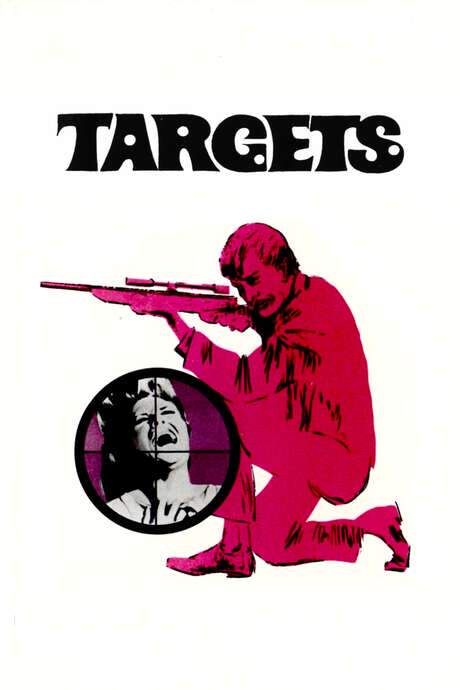
An aging horror‑movie icon whose fame has faded finds his life entangled with that of a seemingly ordinary young man who embarks on a psychotic shooting spree through Los Angeles. Their intersecting paths spark a deadly cat‑and‑mouse game that blurs fame and madness.
Warning: spoilers below!
Haven’t seen Targets yet? This summary contains major spoilers. Bookmark the page, watch the movie, and come back for the full breakdown. If you're ready, scroll on and relive the story!
Read the complete plot breakdown of Targets (1968), including all key story events, major twists, and the ending explained in detail. Discover what really happened—and what it all means.
Byron Orlok, Boris Karloff an aging, embittered horror movie star, abruptly declares he will retire from Hollywood and return to his native England to live out his final days. He believes the old-fashioned shocks he thrives on are outdated, insisting that real-life news stories are far more terrifying than anything he ever conjured on screen. Yet, after a long stretch of convincing from a young director named Sammy Michaels, Peter Bogdanovich, Orlok consents to one last in-person promotional appearance at a Reseda drive-in before leaving Hollywood for good.
Meanwhile, Bobby Thompson, a quiet, clean-cut insurance agent living in the suburban San Fernando Valley with his wife and aging parents, harbors a dark preoccupation that goes well beyond his day job. He is an obsessive gun collector, a detail his family mostly overlooks as they go about their routines. On a morning that begins like any other, tragedy erupts: after his father heads off to work, Thompson murders his wife, his mother, and a grocery delivery boy inside their home. The violence doesn’t end there. That afternoon, Thompson continues his rampage, methodically shooting people as they ride in cars along the busy freeway, perched atop an oil storage tank that looms over the roadway. An employee who comes to investigate the gunfire is shot as well, and the killer leaves behind a disturbing trail of weapons and ammunition at the crime scene.
With the rampage still unfolding, Thompson heads toward the very drive-in where Orlok will soon appear. As dusk falls, he climbs into the tower within the screen frame, choosing the lofty perch to exact his last, terrifying act. The Orlok film is projected onto the large screen behind him, and Thompson begins firing at patrons in the parking area, turning the night into chaos. The theater’s operations are disrupted as the murder spree escalates—Thompson even shoots Orlok’s secretary, Jenny, during the chaos, injuring her and forcing a confrontation between the aging star and the killer.
Orlok, facing the immediate threat in front of him and the surreal image of his own film playing behind Thompson, steps forward with surprising composure. He confronts the gunman, and the two become locked in a strange duel where reality and cinema blur. Thompson, disoriented by the simultaneous sight of the man before him and the iconic image on the screen, finds himself deftly disarmed by Orlok’s walking cane. In a moment charged with dread and lingering fear, Orlok looks at the defeated assailant and asks, Is that what I was afraid of? The crisis culminates as police officers arrive to arrest Thompson for the murders he has committed, and as he is led away, he delivers a chilling, satisfied line about his near-perfect marksmanship: that he “hardly ever missed.”
Last Updated: October 07, 2025 at 08:25
Discover curated groups of movies connected by mood, themes, and story style. Browse collections built around emotion, atmosphere, and narrative focus to easily find films that match what you feel like watching right now.
Unflinching films about the cold, methodical nature of modern violence.Looking for more films like Targets that delve into the unsettling reality of modern violence? These movies explore mass murder and societal fear with a methodical, unflinching lens, providing a tense and heavy viewing experience similar to the feel of Targets.
Stories in this thread often follow a dispassionate killer or unravel the events leading to a violent spree. The narrative structure is frequently procedural, focusing on the chillingly efficient and planned nature of the violence, contrasting it with the mundane world it disrupts.
These films are grouped by their shared commitment to portraying violence not as sensationalized spectacle, but as a cold, methodical reality. They share a bleak tone, high intensity, and a heavy emotional weight that forces viewers to confront disturbing societal anxieties.
Stories where separate lives inevitably intersect in a violent climax.If you liked the dual storyline structure of Targets, where an aging actor and a sniper's lives converge, explore these other movies. They use parallel narratives to build tension and create a powerful, often unsettling, climax when the separate threads finally collide.
The narrative pattern involves telling two concurrent stories, frequently contrasting different worlds or perspectives. The audience watches as events unfold separately, knowing a convergence is inevitable. This structure builds immense suspense and often highlights thematic contrasts, such as the artificial horror of cinema versus the real horror of violence in Targets.
These movies are connected by their distinctive narrative architecture. They share a steady pacing that allows both storylines to breathe, a tense tone from the impending collision, and a moderate complexity that engages the viewer in piecing together the thematic and plot connections.
Don't stop at just watching — explore Targets in full detail. From the complete plot summary and scene-by-scene timeline to character breakdowns, thematic analysis, and a deep dive into the ending — every page helps you truly understand what Targets is all about. Plus, discover what's next after the movie.
Track the full timeline of Targets with every major event arranged chronologically. Perfect for decoding non-linear storytelling, flashbacks, or parallel narratives with a clear scene-by-scene breakdown.
Discover the characters, locations, and core themes that shape Targets. Get insights into symbolic elements, setting significance, and deeper narrative meaning — ideal for thematic analysis and movie breakdowns.
Get a quick, spoiler-free overview of Targets that covers the main plot points and key details without revealing any major twists or spoilers. Perfect for those who want to know what to expect before diving in.
Visit What's After the Movie to explore more about Targets: box office results, cast and crew info, production details, post-credit scenes, and external links — all in one place for movie fans and researchers.
Discover movies like Targets that share similar genres, themes, and storytelling elements. Whether you’re drawn to the atmosphere, character arcs, or plot structure, these curated recommendations will help you explore more films you’ll love.
Targets (1968) Scene-by-Scene Movie Timeline
Targets (1968) Movie Characters, Themes & Settings
Targets (1968) Spoiler-Free Summary & Key Flow
Movies Like Targets – Similar Titles You’ll Enjoy
The Killers (1964) Plot Summary & Ending Explained
Kill List (2012) Ending Explained & Film Insights
Target (1985) Movie Recap & Themes
Target (2004) Spoiler-Packed Plot Recap
Hollywood Kills (2006) Movie Recap & Themes
Deadline (1980) Spoiler-Packed Plot Recap
Angst (1983) Film Overview & Timeline
The Prey (1983) Spoiler-Packed Plot Recap
Relentless (1989) Detailed Story Recap
Anguish (1987) Complete Plot Breakdown
Drive-In Massacre (1976) Complete Plot Breakdown
Born to Kill (1947) Complete Plot Breakdown
Effects (1979) Complete Plot Breakdown
Maniac (1963) Spoiler-Packed Plot Recap
Targeted (2022) Spoiler-Packed Plot Recap