Plot Explained Spoilers guaranteed!
Plot Explained

Browse by genre

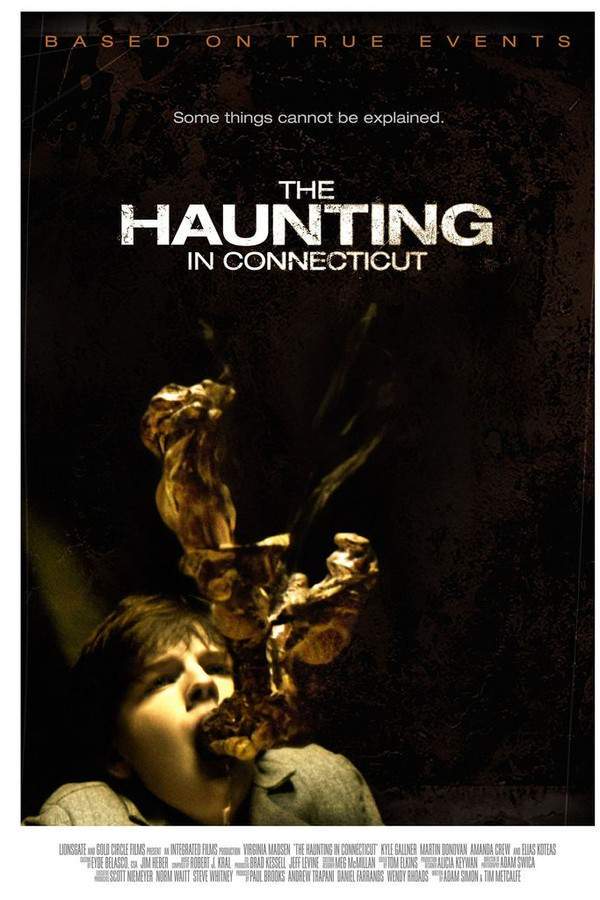
The Haunting in Connecticut (2009) movie poster

Plot Summary

The Haunting in Connecticut (2009) Plot Summary Explained

Release, runtime and language
2009 · 92 min · English
JustWatch #6,426 14
Directed by
Peter Cornwell
Starring
Virginia Madsen, Martin Donovan, Elias Koteas

The Campbell family’s search for a more affordable home leads them to a seemingly perfect house in Connecticut. However, they soon discover the residence has a dark history as a former funeral parlor. As they settle in, unsettling events begin to occur, revealing the house is haunted by malevolent spirits. A young, clairvoyant boy named Jonah, who previously lived in the house and acted as a conduit for the paranormal activity, attempts to warn the family of the danger they face.

On this page (6)
  1. 1 Where to watch
  2. 2 What happens: full plot
  3. 3 Plot questions answered
  4. 4 Movie threads
  5. 5 Movies like The Haunting in Connecticut
  6. 6 Every angle

Where to watch

Where to Watch The Haunting in Connecticut (2009)

Where can you watch The Haunting in Connecticut? Stream, rent or buy it in the US, including on Philo, Fawesome and Kanopy: current JustWatch availability with up-to-date prices.

Streaming availability powered by JustWatch

Full plot summary · contains spoilers

What Happens in The Haunting in Connecticut: Full Plot Summary

The whole story of The Haunting in Connecticut (2009) explained, from the opening scene to the final frame: every key event, every twist and what it all adds up to. Read it as a quick recap before the sequel, to check a scene you missed, or to finally understand what really happened.

As the film begins, we hear the haunting sound of a piano playing alongside a series of old black-and-white photographs that depict family members grieving over the deceased in a funeral home. The scene transitions to Sarah Campbell, portrayed by Virginia Madsen, preparing for a television interview. When asked why such tragic events occur, Sarah reflects on the deeper question of why misfortune befalls good people, asserting that her family didn’t deserve the hardships they faced.

Fast forward to 1987, Sarah is seen driving her son Matt (Kyle Gallner) home after his cancer treatment at the hospital. While she offers a heartfelt prayer for his recovery, Matt playfully chides her for talking to herself, which he humorously suggests is a sign of madness. But Sarah reassures him that she is merely conversing with God, to which he responds that threatening the creator might not be wise. Their lighthearted exchange takes a turn when Matt suddenly feels nauseated, prompting Sarah to pull over as he gets sick by the roadside.

The following morning is chaotic as Sarah attempts to cook breakfast. Her husband Peter (Martin Donovan) enters, expressing concern over not hearing her come home the previous night. Their conversation escalates, revealing their struggles with Matt's illness and the financial strain it imposes. Sarah suggests they find a place closer to the hospital, but Peter, ever the realist, doubts their financial capabilities.

Sarah and Matt return to the hospital for a new treatment trial, and in her search for a suitable rental house, Sarah spots a man, Mr. Sinclair (John B. Lowe), erecting a "For Rent" sign. He offers her the first month free if she takes it immediately, hinting at the house's mysterious history. Sarah feels drawn to the space, though she wonders about the catch, sensing an unusual presence when she sees a shadowy figure retreat above them.

Later, she discovers she must rent this house without discussing it with Peter first, fearing the long drive home for Matt would be too painful. As the days pass, Matt’s condition fluctuates, and Sarah begins to experience unsettling phenomena within their new home, including strange noises and eerie reflections.

One night, while Matt lies awake, he is plagued by visions of corpses and ultimately finds himself in the basement, drawn to a walled-off area. He experiences disorienting shifts in reality, becoming increasingly haunted by the dark history of their residence. As Matt navigates through the house, he is repeatedly confronted by chilling echoes of the past, including his vision of Jonah (Erik J. Berg), a spirit with a tragic plight connected to the house's history involving necromantic practices undertaken by the former owner.

Sarah and Matt’s struggle intensifies as they not only deal with the emotional toll of his illness but are also subjected to increasingly bizarre and terrifying occurrences within the house. Conversations with fellow patients like Reverend Nicholas Popescu (Elias Koteas) lend some insight into the haunting they are experiencing and the spirits that may be trapped there.

As Matt and his family immerse themselves in the ominous history of their home, they gradually uncover the horrifying stories of those who once inhabited it. The family's already fragile dynamics strain as Sarah and Peter face the burden of Matt’s deteriorating health, hallucinatory episodes, and supernatural events.

With every revelation and each escalating nightmare, Matt becomes a central figure in trying to help the wandering spirits find peace. Through a harrowing journey, he encounters visions, ghostly figures, and realizations that pierce through both his conscious and subconscious as he grapples with his own mortality.

In a climactic confrontation, the family faces the spirits that haunt their home, forcing them to confront not only the past but also the impending future of their family unit. Amid the chaos, Matt takes decisive action, leading to a devastating yet liberating fire meant to purge the malevolent spirits.

As the story draws to a close, hope flickers as Sarah recounts how, against all odds, Matt defies his cancer diagnosis, finding a path toward healing while the house is purified and freed from the darkness that had lingered. The family's journey through grief, confrontation, and love culminates in a powerful testament to resilience and the complexity of human experience in the face of tragedy.
Last updated: October 27, 2024 at 21:27

Was this helpful?

Plot questions answered

The Haunting in Connecticut Plot Explained: Your Questions Answered

The questions people ask most about The Haunting in Connecticut (2009): what happens in the confusing scenes, why the characters do what they do, the twists, hidden details and what the ending means. Each answer contains spoilers.

Q1

Why did Sarah rent the house without discussing it with Peter first?

Sarah decided to rent the house secretly because she was desperate to reduce Matt's long commute home from the hospital. The house was located very close to the hospital, and she feared that telling Peter would delay the move since they would need to discuss it together. She also sensed something unusual about the house but chose to ignore her instincts because finding a closer home for Matt's medical treatment felt urgent.

Foreshadowing: Earlier, Peter expresses concern about Sarah coming home late, hinting at her growing secretive behavior around the house search.

  • sarah
  • peter
  • house rental
  • secret decision
  • matt commute
Q2

Why was the house offered with the first month free and such a low rent?

Mr. Sinclair offered Sarah the first month free and pressed her to take the house immediately because he wanted to rent it out quickly. The house had a dark history as a former funeral parlor where necromantic practices were performed, and previous tenants had likely left due to the disturbing supernatural activity. The low price was a signal that something was wrong with the property.
Foreshadowing: Sarah wonders about the catch when Mr. Sinclair insists she take the house right away.

  • cheap rent
  • for rent sign
  • mr sinclair
  • house history
Q3

What was the dark history of the house they moved into?

The house had previously operated as a funeral home where family members grieved over the deceased. More disturbingly, the former owner had performed necromantic practices in the house, which is what trapped the malevolent spirits there. This dark history is why the house remained haunted long after it stopped functioning as a funeral parlor.

Foreshadowing: The opening scene shows old photographs of family members mourning at a funeral home, establishing the house's connection to death.

  • funeral parlor
  • necromancy
  • haunted house
  • dark history
Q4

Who is the boy named Jonah that Matt sees in his visions?

Jonah was a young, clairvoyant boy who previously lived in the house before the Campbell family. He acted as a conduit for the paranormal activity and had a tragic connection to the house's history involving the necromantic practices. Jonah's spirit appears to Matt because they share a sensitivity to the supernatural, and Jonah tries to warn the family about the danger they face.

Foreshadowing: Matt begins experiencing visions of Jonah after discovering the walled-off area in the basement.

  • jonah
  • clairvoyant
  • spirit
  • visions
  • haunted
Q5

Why is Matt able to see the ghosts in the house?

Matt can see the ghosts because he has a natural sensitivity to the supernatural, similar to what Jonah experienced when he lived there. His near-death state from cancer treatment may have heightened his ability to perceive the spirits. Additionally, the spirits are drawn to Matt because he is vulnerable and because the house's dark energy connects to matters of mortality and death.

Foreshadowing: Matt begins having visions after being drawn to the walled-off area in the basement, which is the source of the necromantic activity.

  • matt
  • ghosts
  • visions
  • sensitivity
  • near death
Q6

What is the connection between Matt's cancer and the supernatural activity in the house?

While Matt's cancer is not directly caused by the house, his illness and the supernatural activity are thematically linked through themes of mortality and death. The house's history as a funeral parlor and site of necromantic practices makes it a place where matters of death are concentrated. Matt's proximity to death due to his cancer heightens his ability to perceive the trapped spirits, creating a resonance between his physical condition and the house's dark energy.

Foreshadowing: The opening establishes grief and loss as central themes, connecting the family's real-world tragedy with the supernatural horror.

  • cancer
  • mortality
  • death
  • connection
  • illness
Q7

Why did Matt set the fire that burned down the house?

Matt set the fire during the climactic confrontation to purge the house of the malevolent spirits. The fire was the only way to break the hold the necromantic practices had on the trapped spirits and finally free them. By destroying the house, Matt cleansed the space of the dark energy that had been festering since the funeral parlor days, allowing the spirits to find peace.

Foreshadowing: Reverend Nicholas Popescu explains the nature of the trapped spirits and the need for some form of purification.

  • fire
  • cleansing
  • purge
  • spirits
  • confrontation
Q8

Why were the spirits trapped in the house and unable to move on?

The spirits were trapped because of the necromantic practices performed by the former owner of the funeral parlor. These rituals created a spiritual anchor that prevented the dead from moving on to the afterlife. The walled-off area in the basement is where these practices occurred, and it became the focal point that bound the spirits to the house.

Foreshadowing: Matt discovers a walled-off area in the basement where the necromantic rituals took place.

  • trapped spirits
  • necromancy
  • afterlife
  • basement
  • rituals
Q9

How did Matt recover from his cancer at the end of the film?

Against all medical expectations, Matt defies his cancer diagnosis and begins to recover. The film suggests that this recovery comes after the family confronts and purifies the house of its dark history. While the recovery is portrayed somewhat miraculously, it symbolizes the family's emotional and spiritual liberation from the trauma they experienced, both from Matt's illness and the supernatural haunting.

Foreshadowing: Sarah's interview at the beginning reflects on why misfortune befalls good people, hinting at the eventual hopeful resolution.

  • recovery
  • cancer
  • healing
  • hope
  • miracle
Q10

What helpful information does Reverend Nicholas Popescu provide about the haunting?

Reverend Nicholas Popescu, another patient at the hospital, offers insight into the supernatural disturbances the family is experiencing. He helps Matt and his family understand that the spirits haunting their home are trapped there and need help finding peace. His guidance assists them in comprehending the nature of the haunting and the need for some form of spiritual cleansing to free the trapped souls.

Foreshadowing: Matt meets other patients at the hospital who seem to have knowledge of supernatural matters, foreshadowing this revelation.

  • reverend nicholas popescu
  • patient
  • hospital
  • spiritual insight
  • guidance
Q11

Why was Matt drawn to the basement and the walled-off area?

Matt was drawn to the basement because the spirits there were calling to him, using his sensitivity to their presence. The walled-off area specifically called to him because it was the epicenter of the necromantic activity that created the dark energy in the house. This area held the key to understanding why the spirits were trapped and needed to be confronted.

Foreshadowing: Matt becomes increasingly haunted by visions of corpses and dark occurrences before finding his way to the basement.

  • basement
  • walled area
  • necromancy
  • spirits
  • drawing

Movie threads

More Movies Like The Haunting in Connecticut, by Mood & Story

Curated lists built around what makes The Haunting in Connecticut tick: the same mood, the same kind of story or the same emotional payoff. Each list explains why these movies belong together.

Family Trauma Horror Movies like The Haunting in Connecticut

Supernatural terror amplifies a family's real-world grief and desperation. If you liked how The Haunting in Connecticut blended supernatural horror with a family's real-world crisis, you'll find similar movies here. These stories feature families facing terminal illness or profound loss, whose struggles are amplified and tested by a haunted setting, creating a deeply emotional and fearful experience.

  • oppressive
  • anxious
  • melancholic
  • desperate
  • fearful
  • grim
  • Tone: dark, heavy
  • Pacing: steady, dread-filled
Why these movies?

The story pattern: These narratives often follow a family unit already in crisis who moves into or encounters a malevolent place. The supernatural events directly mirror or intensify their internal conflicts, forcing them to confront their trauma head-on to survive both the physical and psychological threats.

Why they belong together: They are grouped by their unique blend of heavy, real-world drama with supernatural horror, creating a dual-layered tension. The similarity lies in using the haunting as a metaphor for internal family struggles, resulting in stories that are as emotionally resonant as they are frightening.

Oppressive Slow Burn Horror Movies like The Haunting in Connecticut

A steady, relentless build of dread within a claustrophobic, haunted setting. Fans of The Haunting in Connecticut's steadily mounting dread and anxious atmosphere will appreciate these similar movies. This selection features horror films with a steady pacing that builds an oppressive, haunting vibe, often set in a single location like a funeral home or old mansion, where terror unfolds methodically.

  • oppressive
  • anxious
  • dread-filled
  • haunting
  • claustrophobic
  • grim
  • Tone: dark, tense, grim
  • Pacing: steady, relentless
Why these movies?

The story pattern: The narrative pattern involves a gradual reveal of a location's grim past, accompanied by a persistent stream of unsettling events. There are few lulls; the tension is maintained throughout as characters uncover dark secrets and face a growing, often intelligent, supernatural presence.

Why they belong together: These films share a specific vibe defined by a STEADY pacing, a DARK tone, and a HIGH intensity that stems from atmospheric dread rather than chaos. They are connected by their commitment to building a suffocating, anxious mood that gets under your skin and lingers.

If you liked this

Movies Like The Haunting in Connecticut

Similar movies to The Haunting in Connecticut: the same genre, themes or kind of story. Each one comes with its own plot summary, timeline and ending explained.

Browse all movie summaries

Every angle

The Haunting in Connecticut (2009) Explained: Plot, Timeline & Characters

Everything about The Haunting in Connecticut in one place: what happens in the plot summary, the timeline in chronological order, the characters and meaning and a spoiler-free summary. What's After the Movie adds the cast, box office and post-credit scenes.

Coming soon on iOS and Android

The Plot Explained Movie Summary App

Plot summaries, endings explained and timelines on your phone. Catch up on any movie in minutes, save your favorites and never miss a twist again.

Be the first to know when we launch. Your email stays private, always.

Learn more about the app