















Plot Explained Spoilers guaranteed!
Plot Explained

Browse by genre

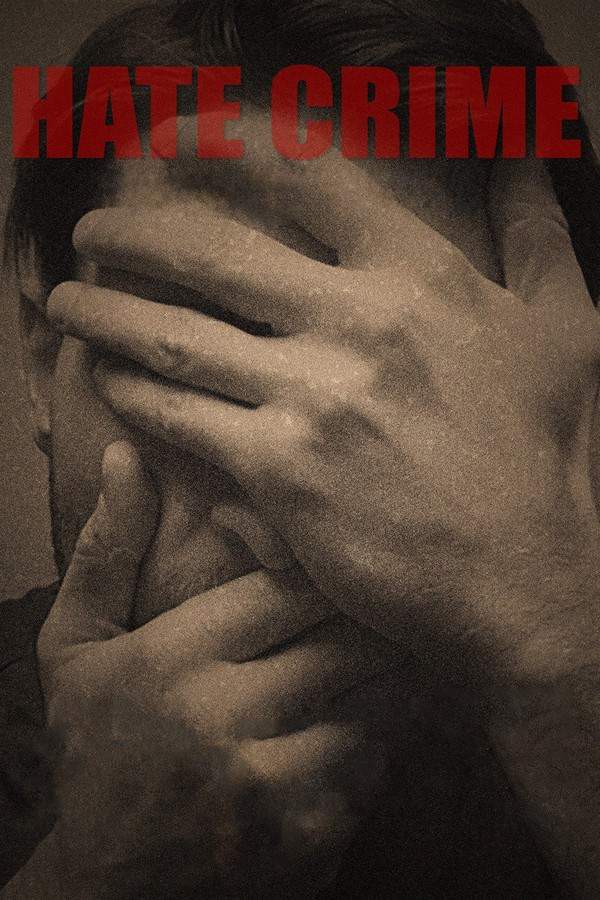
Hate Crime (2006) movie poster

Characters & Themes

Hate Crime (2006) Characters, Setting & Themes Explained

Release, runtime and language
2006 · 103 min · English
JustWatch #16,218 10
Directed by
Tommy Stovall

When a brutal, hate-fueled attack shatters the peaceful life of a gay couple, suspicion immediately turns to their neighbor, the son of a fundamentalist preacher with a known history of intolerance. As the investigation progresses, Robbie finds himself entangled in a complicated network of hidden truths and escalating tensions. He must confront dangerous secrets and engage in a perilous game of cat-and-mouse, ultimately leading to devastating consequences for everyone involved.

On this page (8)
  1. 1 Where to watch
  2. 2 Characters explained (9)
  3. 3 Where & when it takes place
  4. 4 Themes & meaning (3)
  5. 5 Character & meaning questions
  6. 6 Movie threads
  7. 7 Movies like Hate Crime
  8. 8 Every angle

Where to watch

Where to Watch Hate Crime (2006)

Where can you watch Hate Crime? Stream, rent or buy it in the US, including on Amazon Prime Video, Fawesome and Hoopla: current JustWatch availability with up-to-date prices.

Streaming availability powered by JustWatch

9 main characters · contains spoilers

Hate Crime Characters Explained: Who Is Who

The main characters of Hate Crime (2006), heroes and villains: what drives them, how they change over the course of the story and what each of them reveals about the film's bigger ideas.

  • Robbie Levinson (Seth Peterson)

    A devoted partner navigating a violent homophobic attack and its aftermath. He strives to protect his family and seek justice while grappling with fear, guilt, and the pressure of public scrutiny. Robbie's resilience drives the pursuit of truth, even as the investigation hints at personal moral compromises.

    • 🏳️‍🌈 LGBTQ
    • 🧭 Moral Dilemma
    • 💪 Resilience
  • Trey McCoy (Brian J. Smith)

    Robbie's partner whose commitment and love motivate the couple's dream of starting a family. Trey's attack and coma become a turning point for the community's reckoning with prejudice. His eventual death highlights the human cost of intolerance and the fragility of happiness.

    • 🏳️‍🌈 LGBTQ
    • 💔 Tragedy
    • 💑 Partner
  • Kathleen Slansky (Lin Shaye)

    A neighbor who becomes entangled in the plan to uncover the truth. She embodies the pressure from the surrounding community and the willingness of some ordinary people to cross lines when they feel justice or safety is at stake. Kathleen's actions contribute to the film's controversial path to resolution.

    • 👥 Neighbor
    • 🧭 Community
    • 🤐 Secretive
  • Barbara (Cindy Pickett)

    Trey's mother, driven by a fierce desire for justice and loyalty to family. She becomes a central organizer in the effort to retrieve the incriminating tape and confront those responsible. Barbara's actions reflect the fierce protective instinct of a parent.

    • 👪 Family
    • 🗝️ Perseverance
    • 🕵️‍♀️ Investigative
  • Chris Boyd (Chad Donella)

    A conflicted pastor's son who embodies the tension between faith, sexuality, and moral obligation. He is involved in affairs and harbors dangerous impulses, eventually revealing a complicated moral landscape that intersects with the crime and its cover-up.

    • 🕵️ Secret Life
    • 💔 Family Conflict
    • 👥 Peer Pressure
  • Alton Kachim (Luke King)

    A friend whose homophobic attitudes and suspicions surface amid the murder investigation. He illustrates how bigotry within social circles can both fuel conflict and sway perceptions of guilt. Alton's stance reinforces the film's critique of intolerance.

    • 🗣️ Bigotry
    • 🧭 Witness
    • 💬 Gossip
  • Pastor Boyd (Bruce Davison)

    A respected pastor whose moral authority masks a willingness to commit murder to protect his reputation. He wields religious influence to shield himself, but his confession to trey's murder becomes a turning point in the pursuit of truth and justice.

    • ⛪ Religion
    • ⚖️ Corruption
    • 🔪 Violence
  • Detective Esposito (Giancarlo Esposito)

    A veteran detective who navigates suspicion, evidence, and bias while pursuing the truth. He weighs the consequences of revealing uncomfortable truths and ultimately accepts difficult truths that challenge official narratives.

    • 🕵️ Detective
    • ⚖️ Justice
    • 🧭 Investigation
  • Detective Fisher (Farah White)

    A fellow detective who collaborates with Esposito, helping to piece together the case and challenge the boundaries between law and moral certainty. She participates in the process to ensure that the right outcome, not just the easy one, is pursued.

    • 🕵️‍♀️ Detective
    • 🤝 Collaboration
    • ⚖️ Justice

Last updated: November 22, 2025 at 15:32

Was this helpful?

Setting

Where and When Does Hate Crime Take Place?

The setting of Hate Crime (2006): the year and time period, the places and locations, and how they shape the characters, the mood and the tension of the story.

Time period

Location

Suburban neighborhood near a church

A quiet suburban setting frames the story, with Robbie and Trey living in a home next door to Kathleen Slansky. The proximity to a local church and its influential figures anchors the tension, showing how religious and community norms can provoke hostility toward a gay couple. The everyday, intimate neighborhood backdrop makes the violence feel personal and heightens the stakes of the ensuing investigation.

  • 🏘️ Suburban
  • ⛪ Church influence
  • 🏳️‍🌈 LGBTQ

Last updated: November 22, 2025 at 15:32

Was this helpful?

3 major themes

Hate Crime Meaning: Themes & Message Explained

What is Hate Crime (2006) really about? The emotional, social and philosophical themes the film keeps returning to, its symbolism and the message beneath the surface.

  • Hate Crime

    The central event is a violent hate crime against an openly gay couple, sparked after a kiss in front of nosy neighbors. The film uses the crime to examine prejudice, homophobia, and the social pressures that condone discrimination. It shows how religious and community forces can contribute to intolerance and escalate to violence. The aftermath probes how justice confronts bigotry within a close-knit suburb.

  • Justice & Deception

    Detective Esposito leads the investigation, but the case is complicated by alibis, secrets, and the temptation to protect powerful figures. A private investigator's photos reveal hidden relationships and push Robbie toward a desperate measure to obtain the truth. A staged break-in is used to retrieve a crucial tape, testing the boundaries between truth and manipulation. The climax centers on whether the system will accept truth over convenient narratives.

  • LGBTQ Rights & Family

    Robbie and Trey's commitment ceremony and desire to raise a child foreground the couple's relationship as a unit deserving protection. The story explores acceptance, prejudice, and the fragility of family when confronted with homophobia. The community's hostility collides with the couple's longing for stability and a future together. The resolution challenges stereotypes by showing the resilience of love in the face of intolerance.

Last updated: November 22, 2025 at 15:32

Was this helpful?

Character & theme questions

Hate Crime Characters & Meaning: Your Questions Answered

The questions people ask about Hate Crime (2006): who the characters really are, their relationships, what the symbols mean, where it takes place and what the movie is really about. Each answer contains spoilers.

Q1

Where does the movie take place?

The story unfolds in a quiet suburban neighborhood. Robbie and Trey live next door to Kathleen Slansky, and the proximity to a local church and its influential figures creates an underlying tension that connects the community's religious values to the hostility the gay couple faces.

  • suburban setting
  • neighborhood
  • church location
  • setting
Q2

What are the main themes explored in the film?

The film centers on three major themes: hate crimes and homophobia, justice versus deception, and LGBTQ rights and family. It examines how religious and community forces can contribute to intolerance, explores the moral complexities of seeking truth through questionable means, and portrays a gay couple's fight for acceptance and stability.

  • hate crime
  • homophobia
  • lgbtq themes
  • justice
  • deception
  • family
Q3

How does the church influence the story?

The local church serves as a backdrop that highlights the conflict between religious community norms and the gay couple's existence. Pastor Boyd's moral authority initially masks his involvement in the crime, showing how religious reputation can shield wrongdoing and how faith can be weaponized to condone discrimination.

  • church
  • pastor
  • religious influence
  • faith
  • community norms
Q4

Who is the pastor's son and what is his role?

Chris Boyd is the son of Pastor Boyd. He embodies the tension between faith, sexuality, and moral obligation. Chris is involved in secret affairs and harbors dangerous impulses, ultimately revealing a complicated moral landscape where repressed sexuality intersects with the crime and its cover-up.

  • chris boyd
  • pastors son
  • sexuality
  • faith
  • conflict
Q5

What is Detective Esposito's role in the story?

Detective Esposito leads the investigation into the hate crime. He navigates suspicion, evidence, and bias while pursuing the truth, ultimately choosing to accept difficult truths that challenge official narratives rather than pursuing the most convenient resolution.

  • detective esposito
  • investigation
  • police
  • justice
Q6

Who is Kathleen Slansky and what is her significance?

Kathleen Slansky is the neighbors who becomes entangled in the plan to uncover the truth about the attack. She represents ordinary people who cross moral lines when they feel justice or safety is at stake, and her involvement contributes to the film's controversial path to resolution.

  • kathleen slansky
  • neighbor
  • truth
  • justice
Q7

How does the film address LGBTQ rights and family?

The film explores LGBTQ rights through Robbie and Trey's commitment ceremony and their desire to raise a child. Their relationship is portrayed as a family unit deserving protection, showing how community hostility collides with the couple's longing for stability while challenging stereotypes about gay relationships.

  • lgbtq rights
  • family
  • commitment
  • acceptance
  • marriage
Q8

What does the film say about justice and truth?

The film presents a bittersweet view of justice: truth is ultimately revealed through morally questionable means, including a staged break-in. Justice is technically achieved, but it comes after profound loss and is delivered with reluctance from authorities, offering resolution without true catharsis.

  • justice
  • truth
  • morality
  • resolution
  • consequences
Q9

Who is Barbara and what is her role?

Barbara is Trey's mother, driven by fierce loyalty to her family. She becomes a central organizer in the effort to retrieve an incriminating tape and confront those responsible for the attack, representing the protective instinct of a parent fighting for justice.

  • barbara
  • trey mother
  • family
  • justice
  • protection
Q10

How does the film explore prejudice and intolerance?

The film examines prejudice through the lens of a hate crime committed after a public display of affection between the gay couple. It shows how social and religious pressures within a close-knit suburb can condone discrimination and escalate to violence against LGBTQ individuals.

  • prejudice
  • intolerance
  • discrimination
  • hate
  • social pressure

Movie threads

More Movies Like Hate Crime, by Mood & Story

Curated lists built around what makes Hate Crime tick: the same mood, the same kind of story or the same emotional payoff. Each list explains why these movies belong together.

Movies about Avenging a Loss like Hate Crime

Stories where a profound loss ignites a dangerous and morally fraught quest for justice. If you were gripped by the grief-fueled investigation in Hate Crime, explore these movies where a profound personal tragedy sparks a dangerous quest for justice. These stories often feature morally complex protagonists navigating a world of secrets and violence, driven by love and loss.

  • grieving
  • suspenseful
  • angry
  • investigative
  • somber
  • tense
  • Tone: tense, somber, heavy
  • Pacing: steady, driven
Why these movies?

The story pattern: The narrative follows a protagonist shattered by a sudden, violent loss, typically of a loved one. Their grief transforms into a driving force for an investigation that is both personal and perilous. The journey is marked by escalating tension, moral compromises, and the uncovering of hidden truths, often leading to a resolution that brings more somber closure than happy victory.

Why they belong together: These films are grouped by their central emotional engine: a quest for justice born from deep personal grief. They share a heavy emotional weight, high tension, and a focus on the psychological cost of revenge and the search for truth in the face of overwhelming loss.

Thrillers with Heavy Moral Conflict like Hate Crime

Thrillers where characters are trapped in agonizing ethical dilemmas with high stakes. If the complex ethical dilemmas in Hate Crime captivated you, discover more thrillers that put characters in intense moral crucibles. These movies explore the gray areas of justice, where right and wrong are blurred, and every choice carries devastating consequences.

  • tense
  • unsettling
  • oppressive
  • moral conflict
  • suspenseful
  • somber
  • Tone: tense, unsettling, morally complex
  • Pacing: steady, escalating
Why these movies?

The story pattern: The plot revolves around a central ethical dilemma that forces the protagonist to make a difficult, often morally ambiguous, decision. The narrative tension is sustained by the consequences of this choice, exploring themes of justice, hypocrisy, and the cost of compromising one's principles. The endings are typically bittersweet or bleak, reflecting the Pyrrhic nature of the victory.

Why they belong together: These films are united by their exploration of weighty moral questions within a thrilling framework. They share a tense tone, high intensity, and a narrative structure that prioritizes ethical conflict as the primary source of drama and suspense.

If you liked this

Movies Like Hate Crime

Similar movies to Hate Crime: the same genre, themes or kind of story. Each one comes with its own plot summary, timeline and ending explained.

Browse all movie summaries

Every angle

Hate Crime (2006) Explained: Plot, Timeline & Characters

Everything about Hate Crime in one place: what happens in the plot summary, the timeline in chronological order, the characters and meaning and a spoiler-free summary. What's After the Movie adds the cast, box office and post-credit scenes.

Coming soon on iOS and Android

The Plot Explained Movie Summary App

Plot summaries, endings explained and timelines on your phone. Catch up on any movie in minutes, save your favorites and never miss a twist again.

Be the first to know when we launch. Your email stays private, always.

Learn more about the app