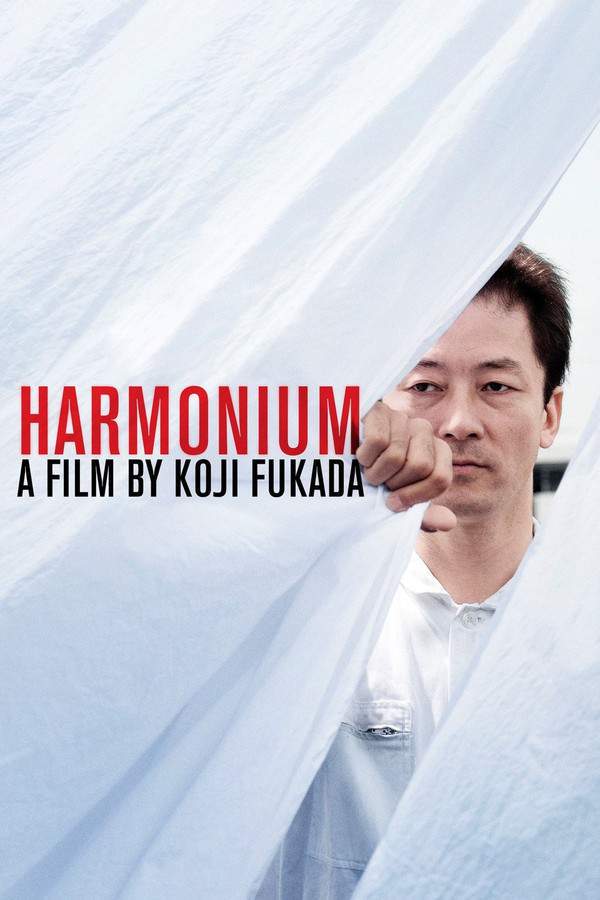
A harmonium maker seeking a fresh start hires an old friend, unaware of his troubled past. The decision unexpectedly triggers a series of events that impact his family and tests the fragile peace he’s trying to rebuild. The story explores themes of friendship, responsibility, and the complexities of second chances.
Find where to stream, rent, or buy Harmonium (2017) in the US with current JustWatch availability, up-to-date pricing, and platform listings for subscription, rental, and digital purchase options.
Warning: spoilers below!
Haven’t seen Harmonium yet? This summary contains major spoilers. Bookmark the page, watch the movie, and come back for the full breakdown. If you're ready, scroll on and relive the story!
Read the complete plot breakdown of Harmonium (2017), including all key story events, major twists, and the ending explained in detail. Discover what really happened, and what it all means.
Toshio [Kanji Furutachi] and his wife Akie [Mariko Tsutsui] live with their daughter Hotaru [Momone Shinokawa] in a quiet, banal existence, with Toshio running a small machine shop in his garage. Life unfolds with an unremarkable rhythm until an old acquaintance, Yasaka [Tadanobu Asano], who has just been released from prison, arrives to help out and ends up staying as a kind of informal assistant.
Yasaka quickly forms a bond with Hotaru, guiding her through her early attempts at playing the harmonium and becoming a more visible presence around the house and the shop. Over time, Yasaka reveals to Akie that he spent eleven years behind bars for murder, asks for forgiveness for not mentioning this earlier, and his presence gradually shifts from outsider to a central figure in the family’s daily life. There is a growing undercurrent of attraction between Yasaka and Akie, and they share moments of closeness that hint at deeper romantic feelings, punctuated by a kiss on several occasions.
Toshio grows suspicious as the family undertakes a river trip, and the film gradually discloses that Yasaka bitterly bears the responsibility for the crime whose blame Toshio partly shared. A striking visual turn occurs when Toshio removes his white clothing to reveal a red shirt underneath, a mark that signals a darker turn for the remainder of the story.
When Toshio is away, Yasaka oversteps boundaries by attempting to have sex with Akie, who firmly pushes him away. He then goes for a walk and encounters Hotaru. Later, Toshio discovers Hotaru injured and unresponsive, with Yasaka standing over her. Yasaka shouts Toshio’s name repeatedly, but he cannot respond as he is absorbed in his daughter’s condition. Yasaka exits and disappears.
Eight years pass, and Toshio hires a new assistant, Takashi [Taiga], a young man raised by a single mother who shows interest in the now-disabled, non-verbal Hotaru and sketches her. Akie becomes fiercely protective of Hotaru. Takashi reveals to both Toshio and Akie that he is Yasaka’s illegitimate son and that Yasaka was a yakuza member, explaining that he sought employment with Toshio because of letters Yasaka had sent to his mother before his disappearance. After Takashi stands too close to Hotaru, Akie ejects him from the house.
Akie then confronts Toshio about his involvement in the murder, and he admits that he helped restrain the victim while Yasaka strangled him. Later, Toshio receives a tip about Yasaka’s location, and he and Akie, along with Takashi, pursue a plan to kill Yasaka in front of his father. Takashi offers himself willingly, but Toshio and Akie reject the notion. The tip proves false, as the person they confront only vaguely resembles Yasaka.
Having reached her breaking point, Akie takes Hotaru to a bridge. After an image of Yasaka appears on the bridge and seems to smile, Akie and Hotaru leap into the water. Toshio rescues an unconscious Akie, while Takashi appears to pull Hotaru from the river — both of them unconscious along the riverbank. Akie regains consciousness, and Toshio desperately attempts to resuscitate Takashi, then Hotaru. The film ends with Toshio continuing to try to revive Hotaru, leaving both her fate and Takashi’s ambiguous and unresolved.
Last updated: October 09, 2025 at 16:20
Explore frequently asked questions about Harmonium (2017) with spoiler-rich answers covering the full plot summary, major story beats, character motivations, hidden details, and ending meaning. This movie summary FAQ helps explain confusing scenes, plot twists, and narrative decisions in clear, searchable detail.
Toshio hires Yasaka seeking a fresh start for himself and his family, wanting to help an old acquaintance get back on his feet. However, the decision is more complicated than simple goodwill - Toshio feels a debt of guilt toward Yasaka because he was partially responsible for the crime that sent Yasaka to prison. This underlying guilt explains why Toshio offers him a place to stay and work, despite the risk it poses to his family.
Toshio admits that he helped restrain the murder victim while Yasaka strangled him. This means Toshio was an accomplice in the killing, not merely a bystander. He allowed Yasaka to take the full blame for eleven years, leaving him to serve the entire prison sentence alone while Toshio returned to his normal life with his family.
Earlier in the film, Yasaka reveals he spent eleven years in prison for murder but hints that the blame was not entirely his.
When Toshio returns home, he finds Hotaru injured and unresponsive with Yasaka standing over her. Yasaka repeatedly calls out Toshio's name, but Toshio is too focused on his daughter's condition to respond or hear what Yasaka is trying to say. Yasaka then leaves and disappears. The film never explicitly shows what happened to Hotaru, leaving the precise nature of the incident ambiguous.
Earlier, Yasaka goes for a walk after being rejected by Akie and encounters Hotaru in town.
Akie reaches her breaking point after years of living with the weight of secrets, guilt, and the trauma of Hotaru's injury. When she sees what appears to be an image of Yasaka smiling at her from the bridge, she makes a desperate decision to end her own life, taking Hotaru with her. The act represents the culmination of her psychological deterioration under the strain of the family's buried secrets and Yasaka's destructive presence.
The film shows growing romantic tension between Akie and Yasaka, her rejection of his advance, and the emotional toll of keeping Toshio's murder involvement secret.
Takashi is Yasaka's illegitimate son, born to a woman Yasza was involved with before his imprisonment. He discovers that Yasaka had been writing letters to his mother before disappearing, which leads Takashi to seek out Toshio. Takashi wants to understand his father and possibly find him, which is why he takes the job at the machine shop.
The moment Toshio removes his white clothing to reveal a red shirt underneath serves as a visual turning point in the film. This color shift signals a darker transformation in his character and marks the beginning of the film's more tragic second half. The white represents the facade of innocence and normalcy Toshio has maintained, while the red beneath suggests the violence and guilt that were always present underneath.
Yasaka bears the full responsibility for a murder that Toshio helped commit. While Yasaka did the killing, Toshio participated by holding the victim down. Yet Toshio escaped any consequences and lived freely for years while Yasaka served eleven years in prison. This inequity fuels Yasaka's bitterness toward Toshio, creating the underlying tension that eventually destroys the family.
Yasaka's initial arrival seems friendly, but the film gradually reveals the depth of his resentment toward Toshio.
After the night of her injury, Hotaru becomes disabled and non-verbal. She requires constant care and cannot speak. Eight years later, she is still living with her parents but in a significantly diminished state. Takashi, the new assistant, shows interest in her and sketches her, though Akie becomes fiercely protective and eventually ejects him from the house when he gets too close.
Toshio and Akie receive a tip about Yasaka's location and, along with Takashi, pursue what they intend to be a confrontation that may end in killing Yasaka. Takashi offers to be sacrificed in their plan, but they reject this. However, the tip proves false - the person they confront only vaguely resembles Yasaka. This failed pursuit demonstrates how consumed they have become by their desire for revenge or closure.
After Akie learns of Toshio's involvement in the murder, tensions escalate significantly.
The film ends with ambiguous outcomes. Akie regains consciousness after being pulled from the water. Toshio desperately attempts to resuscitate Hotaru, and Takashi also pulls Hotaru from the river. Both Hotaru and Takashi are unconscious on the riverbank. The screen cuts away before we learn whether either survives, leaving their fates unresolved and reinforcing the film's bleak, open-ended conclusion.
Discover curated groups of movies connected by mood, themes, and story style. Browse collections built around emotion, atmosphere, and narrative focus to easily find films that match what you feel like watching right now.
Quiet, tense stories of families crumbling under the weight of a disruptive presence.If you liked the quiet, oppressive tension of Harmonium, you'll find similar movies here. These films focus on families under psychological strain, where a slow-burning narrative leads to devastating consequences, exploring themes of guilt, responsibility, and broken trust.
Stories typically begin with a stable, if fragile, family dynamic. The introduction of an external force—a person, a secret, or a past mistake—acts as a catalyst. The narrative then meticulously chronicles the slow erosion of trust and normalcy, often leading to irreversible tragedy.
They are grouped by their shared focus on domestic tension, a deliberate pacing that builds unease, and a dark, heavy tone. The emotional journey is one of watching a family's foundation crack under pressure, creating a deeply unsettling and immersive experience.
Characters haunted by past sins find that second chances come with devastating consequences.For viewers who appreciated Harmonium's exploration of guilt and the fallout of a hidden past. These movies feature characters whose attempts at redemption or a fresh start are thwarted by the heavy burden of their previous actions, leading to bleak or ambiguous outcomes.
A character with a troubled history seeks refuge or redemption, often by integrating into a new community or family. Their past, however, inevitably resurfaces, shattering the fragile stability they've tried to build and forcing a confrontation with the consequences of their actions, which frequently extend to those around them.
They share a core thematic focus on guilt, responsibility, and the destructive power of secrets. The tone is consistently dark and somber, with narratives that question the possibility of true redemption and emphasize the heavy, often tragic, weight of past mistakes.
Don't stop at just watching - explore Harmonium in full detail. From the complete plot summary and scene-by-scene timeline to character breakdowns, thematic analysis, and a deep dive into the ending - every page helps you truly understand what Harmonium is all about. Plus, discover what's next after the movie.
Track the full timeline of Harmonium with every major event arranged chronologically. Perfect for decoding non-linear storytelling, flashbacks, or parallel narratives with a clear scene-by-scene breakdown.
Discover the characters, locations, and core themes that shape Harmonium. Get insights into symbolic elements, setting significance, and deeper narrative meaning - ideal for thematic analysis and movie breakdowns.