Plot Explained Spoilers guaranteed!
Plot Explained

Browse by genre

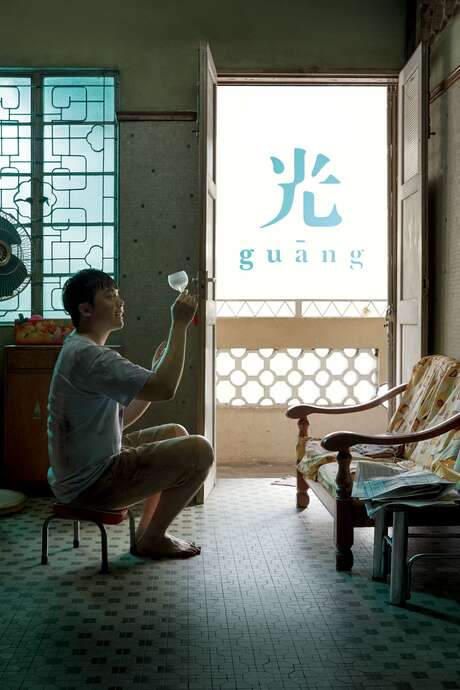
Guang (2018) movie poster

Plot Summary

Guang (2018) Plot Summary Explained

Release, runtime and language
2018 · 88 mins · Malay
Loading streaming availability…
Directed by
Quek Shio Chuan
Starring
Ernest Chong, Danny Low, Kyo Chen, Emily Chan, Feon Lai, Justin Ng
Budget
$2M

Driven by a childhood fascination, an autistic young man embarks on a quest to collect particular glassware, believing it holds a unique significance. His unusual pursuit puts a strain on his relationship with his younger brother and threatens their jobs. As they delve deeper into this mission, they begin to suspect it may hold the key to resolving a difficult situation they face.

On this page (6)
  1. 1 Where to watch
  2. 2 What happens: full plot
  3. 3 Plot questions answered
  4. 4 Movie threads
  5. 5 Movies like Guang
  6. 6 Every angle
Loading streaming availability…

Full plot summary · contains spoilers

What Happens in Guang: Full Plot Summary

The whole story of Guang (2018) explained, from the opening scene to the final frame: every key event, every twist and what it all adds up to. Read it as a quick recap before the sequel, to check a scene you missed, or to finally understand what really happened.

As a child, Wen Guang Kyo Chen is isolated because of autism, a condition that shapes how he experiences the world around him. His younger brother, Didi Ernest Chong, grows up to take care of him after their mother dies when they were kids. Didi works as a waiter at a snooker cafe, juggling the weight of responsibility with his own hopes and fears.

The story opens with Wen Guang delivering a defining self-introduction that anchors the audience in his perspective: “Hello, I am Wen Guang. I am 27 years old. I am nice, kind. I might look a bit weird sometimes, it is because I have autism.” This early moment sets the tone for the film’s delicate exploration of communication, routine, and perception. Wen Guang applies for a job at a flower shop, urged by his brother to seek steady work, but the interview ends without success. A ringing doorbell later triggers an unsettling reaction in him, signaling how ordinary sounds can become overwhelming triggers.

Didi is frustrated by the failed job attempt, especially as he is dealing with the recent breakup with his girlfriend, a strain amplified by the responsibility of caring for Wen Guang. Wen Guang expresses a wish for something as simple as a piano, but Didi insists that they first secure stable employment. The moment Wen Guang visits a piano shop and overhears a conversation about selling a piano, his loud exclamation—“Why are you selling your piano?”—reveals his acute sensitivity to music and sound, a thread that will run through the entire film. The two eventually meet Sue Ann Emily Chan at a bus stop, where a budding friendship begins to form.

Wen Guang finds work washing dishes near the snooker cafe, where the background noise—loud music and clinking wine glasses—reverberates in his mind, triggering memories associated with ringing sounds. He becomes fascinated with collecting glasses, even taking a wine glass from a beggar, and his behavior goes unnoticed at first. When he is caught stealing a glass, he is fired, and Didi admonishes him, forcing Wen Guang to confront the consequences of his actions.

A chance meeting with Sue Ann, who volunteers at a center for children with special needs, deepens Wen Guang’s understanding of his own passions. He explains to her his meticulous interest in collecting glasses and the precise notes and frequencies each cup can produce, a hint of the hidden talent that will eventually emerge. A new job opportunity arises when Didi pushes hard for Wen Guang to find work at a cafe in a mall; the owner, upon discovering Wen Guang’s autism, calmly explains the social demands of cafe life and chooses not to proceed for his well-being, a moment that underscores the film’s compassionate approach.

Frustrated, Wen Guang spots a large, expensive bowl in a shop and tests its sound, but the price—RM1700 (US$400)—is prohibitive. He mutters, “No…” and walks away, while Didi’s impatience grows. A friend helps arrange a cashier position at his shop, giving Wen Guang a chance to contribute in a role that suits his strengths. One night, as he walks home, Wen Guang hears the clinking of glasses from a dumpster truck and clings to the vehicle’s ledge, ending up at a remote rubbish dump. There, he digs through the rubbish with bare hands and retrieves the coveted glass, returning home with undeniable joy.

The news arrives that Wen Guang had stolen the RM1700 bowl, and the police request a statement. Didi’s temper erupts as he confronts Wen Guang, throwing him against the TV and demanding normalcy, a moment that exposes the fragility and strain of their relationship. Wen Guang trembles and collapses as his brother laments their mother’s passing, wondering why Wen Guang spends so much time chasing “useless things” like glass. The scene forces Didi to confront his own inability to fully understand his brother’s world.

After the police visit, Wen Guang disappears. Didi and a friend search frantically, while Sue Ann reveals that Wen Guang wants to do something with notes created by the glasses. Didi’s memories of childhood come rushing back in a series of flashbacks: in school, Wen Guang jumps into a drain during a rainstorm while classmates laugh, and their mother disciplines Didi for mocking him. Their mother’s admonition to treat Wen Guang with care—and her insistence that Didi should watch over him—resonates as Didi begins to understand Wen Guang more deeply.

Wen Guang eventually ends up living on the streets, under a bridge, where he builds a handmade instrument from his glasses. He uses a suction device from a fish-tank cleaner to generate different streams of water that flow over a row of glass bowls and cups. The water moves, the equipment spins, and a melody begins to form. Wen Guang’s discovery of his own musical gift—perfect pitch—reveals how he can translate sound into music with extraordinary precision. His work as a piano tuner comes to life when he joins the store’s piano business, turning his passion into a livelihood.

Back at home, the relationship between the brothers undergoes a quiet transformation. While walking together after a work day, Didi suggests that Wen Guang might pursue a relationship with Sue Ann, signaling a shift toward a more hopeful future. The film closes on a poignant, shared moment between the siblings: a sense of companionship and mutual respect as Wen Guang, empowered by his refined ear for music, proclaims with a playful smile, “Short circuit!” The shy humor in that line underscores the resilience and extraordinary depth of Wen Guang’s inner world.

In the end, Wen Guang emerges not just as a man who hears notes, but as someone who can tune a piano with unmatched sensitivity. His hidden talent—and the siblings’ bid for a better life—offers a nuanced exploration of family, acceptance, and the quiet strengths that can redefine what it means to be different.
Last updated: February 24, 2026 at 13:57

Was this helpful?

Plot questions answered

Guang Plot Explained: Your Questions Answered

The questions people ask most about Guang (2018): what happens in the confusing scenes, why the characters do what they do, the twists, hidden details and what the ending means. Each answer contains spoilers.

Q1

Why does Wen Guang collect glasses?

Wen Guang collects glasses because he can detect the unique notes and frequencies each glass produces. His autism gives him an acute sensitivity to sound, allowing him to perceive subtle differences in pitch that others cannot. This collection isn't random hoarding, it's the foundation for his hidden musical talent. The glasses represent his way of understanding and connecting with the world through sound, eventually leading him to discover he has perfect pitch.

Foreshadowing: Earlier in the film, Wen Guang explains to Sue Ann how each glass produces different notes and frequencies, hinting at his musical gift.

  • wen guang
  • glasses
  • collection
  • autism
  • perfect pitch
  • sound
  • music
Q2

Why does Wen Guang steal the RM1700 bowl?

Wen Guang steals the expensive glass bowl because he recognizes it can produce a beautiful musical note. To him, the bowl isn't just an object, it's a potential instrument that fits into his collection of sound-producing glassware. He doesn't understand the monetary value or the consequences of theft; he simply sees a glass that would complete his set of notes. This action stems from his black-and-white thinking typical of autism, where the pursuit of something meaningful outweighs social rules.

Foreshadowing: The film shows Wen Guang testing the bowl's sound in the shop and muttering 'No...' as he walks away, revealing his struggle between knowing he can't afford it and his obsession with the sound it produces.

  • wen guang
  • theft
  • bowl
  • glass
  • steal
  • autism
  • obsession
Q3

Why does Wen Guang disappear after the police visit?

Wen Guang disappears because the confrontation with Didi becomes overwhelming. After Didi throws him against the TV and demands he be 'normal,' Wen Guang experiences a complete breakdown, he trembles and collapses. The intense emotional stress, combined with his difficulty processing conflict and social expectations, drives him to flee. He ends up living on the streets under a bridge, where he can focus on his glass instrument away from the pressures of conventional life.

Foreshadowing: Earlier scenes show Wen Guang's sensitivity to overwhelming stimuli, including the ringing doorbell that triggers an unsettling reaction.

  • wen guang
  • disappear
  • street
  • bridge
  • police
  • didi
  • confrontation
  • autism
Q4

What does Wen Guang build while living under the bridge?

Wen Guang builds a handmade musical instrument using his collection of glasses and cups. He uses a suction device from a fish-tank cleaner to create different streams of water that flow over rows of glass bowls. As the water moves and the equipment spins, it produces a melody, transforming his obsessive glass collection into actual music. This invention reveals his gift for perfect pitch and proves his collection was always about creating music, not hoarding.

Foreshadowing: The scene where Wen Guang overhears a conversation about selling a piano and exclaims 'Why are you selling your piano?' foreshadows his connection to musical instruments.

  • wen guang
  • instrument
  • bridge
  • glasses
  • music
  • water
  • perfect pitch
  • piano tuner
Q5

How does Wen Guang discover his perfect pitch?

Wen Guang discovers his perfect pitch while living under the bridge, using his glass instrument. As he experiments with water flowing over different glasses and bowls, he realizes he can precisely identify and create musical notes. His sensitive hearing, often a challenge in everyday life due to sensory overload, becomes his greatest strength. This discovery leads him to join a piano store as a tuner, a job that requires exactly the skill he possesses.

Foreshadowing: His ability to detect specific notes and frequencies from each glass throughout the film hints at this natural talent.

  • wen guang
  • perfect pitch
  • piano tuner
  • music
  • discovery
  • sound
  • talent
  • piano store
Q6

Why does Didi react so violently after the police visit?

Didi's violent reaction stems from accumulated frustration, grief, and a sense of helplessness. He recently broke up with his girlfriend, struggles to keep jobs, and feels trapped caring for Wen Guang. When he learns Wen Guang stole a RM1700 bowl, Didi explodes, he throws Wen Guang against the TV and demands he be normal. This outburst represents years of unspoken resentment and exhaustion, not genuine anger at his brother. It breaks their relationship temporarily, but also forces Didi to confront his inability to understand Wen Guang's world.

Foreshadowing: Earlier scenes show Didi's growing frustration with Wen Guang's job failures and his own personal struggles, building to this emotional explosion.

  • didi
  • wen guang
  • violence
  • police
  • frustration
  • autism
  • brothers
  • confrontation
Q7

What do the childhood flashbacks reveal about the brothers?

The flashbacks reveal that their mother asked Didi to always protect and care for Wen Guang. In one flashback, Wen Guang jumps into a drain during a rainstorm while classmates laugh, and their mother disciplines Didi for mocking his brother. These memories show that Didi has always carried the weight of responsibility, but also that their mother's love and guidance planted seeds of empathy. When these memories surface after Wen Guang disappears, they help Didi understand his brother's unique perception of the world and reframe his role as protector rather than controller.

Foreshadowing: The film opens with Wen Guang's self-introduction establishing his autism, which frames how we understand his childhood behavior.

  • didi
  • wen guang
  • childhood
  • flashbacks
  • mother
  • memory
  • protection
  • autism
Q8

Why does sound overwhelm Wen Guang so easily?

Wen Guang experiences sound differently due to his autism, which heightens his sensory perception. Ordinary sounds like a ringing doorbell or clinking glasses can become overwhelming triggers for him. At the snooker cafe where he washes dishes, loud music and clinking wine glasses reverberate in his mind, triggering memories associated with certain sounds. This hypersensitivity is both a challenge and a gift, it causes him distress in daily life but also gives him the ability to detect precise musical frequencies that others cannot hear.

Foreshadowing: The opening scene establishes Wen Guang's autism and how it shapes his experience of the world through his self-introduction.

  • wen guang
  • autism
  • sound
  • sensitivity
  • overwhelm
  • sensory
  • hearing
Q9

How does the relationship between the brothers change by the end?

The brothers' relationship transforms from strained and one-sided to one of mutual respect and understanding. After Wen Guang disappears and Didi recalls their mother's words about protecting his brother, Didi gains deeper empathy. When Wen Guang returns with his musical talent, Didi supports his brother's work at the piano store instead of pushing for 'normal' employment. The film ends with them walking together companionably, and Didi even suggests Wen Guang pursue a relationship with Sue Ann. Their bond now建立在 Wen Guang's unique strengths rather than Didi's expectations of normalcy.

Foreshadowing: The confrontation scene where Didi destroys the glasses marks the lowest point, after which their relationship can only improve.

  • didi
  • wen guang
  • brothers
  • relationship
  • change
  • acceptance
  • understanding
  • family
Q10

What does Wen Guang mean when he says 'Short circuit!' at the end?

When Wen Guang says 'Short circuit!' at the end with a playful smile, he's making a quiet joke, a sign of his unique sense of humor and his growing comfort in expressing himself. The phrase likely references an inside moment not shown on screen, possibly related to their work at the piano store or electrical repairs. More importantly, this line shows Wen Guang engaging in playful banter with his brother, something that would have seemed impossible earlier in the film. It's a moment of shy humor that demonstrates his emotional growth and the relaxed atmosphere between the siblings.

Foreshadowing: Earlier scenes show Wen Guang's struggle to communicate socially, making this playful exchange a sign of significant progress.

  • wen guang
  • ending
  • short circuit
  • joke
  • humor
  • brothers
  • communication
  • smile
Q11

What role does Sue Ann play in Wen Guang's journey?

Sue Ann serves as a bridge between Wen Guang's inner world and the outside society. As a volunteer at a center for children with special needs, she approaches Wen Guang with empathy rather than judgment. She listens when he explains his interest in glasses and the notes they produce, treating his passion seriously. When Wen Guang disappears, she reveals to Didi that Wen Guang wanted to do something with the notes from the glasses, helping Didi understand his brother's purpose. Her friendship offers Wen Guang acceptance and validation that he rarely receives elsewhere.

Foreshadowing: Their meeting at the bus stop after Wen Guang's failed job interview introduces her as a supportive figure.

  • sue ann
  • wen guang
  • friend
  • support
  • autism
  • understanding
  • volunteer
  • relationship

Movie threads

More Movies Like Guang, by Mood & Story

Curated lists built around what makes Guang tick: the same mood, the same kind of story or the same emotional payoff. Each list explains why these movies belong together.

Movies about sibling bonds and reconnection like Guang

Strained sibling relationships mended through a shared and challenging journey. For viewers who appreciated the brotherly bond in Guang, this thread features movies where siblings overcome adversity and misunderstanding. Discover similar heartfelt dramas exploring family duty, hidden talents, and the cathartic power of reconnection.

  • heartfelt
  • poignant
  • frustrated
  • understanding
  • cathartic
  • hopeful
  • Tone: bittersweet, heartfelt
  • Pacing: steady, character-driven
Why these movies?

The story pattern: These narratives typically follow a pair of siblings navigating a world that misunderstands one or both of them. The plot often revolves around a specific project or quest initiated by one sibling, which initially seems like a burden but is gradually revealed to be an act of love or a key to healing past wounds.

Why they belong together: Movies are grouped here based on their focus on the complex, often fraught, dynamic between siblings. They share a bittersweet tone, balancing frustration and pain with underlying hope, and culminate in emotionally resonant moments of understanding and acceptance.

Movies about meaningful quests and hidden purposes like Guang

Characters whose seemingly strange fixations hide a deeper, compassionate purpose. If you enjoyed the revealing quest in Guang, this thread finds similar movies where an unusual obsession leads to emotional discovery. Explore stories about misunderstood characters, creative expression, and the cathartic unveiling of a hidden purpose.

  • misunderstood
  • quest
  • cathartic
  • heartfelt
  • hopeful
  • unveiling
  • Tone: bittersweet, cathartic
  • Pacing: steady build
Why these movies?

The story pattern: The narrative follows a protagonist who is doggedly focused on a specific, often misunderstood, goal. Those around them see it as a problem or an obsession. The story's climax involves the revelation of the true, altruistic, or deeply emotional reason behind the quest, transforming conflict into connection.

Why they belong together: These films are united by a specific plot structure: a mysterious pursuit that strains relationships, followed by an emotional payoff where the purpose is revealed. They share a steady pacing that builds to a cathartic moment and a tone that balances frustration with profound hope.

If you liked this

Movies Like Guang

Similar movies to Guang: the same genre, themes or kind of story. Each one comes with its own plot summary, timeline and ending explained.

Browse all movie summaries

Every angle

Guang (2018) Explained: Plot, Timeline & Characters

Everything about Guang in one place: what happens in the plot summary, the timeline in chronological order, the characters and meaning and a spoiler-free summary. What's After the Movie adds the cast, box office and post-credit scenes.

Coming soon on iOS and Android

The Plot Explained Movie Summary App

Plot summaries, endings explained and timelines on your phone. Catch up on any movie in minutes, save your favorites and never miss a twist again.

Be the first to know when we launch. Your email stays private, always.

Learn more about the app