Year: 1976
Runtime: 97 mins
Language: English
Director: Daryl Duke
Griffin, diagnosed with terminal cancer, refuses to spend his remaining days in silence, choosing instead to enjoy life. In a college class about death he meets Phoenix, a young woman battling terminal leukemia. Their shared predicament leads them to form a deep, unexpected romance as they savor each moment together.
Warning: spoilers below!
Haven’t seen Griffin and Phoenix yet? This summary contains major spoilers. Bookmark the page, watch the movie, and come back for the full breakdown. If you're ready, scroll on and relive the story!
Read the complete plot breakdown of Griffin and Phoenix (1976), including all key story events, major twists, and the ending explained in detail. Discover what really happened—and what it all means.
Geoffrey Griffin is in the midst of a camping trip with his estranged wife Jean Griffin and their children Randy Griffin and Bob Griffin in the rugged embrace of Yosemite National Park. The family interaction feels strained from the start: Geoffrey tries to coax a sense of togetherness, but his wife and kids respond with boredom or disinterest, turning even small requests, like walking the family dog, into moments of friction. A flashback slices through the drive—an ominous memory of a doctor’s warning that he harbors an inoperable, terminal melanoma, a prognosis that drapes the trip with a shadow of what’s to come. This revelation appears to deepen Geoffrey’s resolve to seize moments with his family, yet it also plants a seed of desperation that grows as he confronts their apathy and detachment.
Meanwhile, Sarah Phoenix is confronted with the same grim news: leukemia has claimed her fate. She vacillates between denial and the stark reality of her diagnosis, and after a fiery outburst she seeks a second medical opinion, only to receive the same verdict. Her life takes her on a parallel path to Geoffrey’s—toward a difficult, life-affirming reckoning with death and what it means to live. When Geoffrey travels to Los Angeles, he connects with his brother, George Griffin, who fills him in on the latest about the family and slides him a sum of money, $1,500, to spend as he wishes. This moment marks the beginning of a new chapter in Geoffrey’s struggle to find meaning amid the knowledge that his days may be numbered.
Compelled by his present reality and a newfound curiosity about dying, Geoffrey pursues a course titled “Psychological Processes of Death and Dying,” a choice that unexpectedly becomes the shared ground where he and Sarah meet. Both attend the class, and after it, Geoffrey asks Sarah to dinner the following Wednesday if she’s interested. She remains guarded, reticent about forming a close bond while facing her own terminal fate, and she decides not to show up for the date. Instead, she observes him from a nearby restaurant, where he eventually notices her and extends an invitation to come over.
What follows is a gradual, incandescent romance that defies conventional boundaries. Geoffrey and Sarah spend the ensuing weeks together, living with reckless gusto—sneaking into a movie theater, freighthopping, riding roller coasters at an amusement park, and painting messages on a water tower to mark their growing devotion. She writes “Class of ’59,” while he secretly inks a message that declares “Griffin Loves Phoenix” with a heart and arrow, both acts meant to celebrate their fleeting joy. Neither of them discloses the other’s diagnosis, and the discovery of mortality comes later, when Sarah discovers Geoffrey’s shelf of books about cancer and death—an unsettling insinuation that he has been shadowing her thoughts more closely than she could have imagined.
The moment of truth arrives when Sarah confronts Geoffrey about the true meaning behind his interests and the books in his apartment. Their realizations collide, and they admit that both are living under the shadow of terminal illness. Sarah confides that, if her pain grows too great to bear, she will retreat to a hospital and does not want him to search for her there. The two of them face the brutal honesty of their shared fate, and their relationship becomes a fragile refuge against the encroaching end.
The emotional toll of their discoveries is severe. One day, Sarah leaves a note explaining that her pain is unbearable and urging Geoffrey to stop searching for her and to focus on his family instead. He follows her trail across more than a dozen hospitals, and eventually finds her at her bedside. They share a tender, intimate moment that channels all the fear, longing, and hope they have kept under wraps. Yet the weight of impending loss proves too heavy for Sarah, who asks him to leave, and he complies, stepping away with a sense of sorrow that seems almost inconsolable. In the aftermath, Geoffrey wanders through a cemetery, where Sarah’s gravestone bears the peculiar inscription: “P.S. – Hi Griffin Thought you’d probably drop by.” The line feels like a private message from the beyond, a reminder of the connection they forged in life.
Returning to the present, Geoffrey’s grief erupts in anger as he exits the cemetery and destroys his own car and several others in a moment of rage. The film closes with a quiet, almost ceremonial denouement as a maintenance man covers over the graffiti on the water towers—washing away the marks that once linked their names and their shared moment of rebellion. In the end, the story leaves us with a sober meditation on love, mortality, and the ways people choose to live—and to grieve—when time runs short.
Last Updated: October 09, 2025 at 11:08
Discover curated groups of movies connected by mood, themes, and story style. Browse collections built around emotion, atmosphere, and narrative focus to easily find films that match what you feel like watching right now.
Romantic connections forged in the face of impending mortality.If the poignant love story in Griffin and Phoenix moved you, explore more movies about romance under a terminal deadline. These films share a focus on deep emotional connection, bittersweet joy, and the heavy weight of loving someone when time is short.
These narratives typically follow two characters who meet while grappling with a shared or individual terminal prognosis. Their journey is about choosing love and life in the time they have left, leading to a deep, accelerated intimacy. The story arcs are often linear and character-driven, building towards an emotionally resonant, almost always sad, conclusion.
Movies are grouped here by their core premise of a romance defined by its expiration date. They share a melancholic yet tender tone, a steady pacing that allows for emotional depth, and a heavy emotional weight centered on love, loss, and finding meaning.
Characters confronting mortality seek purpose and joy in their remaining days.Fans of Griffin and Phoenix's reflective journey will appreciate these films about characters facing death who search for meaning and joy. Discover similar stories with a steady pace, heavy emotional weight, and a focus on life's profound questions.
The narrative pattern follows a protagonist (or pair) whose worldview is shattered by a terminal prognosis. The central conflict is internal—grappling with existential dread—and external—deciding how to spend their limited time. The plot is often a series of meaningful experiences or reconnections, leading to a conclusion that is sad but focused on the value of the journey itself.
This thread groups films by their shared thematic core: the 'carpe diem' spirit in the face of death. They are united by a reflective and somber mood, a straightforward narrative that prioritizes emotional truth over complex plotting, and a ultimately heartbreaking yet meaningful resolution.
Don't stop at just watching — explore Griffin and Phoenix in full detail. From the complete plot summary and scene-by-scene timeline to character breakdowns, thematic analysis, and a deep dive into the ending — every page helps you truly understand what Griffin and Phoenix is all about. Plus, discover what's next after the movie.
Track the full timeline of Griffin and Phoenix with every major event arranged chronologically. Perfect for decoding non-linear storytelling, flashbacks, or parallel narratives with a clear scene-by-scene breakdown.
Discover the characters, locations, and core themes that shape Griffin and Phoenix. Get insights into symbolic elements, setting significance, and deeper narrative meaning — ideal for thematic analysis and movie breakdowns.
Get a quick, spoiler-free overview of Griffin and Phoenix that covers the main plot points and key details without revealing any major twists or spoilers. Perfect for those who want to know what to expect before diving in.
Visit What's After the Movie to explore more about Griffin and Phoenix: box office results, cast and crew info, production details, post-credit scenes, and external links — all in one place for movie fans and researchers.
Discover movies like Griffin and Phoenix that share similar genres, themes, and storytelling elements. Whether you’re drawn to the atmosphere, character arcs, or plot structure, these curated recommendations will help you explore more films you’ll love.
Griffin and Phoenix (1976) Scene-by-Scene Movie Timeline
Griffin and Phoenix (1976) Movie Characters, Themes & Settings
Griffin and Phoenix (1976) Spoiler-Free Summary & Key Flow
Movies Like Griffin and Phoenix – Similar Titles You’ll Enjoy
The Dying Gaul (2005) Film Overview & Timeline
One Last Thing... (2006) Full Summary & Key Details
All My Life (2020) Story Summary & Characters
Gracie (2007) Full Summary & Key Details
Nearing Grace (2006) Story Summary & Characters
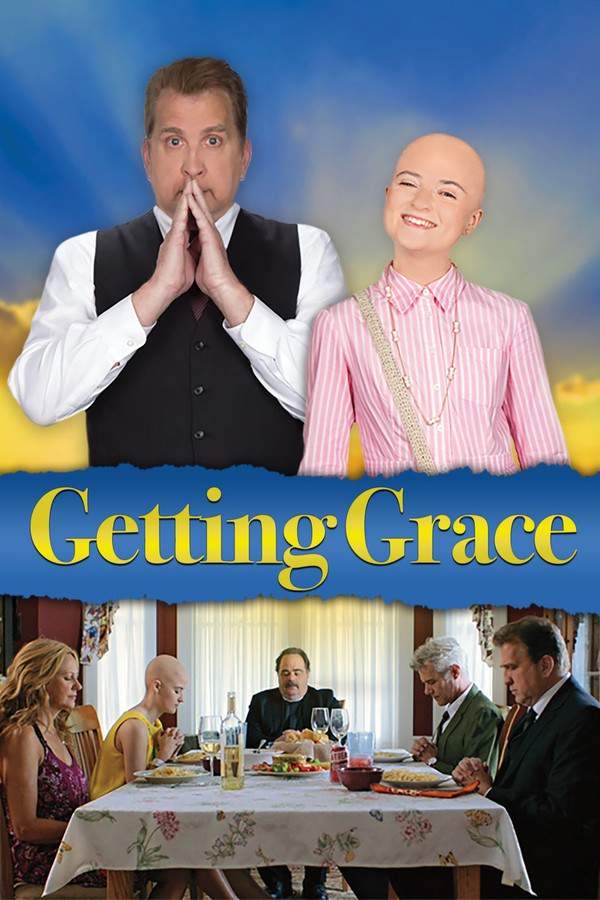
Getting Grace (2018) Full Summary & Key Details
Phoenix (2006) Spoiler-Packed Plot Recap
Princes In Exile (1990) Detailed Story Recap
Pilgrim, Farewell (1980) Full Movie Breakdown
Kindling (2023) Spoiler-Packed Plot Recap
322 (1970) Spoiler-Packed Plot Recap
Killing Mr. Griffin (1997) Ending Explained & Film Insights
Grace & Glorie (1998) Ending Explained & Film Insights
She Lives! (1973) Spoiler-Packed Plot Recap
Dying for Sex (1000) Movie Recap & Themes