





Plot Explained Spoilers guaranteed!
Plot Explained

Browse by genre

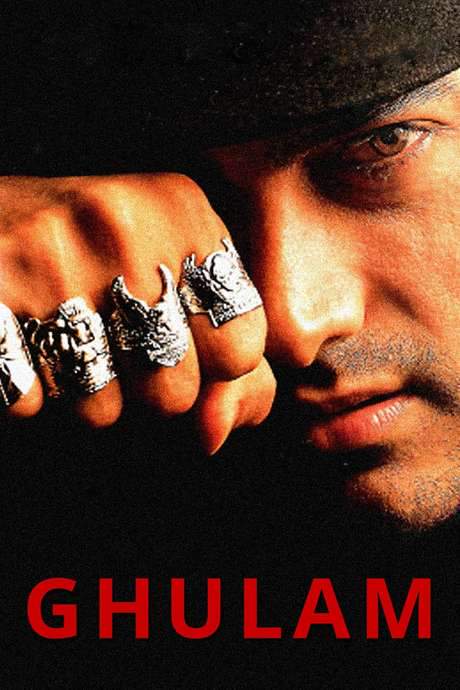
Ghulam (1998) movie poster

Timeline

Ghulam (1998) Timeline Explained – Every Event in Order

Release, runtime and language
1998 · 162 mins · Hindi
Directed by
Vikram Bhatt
Starring
Aamir Khan, Rajit Kapoor, Sharat Saxena, Rani Mukerji, Mita Vashisht, Deepak Tijori

Sidharth, a Mumbai tapori and boxing champion, lives under the shadow of his fallen freedom‑fighter father. His brother Jai works for the ruthless Raunak Singh, who terrorises their basti and extorts merchants. Sidharth befriends Alisha, a biker girl, and Charlie, her gang leader, while idealistic activist Hari’s work threatens Singh. Hari’s fate transforms Sidharth, who decides to confront Raunak and free the community from oppression, culminating in the iconic “Aati Kya Khandala” song.

On this page (5)
  1. 1 Where to watch
  2. 2 Events in order (12)
  3. 3 Timeline questions answered
  4. 4 Movie threads
  5. 5 Every angle

Where to watch

Where to Watch Ghulam (1998)

Where can you watch Ghulam? Stream, rent or buy it in the US, including on Amazon Prime Video, Fawesome and Tubi TV: current JustWatch availability with up-to-date prices.

Streaming availability powered by JustWatch

12 events in order · contains spoilers

Ghulam Timeline: Events in Chronological Order

Every key event of Ghulam (1998) in order, scene by scene, with when and where it takes place. Use it to untangle flashbacks, time jumps and parallel storylines, to refresh your memory before the sequel or to find the exact scene you are thinking of.

  1. Siddhu's life in Mumbai under Jai and Ronnie

    Siddhu Marathe is a boxing champion from Mumbai who lives an aimless life under his older brother Jai. Jai serves as the right-hand man to local gangster Ronnie Singh, pulling Siddhu into a dangerous world. The city is tense with Ronnie's criminal empire, and Siddhu struggles to find his own path amid the violence around him.

    When
    early life in Mumbai
    Where
    Mumbai
  2. Siddhu falls for Alisha; Hari's resistance

    Siddhu befriends Alisha and falls in love, glimpsing happiness beyond crime. Hari, Alisha's brother, is a principled social worker who actively opposes Ronnie's reign of terror. Siddhu remains unaware of Hari's role in resisting Ronnie, and his loyalties begin to fracture as the romance grows.

    When
    pre-ambush
    Where
    Mumbai
  3. Hari's ambush and Siddhu's guilt

    Siddhu unwittingly lures Hari into an ambush planned by Ronnie, leading to Hari's death. The event leaves Siddhu overwhelmed by guilt and ashamed of his part in the violence. He confronts the consequences of his loyalty to Ronnie's circle.

    When
    ambush scene
    Where
    Mumbai
  4. Initially refusing to testify against Ronnie

    Overcome by guilt but bound by family loyalty, Siddhu initially refuses to testify against Ronnie in court. He questions whether breaking Jai's protection of the gang can ever be justified. The courtroom atmosphere is heavy as the case against Ronnie gathers momentum while Siddhu stays silent.

    When
    post-ambush
    Where
    Mumbai Courtroom
  5. A boxing match thrown to protect Ronnie's activities

    On Jai's orders, Siddhu throws a crucial boxing match to shield Ronnie's illegal activities. The defeat stings him and reveals how fear and control have corrupted his family. Siddhu's resolve to stand up to Ronnie begins to crystallize despite the personal cost.

    When
    after ambush
    Where
    Boxing arena, Mumbai
  6. Turning point: Siddhu vows to fight injustice

    The crushing defeat becomes the catalyst to confront his family's cowardice and redefine his purpose. Siddhu vows to fight injustice, even if it means breaking with Jai. A new courage emerges as he decides to oppose Ronnie publicly.

    When
    post-fight turning point
    Where
    Mumbai
  7. Losses mount: breakup with Alisha and Jai's murder

    Siddhu's relationship with Alisha ends as danger escalates, and Jai is murdered by Ronnie, intensifying the personal cost of resisting the gang. The losses push Siddhu toward a clearer commitment to justice rather than family loyalty. The community's fear begins to fade as Siddhu faces the consequences of Ronnie's tyranny.

    When
    after Jai's murder
    Where
    Mumbai
  8. Siddhu testifies in court against Ronnie

    Despite earlier hesitations, Siddhu testifies in court against Ronnie, breaking his silence to reveal the gang's crimes. His act of courage shifts public perception and puts pressure on the justice system. The courtroom scene marks a decisive turning point in Ronnie's downfall.

    When
    during trial
    Where
    Courtroom, Mumbai
  9. Siddhu challenges Ronnie to a public boxing duel

    Siddhu publicly challenges Ronnie to a boxing duel, turning personal vengeance into a symbol of communal accountability. The public fight becomes a rallying point for those oppressed by Ronnie's reign. The arena buzzes as Siddhu steps into the ring as more than a fighter—an emblem of resistance.

    When
    after court
    Where
    Public boxing arena, Mumbai
  10. Siddhu defeats Ronnie and sparks community resistance

    Siddhu defeats Ronnie in a high-stakes bout, delivering a powerful blow to Ronnie's authority. The victory sparks a wave of resistance as the local community stands up to Ronnie and his gang. Ronnie's men flee, signaling the dawn of empowerment for the neighborhood.

    When
    after duel
    Where
    Public arena, Mumbai
  11. Ronnie flees; Siddhu becomes a leader

    With Ronnie on the run, Siddhu's transformation into a courageous leader becomes evident. He begins guiding the community toward collective action and reform. The people of Mumbai start to rethink power, choosing courage over fear.

    When
    post-duel
    Where
    Mumbai
  12. Siddhu's new role and aftermath

    Having embraced leadership, Siddhu protects the community and reflects on the cost of justice. He remains vigilant, knowing the fight against crime is ongoing. The city stands taller as Siddhu earns trust and responsibility.

    When
    aftermath
    Where
    Mumbai

Last updated: February 17, 2026 at 19:57

Was this helpful?

Timeline questions answered

Ghulam Timeline Explained: Your Questions Answered

When does it happen, and why in that order? The questions people ask about the chronology of Ghulam (1998): time jumps, flashbacks, cause and effect between scenes and the correct order of events, each answered with spoilers.

Q1

Why did Siddhu lure Hari into the ambush?

Siddhu unknowingly lured Hari into the ambush because he was unaware of Ronnie's plan. Ronnie used Siddhu's position within his inner circle to set a trap for Hari, who was actively fighting against Ronnie's criminal activities. Siddhu had no knowledge that his actions would lead to Hari's death, making him an unwitting participant in the assassination.

Foreshadowing: Earlier scenes show Siddhu frequenting Ronnie's circle while also beginning a relationship with Alisha, creating a dangerous intersection of his worlds.

  • siddhu
  • hari
  • ambush
  • ronnie trap
Q2

Why did Siddhu initially refuse to testify against Ronnie?

Siddhu refused to testify because he was bound by family loyalty to his brother Jai, who served as Ronnie's right-hand man. Despite his guilt over Hari's death, Siddhu struggled with the code of silence that protected his family. He feared that testifying would betray Jai and break the familial bond that had defined his life.

Foreshadowing: The film establishes early that Siddhu lives under Jai's shadow and within Ronnie's criminal orbit, setting up the moral conflict.

  • siddhu
  • testify
  • ronnie
  • jai
  • loyalty
Q3

Why did Siddhu throw the boxing match?

Siddhu threw the boxing match on Jai's explicit orders to protect Ronnie's illicit activities. The match was likely being used for illegal betting, and losing ensured Ronnie's criminal operations remained undisturbed. This moment revealed how deeply Siddhu was entangled in Ronnie's crime network and how control over him extended beyond simple intimidation.

Foreshadowing: Earlier scenes establish Jai's role as Ronnie's loyal lieutenant, explaining why Jai would order Siddhu to sacrifice his championship status.

  • siddhu
  • boxing match
  • ronnie
  • jai
  • throw
Q4

Why did Ronnie kill Jai?

Ronnie killed Jai because Jai stood in the way of his plans after Siddhu began resisting the gang. With Siddhu's transformation and decision to testify, Jai became a liability or obstacle. Ronnie eliminated Jai to remove anyone who might interfere with his grip on the community and to send a message about the cost of betrayal.

Foreshadowing: The film shows Ronnie eliminating threats consistently, including Hari, making Jai's fate predictable once he opposed Ronnie's interests.

  • ronnie
  • jai
  • murder
  • betrayal
Q5

What made Siddhu decide to testify against Ronnie?

Siddhu decided to testify after accumulating overwhelming guilt from Hari's death and witnessing Jai's murder by Ronnie. These personal losses, combined with his growing conscience, convinced him that staying silent made him complicit in Ronnie's crimes. The weight of his participation in Hari's death and the loss of his brother ultimately pushed him to break the code of silence.

Foreshadowing: Siddhu's gradual shift from the ambush guilt to the boxing match betrayal shows his internal moral struggle escalating throughout the film.

  • siddhu
  • testify
  • ronnie
  • guilt
  • jai
Q6

Why was the boxing duel with Ronnie significant?

The boxing duel became a symbol of communal resistance and public accountability. By challenging Ronnie publicly, Siddhu transformed his personal fight for justice into a collective statement. The entire community witnessed the confrontation, making it impossible for Ronnie's terror to continue unchallenged. The duel represented the oppressed neighborhood rising up against their oppressor.

Foreshadowing: Earlier scenes establish the community's fear and the boxing arena as a space where Siddhu's skills could impact more than just his own life.

  • siddhu
  • ronnie
  • boxing
  • duel
  • community
  • resistance
Q7

Why did Siddhu break up with Alisha?

Siddhu ended his relationship with Alisha because his involvement with Ronnie's gang made him a danger to her. As Siddhu got deeper into the criminal world and Ronnie's enemies targeted him, continuing the relationship would have put Alisha at risk. Additionally, Siddhu felt unworthy of her after his role in her brother Hari's death.

Foreshadowing: The romance scenes early on show Alisha's connection to Hari, making the breakup emotionally inevitable once Siddhu's role in Hari's death became clear.

  • siddhu
  • alisha
  • breakup
  • danger
  • hari
Q8

How did the community respond after Ronnie fled?

After Ronnie fled, the community gathered courage and stood up against his remaining gang members. Inspired by Siddhu's victory and his willingness to risk everything, the oppressed residents reclaimed their neighborhood. Fear began to dissolve as people realized they could resist when united.

Foreshadowing: The film builds toward collective empowerment, with Siddhu's individual act of bravery meant to spark broader social change.

  • ronnie fled
  • community
  • resistance
  • empowerment
Q9

What motivated Siddhu to finally fight against Ronnie?

Siddhu's motivation to fight Ronnie came from multiple devastating events: his unwitting role in Hari's death, the betrayal of throwing the boxing match, and witnessing Jai's murder. These experiences shattered his illusions about loyalty to the gang and convinced him that staying passive meant complicity in ongoing oppression. His transformation was driven by guilt, grief, and a desire for redemption.

Foreshadowing: The gradual buildup from the ambush through Jai's murder shows Siddhu's moral compass realigning with each loss.

  • siddhu
  • ronnie
  • motivation
  • transformation
  • redemption

Movie threads

More Movies Like Ghulam, by Mood & Story

Curated lists built around what makes Ghulam tick: the same mood, the same kind of story or the same emotional payoff. Each list explains why these movies belong together.

Underdog Fighters Against Corruption like in Ghulam

An ordinary individual finds the courage to challenge a powerful, corrupt force. If you liked Ghulam for its story of a boxer confronting a gangster, discover more movies like it. These films feature defiant heroes battling systemic oppression and finding redemption through courage. They blend crime drama with social justice themes for a tense and ultimately rewarding watch.

  • redemptive
  • tense
  • defiant
  • gritty
  • courageous
  • oppressive
  • Tone: tense, defiant, hopeful
  • Pacing: steady, escalating
Why these movies?

The story pattern: The narrative pattern typically involves a reluctant hero living under an oppressive regime. A catalyst event, often the suffering of someone close, triggers their transformation from bystander to activist. The story escalates through tense confrontations, culminating in a climactic, cathartic showdown where the protagonist overcomes the corrupt power structure.

Why they belong together: These movies are grouped together because they share a core theme of individual empowerment against collective injustice. They create a specific emotional journey that starts with oppression and builds to a hopeful, redemptive climax. The combination of gritty tension and a defiant, victorious spirit makes for a consistently powerful viewing experience.

Gritty Urban Transformation Dramas like Ghulam

Character-driven stories of growth and defiance set against a harsh city backdrop. Fans of Ghulam's Mumbai setting and Sidharth's personal journey will love these similar movies. Explore character-driven stories where the city's challenges force a transformation, blending personal drama with social commentary. Find films that capture a tense, hopeful vibe in an urban landscape.

  • gritty
  • melancholic
  • hopeful
  • tense
  • urban
  • redemptive
  • Tone: gritty, melancholic, hopeful
  • Pacing: steady, character-driven
Why these movies?

The story pattern: The narrative follows a character arc of profound personal change. The protagonist, often flawed or lost, is deeply connected to a specific urban community. External pressures and internal conflicts force them to reassess their life, leading to a defiant stand that redefines their identity and saves their community, set against a backdrop of social issues.

Why they belong together: This thread groups movies that share a specific atmosphere: the feeling of a bustling, sometimes oppressive city that shapes the character's journey. They balance gritty realism with a core of human resilience, creating stories that are tense and emotionally resonant but end on a note of hard-earned hope and empowerment.

Every angle

Ghulam (1998) Explained: Plot, Timeline & Characters

Everything about Ghulam in one place: what happens in the plot summary, the timeline in chronological order, the characters and meaning and a spoiler-free summary. What's After the Movie adds the cast, box office and post-credit scenes.

Coming soon on iOS and Android

The Plot Explained Movie Summary App

Plot summaries, endings explained and timelines on your phone. Catch up on any movie in minutes, save your favorites and never miss a twist again.

Be the first to know when we launch. Your email stays private, always.

Learn more about the app