Plot Explained Spoilers guaranteed!
Plot Explained

Browse by genre

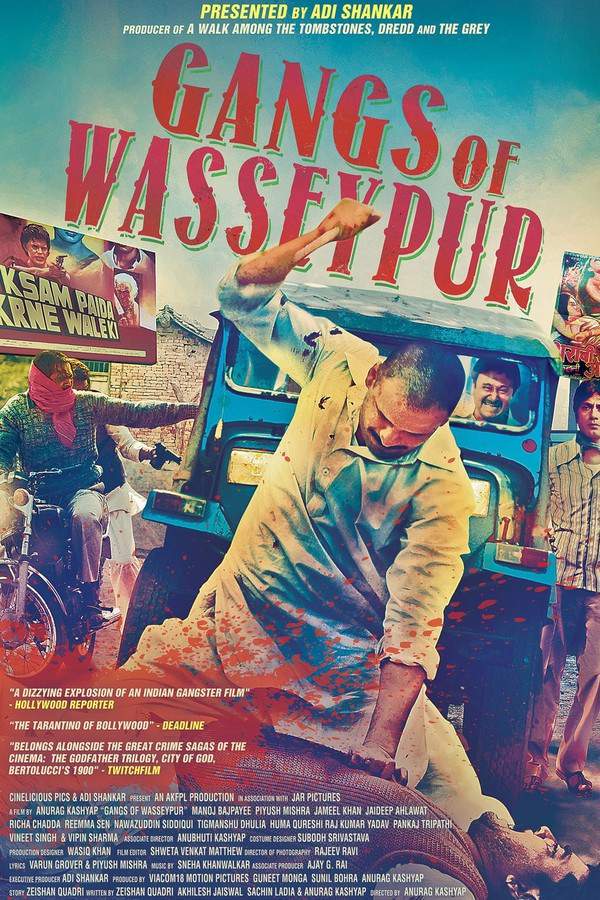
Gangs of Wasseypur (2015) movie poster

Timeline

Gangs of Wasseypur (2015) Timeline Explained – Every Event in Order

Release, runtime and language
2015 · Hindi
Directed by
Anurag Kashyap

Set against the backdrop of a coal-mining town in India, this gripping thriller chronicles the decades-long feud between two powerful families. The conflict begins with Shahid Khan’s banditry in the 1940s and escalates as his son, Sardar, relentlessly pursues dominance. The film explores the intricate relationships, shifting alliances, and betrayals that fuel the violence, spanning seven decades of bloodshed and shaping the landscape of Wasseypur.

On this page (4)
  1. 1 Events in order (14)
  2. 2 Timeline questions answered
  3. 3 Movie threads
  4. 4 Every angle

14 events in order · contains spoilers

Gangs of Wasseypur Timeline: Events in Chronological Order

Every key event of Gangs of Wasseypur (2015) in order, scene by scene, with when and where it takes place. Use it to untangle flashbacks, time jumps and parallel storylines, to refresh your memory before the sequel or to find the exact scene you are thinking of.

  1. British seizure of Dhanbad farmland to start coal mining

    During colonial rule, the British seize farmland in the Dhanbad area to establish coal mining. The move creates early tensions between local communities and mining interests. It also seeds a landscape where future feuds will play out over control of resources.

    When
    Colonial era (pre-1940s)
    Where
    Dhanbad
  2. Shahid Khan banished from Wasseypur

    In 1941, Shahid Khan is banished from Wasseypur for impersonating a Qureshi hero who robbed ferry trains. His exile compels his family to relocate to Dhanbad, setting in motion a cycle of revenge. The incident marks the beginning of Shahid’s long shadow over the region.

    When
    1941
    Where
    Wasseypur
  3. Shahid settles in Dhanbad and murders a muscleman

    Shahid begins work in a coal mine in Dhanbad after his move. Following his wife’s death in childbirth, he violently murders the muscleman who refused him leave that day. The murder cements his reputation and triggers retaliatory violence.

    When
    early 1940s
    Where
    Dhanbad
  4. Shahid becomes Ramadhir’s muscle; Ramadhir orders his murder

    After India gains independence and mines change hands, Shahid is hired as the new muscle by Ramadhir Singh, who owns mines in Dhanbad. Realizing Shahid’s ambitions threaten his power, Ramadhir has him murdered by an assassin named Yadav. The killing removes a wildcard and sets Sardar on a path of retribution.

    When
    Post-1947
    Where
    Dhanbad
  5. Ehsaan Qureshi assigned to Shahid’s family; Sardar survives

    Ehsaan Qureshi is sent to care for Shahid’s family, but Shahid’s son Sardar survives the murder plot. The survivor grows up amid a climate of violence and clan loyalties that will shape his future actions. The protective attention also entwines the Qureshi family with ongoing power struggles.

    When
    1950s
    Where
    Dhanbad
  6. Ramadhir enters politics

    In 1965, Ramadhir enters local politics and becomes a powerful workers’ leader. His ascent blends political authority with ruthless business acumen, enabling him to control local economics. This political rise will later intersect with Sardar’s family saga.

    When
    1965
    Where
    Dhanbad
  7. Mines nationalised; Ramadhir’s power grows; Coal India official killed

    By 1972, coal mines are nationalised, consolidating state control but also intensifying rivalries. Ramadhir’s ruthless tactics intensify as he orders the assassination of a Coal India official who interferes with his business. His growing ruthlessness makes him feared across Dhanbad.

    When
    1972
    Where
    Dhanbad
  8. Sardar marries Nagma Khatoon; three sons are born

    An older Sardar marries Nagma Khatoon, and together they have three sons: Danish, Faizal, and Babua. Nagma knows of Sardar’s hyperactive libido and tolerates his indiscretions while maintaining the family’s stability. The growing clan will become central to the coming feuds.

    When
    late 1960s – early 1970s
    Where
    Wasseypur
  9. Sardar’s crew robs petrol pump and train bogie; jailed

    Sardar, his cousin Asgar, and Nasir start working for Ramadhir’s son but secretly rob a petrol pump and a train bogie belonging to the Singh family. They are jailed for their crime, but Ramadhir realizes that Sardar is not dead and remains a potential threat. The incident deepens the animosity between clans.

    When
    1970s
    Where
    Wasseypur
  10. Jailbreak and new alliance: Durga enters Sardar’s life

    In 1979, Sardar and Asgar escape from jail and hide in Wasseypur at Qamar Makhdoomi’s home. Sardar then marries his cook, Durga, marking a new personal alliance that strengthens his influence. This period signals a shift in Sardar’s personal sphere as he consolidates power.

    When
    1979
    Where
    Wasseypur
  11. The 80s: Wasseypur’s power erupts into open conflict

    During the 80s, Wasseypur merges with Dhanbad, and the Qureshi clan continues to terrorize non-Qureshi Muslims. Makhdoomi asks Sardar for help, triggering a major bomb attack on Qureshi shops and houses. Sardar’s response earns him fear and wider influence in the region.

    When
    1980s
    Where
    Wasseypur
  12. Sardar consolidates power and shifts to iron ore

    As Sardar’s clout grows, he quits coal and secures a contract to fill defunct mines, expanding into iron ore theft. He pushes the Qureshis out of Wasseypur and brings his family deeper into the lucrative underworld. Danish joins the family business, signaling a durable multi-generational empire.

    When
    late 1980s
    Where
    Dhanbad
  13. Faizal travels to Varanasi; guns bought and Yadav killed

    Faizal travels to Varanasi to buy guns, is jailed briefly, and upon release kills the gun seller Yadav, unwittingly avenging his grandfather’s murder. The act cements the next generation’s direct involvement in vengeance politics. The family’s criminal footprint expands beyond traditional coal interests.

    When
    1989
    Where
    Varanasi
  14. Sardar’s downfall: Mohsina, Fazlu, and the ambush

    Meanwhile, Faizal courts Mohsina Hamid, a relative of Sultan, even as Fazlu informs the Qureshis of Sardar’s movements. The next day, Sardar’s car is tracked and he is shot multiple times, dying amid the escalating cycle of retribution. The Sardar era ends as the feud’s next generation continues the cycle of violence.

    When
    1989
    Where
    Wasseypur

Last updated: January 20, 2026 at 17:12

Was this helpful?

Timeline questions answered

Gangs of Wasseypur Timeline Explained: Your Questions Answered

When does it happen, and why in that order? The questions people ask about the chronology of Gangs of Wasseypur (2015): time jumps, flashbacks, cause and effect between scenes and the correct order of events, each answered with spoilers.

Q1

Why was Shahid Khan banished from Wasseypur in 1941?

Shahid Khan was banished from Wasseypur in 1941 for impersonating a Qureshi hero who robbed ferry trains. When his deception was uncovered, the Qureshi clan expelled him from the village, forcing his family to relocate to Dhanbad where he would eventually build his criminal empire in the coal mines.

Foreshadowing: The banishment sets the foundational grudge that fuels the decades-long feud between Shahid Khan's descendants and the Qureshi clan.

  • shahid khan
  • wasim qureshi
  • banishment
  • 1941
  • wasseypur
Q2

Why did Ramadhir Singh order Shahid Khan's murder?

After hiring Shahid Khan as his muscle in the mines, Ramadhir Singh grew concerned about Shahid's rising power and influence. Seeing Shahid as a threat to his own control over the Dhanbad mining operations, Ramadhir arranged for the assassin Yadav to kill Shahid, eliminating the rival before he could challenge Ramadhir's dominance.

Foreshadowing: This calculated murder sets Sardar on his path of revenge against Ramadhir and initiates the main blood feud.

  • ramadhir singh
  • shahid khan
  • murder
  • yadav
  • assassin
Q3

How did Sardar Khan survive the attack on his family?

When Ramadhir Singh sent assassins to eliminate Shahid Khan's family, Ehsaan Qureshi was assigned to watch over them. Only Shahid's young son Sardar survived the onslaught, while the rest of the family was killed. This survivor would later learn the truth about his father's murder and dedicate his life to avenging it.

Foreshadowing: Sardar's survival is the catalyst for the entire revenge saga that dominates the film's narrative.

  • sardar khan
  • ehsaan qureshi
  • survival
  • family attack
  • revenge
Q4

Why did Sardar Khan marry both Nagma Khatoon and Durga?

Sardar Khan first married Nagma Khatoon, a powerful woman from Wasseypur, with whom he had three sons: Danish, Faizal, and Babua. Nagma was aware of Sardar's extramarital affairs and tolerated them. Later, in 1979 after escaping jail, Sardar took refuge at Qamar Makhdoomi's home and married his cook Durga, who gave birth to his fourth son Definite. This second marriage was both practical and strategic, strengthening his connections in Wasseypur.

Foreshadowing: The dual marriages reflect Sardar's calculating nature and his ability to maintain multiple alliances.

  • sardar khan
  • nagma khatoon
  • durga
  • marriage
  • wasseypur
Q5

Why did Faizal Khan kill Yadav in Varanasi?

Faizal Khan was sent to Varanasi in 1989 to purchase guns for his family's operations. After being jailed briefly, he was released and killed the gun seller Yadav, unwittingly avenging his grandfather Shahid Khan's murder, since Yadav was the same assassin Ramadhir Singh had hired to kill Shahid decades earlier.

Foreshadowing: This act completes a full circle of vengeance, showing how the original sin reverberates through generations.

  • faizal khan
  • yadav
  • varanasi
  • gun seller
  • avenge
  • grandfather
Q6

How did the Qureshis find out about Sardar Khan's travel plans?

While high on marijuana, Faizal Khan recklessly revealed to his friend Fazlu that his father Sardar would be traveling without security the next day. Fazlu leaked this information to the Qureshi camp, who then tracked Sardar's car and carried out the ambush that killed him.

Foreshadowing: This betrayal by someone close to the family highlights how personal weaknesses enable the cycle of violence.

  • fazlu
  • faizal khan
  • qureshi
  • ambush
  • travel plans
  • betrayal
Q7

What triggered Sardar Khan's assassination in 1989?

Sardar Khan's assassination was triggered by Faizal's careless revelation about his father's travel plans. The Qureshis, led by Sultan, used this intelligence to ambush Sardar's car on the road. He was shot multiple times and died in the brutal attack, ending the reign of the family's most powerful figure and triggering the next generation's continuation of the feud.

Foreshadowing: The assassination marks the tragic peak of the revenge cycle, showing how vengeance consumes even its primary architects.

  • sardar khan
  • assassination
  • 1989
  • qureshi
  • sultan
  • ambush
Q8

How did coal nationalization in 1972 affect Ramadhir Singh's power?

When the Indian government nationalized the coal mines in 1972, control passed from private owners to the state. However, Ramadhir Singh leveraged this shift by positioning himself as a powerful workers' leader while simultaneously deepening his criminal operations. He became even more ruthless, ordering the assassination of a Coal India official who interfered with his business, consolidating his stranglehold over the region's economy.

Foreshadowing: Nationalization intensified rather than diminished Ramadhir's power, setting the stage for escalated conflict with Sardar.

  • coal nationalization
  • 1972
  • ramadhir singh
  • coal india
  • power
Q9

Why did Sardar Khan shift from coal to iron ore?

By 1989, coal theft had become a low-profit petty crime as regulations tightened and money flows shifted. Sardar Khan pivoted his criminal enterprise accordingly, abandoning the coal trade to take contracts filling defunct mines and expanding into iron ore theft. He also pushed the Qureshi clan out of Wasseypur entirely, redirecting his business toward more profitable ventures.

Foreshadowing: This strategic shift demonstrates Sardar's adaptability but also intensifies his conflict with the Qureshis who controlled local commerce.

  • sardar khan
  • coal
  • iron ore
  • crime
  • business
  • shift
Q10

What is the origin of the feud between Sardar Khan and the Qureshi clan?

The feud traces back to Shahid Khan's 1941 banishment for impersonating a Qureshi hero. This initial humiliation, combined with Ramadhir Singh's murder of Shahid, created deep enmity. Over decades, the conflict evolved from personal vendetta to tribal warfare, the Qureshis terrorizing non-Qureshi Muslims while Sardar fought to protect his territory, with both sides committing bombings, assassinations, and betrayals that fed an endless cycle of revenge.

Foreshadowing: The origin story establishes the futility of the feud, as both sides have legitimate grievances that perpetuate violence.

  • sardar khan
  • qureshi
  • feud
  • origin
  • revenge
  • shahid khan
Q11

Why did Danish Khan try to make peace with the Qureshis?

Danish Khan, Sardar's eldest son, attempted to broker peace by convincing his uncle Badoor Qureshi to step back from the blood feud and end the open war between their clans. Danish even married Shama Parveen, Sultan Qureshi's sister, despite Sultan's opposition. This reconciliation effort represented an attempt to break the cycle of violence, though it ultimately failed to prevent Sardar's assassination.

Foreshadowing: The failed peace attempt underscores the futility of reconciliation within such entrenched hatred.

  • danish khan
  • badoor qureshi
  • peace
  • marriage
  • shama parveen
  • sultan
Q12

What was the relationship between Faizal Khan and Mohsina Hamid?

Faizal Khan entered into a romantic relationship with Mohsina Hamid, who was a relative of Sultan Qureshi, their family's chief rival. This relationship added a personal and dangerous dimension to the already volatile politics of Wasseypur, as romance between enemy clan members was both forbidden and politically explosive.

Foreshadowing: The relationship represents how personal desire can complicate, and ultimately fuel, the broader cycle of violence.

  • faizal khan
  • mohsina hamid
  • romance
  • qureshi
  • relationship

Movie threads

More Movies Like Gangs of Wasseypur, by Mood & Story

Curated lists built around what makes Gangs of Wasseypur tick: the same mood, the same kind of story or the same emotional payoff. Each list explains why these movies belong together.

Epic Generational Crime Sagas like Gangs of Wasseypur

Multi-generational epics where family conflicts escalate into violent, decades-spanning wars. Explore movies like Gangs of Wasseypur that chronicle multi-decade family feuds and criminal empires. If you enjoyed the complex, time-spanning saga of rival families in Wasseypur, you'll find similar epic tales of legacy and violence here.

  • epic
  • revenge-driven
  • generational
  • brutal
  • tragic
  • complex
  • Tone: dark, cynical, tragic
  • Pacing: fast, epic
Why these movies?

The story pattern: The narrative follows a single, escalating conflict across multiple generations, often starting with a seemingly small dispute that grows into an all-consuming war. The story tracks the ripple effects of vengeance, showing how the actions of one generation inevitably shape the lives and tragedies of the next.

Why they belong together: Movies in this thread share a focus on familial legacy, the inescapable nature of inherited conflict, and the epic scope required to show the full consequences of revenge. They are united by complex character webs, a bleak worldview, and a sense of tragic inevitability.

Bleak Revenge Cycles like in Gangs of Wasseypur

Gritty stories where revenge consumes everything, leading to an inevitable, tragic conclusion. Find movies with a similar relentless and gritty revenge cycle like Gangs of Wasseypur. If you appreciated the dark, violent spiral of retaliation that defined the film, discover other stories where vengeance leads only to more bloodshed.

  • brutal
  • revenge-driven
  • violent
  • bleak
  • harsh
  • tense
  • Tone: dark, brutal, hopeless
  • Pacing: fast, relentless
Why these movies?

The story pattern: The plot is driven by an initial act of violence that sparks a relentless back-and-forth of retaliation. Characters become trapped in a brutal spiral, where each act of revenge only justifies the next, ultimately leading to their own destruction and the tragic collapse of their world.

Why they belong together: These movies are grouped by their shared focus on the destructive and ultimately futile nature of revenge. They feature high-intensity violence, a consistently dark and oppressive tone, and a narrative structure that emphasizes inevitability and tragic consequences.

Every angle

Gangs of Wasseypur (2015) Explained: Plot, Timeline & Characters

Everything about Gangs of Wasseypur in one place: what happens in the plot summary, the timeline in chronological order, the characters and meaning and a spoiler-free summary. What's After the Movie adds the cast, box office and post-credit scenes.

Coming soon on iOS and Android

The Plot Explained Movie Summary App

Plot summaries, endings explained and timelines on your phone. Catch up on any movie in minutes, save your favorites and never miss a twist again.

Be the first to know when we launch. Your email stays private, always.

Learn more about the app