Plot Explained Spoilers guaranteed!
Plot Explained

Browse by genre

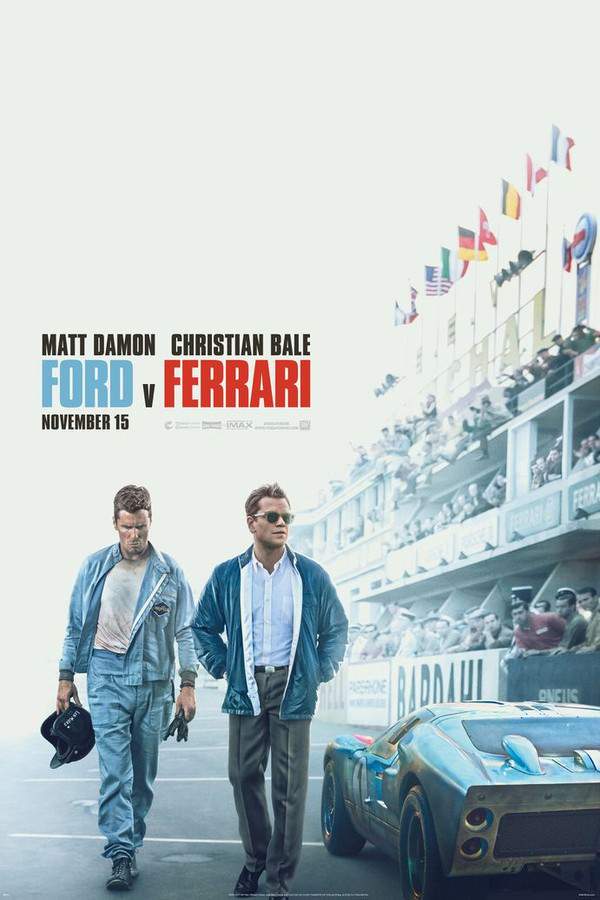
Ford v Ferrari (2019) movie poster

Plot Summary

Ford v Ferrari (2019) Plot Summary & Ending Explained

Release, runtime and language
2019 · 152 min · English
Echo score 86
Loading streaming availability…
Directed by
James Mangold
Starring
Matt Damon, Christian Bale, Jenelle McKee, Roberta Sparta, Noah Jupe, Jon Bernthal
Budget
$97.6M

Driven by ambition, Ford Motor Company enlists Carroll Shelby to construct a race car capable of defeating Ferrari at the 1966 Le Mans. Shelby recruits Ken Miles, a talented but often rebellious driver, to help him achieve the seemingly impossible. Facing corporate interference and personal challenges, the pair pushes the boundaries of automotive engineering and their own abilities in a thrilling battle for racing supremacy.

On this page (7)
  1. 1 Where to watch
  2. 2 What happens: full plot
  3. 3 Plot questions answered
  4. 4 How it ends
  5. 5 The book behind the movie
  6. 6 Movie threads
  7. 7 Every angle
Loading streaming availability…

Full plot summary · contains spoilers

What Happens in Ford v Ferrari: Full Plot Summary

The whole story of Ford v Ferrari (2019) explained, from the opening scene to the final frame: every key event, every twist and what it all adds up to. Read it as a quick recap before the sequel, to check a scene you missed, or to finally understand what really happened.

In a time of upheaval for the Ford Motor Company, Lee Iacocca proposed an ambitious strategy to Henry Ford II: acquire Ferrari, the reigning champion of endurance racing, to elevate Ford's own car sales. Yet, Enzo Ferrari proved unyielding, leveraging Ford's offer to broker a deal with Fiat, which allowed him to maintain control over his beloved Scuderia Ferrari team. This affront ignited a fierce resolve in Henry Ford II to compete with Ferrari on their own turf.

Meanwhile, Iacocca recognized the potential in collaborating with Carroll Shelby, a legendary driver and founder of Shelby American, who famously clinched victory at the 24 Hours of Le Mans in 1959. Shelby, in turn, called upon his friend Ken Miles, an audacious British racing driver and mechanical engineer known for his candid observations. Together with Iacocca, they gathered at Los Angeles International Airport to develop the Ford GT40 Mk I prototype, dedicated to crafting a vehicle that could rival Ferrari's supremacy.

As the highly anticipated Ford Mustang debuted, Ken Miles didn't hold back, delivering a sharp critique that disappointed Leo Beebe, Ford’s senior vice president. Beebe's subsequent campaign against allowing Miles to represent Ford at Le Mans—viewing him as a potential public relations disaster—led Shelby to make the tough decision to opt for Phil Hill and Bruce McLaren instead. The outcome was predictable; none of the Ford cars finished the race.

Undaunted, Shelby threw himself into perfecting the GT40 Mk I, achieving an astonishing speed of 218 mph (350.8 km/h) on the Mulsanne Straight, albeit it was soon halted by mechanical failure. Noticing this success, Shelby leveraged it to broker an agreement with Henry Ford II: if Miles could secure a win at the 24 Hours of Daytona, he would earn a place at Le Mans; otherwise, Ford would assume full control of Shelby American.

At Daytona International Speedway, Beebe fielded a second GT40 backed by a NASCAR crew, boasting faster pit stops. However, Shelby permitted Miles to push his vehicle beyond the 7,000 RPM redline, leading him to accomplish victory and secure his spot at Le Mans. With the green flag unfurling at Le Mans, Miles encountered a significant challenge as a malfunctioning door affected his speed during the initial lap. The pit crew sprang into action, making critical repairs, allowing Miles to return and shatter lap records, closing in on the formidable Ferraris.

A gripping contest unfolded between Miles and his rival Lorenzo Bandini in their respective GT40 and Ferrari prototype 330 P3, neither willing to concede as they raced on the famed Mulsanne Straight. Yet, fate took a twist when Bandini’s Ferrari suffered mechanical issues, causing him to withdraw from the race. Upon crossing the finish line, Miles found himself in a tense scenario, with Fords holding the top three places. Team owner Beebe urged Shelby to instruct Miles to slow down, facilitating a coordinated finish for the press. Shelby chose not to enforce Beebe's request, leaving the choice to Miles, who initially resisted the idea of letting off the throttle, preferring to maintain his furious speed.

Ultimately, Miles made a surprising decision to abide by Beebe's wishes. Although McLaren crossed the finish line first, after completing more miles despite starting behind Miles, Shelby’s driver was granted second place. This event stirred controversy, with Shelby accusing Beebe of intentionally undermining Miles’ chance of victory.

Philosophically, Miles accepted the outcome, reminding Shelby that he had been promised a drive, not a guaranteed win. As they left the track, an unexpected show of sportsmanship from Enzo Ferrari added an unexpected touch of grace to the tournament. Tragically, months later, a mechanical fault took Miles’ life during testing at Riverside International Raceway.

In the wake of his death, Shelby paid a heartfelt visit to Miles' widow Mollie and their son Peter, gifting the young boy a wrench once thrown at him by Miles during an argument. This poignant moment served as a striking reminder of the camaraderie woven tightly into the fabric of racing.

In honoring Miles’ lasting impact on the sport, Ford achieved remarkable victories at Le Mans in 1967, 1968, and 1969, while Miles was posthumously inducted into the Motorsports Hall of Fame of America in 2001.
Last updated: November 21, 2024 at 11:29

Was this helpful?

Plot questions answered

Ford v Ferrari Plot Explained: Your Questions Answered

The questions people ask most about Ford v Ferrari (2019): what happens in the confusing scenes, why the characters do what they do, the twists, hidden details and what the ending means. Each answer contains spoilers.

Q1

Why did Enzo Ferrari reject Ford's offer to buy his company?

Enzo Ferrari used Ford's acquisition offer as leverage to negotiate a better deal with Fiat. While Ford believed they were close to purchasing Ferrari, Enzo secretly used the negotiation to secure Fiat's investment, which gave him the financial backing he needed to maintain complete control over Scuderia Ferrari. This maneuver completelyfoiled Ford's plans and humiliated Henry Ford II, fueling his determination to beat Ferrari on the race track instead.

Foreshadowing: Earlier, Iacocca notes that Ferrari dominates endurance racing, setting up Ford's desire to challenge them directly.

  • ferrari
  • ford acquisition
  • enzo ferrari
  • fiat
  • henry ford ii
Q2

Why was Ken Miles initially not allowed to race at Le Mans?

Leo Beebe, Ford's senior vice president, actively campaigned against Ken Miles representing Ford at Le Mans. Beebe viewed Miles as a potential public relations disaster because of his sharp tongue and tendency to criticize Ford's vehicles publicly, as evidenced by his scathing review of the Mustang. Shelby ultimately chose Phil Hill and Bruce McLaren instead, resulting in all Ford cars failing to finish the race.

Foreshadowing: Miles' critical nature was established during the Mustang debut, where his honesty directly offended Beebe.

  • ken miles
  • leo beebe
  • le mans
  • phil hill
  • bruce mclaren
Q3

What happened during the controversial finish at Le Mans 1966?

As Ken Miles approached the finish line with Fords holding the top three positions, Beebe requested that Shelby instruct Miles to slow down for a coordinated photo finish for the press. Shelby refused to order Miles but left the decision to him. Miles ultimately agreed to slow, allowing Bruce McLaren to cross first. However, because Miles had started farther back and completed more total miles, many felt he was the true winner. The controversy stemmed from the perception that corporate politics denied Miles his rightful victory.

Foreshadowing: The tension between Beebe and Miles had been building since the Mustang debut and Beebe's earlier opposition to Miles racing.

  • le mans 1966
  • finish line
  • controversy
  • bruce mclaren
  • leo beebe
Q4

Why did Ken Miles die after his Le Mans victory?

Months after his runner-up finish at Le Mans, Ken Miles was killed during a testing session at Riverside International Raceway when the car he was driving suffered a mechanical failure. The exact cause was a suspected broken rear suspension component that sent the car spinning out of control. His death came at age 47, cutting short the career of one of racing's most talented drivers.

Foreshadowing: Earlier in the film, the GT40 experienced mechanical failures, including the door issue at Le Mans, establishing the dangerous nature of these high-speed vehicles.

  • ken miles death
  • riverside
  • mechanical failure
  • testing
Q5

How did Carroll Shelby convince Henry Ford II to let Miles race at Le Mans?

After the GT40 achieved 218 mph on the Mulsanne Straight before suffering mechanical failure, Shelby used this accomplishment to negotiate with Henry Ford II. He proposed a deal: if Miles could win at Daytona, he would earn his place at Le Mans; if not, Ford would take full control of Shelby American. Miles delivered, winning Daytona while pushing his car beyond the 7,000 RPM redline, securing his spot at Le Mans.

Foreshadowing: The GT40's impressive speed demonstrated the car's potential, giving Shelby leverage for his negotiation.

  • carroll shelby
  • henry ford ii
  • daytona
  • gt40
  • deal
Q6

What was the GT40 door problem Ken Miles faced at Le Mans?

During the opening lap of the 1966 Le Mans race, Ken Miles' GT40 developed a door malfunction that significantly hampered his speed. The pit crew quickly repaired the issue, allowing Miles to return to the race where he began setting lap records and closing the gap on the Ferraris.

Foreshadowing: The GT40 had experienced mechanical issues during development, foreshadowing reliability challenges at Le Mans.

  • gt40
  • door
  • le mans
  • pit crew
  • mechanical
Q7

Why did Leo Beebe ask Ken Miles to slow down at Le Mans?

Beebe wanted a coordinated finish so Ford could have all three cars cross the finish line together for a dramatic photo opportunity that would generate maximum positive publicity for the company. This was purely a public relations decision rather than a racing strategy, and it directly conflicted with Miles' competitive nature.

Foreshadowing: Beebe's focus on image over performance was established earlier through his objections to Miles representing Ford.

  • leo beebe
  • slow down
  • photo finish
  • pr
Q8

What caused the rivalry between Ford and Ferrari at Le Mans?

The rivalry began when Henry Ford II sought to acquire Ferrari as a way to boost Ford's image and car sales. When Enzo Ferrari used the offer to secure a deal with Fiat while maintaining control of his racing team, Henry Ford II was humiliated and vowed to beat Ferrari on their own turf. This corporate feud transformed into a high-stakes racing battle that defined the 1966 Le Mans showdown.

Foreshadowing: Iacocca's initial proposal to acquire Ferrari set the entire conflict in motion.

  • ford
  • ferrari
  • rivalry
  • le mans
  • henry ford ii
  • enzo ferrari
Q9

What motivated Ken Miles throughout the film?

Ken Miles was motivated by his pure love of racing and engineering excellence. He was a talented but often rebellious driver who spoke his mind honestly, even when it harmed his relationships with corporate executives. His motivation was not fame or money but the pursuit of pushing automotive boundaries and competing at the highest level, which is why he pushed his car beyond the 7,000 RPM redline at Daytona despite the risks.

Foreshadowing: Miles' character was introduced as a candid, uncompromising racer who valued honesty over diplomacy.

  • ken miles
  • motivation
  • racing
  • engineering
  • character
Q10

What was the significance of the wrench Carroll Shelby gave to Peter Miles?

After Ken Miles' death, Carroll Shelby visited his widow Mollie and their son Peter. Shelby presented Peter with a wrench that Ken had thrown at him during an argument, symbolizing the deep friendship and camaraderie between the two men. This poignant gesture represented Ken's lasting impact on those who knew him and the personal connections woven through the racing world.

Foreshadowing: Earlier, Ken threw the wrench at Shelby during a disagreement, establishing their volatile but genuine friendship.

  • wrench
  • peter miles
  • shelby
  • mollie
  • death
Q11

How did Ken Miles' work influence Ford's later Le Mans victories?

Although Ken Miles was denied his rightful victory in 1966, his work and engineering contributions directly shaped Ford's future success. Ford went on to win Le Mans in 1967, 1968, and 1969, dominating Ferrari in subsequent years. Miles' technical expertise, driving skill, and the foundation built with the GT40 program created the blueprint for Ford's racing supremacy.

Foreshadowing: The film shows Ford's determination to continue the program after 1966, building on lessons learned.

  • ford
  • le mans
  • victories
  • legacy
  • gt40
  • 1967
  • 1968
  • 1969

Ending explained

What Happens at the End of Ford v Ferrari?

How Ford v Ferrari (2019) ends, in short: the final scene, the last twist and what it means for the characters. The full ending explained, with every spoiler, lives on its own page.

Read the full ending explained

Ford v Ferrari concludes with a powerful and somewhat bittersweet note. Ken Miles, the talented and fiercely independent driver, is set to win the 24 Hours of Le Mans, but he chooses to let his teammates catch up so all three Ford cars can finish together. This decision is driven by his respect for the team and his desire to be part of something bigger than himself, even if it means sacrificing his chance at the victory. However, due to a technicality in the rules—specifically that one of Ken's teammates started further back on the grid—Ken technically misses out on the win, even though he covered the greatest distance and was undeniably the fastest driver on the track. The race's unique way of measuring total distance instead of just speed or time ultimately cost him the victory, highlighting both the power of teamwork and the unfairness of some rules.

The film also explores Ken's personal growth, especially when he finally agrees to follow team orders. His earlier reluctance reflects his rebellious spirit, but his willingness to cooperate shows he’s matured and understands the bigger picture—valuing friendship and legacy over individual glory. After Ken’s tragic death in a testing accident just months after Le Mans, the story shifts to a touching scene where Carroll Shelby visits Ken’s young son, Peter, and gives him a wrench—symbolic of their bond and Ken’s passion for racing. This act of kindness offers a poignant closure, emphasizing the human side of these racing legends.

Continue reading the ending (1 more paragraphs)

While some details are adapted or simplified for dramatic effect, the movie remains largely faithful to the true story. It avoids over-dramatizing Ken’s death, instead focusing on the emotional aftermath and honoring his legacy as a national hero and talented driver. The ending, with its mix of victory, loss, and heartfelt connection, leaves viewers reflecting on the sacrifices and camaraderie that define racing—and the enduring impact of Ken Miles’ spirit.

Ford v Ferrari ending explained in full

Movie threads

More Movies Like Ford v Ferrari, by Mood & Story

Curated lists built around what makes Ford v Ferrari tick: the same mood, the same kind of story or the same emotional payoff. Each list explains why these movies belong together.

Movies about Visionaries vs The System like Ford v Ferrari

Brilliant mavericks fight institutional inertia to achieve a revolutionary goal. If you enjoyed the clash of brilliant minds against corporate bureaucracy in Ford v Ferrari, you'll like these movies. This thread features stories about innovators, engineers, and artists fighting for their vision against institutional inertia, similar to the struggle between Shelby and the Ford executives.

  • technical
  • frustrating
  • obsessive
  • triumphant
  • urgent
  • competitive
  • Tone: tense, driven, frustrating
  • Pacing: fast, urgent
Why these movies?

The story pattern: These narratives follow a gifted but often difficult individual or team whose singular focus on a complex, technical, or artistic goal puts them at odds with the established powers that be. The central conflict is as much about navigating politics and egos as it is about achieving the goal itself, leading to a journey filled with technical triumphs and interpersonal friction.

Why they belong together: Movies in this thread share a core dynamic: the passionate pursuit of excellence versus the pragmatic constraints of business or bureaucracy. They blend the excitement of technical achievement with the tension of corporate or institutional drama, creating a specific, relatable frustration for anyone who's ever had a great idea shot down by a committee.

Bittersweet Sports and Competition Movies like Ford v Ferrari

Stories where winning the contest comes with a profound personal sacrifice. For viewers who appreciated the triumphant yet tragic ending of Ford v Ferrari. These movies feature intense rivalries and competitions where the victory is earned but stained by personal sacrifice or loss, offering a more complex and emotionally weighted take on the sports drama genre.

  • triumphant
  • tragic
  • competitive
  • bittersweet
  • urgent
  • costly victory
  • Tone: tense, bittersweet, tragic
  • Pacing: fast-paced, building
Why these movies?

The story pattern: The narrative follows a dedicated individual or team striving for a clear, difficult goal, typically in a competitive arena like sports, business, or art. The story builds towards a climactic victory, but the achievement is undercut by a parallel personal tragedy, loss, or moral compromise for the protagonist, leaving the audience with a mixed feeling of success and sorrow.

Why they belong together: These films are grouped by their unique emotional payoff: they deliver the catharsis of a hard-won victory while simultaneously exploring the heavy price of that success. This combination of high-stakes action and poignant, bittersweet emotion creates a powerful and memorable viewing experience that goes beyond a simple win-or-lose story.

Every angle

Ford v Ferrari (2019) Explained: Plot, Ending, Timeline & Characters

Everything about Ford v Ferrari in one place: what happens in the plot summary, the timeline in chronological order, the characters and meaning, the ending explained and a spoiler-free summary. What's After the Movie adds the cast, box office and post-credit scenes.

Coming soon on iOS and Android

The Plot Explained Movie Summary App

Plot summaries, endings explained and timelines on your phone. Catch up on any movie in minutes, save your favorites and never miss a twist again.

Be the first to know when we launch. Your email stays private, always.

Learn more about the app