#4112 Year: 2025
Runtime: 1 h 52 m
Language: english
Director: David Freyne
Echo Score: 75Budget: $15M
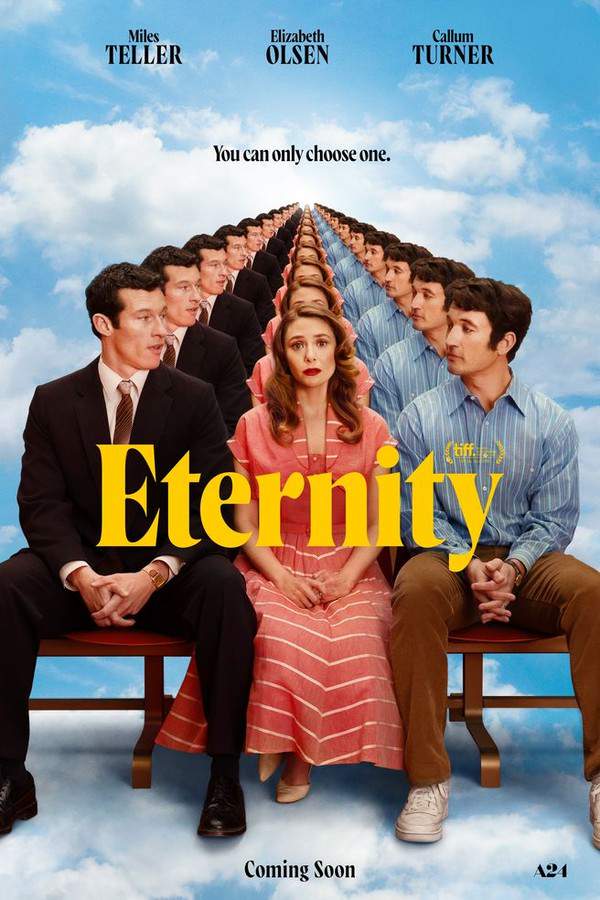
In a bureaucratic afterlife where each soul has exactly one week to decide its permanent destination, Joan (Elizabeth Olsen) must make an impossible decision. She is torn between the man she built her life with (Miles Teller) and the first love she lost early, a young man (Callum Turner) who has waited for decades, hoping she will choose to spend eternity with him.
Find where to stream, rent, or buy Eternity (2025) in the US with current JustWatch availability, up-to-date pricing, and platform listings for subscription, rental, and digital purchase options.
Warning: spoilers below!
Haven’t seen Eternity yet? This summary contains major spoilers. Bookmark the page, watch the movie, and come back for the full breakdown. If you're ready, scroll on and relive the story!
Still thinking about how Eternity (2025) ended? Here’s a full breakdown of the ending, key final moments, major twists, and the deeper meaning behind the film’s conclusion.
In the afterlife Joan is forced to decide which of her two deceased husbands will accompany her for eternity. She spends separate “eternities” with each man, tasting the possibilities and confronting what each relationship truly means. The experience leaves her more bewildered than before, especially when she learns that Larry had prepared a letter meant to sway her toward his version of forever. The revelation that he may have been trying to steer her choice, combined with the weight of her friend’s drunken encouragement, pushes her to a breaking point.
Instead of proclaiming “I choose me,” Joan declares that she chooses neither husband. The line is less a triumph of independence than a self‑imposed compromise: she cannot bear to see either man heart‑broken, so she lets both down by refusing both offers. This decision is born of compassion rather than certainty about her own future.
A subtle clue lies in Joan’s hair. With Larry she always wore it short, a visual reminder that she never felt fully content during their life together. In the afterlife her hair is long, echoing the brief period she spent with Luke when she was happiest. The film suggests that a soul’s appearance reflects the state of its greatest joy, hinting that Joan’s true happiness was tied to the fleeting moment with Luke, not to any lasting domesticity with Larry.
When Joan attempts to leave the eternities arranged for her, Luke—who has been waiting for 67 years—helps her escape the mountain‑bound eternity he once shared with her. He realizes that their love, though powerful, was essentially a honeymoon that never matured, and that forcing them together would only trap them in an illusion. With Luke’s reluctant blessing, Joan returns to the archive where Larry now works as a bartender. There, she discovers that the ordinary, familiar life she shared with Larry feels like home, even if it lacks the ecstatic spark she once felt with Luke.
The film closes on the notion that eternity is less about perpetual bliss and more about the honest accumulation of both joy and sorrow. Joan’s ultimate choice—to stay with Larry in a modest, shared afterlife—underscores the message that ordinary, steady love can be the most enduring of all.
Last updated: December 10, 2025 at 15:52
Read frequently asked questions about the ending of Eternity (2025), including final-scene interpretation, twist explanations, character outcomes, and the deeper meaning behind the conclusion. This ending explained FAQ is designed for viewers searching for clear spoiler-heavy answers and ending breakdown insights.
Joan chooses neither Larry nor Luke because she cannot bear to see either man heartbroken. Rather than the triumphant "I choose me" declaration, her decision is a self-imposed compromise born of compassion. She would rather let both down than commit to one and abandon the other, though this leaves her future uncertain rather than resolved.
Joan's hair serves as a visual indicator of her happiest moments. With Larry she wore it short, reflecting her dissatisfaction during their marriage. In the afterlife her hair grows long, echoing the brief period she spent with Luke when she was truly happy. The film suggests a soul's appearance reflects the state of its greatest joy.
Earlier scenes show Joan's hair style changing with her emotional state, foreshadowing this visual symbolism.
Luke assists Joan in escaping the mountain-bound eternity because he realizes their love, while powerful, was essentially a honeymoon that never matured into a real partnership. Rather than trapping her in an illusion of eternal romance, he gives his reluctant blessing for her to leave, acknowledging that forcing them together would be unfair to both of them.
The ending conveys that eternity is less about perpetual bliss and more about the honest accumulation of both joy and sorrow. Joan ultimately chooses ordinary, steady love with Larry over the ecstatic but immature passion she shared with Luke, suggesting that lasting partnership often trumps idealized romance.
Larry had prepared a letter intended to sway Joan toward choosing his version of forever. The revelation that he may have been trying to influence her decision adds to Joan's confusion and contributes to her breaking point, making it harder for her to trust either man's motives.
After experiencing both eternities, Joan discovers that the ordinary, familiar life she shared with Larry feels like home, even without the ecstatic spark she felt with Luke. She returns to the archive where Larry works as a bartender, choosing the worn-in comfort of a long marriage over the idealized romance she once shared with her first love.
Joan's ending is bittersweet rather than triumphantly happy. She finds peace with Larry in a modest shared afterlife, accepting the imperfections of their earthly life together. However, Luke is left behind, and her choice reflects acceptance rather than passionate certainty.
After Joan leaves with Luke's blessing, he remains in the mountain-bound eternity they once shared, waiting alone. Having waited 67 years for Joan, he accepts that their love was too idealized to sustain eternity. His fate represents the cost of choosing a mature partnership over romanticized passion.
The ending is bittersweet because Joan and Larry are reunited in peace, but Luke is left behind in solitude. The peace they find comes from accepting imperfection rather than achieving romantic perfection. Joan gains a lasting partnership but loses her first love forever, embodying the film's theme that honest love includes both joy and sorrow.
The film argues that ordinary, steady love can be more enduring than idealized romantic passion. Eternity is portrayed not as perpetual bliss but as the honest accumulation of both joy and sorrow. The most lasting partnerships are built on familiarity and acceptance rather than constant ecstasy.
Discover curated groups of movies connected by mood, themes, and story style. Browse collections built around emotion, atmosphere, and narrative focus to easily find films that match what you feel like watching right now.
Love stories complicated by fantastical settings and impossible destinies.If you enjoyed the heartbreaking dilemma in Eternity, you'll love these movies that explore love tested by fate. Discover similar romantic fantasy stories where characters must make soul-defining decisions in extraordinary circumstances.
These stories typically center on a protagonist faced with a love-related choice that has cosmic or supernatural stakes. The narrative unfolds through their emotional struggle, exploring themes of sacrifice, devotion, and what truly defines a soulmate, often culminating in a bittersweet but resonant resolution.
Movies are grouped here because they share a core premise of romance intertwined with a high-concept, often fantastical, conflict. They deliver a similar emotional mix of profound love, deep melancholy, and the poignant weight of a life-altering decision.

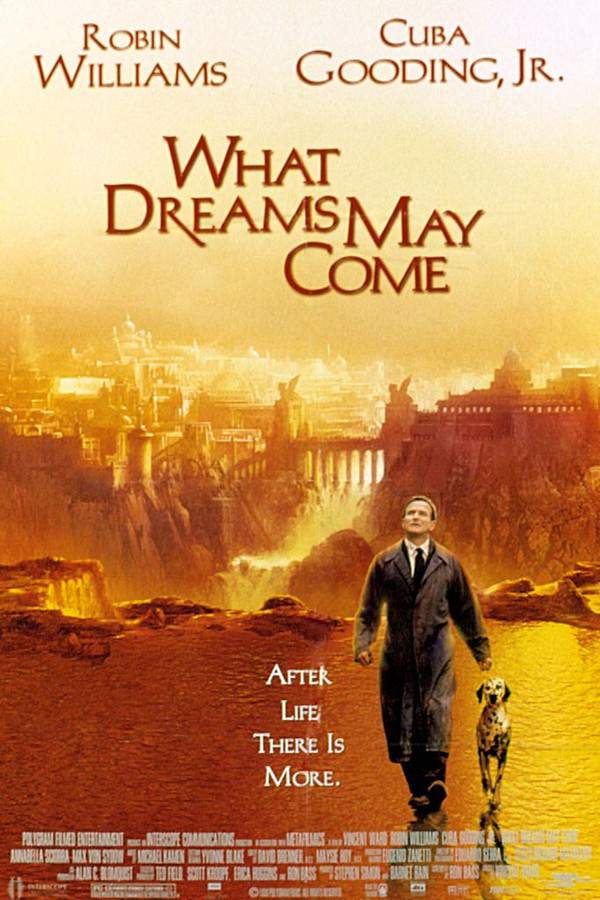
Character-driven stories set in contemplative and bureaucratic realms of the dead.Fans of Eternity's unique setting will appreciate these movies about souls navigating the afterlife. Find similar films with a steady pace, bittersweet tone, and a focus on memory, regret, and self-discovery in the great beyond.
The narrative follows a soul's journey through a structured or bureaucratic afterlife, often involving a review of their life and relationships. The central conflict is internal, driven by memory, regret, and the need for closure, leading to a moment of profound personal acceptance or understanding.
These films are connected by their shared setting of a contemplative afterlife and a focus on internal, emotional growth. They offer a similar vibe: a steady, melancholic, and deeply reflective exploration of life's meaning through the lens of what comes after.
Don't stop at just watching - explore Eternity in full detail. From the complete plot summary and scene-by-scene timeline to character breakdowns, thematic analysis, and a deep dive into the ending - every page helps you truly understand what Eternity is all about. Plus, discover what's next after the movie.
Read a complete plot summary of Eternity, including all key story points, character arcs, and turning points. This in-depth recap is ideal for understanding the narrative structure or reviewing what happened in the movie.
Track the full timeline of Eternity with every major event arranged chronologically. Perfect for decoding non-linear storytelling, flashbacks, or parallel narratives with a clear scene-by-scene breakdown.
Discover the characters, locations, and core themes that shape Eternity. Get insights into symbolic elements, setting significance, and deeper narrative meaning - ideal for thematic analysis and movie breakdowns.