Year: 1995
Runtime: 51 mins
Language: Japanese
Director: Mitsuo Hashimoto
When a mysterious, unopenable music box is discovered, the Z Warriors are instructed to unlock it with the power of the Dragon Balls. Opening it releases the heroic warrior Tapion, who has imprisoned himself together with the monstrous Hildegarn. To stop the revived evil, Goku must quickly master a new technique and join forces with his allies to defeat Hildegarn and protect the world.
Warning: spoilers below!
Haven’t seen Dragon Ball Z: Wrath of the Dragon yet? This summary contains major spoilers. Bookmark the page, watch the movie, and come back for the full breakdown. If you're ready, scroll on and relive the story!
Read the complete plot breakdown of Dragon Ball Z: Wrath of the Dragon (1995), including all key story events, major twists, and the ending explained in detail. Discover what really happened, and what it all means.
Last updated: October 09, 2025 at 09:29
Explore frequently asked questions about Dragon Ball Z: Wrath of the Dragon (1995) with spoiler-rich answers covering the full plot summary, major story beats, character motivations, hidden details, and ending meaning. This movie summary FAQ helps explain confusing scenes, plot twists, and narrative decisions in clear, searchable detail.
Tapion sealed himself inside the enchanted music box because he contains half of the monstrous Hirudegarn within his own body. One thousand years ago, Tapion and his brother Minotia used magical ocarinas to seal the two halves of Hirudegarn inside themselves, then sent the music boxes to opposite ends of the universe to keep the monster contained.
The elderly man who gives the box to the Z Warriors warns that Tapion is their only chance to stop the approaching evil.
Hirudegarn was split into two halves and sealed inside different containers one thousand years ago. When Shenron opened Tapion's music box, only the upper half was released initially. The lower half later manifested separately in the city, attacking before eventually reuniting with its upper half to form the complete monster.
Tapion reveals he only has half of Hirudegarn sealed inside him.
Hirudegarn is intangible and cannot be damaged by conventional attacks until it initiates an attack itself. This unique property makes the creature nearly invulnerable to physical blows, forcing the heroes to adapt their strategy during the initial confrontation.
Gohan and Videl discover through trial and error that their attacks pass through the monster without effect.
The ocarina is one of two magical instruments forged by a priest one thousand years ago specifically to combat Hirudegarn. When Tapion plays it, the haunting tune disrupts the monster's form and weakens it temporarily, causing Hirudegarn to vanish until the magic wears off.
Tapion's origin story explains the ocarinas were created specifically to seal and control Hirudegarn.
Tapion and his brother Minotia both sealed half of Hirudegarn inside themselves to stop the monster from destroying all life. While Tapion survived and remained sealed in the music box, Minotia's fate is not explicitly shown in the film, though the timeline suggests he either died or was lost somewhere in the universe during the sealing process.
Tapion mentions his brother helped him seal the monster.
Hoi claims that Tapion himself is the true threat, not Hirudegarn. He attempts to steal the ocarina, presumably to use its magical properties for his own purposes, though the exact nature of his plans remains unclear. Trunks ultimately stops Hoi and chooses to side with Tapion.
Hoi appears early in the film, establishing himself as an antagonistic figure with unclear motives.
Tapion believes that if he dies, the half of Hirudegarn sealed inside him will also be destroyed, permanently weakening the monster. He pleads for death as a desperate attempt to seal Hirudegarn again, but the creature escapes before they can carry out this sacrifice.
Tapion's isolation and reluctance to interact with others stems from his fear of accidentally releasing the monster.
Goku transforms into the legendary Super Saiyan 3, a form that dramatically increases his power beyond Super Saiyan 2. He then uses the Dragon Fist technique, channeling his ki into a powerful concentrated attack that pierces through Hirudegarn and defeats the monster completely.
The movie's description mentions Goku must quickly master a new technique to stop the revived evil.
After Hirudegarn is defeated, Tapion uses Bulma's time machine to travel back to his home world. He leaves Trunks the enchanted sword as a farewell gift, a weapon forged one thousand years ago to battle the monster.
Bulma's lab and technology are established earlier when Tapion reveals the backstory.
Goten and Trunks fuse into Gotenks 3 to participate in the final battle against the fully reformed Hirudegarn. Gotenks engages the monster in combat alongside Goku as Super Saiyan 3 and Vegeta, contributing to the combined assault before Hirudegarn temporarily defeats them.
Gotenks' fusion is a signature move in Dragon Ball Z that typically appears in major battles.
Discover curated groups of movies connected by mood, themes, and story style. Browse collections built around emotion, atmosphere, and narrative focus to easily find films that match what you feel like watching right now.
Heroes must rapidly master a new ability to confront a looming catastrophic threat.Explore movies like Dragon Ball Z: Wrath of the Dragon where heroes face a ticking clock to master a new power and stop a world-ending threat. These similar action-packed stories deliver high-stakes tension, fast pacing, and triumphant victories against overwhelming evil.
These narratives typically feature a clear and immediate threat that escalates throughout the story. The plot revolves around the protagonists' desperate training or quest to acquire a 'key' power—a special move, weapon, or transformation—before it's too late. The story structure is a direct escalation from discovery of the threat to frantic preparation and culminates in a decisive, high-powered battle.
Movies in this thread are united by their shared structure of a time-sensitive power-up arc. They create a specific type of suspense and excitement by combining high-stakes scenarios with the satisfying character progression of mastering a new skill under extreme pressure. The focus is on heroic determination and the thrill of a last-minute victory.
A ancient, imprisoned evil is accidentally released, forcing a united front to contain it.Find films similar to Dragon Ball Z: Wrath of the Dragon where a sealed monster is accidentally freed. If you liked the suspense of a contained evil breaking loose, you'll enjoy these stories about teamwork, ancient threats, and epic battles to re-imprison or destroy a rampaging force.
The plot pattern begins with the discovery of a mysterious sealed object or prison. Curiosity or misunderstanding leads to the containment being broken, releasing a powerful and often chaotic evil. The rest of the story is a reactive battle, with the heroes learning about the nature of the threat they've unleashed and struggling to find a way to defeat it, sometimes facing moral dilemmas about the original act of sealing.
These movies share a core premise that generates immediate tension and a clear antagonist. The 'unleashing' event provides a strong inciting incident, and the struggle to control the resulting chaos creates a cohesive experience of disaster management, collective heroism, and confronting a force of pure destruction.
Don't stop at just watching - explore Dragon Ball Z: Wrath of the Dragon in full detail. From the complete plot summary and scene-by-scene timeline to character breakdowns, thematic analysis, and a deep dive into the ending - every page helps you truly understand what Dragon Ball Z: Wrath of the Dragon is all about. Plus, discover what's next after the movie.
Track the full timeline of Dragon Ball Z: Wrath of the Dragon with every major event arranged chronologically. Perfect for decoding non-linear storytelling, flashbacks, or parallel narratives with a clear scene-by-scene breakdown.
Discover the characters, locations, and core themes that shape Dragon Ball Z: Wrath of the Dragon. Get insights into symbolic elements, setting significance, and deeper narrative meaning - ideal for thematic analysis and movie breakdowns.
Discover movies like Dragon Ball Z: Wrath of the Dragon that share similar genres, themes, and storytelling elements. Whether you’re drawn to the atmosphere, character arcs, or plot structure, these curated recommendations will help you explore more films you’ll love.
Dragon Ball Z: Wrath of the Dragon (1995) Scene-by-Scene Movie Timeline
Dragon Ball Z: Wrath of the Dragon (1995) Movie Characters, Themes & Settings
Dragon Ball Z: Wrath of the Dragon (1995) Spoiler-Free Summary & Key Flow
Movies Like Dragon Ball Z: Wrath of the Dragon – Similar Titles You’ll Enjoy
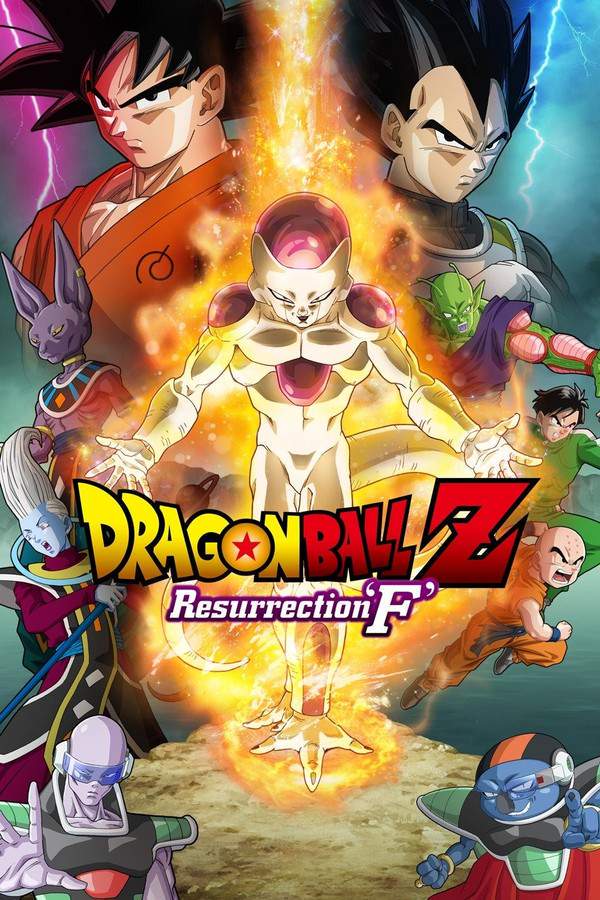
Dragon Ball Z: Resurrection 'F' (2015) Story Summary & Characters
Dragon Ball Z: Bardock - The Father of Goku (1990) Full Movie Breakdown
Dragon Ball Z: The World’s Strongest (1990) Film Overview & Timeline
Dragon Ball Z: The Tree of Might (1990) Film Overview & Timeline
Dragon Ball Z: Cooler’s Revenge (1991) Film Overview & Timeline
Dragon Ball Z: Dead Zone (1989) Full Movie Breakdown
Dragon Ball: Curse of the Blood Rubies (1986) Detailed Story Recap
Dragon Ball: Mystical Adventure (1988) Detailed Story Recap
Dragon Ball: Mystical Adventure (1988) Movie Recap & Themes
Dragon Ball: Curse of the Blood Rubies (1986) Film Overview & Timeline
Dragon Ball Z: Bojack Unbound (1993) Spoiler-Packed Plot Recap
Dragon Ball Z: Broly - The Legendary Super Saiyan (1993) Full Movie Breakdown
Dragon Ball Z: Fusion Reborn (1995) Complete Plot Breakdown
Dragon Ball Z: Bio-Broly (1994) Story Summary & Characters
Dragon Ball: The Path to Power (1996) Story Summary & Characters