Plot Explained Spoilers guaranteed!
Plot Explained

Browse by genre

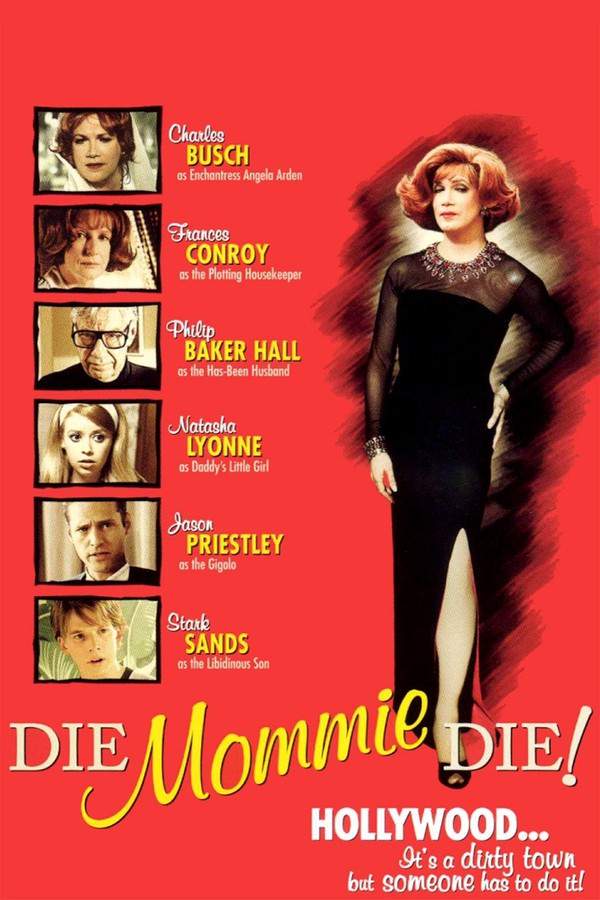
Die, Mommie, Die! (2003) movie poster

Plot Summary

Die, Mommie, Die! (2003) Plot Summary Explained

Release, runtime and language
2003 · 90 min · English
Directed by
Mark Rucker
Starring
Jason Priestley, Natasha Lyonne, Charles Busch

A cabaret performer schemes to escape an unhappy marriage by attempting to poison her husband. As her plan goes awry, she finds herself facing the consequences and uncovering complex secrets within her family. The story explores the tangled relationships between Angela and her children, leading to a darkly comedic and increasingly chaotic unraveling of their lives.

On this page (5)
  1. 1 What happens: full plot
  2. 2 Plot questions answered
  3. 3 Movie threads
  4. 4 Movies like Die, Mommie, Die!
  5. 5 Every angle

Full plot summary · contains spoilers

What Happens in Die, Mommie, Die!: Full Plot Summary

The whole story of Die, Mommie, Die! (2003) explained, from the opening scene to the final frame: every key event, every twist and what it all adds up to. Read it as a quick recap before the sequel, to check a scene you missed, or to finally understand what really happened.

The story unfolds with Angela Arden, portrayed by Jason Priestley, kneeling at the grave of her twin sister Barbara. This haunting scene serves as a stark reminder of the dark, lingering secrets that plague Angela in every moment of her life. A once-thriving lounge singer, she now finds her career stagnant and overshadowed by the tragic suicide of Barbara. Compounding her struggles is her unhappy marriage to film director Sol Sussman, who, along with their two tumultuous children—Lance, a young man wrestling with his identity, and Edith, a spoiled daughter who harbors disdain towards Angela—further complicates her existence. A layer of complexity is added by Bootsie, the curious maid secretly infatuated with Sol.

In a bid to spark her passion for life and breathe new life into her career, Angela begins a risky affair with Tony Parker, a charming but unscrupulous tennis player. However, her newfound joy is short-lived as Sol uncovers their dalliance after employing a private investigator to spy on Angela. Instead of opting for a divorce, Sol seeks revenge by cutting off her credit cards and sabotaging her chances to perform in New York City, effectively crushing her aspirations.

Feeling cornered and desperate for agency in her life, Angela devises a chilling plan to eliminate Sol using a poison-laced suppository. Although Angela inherits a modest sum from Sol's estate, both her children and Bootsie begin to grow suspicious of the circumstances surrounding Sol’s demise, which stir up old speculation about Barbara's death.

As Edith and Lance become ensnared in their mother's dark schemes, they plot to extract a confession from her. Meanwhile, Tony's fascination with the shadowy details of Aunt Barbara's death grows. The sudden death of Bootsie serves as a catalyst, prompting the siblings to lace Angela's evening coffee with LSD, leading to a psychedelic episode in which Angela confesses to the murder of Sol, revealing an unsettling truth: she is in fact Barbara.

Through captivating flashbacks, we delve into Barbara’s tragic story juxtaposed with Angela’s rise to fame, ending with Barbara’s incarceration for jewelry theft. Upon her release, Barbara faced Angela’s cruelty when she sought refuge in her opulent mansion. Witnessing the maltreatment Angela doles out to Sol and their children, Barbara concocts a plan of her own—to poison Angela and seize her life.

As secrets unravel, the children are left in awe as Barbara exposes her true role in the events leading to her sister's fate. This shocking revelation opens a Pandora's box of deceit, betrayal, and ultimately, self-awareness. Within the escalating emotional tumult, we see both Edith and Lance yearning for Tony’s attention, each caught in a web spun from their familial chaos.

Just as the truth surfaces, Barbara confronts a masked assailant, revealing Sol as the attacker in a dramatic twist. In a charged atmosphere filled with tension, Sol begins to disclose the convoluted story behind his supposed death, explaining that he initiated a scheme with Bootsie to escape the clutches of ruthless mob enforcers due to outstanding debts.

In another twist, Tony, who has been investigating Angela’s murder while posing as an FBI agent, apprehends Sol. As the children come to terms with Barbara's desperate motives, they embrace her, signaling a shift towards understanding. In a turn of allegiance, Tony promises to destroy the evidence against her, shielding her from the repercussions of her actions. However, as Barbara departs, she asserts that by embracing her authentic self, she will finally liberate herself from the oppressive shadow of her sister—a freedom long overdue.
Last updated: November 19, 2024 at 17:59

Was this helpful?

Plot questions answered

Die, Mommie, Die! Plot Explained: Your Questions Answered

The questions people ask most about Die, Mommie, Die! (2003): what happens in the confusing scenes, why the characters do what they do, the twists, hidden details and what the ending means. Each answer contains spoilers.

Q1

Why did Angela poison Sol?

Angela poisoned Sol because she felt trapped in her unhappy marriage and desperate to reclaim her freedom. After Sol discovered her affair with Tony Parker, he cut off her credit cards and sabotaged her chances to perform in New York City, effectively crushing her career aspirations. Feeling cornered with no other options, Angela devised a plan to eliminate him using a poison-laced suppository.

Foreshadowing: Earlier scenes establish Angela's frustration with her stagnant career and her desperate desire to escape her suffocating domestic life.

  • poison
  • sol sussman
  • murder
  • motivation
  • escape marriage
Q2

Why is Angela actually Barbara?

The truth revealed during Angela's LSD-induced confession is that she is Barbara, not Angela. The real Angela was the successful lounge singer, while Barbara was her twin sister who struggled with life. After being released from prison for jewelry theft, Barbara went to Angela's mansion seeking help but witnessed Angela's cruel treatment of Sol and the children. Barbara then poisoned Angela and assumed her identity to escape her own miserable life and take over Angela's more glamorous existence.

Foreshadowing: The opening scene shows Angela kneeling at Barbara's grave, but the emotional weight suggests deeper guilt rather than simple mourning for a sister.

  • barbara
  • identity swap
  • twin sister
  • reveal
  • true identity
Q3

Why did Sol fake his death?

Sol faked his death because he was being pursued by ruthless mob enforcers due to outstanding debts he owed them. He orchestrated the scheme with Bootsie, his maid who was secretly infatuated with him, to escape the mob's threat. Rather than facing the consequences of his financial troubles, Sol chose to disappear and watch the chaos unfold from the shadows.

Foreshadowing: Bootsie's suspicious behavior and secret infatuation with Sol hint at a deeper connection between them that predates the main events.

  • mob
  • fake death
  • debts
  • bootsie
  • escape
Q4

What happened to Bootsie?

Bootsie died under suspicious circumstances. She was Sol's maid who was secretly in love with him. Her death served as a catalyst for the siblings to take action against Angela, leading them to lace her coffee with LSD. It is later revealed that Bootsie was involved in Sol's fake death scheme, helping him disappear to escape mob collectors.

Foreshadowing: Bootsie's secret infatuation with Sol and her mysterious behavior throughout the film hinted at her deeper involvement in his affairs.

  • bootsie
  • death
  • maid
  • sol
  • plot twist
Q5

Why did Edith and Lance drug Angela with LSD?

Edith and Lance drugged Angela with LSD because they suspected she had murdered Sol and wanted to extract a confession from her. Bootsie's sudden death had made them more desperate to uncover the truth about their father's demise. The LSD caused Angela to have a psychedelic episode during which she confessed to killing Sol and revealed her shocking true identity as Barbara.

Foreshadowing: Earlier, Edith and Lance had been plotting to confront Angela and extract a confession about Sol's death.

  • lsd
  • confession
  • edith
  • lance
  • children
Q6

Why did Barbara kill her sister Angela?

Barbara killed Angela after witnessing how cruelly Angela treated Sol and the children in her mansion. Barbara, who had just been released from prison for jewelry theft and was living a miserable life, saw an opportunity to escape her own despair by taking over Angela's more privileged existence. The contrast between Angela's glamorous life and Barbara's struggles, combined with Angela's cruelty, motivated Barbara to poison her and assume her identity.

Foreshadowing: Flashbacks show Barbara's tragic life juxtaposed with Angela's rise to fame, establishing the resentment that built over time.

  • murder
  • sister
  • motive
  • identity theft
  • revenge
Q7

Who is Tony Parker really?

Tony Parker, the charming tennis player whom Angela had an affair with, was actually an FBI agent investigating the circumstances of Sol's death. He posed as Tony Parker while gathering evidence about Angela's involvement in the murder. In the end, Tony chooses to protect Barbara by promising to destroy the evidence against her, choosing his feelings for her over his duty.

Foreshadowing: Tony's unusual fascination with the details of Aunt Barbara's death and his investigative nature hint at his true profession.

  • tony parker
  • fbi agent
  • investigation
  • true identity
Q8

Why did Barbara finally reveal her true identity?

Barbara revealed her identity during Angela's LSD-induced confession, unable to keep the truth hidden any longer. The drug trip broke down her psychological barriers, causing her to confess to Sol's murder and accidentally expose that she was actually Barbara. This moment represents her unconscious desire to stop living under her sister's shadow and finally embrace her authentic self, leading to her later declaration that she would liberate herself from Angela's oppressive memory.

Foreshadowing: Throughout the film, Barbara's actions suggest an internal conflict between maintaining her deception and yearning for freedom.

  • revelation
  • identity
  • freedom
  • self acceptance
  • liberation
Q9

Why did Sol cut off Angela's finances after discovering her affair?

When Sol discovered Angela's affair with Tony Parker through a private investigator, he chose revenge over divorce. Rather than simply leaving Angela, Sol deliberately cut off her credit cards and sabotaged her chances to perform in New York City. This punitive response was meant to control and punish Angela for her infidelity, trapping her further in the unhappy marriage.

Foreshadowing: Sol's character is established as vindictive and controlling, making his choice to punish rather than leave consistent with his nature.

  • revenge
  • finances
  • affair
  • control
  • punishment
Q10

Why did Edith and Lance accept Barbara after learning the truth?

After learning that Barbara had killed their mother Angela but had done so because of Angela's cruelty to them and Sol, Edith and Lance chose to embrace her instead of rejecting her. They came to understand Barbara's motivations and the abusive environment they had all lived in. This moment represents their shift from seeking revenge to offering forgiveness and acceptance, symbolizing reconciliation within their fractured family.

Foreshadowing: Earlier scenes establish the toxic dynamic in the household, with Angela (Barbara) mistreating the children.

  • edith
  • lance
  • forgiveness
  • family
  • reconciliation

Movie threads

More Movies Like Die, Mommie, Die!, by Mood & Story

Curated lists built around what makes Die, Mommie, Die! tick: the same mood, the same kind of story or the same emotional payoff. Each list explains why these movies belong together.

Campy murder mysteries like Die, Mommie, Die!

Dysfunctional families unravel in a whirlwind of dark secrets and theatrical crime. If you enjoyed the chaotic, campy suspense of Die, Mommie, Die!, you'll love these movies. This collection features similar dark comedies where murder plots ignite a firestorm of family secrets, betrayals, and theatrical melodrama, all delivered with a fast-paced, absurdist flair.

  • campy
  • suspenseful
  • dysfunctional
  • absurd
  • theatrical
  • chaotic
  • Tone: dark, comedic
  • Pacing: fast, chaotic
Why these movies?

The story pattern: These narratives typically begin with a high-stakes crime, like a murder or poisoning, within a family or closed group. This act sets off a domino effect of investigations, confessions, and unmaskings, where characters' true identities and motives are slowly and chaotically exposed. The journey is less about solving the crime cleanly and more about the spectacle of the ensuing chaos.

Why they belong together: Movies are grouped here for their shared high-energy blend of suspense and humor, their focus on toxic family dynamics as a catalyst for crime, and their commitment to a theatrical, campy aesthetic that makes dark themes wildly entertaining.

Theatrical dark comedies similar to Die, Mommie, Die!

Stories where exaggerated emotions and high drama meet a darkly comic sensibility. Fans of the grand, theatrical style of Die, Mommie, Die! will find more to love here. These films share a love for melodrama and camp, presenting serious themes of deceit and family conflict with an exaggerated, performative flair that is both suspenseful and darkly funny.

  • theatrical
  • melodramatic
  • campy
  • biting
  • heightened
  • performative
  • Tone: theatrical, dark
  • Pacing: steady, deliberate
Why these movies?

The story pattern: The narrative pattern often revolves around a central character performing a role—either literally as an imposter or figuratively within their life—which eventually cracks under pressure. The story unfolds in a series of dramatic confrontations and revelations that feel like acts in a play, building to a climax that is both emotionally heightened and intellectually witty.

Why they belong together: These films are united by their distinctive 'stagey' aesthetic, their balancing act between genuine suspense or drama and self-aware parody, and their exploration of performance and identity within a framework of dark comedy.

If you liked this

Movies Like Die, Mommie, Die!

Similar movies to Die, Mommie, Die!: the same genre, themes or kind of story. Each one comes with its own plot summary, timeline and ending explained.

Browse all movie summaries

Every angle

Die, Mommie, Die! (2003) Explained: Plot, Timeline & Characters

Everything about Die, Mommie, Die! in one place: what happens in the plot summary, the timeline in chronological order, the characters and meaning and a spoiler-free summary. What's After the Movie adds the cast, box office and post-credit scenes.

Coming soon on iOS and Android

The Plot Explained Movie Summary App

Plot summaries, endings explained and timelines on your phone. Catch up on any movie in minutes, save your favorites and never miss a twist again.

Be the first to know when we launch. Your email stays private, always.

Learn more about the app