Plot Explained Spoilers guaranteed!
Plot Explained

Browse by genre

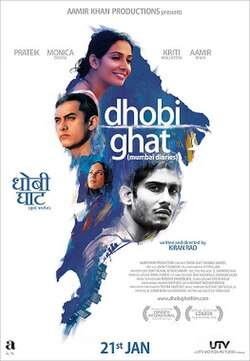
Dhobi Ghat (2010) movie poster

Characters & Themes

Dhobi Ghat (2010) Characters, Setting & Themes Explained

Release, runtime and language
2010 · 102 mins · Hindi
Loading streaming availability…
Directed by
Kiran Rao
Starring
Prateik Babbar, Aamir Khan, Danish Husain, Kriti Malhotra, Monica Dogra, Kitu Gidwani

Arun, a reclusive modern‑art painter, lives a solitary life near the bustling Dhobi Ghat. Shai, an American banker visiting Mumbai, crosses paths with him, while Munna, a local washer‑boy, shares the same neighbourhood. Yasmin, a young woman from the area, completes the quartet. Their intersecting stories reveal how lives from different social strata become inextricably linked in the city’s vibrant mosaic.

On this page (7)
  1. 1 Where to watch
  2. 2 Characters explained (3)
  3. 3 Where & when it takes place
  4. 4 Themes & meaning (3)
  5. 5 Character & meaning questions
  6. 6 Movie threads
  7. 7 Every angle
Loading streaming availability…

3 main characters · contains spoilers

Dhobi Ghat Characters Explained: Who Is Who

The main characters of Dhobi Ghat (2010), heroes and villains: what drives them, how they change over the course of the story and what each of them reveals about the film's bigger ideas.

  • Arun (Aamir Khan)

    A reclusive artist seeking inspiration and reconnection with his past and family. His creative journey is intertwined with his emotional detachment and aspirations for recognition. Arun's character embodies introspection and the search for meaning beyond art.

    • 🎨 Artist
    • 🌿 Introvert
    • 💔 Lonely
  • Shai (Monica Dogra)

    An American investment banker on a sabbatical, she is curious about Mumbai's socio-economic fabric. Shai's warmth and open-mindedness help her connect with people from diverse backgrounds, highlighting her compassionate nature.

    • 🌏 Global
    • 💼 Professional
    • 🤝 Friendly
  • Zohaib 'Munna' Shaikh (Prateik Babbar)

    A hopeful washerman dreaming of Bollywood, Munna is hardworking yet wistful about his limited social status. His desire for a better life and unspoken love for Shai drive his emotional depth and resilience.

    • 👕 Washerman
    • 🌟 Dreamer
    • ❤️ Unfulfilled

Last updated: August 05, 2025 at 06:52

Was this helpful?

Setting

Where and When Does Dhobi Ghat Take Place?

The setting of Dhobi Ghat (2010): the year and time period, the places and locations, and how they shape the characters, the mood and the tension of the story.

Time period

Contemporary, early 2000s

The film takes place in the early 21st century, capturing Mumbai's dynamic social landscape. This period reflects a time of rapid urban development, economic opportunities, and diverse lifestyles, with characters navigating the city's changing face while maintaining their personal struggles.

Location

Mumbai, Maliabad

The movie is set primarily in Mumbai, India, depicting both the old, historic parts of the city and the bustling modern areas. Maliabad, a small town in UP, is also featured through Yasmin's background, highlighting regional diversity. Mumbai serves as a cultural and economic hub, showcasing a mix of traditional and contemporary urban life.

  • 🌆 Urban
  • 🎥 Film City
  • 🕌 Old Mumbai

Last updated: August 05, 2025 at 06:52

Was this helpful?

3 major themes

Dhobi Ghat Meaning: Themes & Message Explained

What is Dhobi Ghat (2010) really about? The emotional, social and philosophical themes the film keeps returning to, its symbolism and the message beneath the surface.

  • Art and Self-Discovery

    The movie explores how art serves as a medium for personal expression and healing. Arun's paintings and Yasmin's video diaries reveal inner lives and hidden stories, emphasizing the importance of creativity in understanding oneself and others.

  • Class and Society

    Through characters like Munna, the film highlights social divisions, economic hardships, and aspirations beyond one's station. Munna's struggle to break into the film industry and his interactions with Shai and Arun showcase a desire for social mobility and recognition.

  • Loneliness and Connection

    Characters grapple with emotional solitude despite being surrounded by Mumbai's chaos. Arun’s detachment, Shai's career breaks, and Munna's unspoken love demonstrate the universal search for authentic human connection amidst urban alienation.

Last updated: August 05, 2025 at 06:52

Was this helpful?

Character & theme questions

Dhobi Ghat Characters & Meaning: Your Questions Answered

The questions people ask about Dhobi Ghat (2010): who the characters really are, their relationships, what the symbols mean, where it takes place and what the movie is really about. Each answer contains spoilers.

Q1

Where is Dhobi Ghat located and what does it represent in the movie?

Dhobi Ghat is a historic laundry district in South Mumbai, near Mahalaxmi. In the film, this area serves as a microcosm of Mumbai itself, where lives from vastly different social strata intersect daily. The setting represents the city's blend of old and new, where traditional washermen work alongside urban professionals, creating a vivid backdrop for the characters' intersecting stories.

Foreshadowing: The opening scenes establish Dhobi Ghat as both a literal location and symbolic space where class boundaries temporarily blur.

  • dhobi ghat
  • mumbai location
  • historic laundry
  • mumbai setting
Q2

What areas of Mumbai are featured in the film?

The film primarily showcases South Mumbai, including the historic Dhobi Ghat area, alongside modern urban spaces. Yasmin's backstory introduces Maliabad, a small town in Uttar Pradesh, highlighting the regional diversity between rural backgrounds and Mumbai's metropolitan intensity. This contrast emphasizes how migrants from different parts of India converge in Mumbai seeking opportunity.

  • mumbai neighborhoods
  • south mumbai
  • urban settings
  • bombay film locations
Q3

When does Dhobi Ghat take place?

The film is set in the early 21st century, specifically in the early 2000s. This contemporary period captures Mumbai during a time of rapid urban transformation, where traditional ways of life coexist with modernization. The early 2000s setting reflects the city's evolving socio-economic landscape and the diverse lifestyles characters navigate.

  • early 2000s
  • contemporary mumbai
  • time period
  • modern india
Q4

How does Dhobi Ghat explore class and social divisions?

Through Munna's character, the film directly addresses class divisions, a washerman dreaming of Bollywood stardom while working alongside wealthy residents. His interactions with Shai and Arun reveal the complex dynamics of social mobility and recognition. The film shows how people from different economic backgrounds share physical space in Mumbai yet remain separated by opportunity and privilege.

Foreshadowing: Munna's persistent hope against economic odds threads through his conversations with Shai.

  • class divisions
  • social mobility
  • poverty
  • mumbai inequality
  • munna character
Q5

What role does art play in Dhobi Ghat?

Art serves as a medium for self-discovery and healing throughout the film. Arun's paintings and Yasmin's video diaries function as windows into their inner lives, revealing hidden stories and emotions they cannot express verbally. The film suggests that creative expression helps characters understand themselves and connect with others on a deeper level.

Foreshadowing: Arun's reclusive nature is established early through his relationship with his art.

  • art and healing
  • creativity
  • self expression
  • arun paintings
  • yasmin videos
Q6

How does Dhobi Ghat address loneliness and human connection?

The film explores emotional solitude despite urban density, Arun's detachment, Shai's career break seeking meaning, and Munna's unspoken love demonstrate characters searching for authentic connection amid Mumbai's chaos. The city becomes both a place of isolation and potential connection, where brief encounters can leave lasting impact despite social barriers.

Foreshadowing: Characters are frequently shown alone in crowded spaces, emphasizing urban alienation.

  • loneliness
  • human connection
  • urban alienation
  • emotional isolation
  • relationships
Q7

Who is Arun and what role does he play in the story?

Arun is a reclusive modern-art painter living near Dhobi Ghat, portrayed by Aamir Khan. He embodies introspection and the search for meaning beyond his art. His character represents the emotional detachment many artists experience while grappling with their past and desire for recognition. Arun's journey involves reconnecting with his creative self and confronting personal history.

  • arun character
  • aamir khan
  • painter
  • reclusive artist
  • introspection
Q8

Who is Shai and why is she in Mumbai?

Shai is an American investment banker visiting Mumbai on a sabbatical, portrayed by Monica Dogra. Driven by curiosity about Mumbai's socio-economic fabric, she seeks to understand lives different from her own. Her warmth and open-mindedness allow her to connect across social boundaries, representing the compassionate outsider looking for meaning beyond her professional life.

  • shai character
  • monica dogra
  • american banker
  • sabbatical
  • outsider
Q9

Who is Munna and what are his aspirations?

Munna (Zohaib Shaikh) is a local washerman at Dhobi Ghat, portrayed by Prateik Babbar. Despite his modest background, he harbors dreams of Bollywood stardom and a desire for social mobility. His hardworking nature and unspoken love for Shai reveal emotional depth and resilience. Munna represents the aspirational spirit of Mumbai's working class, hoping to transcend his station through determination.

  • munna character
  • prateik babbar
  • washerman
  • bollywood dreams
  • aspirations
Q10

What connects the four main characters in Dhobi Ghat?

The four characters, Arun, Shai, Munna, and Yasmin, are linked by their proximity in Mumbai's Dhobi Ghat neighborhood despite coming from vastly different social strata. Their intersecting stories reveal how urban spaces connect lives that would otherwise remain separate. Each character represents a different slice of Mumbai society, and their brief encounters demonstrate how class boundaries both persist and subtly shift in the city.

  • character connections
  • intersecting stories
  • mumbai society
  • four characters
Q11

What are the main themes explored in Dhobi Ghat?

Dhobi Ghat explores three interconnected themes: art and self-discovery, class and society, and loneliness versus connection. The film examines how creativity helps characters understand themselves, how economic hardship shapes aspirations and social boundaries, and how urban dwellers search for meaningful relationships despite physical proximity. These themes weave together to portray Mumbai as both a melting pot and a place of emotional isolation.

  • movie themes
  • art
  • self discovery
  • class
  • loneliness
  • connection

Movie threads

More Movies Like Dhobi Ghat, by Mood & Story

Curated lists built around what makes Dhobi Ghat tick: the same mood, the same kind of story or the same emotional payoff. Each list explains why these movies belong together.

Movies about interconnected lives in a city like Dhobi Ghat

Stories where disparate city lives intersect in quiet, meaningful ways. If you liked Dhobi Ghat's portrayal of intersecting lives in Mumbai, you'll appreciate these similar films. Discover other dramas that weave together the quiet stories of diverse characters navigating loneliness and connection in an urban landscape.

  • urban
  • interconnected
  • lonely
  • melancholic
  • contemplative
  • atmospheric
  • Tone: melancholic, contemplative
  • Pacing: slow, deliberate
Why these movies?

The story pattern: These films follow multiple protagonists whose paths cross briefly but significantly. The plot is less about a single climax and more about the cumulative emotional impact of these chance encounters, portraying a city as a character that both separates and connects its inhabitants.

Why they belong together: This group shares a focus on character-driven, multi-strand narratives set against an urban backdrop. They consistently feature a melancholic, observational tone, slow pacing to soak in the atmosphere, and a bittersweet exploration of isolation and fragile human bonds.
Quiet character dramas about unfulfilled dreams like Dhobi Ghat

Character studies of quiet individuals navigating longing and deferred aspirations. Fans of Dhobi Ghat's portrayal of Arun's solitude and Munna's aspirations will find similar stories here. Explore movies that delve into the melancholic but gentle world of characters carrying the weight of their dreams and losses.

  • melancholic
  • introspective
  • quiet
  • lonely
  • artistic
  • bittersweet
  • Tone: melancholic, bittersweet
  • Pacing: slow, introspective
Why these movies?

The story pattern: The narrative is driven by character introspection rather than external plot. It follows individuals—often artists, or ordinary people with quiet ambitions—as they process grief, loneliness, or longing. The journey is internal, with small moments of creation or connection offering a fragile sense of purpose.

Why they belong together: Movies in this thread are united by a melancholic, introspective mood, a slow, deliberate pace, and a focus on the emotional weight of unrequited love, artistic expression, or deferred dreams. They share a bittersweet feeling, balancing sadness with resilience.

Every angle

Dhobi Ghat (2010) Explained: Plot, Timeline & Characters

Everything about Dhobi Ghat in one place: what happens in the plot summary, the timeline in chronological order, the characters and meaning and a spoiler-free summary. What's After the Movie adds the cast, box office and post-credit scenes.

Coming soon on iOS and Android

The Plot Explained Movie Summary App

Plot summaries, endings explained and timelines on your phone. Catch up on any movie in minutes, save your favorites and never miss a twist again.

Be the first to know when we launch. Your email stays private, always.

Learn more about the app