Plot Explained Spoilers guaranteed!
Plot Explained

Browse by genre

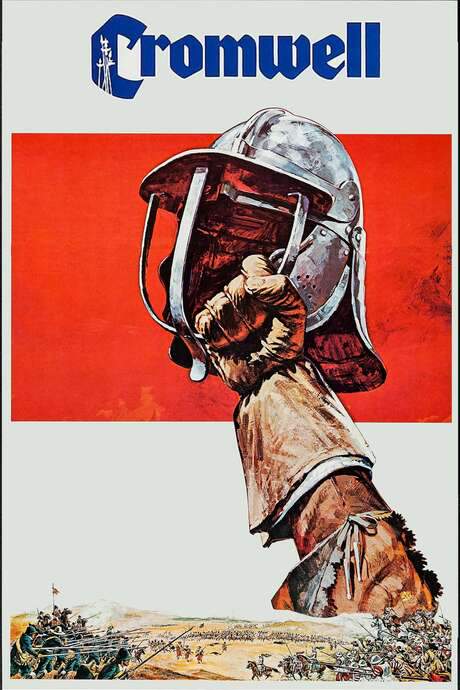
Cromwell (1970) movie poster

Timeline

Cromwell (1970) Timeline Explained – Every Event in Order

Release, runtime and language
1970 · 140 mins · English
Loading streaming availability…
Directed by
Ken Hughes
Starring
Timothy Dalton, Robert Morley, Frank Finlay, Alec Guinness, Geoffrey Keen, Douglas Wilmer

Disgusted with King Charles I's policies, Oliver Cromwell intends to sail with his family to the New World. Yet, on the night before departure, the escalating religious and political turmoil drags him back to England, where his convictions pull him into the mounting conflict that culminates in the English Civil War.

On this page (6)
  1. 1 Where to watch
  2. 2 Events in order (12)
  3. 3 Timeline questions answered
  4. 4 Movie threads
  5. 5 Movies like Cromwell
  6. 6 Every angle
Loading streaming availability…

12 events in order · contains spoilers

Cromwell Timeline: Events in Chronological Order

Every key event of Cromwell (1970) in order, scene by scene, with when and where it takes place. Use it to untangle flashbacks, time jumps and parallel storylines, to refresh your memory before the sequel or to find the exact scene you are thinking of.

  1. Puritan Cromwell vs Royal policy

    Oliver Cromwell is portrayed as a devout Puritan, a country squire and magistrate whose beliefs guide his politics. He chafes at Charles I’s policies—enclosures of common land and high Anglican rituals—that inflame Puritans and reformers alike. On the eve of a planned move with his family to the New World, he is persuaded to stay and re-enter political life.

    When
    Pre-1642
    Where
    England
  2. Parliament summoned; Strafford affair

    Charles I reluctantly summons Parliament after twelve years to secure funds for wars against Scotland and Ireland. To appease the Commons, he agrees to execute his close adviser, Thomas Wentworth, Earl of Strafford, but Parliament presses for reforms that would curb royal prerogative. The tension foreshadows a constitutional showdown.

    When
    1640
    Where
    London
  3. Arrest of MPs and outbreak of war

    Charles enters the parliamentary chamber with an armed guard to arrest five MPs, attempting to subdue opposition by force. The arrest backfires, and Parliament rallies in open defiance, sparking the English Civil War. Both sides claim God fights for their cause.

    When
    1642
    Where
    London, Parliament chamber
  4. Edgehill and the rise of the New Model Army

    At Edgehill, Cromwell’s cavalry initially falters, signaling Parliament’s early military shortcomings. He and Fairfax then design the disciplined New Model Army, whose training and unity prove decisive against Royalist forces. The reform marks a turning point in the war.

    When
    1642-1643
    Where
    Edge Hill, England
  5. Naseby victory; Cromwell’s cavalry decisive

    The New Model Army secures a decisive victory at Naseby, turning the war in Parliament’s favor. Cromwell’s leadership and cavalry strength prove pivotal in the rout of Royalist forces. Tragically, one of Cromwell's sons is killed during the fighting.

    When
    1645
    Where
    Naseby
  6. Oxford siege; Rupert's Bristol defeat

    Oxford becomes the last Royalist stronghold as Charles’s position weakens under pressure. Prince Rupert of the Rhine, once a top commander, fails to hold Bristol and is banished after the setback. The royal cause drains of momentum as the tides turn.

    When
    1646
    Where
    Oxford; Bristol
  7. Catholic aid sought abroad

    Charles plans to raise a wholly Catholic army with help from Catholic nations. The queen and his eldest son travel abroad to secure support, exposing the monarchy’s vulnerability to religious maneuvering. The international angle widens the conflict’s stakes.

    When
    1646-1647
    Where
    Europe
  8. Charles I trial and execution

    Cromwell uses Parliament to push for Charles’s treason trial, asserting accountability for royal prerogative. Charles refuses to recognize any authority higher than his own, and the trial ends with a guilty verdict and execution. The king’s death marks a profound political rupture.

    When
    1649
    Where
    London, Westminster
  9. Cromwell resists a crown; politics falter

    In the wake of the king’s execution, Cromwell retreats moodily to his estate and resists becoming king when radicals urge him to seize the crown. Parliament appears self-serving and faction-ridden, complicating attempts to create stable governance. The era slides toward a military-driven rule rather than a balanced constitution.

    When
    1649-1650
    Where
    England
  10. Purged Parliament; Protectorate arises

    Cromwell’s troops purge the House of Commons, removing dissenting MPs and leaving him in a position of control. He then outlines to the viewer his vision for a Protectorate, a new constitutional order meant to stabilize the realm under his leadership. The transition marks the definitive shift from republic to a strongman rule.

    When
    1653
    Where
    London
  11. The Lord Protectorate years

    Cromwell serves as Lord Protector for about five years, steering a government that mixes military discipline with centralized authority. He navigates a fractured Parliament and seeks to balance power while pursuing religious and social reforms. The era defines a new, if controversial, phase of English governance.

    When
    1653-1658
    Where
    London
  12. Restoration and lasting change

    Eventually the Protectorate falters and Charles II returns to the throne, signaling the Restoration. The film underscores that England will never be the same again, as new political and religious tensions linger. The era ends with a transformed monarchy and a reconfigured balance of power.

    When
    1660
    Where
    England

Last updated: October 09, 2025 at 14:14

Was this helpful?

Timeline questions answered

Cromwell Timeline Explained: Your Questions Answered

When does it happen, and why in that order? The questions people ask about the chronology of Cromwell (1970): time jumps, flashbacks, cause and effect between scenes and the correct order of events, each answered with spoilers.

Q1

Why did Cromwell decide to stay in England instead of moving to the New World?

On the night before his planned departure to the New World with his family, Cromwell was persuaded to stay and re-enter political life. The escalating religious and political turmoil, specifically Charles I's policies that agitated Puritans, including land enclosures and Catholic rituals, pulled him back into England's crisis. His devout Puritan beliefs made it impossible for him to ignore the mounting conflict between crown and Parliament.

Foreshadowing: Earlier scenes establish Cromwell as a magistrate and former MP deeply invested in his country's governance.

  • cromwell
  • new world
  • puritan
  • departure
  • politics
Q2

Why was the Earl of Strafford executed?

Charles I reluctantly agreed to execute his close adviser Thomas Wentworth, Earl of Strafford, to appease the House of Commons, which demanded accountability for the king's policies. Strafford had been a controversial figure whose hardline policies had angered Parliament. Though the king resisted giving up his adviser, the political pressure forced his hand as Charles needed Parliament's cooperation to secure funds for wars against Scotland and Ireland.

Foreshadowing: The Strafford affair highlights the growing tension between royal prerogative and parliamentary authority.

  • strafford
  • execution
  • parliament
  • charles i
  • wentworth
Q3

Why did Charles I enter Parliament with armed guards to arrest the five MPs?

Charles I entered the parliamentary chamber with an armed guard to arrest five members of Parliament in an attempt to silence his political opposition and suppress resistance to his policies. This desperate move backfired spectacularly, the arrest sparked outrage and united Parliament in open defiance, directly triggering the outbreak of the English Civil War. Both sides immediately claimed God fought for their cause.

Foreshadowing: The king's earlier refusal to concede reforms that would curb royal authority set the stage for this confrontation.

  • charles i
  • arrest
  • mps
  • civil war
  • parliament
Q4

What was the New Model Army and why was it important?

The New Model Army was a disciplined military force created by Oliver Cromwell and General Thomas Fairfax to replace Parliament's fragmented and unreliable troops. Unlike the existing Parliamentary armies, the New Model Army was professionally trained, well-organized, and united under strong leadership. Their cohesion and training proved decisive, delivering the decisive victory at the Battle of Naseby in 1645, which turned the war in Parliament's favor.

Foreshadowing: Earlier at Edgehill, Cromwell's cavalry had faltered, exposing Parliament's military weaknesses.

  • new model army
  • fairfax
  • military
  • parliament
  • battle of naseby
Q5

Why did Cromwell's son die at the Battle of Naseby?

One of Cromwell's sons was killed during the fighting at the Battle of Naseby in 1645. The battle was a decisive confrontation where the New Model Army routed the Royalist forces, and the casualty toll included Cromwell's own family member. This tragic loss occurred as Cromwell's cavalry proved pivotal in achieving the victory that turned the war in Parliament's favor.

Foreshadowing: The timeline establishes Cromwell as a family man with sons who serve in his cavalry.

  • cromwell son
  • naseby
  • death
  • battle
  • cavalry
Q6

Why did Charles I seek Catholic help from abroad?

As his military position weakened in 1646-1647, Charles I secretly planned to raise a wholly Catholic army with help from Catholic nations. To facilitate this, he sent Queen Henrietta Maria and his eldest son abroad to secure support from Catholic powers. This exposed the monarchy's desperation and vulnerability, while also deepening the religious divisions at the heart of the conflict. The queen, a Catholic, had previously been unable to allow the Prince of Wales to be raised in her faith.

Foreshadowing: Earlier scenes establish the queen's private Catholic practice and the tension it created.

  • catholic
  • charles i
  • queen henrietta maria
  • army
  • foreign aid
Q7

Why was Charles I put on trial and executed?

Cromwell and fellow Parliamentarians demanded accountability for what they viewed as Charles I's tyranny, particularly after learning of his covert plan to mobilize a Catholic army. The king was brought to trial for treason, with Parliament asserting that even a monarch could be held accountable for crimes against the realm. Charles I refused to acknowledge any authority higher than his own, believing in the divine right of kings. He was found guilty and executed, a profound political rupture that fundamentally changed England's future.

Foreshadowing: Sir Edward Hyde's revelation about the Catholic army plot gave Cromwell critical evidence.

  • charles i
  • execution
  • trial
  • treason
  • cromwell
Q8

Why did Cromwell refuse to become king?

After Charles I's execution, radicals urged Cromwell to seize the crown and become king, but he refused. Cromwell retreated moodily to his estate, wrestling with the weight of what had been done. He resisted the title, though Parliament proved self-serving and faction-ridden in its attempts to govern. Ultimately, the era slid toward military-driven rule rather than a balanced constitutional settlement, leading to the establishment of the Protectorate.

Foreshadowing: The film establishes Cromwell as a deeply religious man driven by conscience, not ambition.

  • cromwell
  • crown
  • king
  • refusal
  • protectorate
Q9

What was the Protectorate and why did Cromwell establish it?

The Protectorate was the constitutional order Cromwell established after purging the House of Commons in 1653, removing dissenting MPs and consolidating control. Facing a fractured Parliament and chaotic governance after the king's execution, Cromwell asserted the Protectorate as necessary to stabilize the realm. He served as Lord Protector for approximately five years, steering a government that mixed military discipline with centralized authority while pursuing religious and social reforms.

Foreshadowing: Earlier scenes show Parliament becoming increasingly self-serving and ineffective after the king's death.

  • protectorate
  • cromwell
  • lord protector
  • government
  • parliament
Q10

Why did Charles II become king after Cromwell's Protectorate?

After Cromwell's death in 1658, the Protectorate faltered and could not maintain stability. In 1660, Charles II, the son of Charles I, was restored to the throne, marking the Restoration. The film notes that England would never be the same again, as new political and religious tensions lingered. The balance of power had fundamentally shifted, and the monarchy returned with modified authority, shaped by the constitutional debates and conflicts of the preceding two decades.

Foreshadowing: The film's closing voice-over directly addresses this transformation.

  • charles ii
  • restoration
  • protectorate
  • monarchy
  • england

Movie threads

More Movies Like Cromwell, by Mood & Story

Curated lists built around what makes Cromwell tick: the same mood, the same kind of story or the same emotional payoff. Each list explains why these movies belong together.

Serious historical dramas of political upheaval like Cromwell

Epic stories where individuals are consumed by the tides of rebellion and revolution. Explore movies like Cromwell that delve into serious historical events and political turmoil. If you enjoyed the complex portrayal of the English Civil War, you'll find similar epic history and literature stories here, focusing on themes of leadership, revolution, and the moral weight of power.

  • serious
  • gripping
  • contemplative
  • dramatic
  • sober
  • tense
  • Tone: tense, serious, conflicted
  • Pacing: steady, methodical
Why these movies?

The story pattern: Stories in this thread typically follow a principled but conflicted protagonist who is reluctantly pulled into a large-scale political or religious conflict. The narrative charts a steady progression from ideological disagreement to open warfare, culminating in a resolution that is historically significant but often morally and emotionally complex for the characters involved.

Why they belong together: Movies are grouped here because they share a high-stakes, serious tone, a methodical pacing that builds tension around political decisions, and a heavy emotional weight derived from themes of duty, conviction, and the human cost of revolution.

Movies about morally grey leadership like Cromwell

Character studies of powerful figures torn between ideals and the burdens of power. Discover films similar to Cromwell that explore the theme of conflicted leadership. If you were fascinated by Oliver Cromwell's moral journey, these stories feature powerful characters facing impossible choices, wrestling with duty, conscience, and the corruption that often accompanies power.

  • conflicted
  • dramatic
  • tragic
  • sober
  • contemplative
  • intense
  • Tone: dramatic, contemplative, tragic
  • Pacing: steady, character-driven
Why these movies?

The story pattern: The narrative pattern follows a leader who initially fights against a corrupt system, only to find themselves wielding similar power and facing the same ethical dilemmas. The journey is often a tragic or bittersweet exploration of how noble intentions can be compromised, leaving the character fundamentally changed and burdened by their actions.

Why they belong together: These films are connected by their complex character arcs, a focus on the theme of power and corruption, and a mixed or tragic ending feel that questions the price of victory. They share a contemplative and dramatic mood, asking difficult questions about morality in leadership.

If you liked this

Movies Like Cromwell

Similar movies to Cromwell: the same genre, themes or kind of story. Each one comes with its own plot summary, timeline and ending explained.

Browse all movie summaries

Every angle

Cromwell (1970) Explained: Plot, Timeline & Characters

Everything about Cromwell in one place: what happens in the plot summary, the timeline in chronological order, the characters and meaning and a spoiler-free summary. What's After the Movie adds the cast, box office and post-credit scenes.

Coming soon on iOS and Android

The Plot Explained Movie Summary App

Plot summaries, endings explained and timelines on your phone. Catch up on any movie in minutes, save your favorites and never miss a twist again.

Be the first to know when we launch. Your email stays private, always.

Learn more about the app