









Plot Explained Spoilers guaranteed!
Plot Explained

Browse by genre

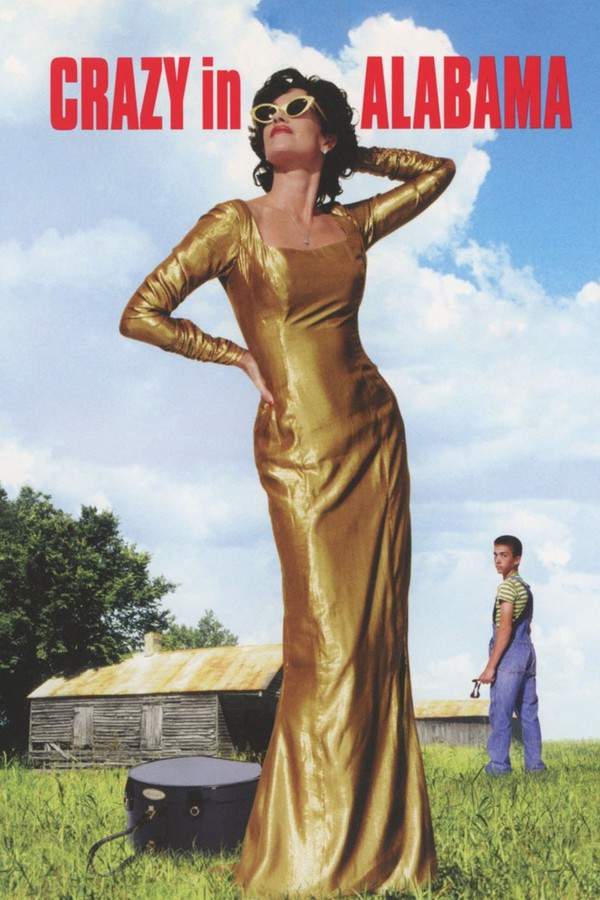
Crazy in Alabama (1999) movie poster

Timeline

Crazy in Alabama (1999) Timeline Explained – Every Event in Order

Release, runtime and language
1999 · 111 min · English
JustWatch #30,949 1
Starring
Lucas Black, Cathy Moriarty, Melanie Griffith, David Morse, Meat Loaf

In 1965 Alabama, Lucille Vinson retaliates against her abusive husband and then sets off to pursue her dream of becoming a television star in Hollywood. Simultaneously, her nephew Peejoe comes of age amidst the racial tensions of the South, struggling with questions of morality when a young black man is killed by Sheriff John Doggett. Peejoe’s journey explores the complexities of justice and the impact of prejudice in his community.

On this page (6)
  1. 1 Where to watch
  2. 2 Events in order (16)
  3. 3 Timeline questions answered
  4. 4 Movie threads
  5. 5 Movies like Crazy in Alabama
  6. 6 Every angle

Where to watch

Where to Watch Crazy in Alabama (1999)

Where can you watch Crazy in Alabama? Stream, rent or buy it in the US, including on fuboTV, Tubi TV and YouTube Free: current JustWatch availability with up-to-date prices.

Streaming availability powered by JustWatch

16 events in order · contains spoilers

Crazy in Alabama Timeline: Events in Chronological Order

Every key event of Crazy in Alabama (1999) in order, scene by scene, with when and where it takes place. Use it to untangle flashbacks, time jumps and parallel storylines, to refresh your memory before the sequel or to find the exact scene you are thinking of.

  1. Orphaned Siblings

    Peejoe Bullis and his brother Wiley are introduced as orphaned siblings living under the care of their grandmother. Their lives are marked by struggles and resilience, setting the stage for the tumultuous events to follow.

  2. Murder Committed by Lucille

    Their world is shaken when their aunt Lucille Vinson commits murder by killing her husband Chester. She takes the drastic step of concealing his head in a Tupperware container, driven by her ambition to pursue a career in Hollywood.

  3. Abandonment by Lucille

    Following the murder, Lucille leaves her seven children with their grandmother, leaving Peejoe and Wiley without a stable home. Unable to remain with their grandmother, they move in with Uncle Dove and his wife Earlene.

  4. Search for Lucille

    Uncle Dove informs Sheriff John Doggett that they have no knowledge of Lucille's whereabouts after her departure. This sets off a series of events as law enforcement begins to search for her.

  5. Lucille's Journey to Hollywood

    Lucille embarks on her journey to Hollywood, where she begins to hear the sarcastic comments of Chester’s head. This strange occurrence marks the start of her darkly comedic adventure as she navigates the trials ahead.

    Where
    Fleur de Lys hat shop
  6. Couture Purchase

    While at the Fleur de Lys hat shop, Lucille encounters a sharp-tongued assistant and impulsively spends five hundred dollars on an extravagant hat. This purchase becomes a bizarre and pivotal element in her attempt to conceal Chester's head.

    Where
    Fleur de Lys hat shop
  7. Theft and Escape

    Lucille's troubles escalate when she steals money and a car from an irate bartender. This act of desperation leads to her flight from the scene, revealing her deteriorating state of mind.

    Where
    Roadside bar
  8. Compassion from Sally

    At a roadside coffee shop, Lucille meets waitress Sally, who recognizes her distress and offers her a meal for free. This moment of kindness provides a brief respite from Lucille's turbulent journey.

    Where
    Roadside coffee shop
  9. Police Encounter

    Lucille's luck takes a turn when she gets pulled over by the police. In a fit of desperation, she manages to handcuff the officer, escaping while leaving behind his gun at the station.

  10. Racial Tensions in Alabama

    Back in Alabama, Peejoe witnesses illegal voting registrations and grapples with the murder of 17-year-old Taylor Jackson. This incident exposes him to the town's racial tensions and inadvertently pulls him into the civil rights movement.

    Where
    Alabama
  11. Vegas Adventures

    Meanwhile, Lucille finds herself in Las Vegas, experiencing a brief escape filled with gambling and romance. This moment of joy starkly contrasts with her troubled life, highlighting her longing for freedom.

    Where
    Las Vegas
  12. Casting Couch Challenges

    Upon arriving in Hollywood, Lucille faces difficult interactions with the rude actress Joan Blake on set. This confrontation sheds light on the social dynamics and competitiveness of the entertainment industry.

    Where
    Hollywood
  13. Televised Fallout

    As Lucille's trial begins, Earlene expresses frustration over Peejoe's growing involvement in activism. Their family bond weakens as they gather to watch Lucille’s dramatic and publicized televised appearance.

  14. Golden Gate Bridge Incident

    In a moment of panic, Lucille finds herself on the Golden Gate Bridge, intending to dispose of Chester’s head. However, she loses money during the process, leading to her eventual discovery by the police.

    Where
    Golden Gate Bridge
  15. Trial and Sentencing

    Lucille's trial unfolds as she defends her actions by exposing the abuses from her marriage to Chester. Despite her passionate defense, the jury finds her guilty, leading to a surprising verdict of probation instead of a harsher sentence.

    Where
    Courtroom
  16. Reunion and Reflection

    The film concludes with Lucille reuniting with her children, leaving the courtroom amidst mixed feelings of disbelief and relief. Meanwhile, Peejoe and Wiley navigate the aftermath of social change in Alabama, pondering their new shared realities.

    Where
    Alabama

Last updated: October 27, 2024 at 21:19

Was this helpful?

Timeline questions answered

Crazy in Alabama Timeline Explained: Your Questions Answered

When does it happen, and why in that order? The questions people ask about the chronology of Crazy in Alabama (1999): time jumps, flashbacks, cause and effect between scenes and the correct order of events, each answered with spoilers.

Q1

Why does Lucille kill her husband Chester?

Lucille kills Chester because he was an abusive husband who also stood in the way of her Hollywood dreams. She had been cast in a two-episode role on the sitcom Bewitched, and Chester's existence represented both the physical danger she faced and the obstacle preventing her from pursuing her career in Hollywood. The murder was her way of escaping both the abuse and the constraints on her ambitions.

  • chester
  • abuse
  • hollywood dreams
  • murder
  • domestic violence
Q2

Why does Lucille take Chester's head to Hollywood?

After killing Chester, Lucille decapitates him and places his head in a Tupperware container, which she keeps with her throughout her journey to Hollywood. This darkly comedic choice serves as both a macabre keepsake and a physical burden she cannot abandon. The head even speaks sarcastically to her during her road trip, adding a surreal element to the film. She eventually tries to dispose of it at the Golden Gate Bridge but is caught by police.

  • chester's head
  • tuuperware
  • hollywood
  • golden gate bridge
  • surreal element
Q3

Why is Taylor Jackson's murder significant to the story?

Taylor Jackson, a 17-year-old black young man, is killed by Sheriff John Doggett, which becomes a pivotal event that exposes the racial tensions in 1960s Alabama. This murder directly impacts Peejoe, who witnesses both the killing and the subsequent cover-up. The event forces Peejoe to confront the realities of racism and injustice in his community, ultimately pulling him into the civil rights movement despite his young age.

  • taylor jackson
  • sheriff john doggett
  • racism
  • civil rights
  • murder
Q4

Why does Peejoe become involved in the civil rights movement?

Peejoe becomes involved in the civil rights movement after witnessing the murder of 17-year-old Taylor Jackson by Sheriff John Doggett. The killing, combined with his observation of illegal voting registrations in his racially charged community, forces him to grapple with questions of morality and justice. Rather than remaining indifferent to the injustice around him, Peejoe finds himself reluctantly pulled into activism as the tragedy hits close to home.

  • peejoe
  • civil rights
  • activism
  • racism
  • alabama
  • moral awakening
Q5

What happens when Lucille tries to dispose of Chester's head at the Golden Gate Bridge?

While on the Golden Gate Bridge, Lucille attempts to throw Chester's head into the water below to dispose of the evidence of her crime. However, in the process of trying to release the head, she loses her money. Police discover her during this panicked moment, leading to her arrest. This incident marks the end of her chaotic journey and sets up her eventual trial.

  • golden gate bridge
  • arrest
  • money lost
  • police discovery
  • chrsters head
Q6

What is the outcome of Lucille's trial?

Lucille is brought to trial for murdering Chester. During her defense, she describes the abusive nature of her marriage, comparing Chester's oppressive behavior to famous cinema villains. The jury initially finds her guilty, but Judge Louis Mead intervenes with a suspended sentence of five years' probation instead of the electric chair. The judge cites her non-violent nature, noting that her actions were directed solely at her husband rather than being a threat to society at large.

  • trial
  • guilty verdict
  • judge louis mead
  • probation
  • electric chair
  • defense
Q7

Why does Sheriff John Doggett kill Taylor Jackson?

The film depicts Sheriff John Doggett as a racist authority figure who kills 17-year-old Taylor Jackson, though the specific motivations behind the murder are not fully detailed in the summary. The killing represents the violent racial prejudice embedded in the Southern justice system during the 1960s. This act of brutality against an unarmed black teenager exposes the corrupt and bigoted nature of local law enforcement in the Jim Crow South.

  • sheriff john doggett
  • taylor jackson
  • racism
  • police brutality
  • murder
Q8

Why does Lucille spend $500 on a hat at the Fleur de Lys?

At the Fleur de Lys hat shop in Hollywood, Lucille encounters a sharp-tongued assistant who mocks her. In an impulsive decision, she spends five hundred dollars on an extravagant couture hat. This purchase serves a dual purpose: it provides a fashionable container to conceal Chester's head, and it represents her desperate attempt to reinvent herself as a sophisticated Hollywood aspirant despite her dire circumstances.

  • fleur de lys
  • expensive hat
  • hollywood
  • chrsters head
  • reinvention
Q9

Why does the waitress Sally help Lucille at the roadside coffee shop?

At a roadside coffee shop, waitress Sally (played by Fannie Flagg) recognizes that Lucille is in distress and offers her a meal for free. Sally shows compassion toward Lucille despite her chaotic state. This act of kindness provides Lucille with a brief moment of relief during her tumultuous journey, highlighting the theme that empathy can be found in unexpected places.

  • sally
  • waitress
  • kindness
  • compassion
  • roadside cafe
  • meal
Q10

What happens to the segregated swimming pool at the end of the movie?

At the film's conclusion, the town fills in the segregated swimming pool, symbolizing the social changes brought about by the civil rights movement in Alabama. This event marks a shift in the community's racial dynamics, even as it comes with a bittersweet tone, the pool's destruction represents progress, but also the end of an era that Peejoe and Wiley once knew. The two boys fish with a friend, reflecting on their new reality in a changing South.

  • segregated pool
  • swimming pool
  • civil rights
  • social change
  • alabama
  • ending
Q11

Why do Peejoe and Wiley have to move in with Uncle Dove?

After Lucille leaves Alabama to pursue her Hollywood dreams, she leaves her seven children with their grandmother. However, there is no room for Peejoe and Wiley, so they are forced to move in with Uncle Dove and his wife Earlene. This displacement adds to the boys' instability after already being orphaned, and it places them in a new household that becomes connected to the search for Lucille.

  • peejoe
  • wiley
  • uncle dove
  • earlene
  • orphans
  • housing
Q12

Why does Lucille handcuff the police officer during the traffic stop?

When Lucille gets pulled over by police during her journey, she finds herself in a desperate situation. She manages to handcuff the officer and escapes, leaving behind his gun at the police station. This act demonstrates her increasingly reckless state of mind as she flees from law enforcement while carrying the evidence of her crime. It also showcases her resourcefulness in avoiding capture.

  • police
  • traffic stop
  • handcuffs
  • escape
  • gun
  • fleeing

Movie threads

More Movies Like Crazy in Alabama, by Mood & Story

Curated lists built around what makes Crazy in Alabama tick: the same mood, the same kind of story or the same emotional payoff. Each list explains why these movies belong together.

Movies like Crazy in Alabama set in the Segregated South

Character-driven tales set against the backdrop of racial tension and change. If you liked the historical setting and social commentary of Crazy in Alabama, explore these other films that use the racially charged landscape of the American South as a powerful narrative force. These movies like Crazy in Alabama feature character-driven drama amidst a backdrop of civil rights struggles.

  • tense
  • reflective
  • melancholic
  • hopeful
  • unsettling
  • historical
  • Tone: bittersweet, reflective, tense
  • Pacing: steady, deliberate
Why these movies?

The story pattern: Stories in this thread typically follow characters, often young or coming of age, as they navigate the complex moral landscape of a deeply prejudiced society. The central conflict often arises from the clash between personal decency and systemic injustice, leading to moments of profound realization and bittersweet progress.

Why they belong together: Movies are grouped here for their shared focus on the American South as a setting rich with dramatic tension and historical weight. They share a tone that balances the gravity of social issues with the intimate, personal journeys of their characters.

Movies like Crazy in Alabama with quirky crime stories

Where eccentric characters commit dark acts, blurring the line between comedy and drama. Fans of the darkly humorous and eccentric crime plot in Crazy in Alabama will enjoy these similar movies. Discover other films that balance quirky characters who commit serious acts with the dramatic consequences that follow, creating a uniquely bittersweet and unpredictable tone.

  • quirky
  • unsettling
  • dark humor
  • tense
  • melancholic
  • eccentric
  • Tone: bittersweet, quirky, unsettling
  • Pacing: variable, character-driven
Why these movies?

The story pattern: The narrative pattern involves an unconventional protagonist committing a violent or criminal act, often for sympathetic or bizarre reasons, and then embarking on a journey that is both strangely comical and fraught with danger. The story explores the dissonance between the character's eccentric perspective and the gravity of their actions.

Why they belong together: These films are united by their distinctive tonal blend, where crime narratives are filtered through a quirky or whimsical lens without losing sight of the emotional and moral stakes. This creates a uniquely engaging and offbeat viewing experience.

If you liked this

Movies Like Crazy in Alabama

Similar movies to Crazy in Alabama: the same genre, themes or kind of story. Each one comes with its own plot summary, timeline and ending explained.

Browse all movie summaries

Every angle

Crazy in Alabama (1999) Explained: Plot, Timeline & Characters

Everything about Crazy in Alabama in one place: what happens in the plot summary, the timeline in chronological order, the characters and meaning and a spoiler-free summary. What's After the Movie adds the cast, box office and post-credit scenes.

Coming soon on iOS and Android

The Plot Explained Movie Summary App

Plot summaries, endings explained and timelines on your phone. Catch up on any movie in minutes, save your favorites and never miss a twist again.

Be the first to know when we launch. Your email stays private, always.

Learn more about the app