Plot Explained Spoilers guaranteed!
Plot Explained

Browse by genre

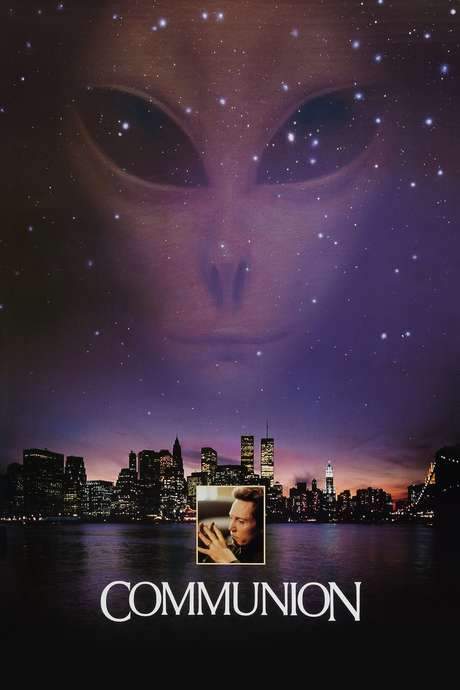
Communion (1989) movie poster

Characters & Themes

Communion (1989) Characters, Setting & Themes Explained

Release, runtime and language
1989 · 103 mins · English
Loading streaming availability…
Directed by
Philippe Mora
Starring
Christopher Walken, Basil Hoffman, Paul Clemens, Joshua John Miller, Lindsay Crouse, Frances Sternhagen

The true story of one man’s terrifying journey into the unknown. A novelist’s wife and son see him changed by an apparent encounter with aliens in the mountains.

On this page (9)
  1. 1 Where to watch
  2. 2 Characters explained (6)
  3. 3 Where & when it takes place
  4. 4 Themes & meaning (3)
  5. 5 Character & meaning questions
  6. 6 The book behind the movie
  7. 7 Movie threads
  8. 8 Movies like Communion
  9. 9 Every angle
Loading streaming availability…

6 main characters · contains spoilers

Communion Characters Explained: Who Is Who

The main characters of Communion (1989), heroes and villains: what drives them, how they change over the course of the story and what each of them reveals about the film's bigger ideas.

  • Whitley Strieber (Christopher Walken)

    A successful author whose nights are haunted by paranoid dreams and sightings of alien beings. His skepticism clashes with mounting evidence, driving him to seek answers through therapy and direct confrontations with the unknown.

    • ❄️ Sci-Fi
    • 🎭 Drama
    • 🧠 Psychological
  • Anne Strieber (Lindsay Crouse)

    Whitley's wife who tries to maintain normal family life amidst unsettling visions. She serves as a stabilizing presence for their son and the surrounding family while the couple grapples with doubt and fear.

    • ❄️ Drama
    • 🧠 Family
    • 💑 Relationship
  • Andrew Strieber (Jonathan Fromdahl)

    Whitley and Anne's son who becomes entangled in the experiences and visions of contact. His emergence into the mystery tests the family dynamics and his sense of safety.

    • 👶 Family
    • 🧠 Psychology
    • 🛡️ Protection
  • Dr. Janet Duffy (Frances Sternhagen)

    A psychiatrist specializing in hypnotic regression who guides Strieber toward confronting his experiences. She represents medical skepticism while also validating the potential reality of his memories.

    • 🧠 Psychology
    • 🩺 Medical
    • 🧩 Mystery
  • Alex (Andreas Katsulas)

    Family friend at the cabin who witnesses the unsettling events, highlighting the communal impact of the encounters and the ambiguity surrounding what is happening.

    • 👥 Friend
    • 🧭 Mystery
    • 🧩 Community
  • Sarah (Terri Hanauer)

    Another family friend who bears witness to the strange happenings, contributing to the group dynamics and the sense that the events extend beyond the nuclear family.

    • 👥 Friend
    • 🧭 Mystery
    • 👁️ Perception

Last updated: October 04, 2025 at 13:53

Was this helpful?

Setting

Where and When Does Communion Take Place?

The setting of Communion (1989): the year and time period, the places and locations, and how they shape the characters, the mood and the tension of the story.

Time period

1985

Set in 1985, the narrative unfolds in a mid-1980s urban environment that bleeds into a secluded countryside cabin. The era’s technological and cultural backdrop informs the characters’ skepticism and eagerness to understand extraordinary experiences. Memory, therapy, and distant scientific curiosity shape how the events are interpreted during this period.

Location

Manhattan, New York, Cabin in the woods

The story shifts between Whitley Strieber's Manhattan apartment and a remote family cabin in the woods, highlighting the contrast between the bustling city life and isolated retreat where strange encounters occur. Manhattan represents the author’s professional success and normal domesticity, while the cabin becomes the claustrophobic setting for otherworldly intrusions. These two places frame the tension between everyday life and the unknown.

  • 🏙️ Urban
  • 🌲 Rural
  • 👨‍👩‍👧 Family

Last updated: October 04, 2025 at 13:53

Was this helpful?

3 major themes

Communion Meaning: Themes & Message Explained

What is Communion (1989) really about? The emotional, social and philosophical themes the film keeps returning to, its symbolism and the message beneath the surface.

  • Alien Contact

    The core of the film centers on Whitley Strieber's repeated encounters with extraterrestrial beings and the sense that contact has shaped his life beyond a single moment. Encounters blur the line between dream and reality, driving a quest for truth. The theme also raises the idea that such contact may be hereditary, passing from parent to child.

  • Reality vs Perception

    Hypnosis and regression therapy probe the boundary between truth and illusion. Strieber vacillates between validation and doubt as doctors confirm possible experiments, while he maintains personal skepticism. The story questions whether subjective experiences can be as compelling as objective evidence and how memory shapes belief.

  • Family & Legacy

    Marital strain and paternal concerns anchor the narrative as visions intrude on daily life. The alien contact is framed as a family matter, suggesting a lineage of encounters that could be passed to Whitley’s son Andrew. Acceptance of the visitation eventually reinforces family bonds and shared purpose.

Last updated: October 04, 2025 at 13:53

Was this helpful?

Character & theme questions

Communion Characters & Meaning: Your Questions Answered

The questions people ask about Communion (1989): who the characters really are, their relationships, what the symbols mean, where it takes place and what the movie is really about. Each answer contains spoilers.

Q1

Where does the story take place?

The film is set in two primary locations: Whitley Strieber's Manhattan apartment representing his successful author lifestyle and normal domesticity, and a remote family cabin in the woods where the strange encounters occur. The contrast between the bustling city and the isolated cabin creates the central tension between everyday life and the unknown.

  • manhattan
  • cabin
  • setting
  • location
  • woods
  • new york
Q2

When is the movie set?

Communion is set in 1985, during the mid-1980s. This era's cultural backdrop of skepticism toward extraordinary claims, combined with emerging interest in repressed memory therapy andalien abduction narratives, shapes how the characters interpret the events.

  • 1985
  • time period
  • 1980s
  • era
  • setting
Q3

What is the alien contact theme about?

The core theme of alien contact explores Whitley Strieber's repeated encounters with extraterrestrial beings and how these experiences reshape his entire life. The encounters blur the line between dream and reality, driving his desperate quest for truth. The film also suggests such contact may be hereditary, potentially passing from parent to child.

  • alien contact
  • extraterrestrial
  • abduction
  • ufo
  • encounters
Q4

How does the film explore reality vs perception?

The film uses hypnosis and regression therapy to probe the boundary between truth and illusion. Strieber oscillates between validation and doubt as medical professionals confirm possible experiments, while he maintains personal skepticism. The narrative questions whether subjective experiences can be as compelling as objective evidence and how memory fundamentally shapes belief.

  • reality
  • perception
  • memory
  • hypnosis
  • therapy
  • regression
  • truth
Q5

What role does family play in the story?

Family and legacy serve as emotional anchors throughout the narrative. Marital strain and paternal concerns dominate as alien visions intrude on daily life. The contact is framed as a family matter with a potential lineage of encounters that could extend to Whitley's son Andrew. Ultimately, acceptance of the visitation reinforces family bonds and creates shared purpose against the unknown.

  • family
  • marriage
  • son
  • andrew
  • legacy
  • bonds
  • acceptance
Q6

Who is Whitley Strieber?

Whitley Strieber is a successful author portrayed by Christopher Walken whose nights are haunted by paranoid dreams and sightings of alien beings. His natural skepticism clashes with mounting evidence, driving him to seek answers through therapy and direct confrontation with the unknown. His journey forms the psychological core of the film.

  • whitley strieber
  • christopher walken
  • author
  • protagonist
Q7

Who is Anne Strieber?

Anne Strieber is Whitley's wife, played by Lindsay Crouse, who tries to maintain normal family life amidst unsettling visions. She serves as a stabilizing presence for their son and the surrounding family while the couple grapples with doubt and fear. Her perspective provides grounding in domestic reality amid supernatural uncertainty.

  • anne strieber
  • lindsay crouse
  • wife
  • family
Q8

Who is Andrew Strieber?

Andrew Strieber is Whitley and Anne's son, played by Jonathan Fromdahl, who becomes entangled in the experiences and visions of contact. His emergence into the mystery tests family dynamics and his sense of safety, representing the theme of potential generational inheritance of these encounters.

  • andrew strieber
  • son
  • child
  • family
Q9

Who is Dr. Janet Duffy?

Dr. Janet Duffy, portrayed by Frances Sternhagen, is a psychiatrist specializing in hypnotic regression who guides Strieber toward confronting his experiences. She represents medical skepticism while also validating the potential reality of his memories, embodying the film's exploration of whether scientific frameworks can accommodate extraordinary experiences.

  • dr janet duffy
  • psychiatrist
  • therapist
  • hypnosis
  • regression
Q10

What is the tone of the film?

The film maintains a consistently tense, psychologically disturbing tone driven by Strieber's escalating paranoia and the strain on his family. It explores disturbing themes of psychological violation and existential dread. The pacing moves from seemingly normal life to sudden, shocking incidents, amplifying unpredictability and dread.

  • horror
  • psychological
  • tension
  • paranoia
  • dread
  • tone
Q11

What does the ending mean?

The ending remains deliberately ambiguous; Strieber chooses to accept the 'unknown' rather than defeat it. This is neither a clear victory nor a defeat but a complex integration of a disturbing reality into his life. It represents a philosophical surrender to uncertainty rather than resolution.

  • ending
  • ambiguous
  • acceptance
  • unknown
  • resolution

Movie threads

More Movies Like Communion, by Mood & Story

Curated lists built around what makes Communion tick: the same mood, the same kind of story or the same emotional payoff. Each list explains why these movies belong together.

Psychological horror blurring reality like in Communion

Unsettling journeys where the line between trauma and supernatural nightmare fades. Discover movies like Communion, where psychological terror and ambiguous realities create a uniquely unsettling experience. If you enjoyed the mind-bending tension and the questioning of what's real in Communion, these similar thrillers and horror films exploring memory, trauma, and delusion will captivate you.

  • psychological
  • unsettling
  • paranoid
  • uncanny
  • nightmarish
  • anxious
  • Tone: tense, uncanny, unsettling
  • Pacing: variable, psychological build
Why these movies?

The story pattern: Stories in this thread typically follow a protagonist grappling with fragmented or traumatic memories, often using tools like therapy or hypnosis to uncover the truth. The narrative structure is built on ambiguity, deliberately leaving the audience uncertain whether the horror is supernatural or a symptom of profound psychological distress, culminating in an unresolved or ambiguous ending.

Why they belong together: Movies are grouped here for their shared focus on psychological unease over gore, their ambiguous approach to supernatural threats, and their commitment to making the viewer question the nature of the protagonist's reality, resulting in a deeply cerebral and paranoid viewing experience.


Family terror movies like Communion

The safety of family and home is shattered by an incomprehensible, otherworldly threat. If you liked the theme of a family under supernatural stress in Communion, explore these other horror and thriller films. Find movies similar to Communion where alien encounters or paranormal events invade domestic life, testing the bonds of marriage and parenthood under extreme duress.

  • family under stress
  • invasion
  • uncanny
  • anxious
  • confrontational
  • fear of the unknown
  • Tone: confrontational, anxious, tense
  • Pacing: variable, from steady to chaotic
Why these movies?

The story pattern: The narrative pattern involves an initial, seemingly normal domestic setting that is gradually or suddenly invaded by an unexplainable phenomenon. The story then focuses on the family's reaction—often disbelief, fractured trust, and desperate attempts to protect each other—as the threat escalates, blurring the boundaries between the real world and a terrifying unknown.

Why they belong together: These films are connected by their central theme of the home as a battleground, the strain on family dynamics caused by an external, inexplicable threat, and the potent fear that comes from vulnerability in a place meant to be safe.

If you liked this

Movies Like Communion

Similar movies to Communion: the same genre, themes or kind of story. Each one comes with its own plot summary, timeline and ending explained.

Browse all movie summaries

Every angle

Communion (1989) Explained: Plot, Timeline & Characters

Everything about Communion in one place: what happens in the plot summary, the timeline in chronological order, the characters and meaning and a spoiler-free summary. What's After the Movie adds the cast, box office and post-credit scenes.

Coming soon on iOS and Android

The Plot Explained Movie Summary App

Plot summaries, endings explained and timelines on your phone. Catch up on any movie in minutes, save your favorites and never miss a twist again.

Be the first to know when we launch. Your email stays private, always.

Learn more about the app