Year: 1967
Runtime: 105 mins
Language: English
Director: Gordon Douglas
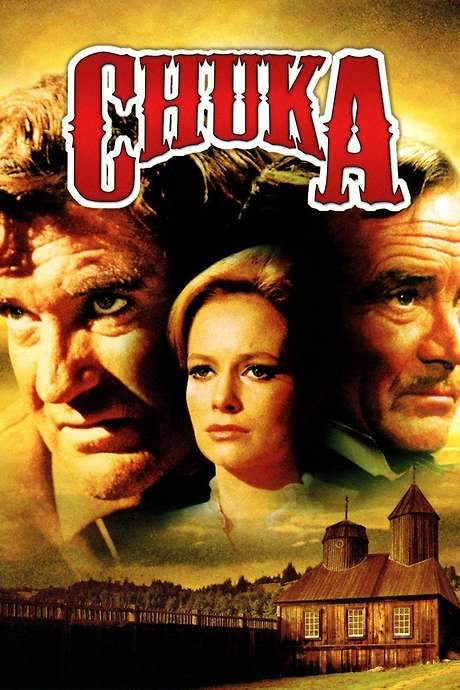
He’s a man called Chuka and you don’t forget it! A group under siege at an Army fort grapple with painful memories.
Find where to stream, rent, or buy Chuka (1967) in the US with current JustWatch availability, up-to-date pricing, and platform listings for subscription, rental, and digital purchase options.
Warning: spoilers below!
Haven’t seen Chuka yet? This summary contains major spoilers. Bookmark the page, watch the movie, and come back for the full breakdown. If you're ready, scroll on and relive the story!
Trace every key event in Chuka (1967) with our detailed, chronological timeline. Perfect for unpacking nonlinear stories, spotting hidden connections, and understanding how each scene builds toward the film’s climax. Whether you're revisiting or decoding for the first time, this timeline gives you the full picture.
Last updated: October 09, 2025 at 12:38
Find frequently asked questions about the Chuka (1967) timeline, including chronological order, nonlinear jumps, cause-and-effect links, and scene sequence clarifications. This timeline FAQ helps explain when key events happen, how moments connect, and why the story unfolds in that specific order.
Hanu recognizes Chuka because they share a past connection. When Chuka rides into the Arapaho camp in winter and offers food to the starving people, Hanu acknowledges this act of kindness. The mutual recognition between the two men, the quiet gunman and the war chief, creates a moment of respect that allows the stagecoach to pass safely through the warrior circle.
The Colt pistol and solitary grave discovered among the fort's ruins belong to Chuka himself. The opening scene shows the commander discovering these items after the battle, hinting that Chuka died at the fort. The pistol was described by Hanu as belonging to a "quiet, lonely man," foreshadowing Chuka's ultimate fate and the mystery surrounding his death.
The opening frame establishes the Colt as Chuka's, creating dramatic irony about his eventual fate.
Chuka lowers his weapon because Helena Chavez is being pursued by the Arapaho. While he has Hanu in his sights and could take revenge or end the conflict, he chooses not to fire. Instead, he protects Helena from capture, prioritizing her survival over settling whatever debt exists between himself and Hanu. This act of mercy mirrors the earlier mercy shown to him by Hanu at the stagecoach.
The debt between Chuka and Hanu appears to be rooted in mutual recognition of honor among warriors. Earlier, Hanu showed mercy by not attacking when Chuka was escorting the stagecoach. When Chuka later lowers his weapon instead of shooting Hanu while Helena runs, he returns that mercy. Hanu's silent, resolute departure suggests he acknowledges this debt repaid, not through violence, but through Chuka's choice to spare him and protect the woman he loves.
The initial stagecoach scene establishes Hanu's recognition and mercy toward Chuka.
The Arapaho breach the fort with crucial inside help from Major Benson's Arapaho mistress. She stabs Benson during the attack and sets fire to the stables, creating chaos and an open path through the fort's defenses. This betrayal from within, combined with the overwhelming force of the siege, allows the Arapaho warriors to storm through the breached walls and overrun the garrison.
Major Benson's hidden Arapaho mistress is revealed during dinner, establishing her access to the fort.
Colonel Valois shoots Spivey, the soldier leading the mutiny, to maintain absolute control over his garrison during the siege. Despite his own checkered past of suspected cowardice and volatile command, Valois understands that any sign of weakness or divided command could lead to complete collapse. By killing the ringleader instantly, he demonstrates that he will use lethal force to preserve order, even among his own men.
Hansbach remains loyal to Valois because Valois once rescued him from captivity in the Sudan at great cost to his own unit. Over coffee, Hansbach recounts this story, explaining that Valois's willingness to risk his men to save one soldier earned unwavering devotion. Hansbach's loyalty stands in stark contrast to the other officers' moral failures, making him the one truly reliable defender at the fort.
While the film does not explicitly show Chuka and Helena leaving, the ending strongly implies they escaped together. After burying Senora Kleitz, the two slip away during the chaos as the Arapaho overrun the fort. The final narration states there is no sign of them, and the hopeful implication is that they fled together. The discovery of Chuka's grave in the opening frame suggests he may have died later from his wounds, but not before ensuring Helena's safety.
Kleitz asks Chuka to help her niece escape, establishing Helena as someone he would protect.
Senora Kleitz dies in the chaos of the Arapaho assault when the fort's walls are breached and flames spread through the compound. She dies in Chuka's arms, fulfilling the tragic arc of their rekindled but ultimately impossible romance. Having told Chuka that it was too late to rebuild their past relationship, her death represents the final loss, love sacrificed to the violence of the siege.
Kleitz tells Chuka it is too late for them and asks him to help her niece escape.
Valois's past involves suspected cowardice during a military engagement, likely compounded by drinking. During dinner, he himself reveals this checkered history, using it as a tool to humiliate his subordinates and assert dominance. His final words as he dies reference this cowardice, suggesting he never overcame the shame of his past failures. His desperate defense of the fort may partly stem from proving his courage posthumously.
Major Benson's Arapaho mistress betrays the fort as an act of loyalty to her people during the siege. While her exact motivations are not fully explored, her action directly aids the Arapaho assault by creating chaos and an open pathway into the fort. Her relationship with Benson appears to have been a secret affair, but when the attack comes, she chooses her tribe over her lover, stabbing Benson and lighting the fires that help overwhelm the defenders.
Benson's hidden Arapaho mistress is revealed during the dinner scene, where her presence represents a dangerous vulnerability.
Before the film, Chuka and Kleitz were in love, but she was the daughter of a wealthy rancher who dismissed Chuka as a lowly hand. Their social difference made any future together impossible, and Kleitz's family arranged her marriage to another man. By the time of the siege, Kleitz is a widow, and when Chuka tries to rekindle their romance, she tells him it is too late, they cannot undo years of separation and lost time.
Discover curated groups of movies connected by mood, themes, and story style. Browse collections built around emotion, atmosphere, and narrative focus to easily find films that match what you feel like watching right now.
Stories of desperate characters trapped and tested by an overwhelming external threat.If you liked the tense survival pressure in Chuka, explore more movies like it. This list features films with a similar setup: characters trapped in a fort, station, or other location, facing an overwhelming siege that tests their resolve and forces difficult moral decisions.
The narrative pattern involves a group of characters, often with conflicting backgrounds, becoming trapped in a defensible location. An external enemy force surrounds them, leading to a battle of attrition. The story unfolds through strategic decisions, internal power struggles, and the psychological breakdown of individuals under prolonged stress, typically culminating in a final, destructive assault.
Movies are grouped here for their shared high-tension atmosphere, the central 'fort under siege' plot structure, and the intense focus on group dynamics and survival against overwhelming odds. They deliver a specific kind of anxious, claustrophobic viewing experience.
Gritty tales where haunted protagonists confront a violent past in a bleak landscape.For viewers who appreciated the heavy emotional weight and melancholic tone of Chuka, this list collects similar Westerns. These films share a focus on scarred heroes, bleak atmospheres, and stories that explore themes of trauma, debt, and honor, often with bittersweet or tragic conclusions.
The narrative follows a world-weary, skilled protagonist who arrives in a troubled community. Their personal history of violence or loss is a central element, often intersecting with the current conflict. The journey is less about clear victory and more about confronting the past, settling debts, and finding a fragile, hard-won peace amidst a cycle of violence.
This thread groups films based on their shared tone of melancholic fatalism, the archetype of the traumatized hero, and a generally heavy emotional weight. The Western setting is used not for adventure but as a backdrop for exploring themes of regret, sacrifice, and the grim reality of frontier life.
Don't stop at just watching - explore Chuka in full detail. From the complete plot summary and scene-by-scene timeline to character breakdowns, thematic analysis, and a deep dive into the ending - every page helps you truly understand what Chuka is all about. Plus, discover what's next after the movie.
Read a complete plot summary of Chuka, including all key story points, character arcs, and turning points. This in-depth recap is ideal for understanding the narrative structure or reviewing what happened in the movie.
Discover the characters, locations, and core themes that shape Chuka. Get insights into symbolic elements, setting significance, and deeper narrative meaning - ideal for thematic analysis and movie breakdowns.
Discover movies like Chuka that share similar genres, themes, and storytelling elements. Whether you’re drawn to the atmosphere, character arcs, or plot structure, these curated recommendations will help you explore more films you’ll love.
Chuka (1967) Plot Summary & Movie Recap
Chuka (1967) Scene-by-Scene Movie Timeline
Chuka (1967) Spoiler-Free Summary & Key Flow
Movies Like Chuka – Similar Titles You’ll Enjoy
Shalako (1968) Complete Plot Breakdown
Massacre Canyon (1954) Spoiler-Packed Plot Recap
The Shooting (1966) Film Overview & Timeline
The Shadow of Chikara (1977) Plot Summary & Ending Explained
Chisum (1970) Complete Plot Breakdown
Fort Massacre (1958) Full Movie Breakdown
Dakota Incident (1956) Full Summary & Key Details
Charro! (1969) Story Summary & Characters
Chato’s Land (1972) Story Summary & Characters
Apache Ambush (1955) Detailed Story Recap
Fort Courageous (1965) Spoiler-Packed Plot Recap
Fort Utah (1967) Full Movie Breakdown
Chino (1973) Ending Explained & Film Insights
Duel at Diablo (1966) Story Summary & Characters
Comanche Station (1960) Movie Recap & Themes