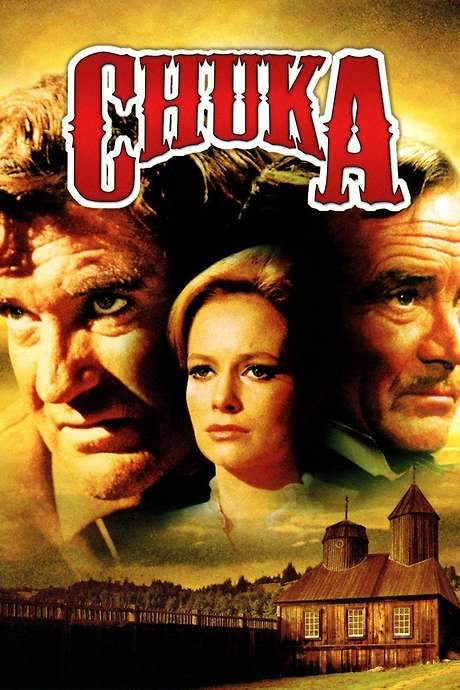
Year: 1967
Runtime: 105 mins
Language: English
Director: Gordon Douglas
He’s a man called Chuka and you don’t forget it! A group under siege at an Army fort grapple with painful memories.
Find where to stream, rent, or buy Chuka (1967) in the US with current JustWatch availability, up-to-date pricing, and platform listings for subscription, rental, and digital purchase options.
Warning: spoilers below!
Haven’t seen Chuka yet? This summary contains major spoilers. Bookmark the page, watch the movie, and come back for the full breakdown. If you're ready, scroll on and relive the story!
Read the complete plot breakdown of Chuka (1967), including all key story events, major twists, and the ending explained in detail. Discover what really happened, and what it all means.
The film opens with a U.S. Army commander dictating a report from the ruins of a fort that has been largely destroyed. In the dim, war-scarred office, the Arapaho war chief Marco López Hanu speaks little as a single grave and a Colt pistol, once owned by a gunman described by Hanu as a “quiet, lonely man,” are discovered among the rubble. This quiet mystery becomes the doorway into a story that blends past wounds with a present danger.
A wandering gunman, Rod Taylor as Chuka, rides into an Arapaho camp in the heart of winter, where he offers food to the starving people. Not long after, he crosses paths with a stagecoach carrying two women—Senora Veronica Kleitz Luciana Paluzzi and her niece Senorita Helena Chavez Victoria Vetri. The two dissolve into the uneasy tension of the moment as Chuka and the coach exchange wary glances. Suddenly, Arapaho warriors, led by Hanu, circle the coach. Though the group expects violence, Hanu recognizes Chuka, and the riders pull back, letting the coach pass.
Chuka accompanies the coach to a nearby U.S. Army fort, where the outpost’s commander, Colonel Stuart Valois John Mills, guards the civilians with a steely, anxious posture. He fears that their overdue patrol may have fallen prey to ambush and refuses to allow the three civilians to leave. To scout the surrounding danger, he dispatches his trusted Lou Trent James Whitmore, who returns without his rider or a clear answer, casting a pall over the fort’s already tense mood.
Inside the fort, a shadowed past leans over every table and doorway. Before Chuka became a hired gun, he once loved Kleitz, only to be dismissed because he was a lowly hand on her father’s ranch. Kleitz is now a widow, her marriage arranged by the family’s social expectations. The soldiers of the fort, meanwhile, carry their own sins: Valois is a man broken by a past of suspected cowardice and volatile command; Major Benson [Louis Hayward] uses card games as a mask while keeping an Arapaho mistress hidden away; Lieutenant Daly [Gerald York] has faced a treason charge that was ultimately dropped. Over dinner, Valois narrates these past lives in a bold, humiliating bid to undermine his subordinates, a tactic that only echoes the tensions roiling the fort. Yet one man remains unequivocally reliable: Sergeant Otto Hansbach [Ernest Borgnine], a first-rate soldier whose loyalty stands in sharp contrast to the fort’s flawed leadership. The meal is interrupted when Spivey [Michael Cole], a soldier under discipline for desertion, is flogged, and Chuka watches with a growing sense of unease about the lines between law and survival.
Chuka is hired for a $200 assignment to slip out and scout the enemy lines, and in the process he rescues Lou Trent from danger. On the return journey, he attempts to rekindle his past bond with Kleitz, who has moved on in life but from whom he must learn that it might be too late. He offers to guide the two women to safety, yet Kleitz asks him to consider fleeing with her niece, while Chuka admits he would only run if Kleitz herself would come with him.
From the moment Chuka surveys the approaching threat, the fort’s defense hinges on the impossible choice to abandon supplies to the enemy. Chuka urges Colonel Valois to retreat, while Valois stubbornly clings to the idea that they can defend the fort against overwhelming odds. A mutiny is quashed when the ringleader is shot, a brutal moment that confirms to Chuka how far Valois will go to maintain control. Hansbach’s steady, quiet insistence on duty becomes a quiet counterpoint to the more reckless impulses around him. Over coffee later, Hansbach explains his unwavering loyalty to the commander, recounting a tale from the Sudan in which Valois’s unit rescued him from capture at a great cost.
The moment of personal revelation arrives when Kleitz seeks out Chuka; the two share a charged, intimate moment, and she reaffirms the difficult choice between love and safety. As the fort braces for the impending attack, Major Benson’s machinations come to a head: his Arapaho mistress, after stabbing him, sets fire to the stables, providing a crucial inside edge to the attackers. The walls are breached, and the flames roar through the fort as Kleitz and Valois are killed in the chaos. Kleitz dies in Chuka’s arms, and Valois meets his end with a final, painful reflection about cowardice. Hansbach is fatally shot in the turmoil, and with the soldiers defeated and the fort exposed, Chuka and Helena Chavez slip away, hiding as the Arapaho surge through the breached defenses to claim the fort’s stores and scatter the remaining defenders.
As the mayhem erupts, Hanu rides through the burning fort, inspecting the ruin as if measuring the weight of a debt owed. Chuka, aiming his pistol at the Arapaho chief, hesitates at a critical moment and lowers the weapon, opting instead to protect Helena’s life. Hanu watches in quiet resolve and, with a purposeful calm, turns away with his braves into the night, seemingly acknowledging a debt repaid in a different form.
Back in the present, the commander concludes his report and resolves not to disturb the remains or the resting place of those who fell. The film closes with no clear sign of Chuka or Helena, but the narrative leaves a hopeful hint that they may have escaped together after laying Señora Kleitz to rest, with the fort’s ashes fading into memory and the buried past finally set to rest.
Last updated: October 09, 2025 at 12:38
Explore frequently asked questions about Chuka (1967) with spoiler-rich answers covering the full plot summary, major story beats, character motivations, hidden details, and ending meaning. This movie summary FAQ helps explain confusing scenes, plot twists, and narrative decisions in clear, searchable detail.
Hanu recognizes Chuka because they share a past connection. When Chuka rides into the Arapaho camp in winter and offers food to the starving people, Hanu acknowledges this act of kindness. The mutual recognition between the two men, the quiet gunman and the war chief, creates a moment of respect that allows the stagecoach to pass safely through the warrior circle.
The Colt pistol and solitary grave discovered among the fort's ruins belong to Chuka himself. The opening scene shows the commander discovering these items after the battle, hinting that Chuka died at the fort. The pistol was described by Hanu as belonging to a "quiet, lonely man," foreshadowing Chuka's ultimate fate and the mystery surrounding his death.
The opening frame establishes the Colt as Chuka's, creating dramatic irony about his eventual fate.
Chuka lowers his weapon because Helena Chavez is being pursued by the Arapaho. While he has Hanu in his sights and could take revenge or end the conflict, he chooses not to fire. Instead, he protects Helena from capture, prioritizing her survival over settling whatever debt exists between himself and Hanu. This act of mercy mirrors the earlier mercy shown to him by Hanu at the stagecoach.
The debt between Chuka and Hanu appears to be rooted in mutual recognition of honor among warriors. Earlier, Hanu showed mercy by not attacking when Chuka was escorting the stagecoach. When Chuka later lowers his weapon instead of shooting Hanu while Helena runs, he returns that mercy. Hanu's silent, resolute departure suggests he acknowledges this debt repaid, not through violence, but through Chuka's choice to spare him and protect the woman he loves.
The initial stagecoach scene establishes Hanu's recognition and mercy toward Chuka.
The Arapaho breach the fort with crucial inside help from Major Benson's Arapaho mistress. She stabs Benson during the attack and sets fire to the stables, creating chaos and an open path through the fort's defenses. This betrayal from within, combined with the overwhelming force of the siege, allows the Arapaho warriors to storm through the breached walls and overrun the garrison.
Major Benson's hidden Arapaho mistress is revealed during dinner, establishing her access to the fort.
Colonel Valois shoots Spivey, the soldier leading the mutiny, to maintain absolute control over his garrison during the siege. Despite his own checkered past of suspected cowardice and volatile command, Valois understands that any sign of weakness or divided command could lead to complete collapse. By killing the ringleader instantly, he demonstrates that he will use lethal force to preserve order, even among his own men.
Hansbach remains loyal to Valois because Valois once rescued him from captivity in the Sudan at great cost to his own unit. Over coffee, Hansbach recounts this story, explaining that Valois's willingness to risk his men to save one soldier earned unwavering devotion. Hansbach's loyalty stands in stark contrast to the other officers' moral failures, making him the one truly reliable defender at the fort.
While the film does not explicitly show Chuka and Helena leaving, the ending strongly implies they escaped together. After burying Senora Kleitz, the two slip away during the chaos as the Arapaho overrun the fort. The final narration states there is no sign of them, and the hopeful implication is that they fled together. The discovery of Chuka's grave in the opening frame suggests he may have died later from his wounds, but not before ensuring Helena's safety.
Kleitz asks Chuka to help her niece escape, establishing Helena as someone he would protect.
Senora Kleitz dies in the chaos of the Arapaho assault when the fort's walls are breached and flames spread through the compound. She dies in Chuka's arms, fulfilling the tragic arc of their rekindled but ultimately impossible romance. Having told Chuka that it was too late to rebuild their past relationship, her death represents the final loss, love sacrificed to the violence of the siege.
Kleitz tells Chuka it is too late for them and asks him to help her niece escape.
Valois's past involves suspected cowardice during a military engagement, likely compounded by drinking. During dinner, he himself reveals this checkered history, using it as a tool to humiliate his subordinates and assert dominance. His final words as he dies reference this cowardice, suggesting he never overcame the shame of his past failures. His desperate defense of the fort may partly stem from proving his courage posthumously.
Major Benson's Arapaho mistress betrays the fort as an act of loyalty to her people during the siege. While her exact motivations are not fully explored, her action directly aids the Arapaho assault by creating chaos and an open pathway into the fort. Her relationship with Benson appears to have been a secret affair, but when the attack comes, she chooses her tribe over her lover, stabbing Benson and lighting the fires that help overwhelm the defenders.
Benson's hidden Arapaho mistress is revealed during the dinner scene, where her presence represents a dangerous vulnerability.
Before the film, Chuka and Kleitz were in love, but she was the daughter of a wealthy rancher who dismissed Chuka as a lowly hand. Their social difference made any future together impossible, and Kleitz's family arranged her marriage to another man. By the time of the siege, Kleitz is a widow, and when Chuka tries to rekindle their romance, she tells him it is too late, they cannot undo years of separation and lost time.
Discover curated groups of movies connected by mood, themes, and story style. Browse collections built around emotion, atmosphere, and narrative focus to easily find films that match what you feel like watching right now.
Stories of desperate characters trapped and tested by an overwhelming external threat.If you liked the tense survival pressure in Chuka, explore more movies like it. This list features films with a similar setup: characters trapped in a fort, station, or other location, facing an overwhelming siege that tests their resolve and forces difficult moral decisions.
The narrative pattern involves a group of characters, often with conflicting backgrounds, becoming trapped in a defensible location. An external enemy force surrounds them, leading to a battle of attrition. The story unfolds through strategic decisions, internal power struggles, and the psychological breakdown of individuals under prolonged stress, typically culminating in a final, destructive assault.
Movies are grouped here for their shared high-tension atmosphere, the central 'fort under siege' plot structure, and the intense focus on group dynamics and survival against overwhelming odds. They deliver a specific kind of anxious, claustrophobic viewing experience.
Gritty tales where haunted protagonists confront a violent past in a bleak landscape.For viewers who appreciated the heavy emotional weight and melancholic tone of Chuka, this list collects similar Westerns. These films share a focus on scarred heroes, bleak atmospheres, and stories that explore themes of trauma, debt, and honor, often with bittersweet or tragic conclusions.
The narrative follows a world-weary, skilled protagonist who arrives in a troubled community. Their personal history of violence or loss is a central element, often intersecting with the current conflict. The journey is less about clear victory and more about confronting the past, settling debts, and finding a fragile, hard-won peace amidst a cycle of violence.
This thread groups films based on their shared tone of melancholic fatalism, the archetype of the traumatized hero, and a generally heavy emotional weight. The Western setting is used not for adventure but as a backdrop for exploring themes of regret, sacrifice, and the grim reality of frontier life.
Don't stop at just watching - explore Chuka in full detail. From the complete plot summary and scene-by-scene timeline to character breakdowns, thematic analysis, and a deep dive into the ending - every page helps you truly understand what Chuka is all about. Plus, discover what's next after the movie.
Track the full timeline of Chuka with every major event arranged chronologically. Perfect for decoding non-linear storytelling, flashbacks, or parallel narratives with a clear scene-by-scene breakdown.
Discover the characters, locations, and core themes that shape Chuka. Get insights into symbolic elements, setting significance, and deeper narrative meaning - ideal for thematic analysis and movie breakdowns.
Discover movies like Chuka that share similar genres, themes, and storytelling elements. Whether you’re drawn to the atmosphere, character arcs, or plot structure, these curated recommendations will help you explore more films you’ll love.
Chuka (1967) Scene-by-Scene Movie Timeline
Chuka (1967) Movie Characters, Themes & Settings
Chuka (1967) Spoiler-Free Summary & Key Flow
Movies Like Chuka – Similar Titles You’ll Enjoy
Shalako (1968) Plot Summary & Ending Explained
Massacre Canyon (1954) Full Summary & Key Details
The Shooting (1966) Full Movie Breakdown
The Shadow of Chikara (1977) Spoiler-Packed Plot Recap
Chisum (1970) Plot Summary & Ending Explained
Fort Massacre (1958) Full Summary & Key Details
Dakota Incident (1956) Detailed Story Recap
Charro! (1969) Full Movie Breakdown
Chato’s Land (1972) Story Summary & Characters
Apache Ambush (1955) Plot Summary & Ending Explained
Fort Courageous (1965) Plot Summary & Ending Explained
Fort Utah (1967) Story Summary & Characters
Chino (1973) Story Summary & Characters
Duel at Diablo (1966) Spoiler-Packed Plot Recap
Comanche Station (1960) Spoiler-Packed Plot Recap