Plot Explained Spoilers guaranteed!
Plot Explained

Browse by genre

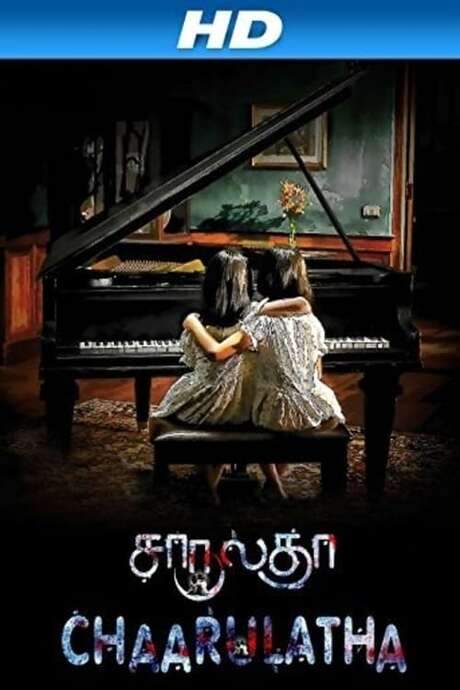
Chaarulatha (2012) movie poster

Plot Summary

Chaarulatha (2012) Plot Summary Explained

Release, runtime and language
2012 · 120 mins · Kannada
Loading streaming availability…
Directed by
Pon Kumaran
Starring
Priyamani, Saranya Ponvannan, P. Ravi Shankar, Seetha, Skanda Ashok

A supernatural horror film released in 2012, Charulatha was simultaneously produced in Kannada and Tamil. Directed by Pon Kumaran, the film stars Priyamani and is based on the Thai horror film Alone. The story centers around conjoined twins and explores themes of mystery and suspense. Music was composed by Sundar C Babu, and the film was distributed by Sax Pictures, with dubbed versions also released in Malayalam and Telugu.

On this page (5)
  1. 1 Where to watch
  2. 2 What happens: full plot
  3. 3 Plot questions answered
  4. 4 Movie threads
  5. 5 Every angle
Loading streaming availability…

Full plot summary · contains spoilers

What Happens in Chaarulatha: Full Plot Summary

The whole story of Chaarulatha (2012) explained, from the opening scene to the final frame: every key event, every twist and what it all adds up to. Read it as a quick recap before the sequel, to check a scene you missed, or to finally understand what really happened.

The story opens in Vizag, where conjoined twins Charu and Latha share a single body and heartbeat, moving through life in near perfect harmony until a visitor named Ravi arrives and unsettles their quiet world. Both sisters find themselves drawn to him, but Ravi’s heart gravitates toward Charu, triggering a subtle yet growing rift between Charu and Latha as affection turns into competition and doubt.

As the triangle tightens, their mother, Charu and Latha's mother, makes the painful decision to pursue a surgical separation of the twins. The operation, meant to give them independent futures, unfolds with tragic consequences: Latha dies in the procedure, leaving Charu and their family to face an altered, lonelier reality. The loss fractures the twins’ bond in profound and lasting ways, even as the world they share remains physically tethered.

After Latha’s death, Charu begins to experience inexplicable, haunting echoes of her sister. She sometimes hears the violin they once shared, and she senses a presence that feels both familiar and overwhelming. The haunting intensifies as the apparition appears, but it vanishes whenever Ravi reaches out to Charu, leaving her with questions and a sense of unresolved guilt that shadows her days.

The tension shifts to the hospital, where Ravi visits the twins’ mother, hoping for clarity. She struggles to tell him something crucial, and the moment veers between tenderness and difficulty. Eventually, a revelation surfaces at the graveyard: Charu did not survive the events as everyone believed; Latha has been impersonating Charu, stepping into her sister’s life after death in order to hold onto the bond with Ravi and the life they never got to finish together. Ravi is confronted with a truth that rewrites everything he thought he knew about the sisters and his own choices.

Flashbacks fill in the gaps, detailing the sequence of events that led to the tragedy. After Ravi confessed his love to Charu before leaving town, Latha, enraged by being sidelined, refused to join Charu on the balcony to bid him farewell. In a burst of anger, Latha tears up a picture of Charu that Ravi had given her, a moment that estranges the twins further. The confrontation escalates on the stairs, and Charu is fatally affected, sealing the separation of the conjoined twins and sealing Charu’s fate in the public memory.

In the climactic confrontation, Latha confesses her own love for Ravi and faces Charu’s spirit, who returns to test the loyalties of the living. The house erupts in flames as Latha clings to the hope of Ravi’s reciprocation, refusing to leave until he acknowledges her feelings. Their mother pleads for a different ending, but Ravi makes a heart-wrenching choice to sacrifice his love for Charu in order to save Latha, allowing them both to escape to safety.

The film closes with a quiet, poignant ritual: Ravi and Latha place flowers on Charu’s grave, a scene that suggests closure and a fragile, evolving acceptance. As Latha approaches, Ravi senses Charu’s spirit smiling upon them, a spectral nod that hints at a hopeful, if complicated, union between the surviving sisters and the man who drew them together. The final image lingers on the quiet grave, the shared memory of Charu, and the idea that love, even when altered by tragedy, can endure in new forms.

Last updated: October 03, 2025 at 10:33

Was this helpful?

Plot questions answered

Chaarulatha Plot Explained: Your Questions Answered

The questions people ask most about Chaarulatha (2012): what happens in the confusing scenes, why the characters do what they do, the twists, hidden details and what the ending means. Each answer contains spoilers.

Q1

Why did the mother decide to separate the conjoined twins?

The mother made the painful decision to pursue surgical separation after Ravi arrived and created a rift between Charu and Latha. With both sisters falling in love with Ravi and his affection gravitating toward Charu, the growing tension and competition between the sisters convinced their mother that giving them independent futures would resolve the emotional conflict and allow each to live their own life.

Foreshadowing: Early scenes show the twins moving in perfect harmony, making the mother's later decision feel like a dramatic break from their peaceful existence.

  • separation surgery
  • conjoined twins
  • mother decision
  • independent futures
Q2

Which twin died during the separation surgery?

Latha died on the operating table during the separation procedure, leaving Charu alive but forever changed. This tragedy devastated the family and created the foundation for the haunting events that followed.

  • separation surgery
  • Latha death
  • Charu survival
  • operation outcome
Q3

How did Latha end up impersonating Charu after the surgery?

The shocking revelation at the graveyard reveals that it was actually Charu who died during the operation, not Latha. After the surgery, Latha survived and began impersonating Charu to stay close to Ravi and hold onto the life she never got to finish. Everyone believed Charu survived, but Latha had taken her sister's identity.

Foreshadowing: The haunting intensifies whenever Ravi reaches out to Charu, hinting that something is wrong with the identity of the person he's interacting with.

  • Latha impersonation
  • Charu death
  • identity swap
  • twist reveal
Q4

What caused the rivalry between Charu and Latha?

Ravi's arrival triggered the rivalry. While both sisters were drawn to him, Ravi's heart gravitated specifically toward Charu. This unilateral affection created jealousy and competition between the twins, transforming their previously harmonious bond into one marked by suspicion and resentment.

Foreshadowing: The opening scene establishes the twins' near-perfect harmony, making Ravi's disruptive impact more pronounced.

  • love triangle
  • Ravi attraction
  • sister jealousy
  • Charu Latha conflict
Q5

How did Charu actually die in the flashback sequence?

The flashback reveals that after Ravi confessed his love to Charu before leaving town, Latha became enraged by being overlooked. She refused to join Charu on the balcony to bid Ravi farewell, tore up the picture Ravi had given Charu, and the confrontation escalated on the stairs, resulting in Charu's fatal accident that led to the emergency separation surgery.

Foreshadowing: The tension between the sisters over Ravi's affection plants the seeds for this tragic confrontation.

  • Charu death
  • flashback
  • Latha anger
  • staircase accident
Q6

What happens during the climactic fire scene?

In the climax, Latha confesses her own love for Ravi as Charu's spirit returns to test the loyalties of the living. The house erupts in flames, and Ravi faces an impossible choice. He sacrifices his love for Charu by choosing to save Latha, allowing both sisters to escape to safety while honoring Charu's memory.

Foreshadowing: Charu's spirit returns specifically to test loyalties, foreshadowing the choice Ravi must make between the two sisters.

  • house fire
  • Ravi choice
  • Latha confession
  • Charu spirit
Q7

Why did Ravi choose to save Latha instead of letting her die?

Ravi made the heart-wrenching choice to sacrifice his love for Charu in order to save Latha. By acknowledging Latha's feelings and choosing her survival, he enabled the sisters to escape the burning house. This sacrifice represents his acceptance of the complex reality that neither twin could be saved through denial or abandonment.

Foreshadowing: The earlier moments when the apparition vanishes whenever Ravi reaches out to Charu hint at his deeper connection to the surviving twin.

  • Ravi sacrifice
  • Latha survival
  • love choice
  • redemption
Q8

Why does Ravi visit the twins' mother at the hospital?

Ravi visits the twins' mother seeking clarity about what truly happened during and after the separation surgery. The conversation is fraught with difficulty as she struggles to reveal the crucial truth, setting up the eventual revelation that Charu did not survive and Latha has been impersonating her.

Foreshadowing: This hospital visit builds tension and hints that the mother knows more than she's revealing about the twins' fates.

  • hospital visit
  • Ravi
  • mother confession
  • truth seeking
Q9

What is the significance of the violin in the haunting?

The violin was a shared element between the conjoined twins, representing their unique bond and unity. After Latha's death, Charu begins hearing the violin echo, an inexplicable, haunting reminder of her sister's presence. This supernatural element intensifies the psychological horror, suggesting Latha's spirit will not rest.

  • violin
  • haunting
  • twins bond
  • supernatural element
Q10

What does the final scene at Charu's grave signify?

The film closes with Ravi and Latha placing flowers on Charu's grave, offering a sense of closure and acceptance. When Ravi senses Charu's spirit smiling upon them, it hints at a hopeful, if complicated, future, suggesting that love, even altered by tragedy, can endure in new forms and the surviving sister can find peace.

  • Charu grave
  • closure
  • acceptance
  • bittersweet ending

Movie threads

More Movies Like Chaarulatha, by Mood & Story

Curated lists built around what makes Chaarulatha tick: the same mood, the same kind of story or the same emotional payoff. Each list explains why these movies belong together.

Supernatural identity thrillers like Chaarulatha

Stories where grief and guilt manifest through spectral twins and mistaken identities. If you liked the themes of mistaken identity and spectral twins in Chaarulatha, explore these movies where grief and deception create supernatural doubles. These stories feature heavy emotional weight, dark tones, and complex psychological horror revolving around tragic siblings, haunting guilt, and forbidden love triangles.

  • haunting
  • tragic
  • psychological
  • gothic
  • guilty
  • suspenseful
  • Tone: dark, melancholic, suspenseful
  • Pacing: steady, methodical build
Why these movies?

The story pattern: Narratives in this thread often begin with a profound loss—usually of a twin or a close counterpart—which triggers a crisis of identity. A surviving character may be haunted literally or figuratively, leading to deception where they impersonate the deceased or are tormented by their memory. The plot revolves around the unraveling of this deception and the heavy psychological toll it takes, culminating in a bittersweet or tragic resolution.

Why they belong together: Movies are grouped here because they share a core exploration of fractured identity through a supernatural or psychological lens, a dark and melancholic tone, and a steady, deliberate pacing that builds suspense around a central secret. They deliver a similar feeling of claustrophobic dread and tragic beauty.

Gothic family horror dramas like Chaarulatha

Melancholic tales where home becomes a prison for dark secrets and tragic love. For viewers who enjoyed the haunting, gothic atmosphere and tragic family dynamics of Chaarulatha, this section features movies with similar domestic horror. These stories unfold in oppressive settings, centered on dark secrets, forbidden love, and the psychological fallout of sibling relationships, all with a steady, suspenseful pace.

  • gothic
  • haunting
  • claustrophobic
  • tragic
  • melancholic
  • suspenseful
  • Tone: dark, haunting, tragic
  • Pacing: steady, deliberate
Why these movies?

The story pattern: The narrative pattern involves a central conflict, often a forbidden love triangle or a deep sibling rivalry, that is confined to a single, evocative setting like a mansion or ancestral home. This confinement creates tension as secrets cannot easily escape. The story methodically unveils a past tragedy through flashbacks and present-tense haunting, forcing characters to confront a bittersweet or bleak truth about their family.

Why they belong together: These films are united by their use of a gothic, haunting mood and a domestic setting that feels both like a sanctuary and a prison. They share a steady pacing that builds dread, a focus on tragic romance and family betrayal, and an overall tone that is dark, suspenseful, and deeply melancholic.

Every angle

Chaarulatha (2012) Explained: Plot, Timeline & Characters

Everything about Chaarulatha in one place: what happens in the plot summary, the timeline in chronological order, the characters and meaning and a spoiler-free summary. What's After the Movie adds the cast, box office and post-credit scenes.

Coming soon on iOS and Android

The Plot Explained Movie Summary App

Plot summaries, endings explained and timelines on your phone. Catch up on any movie in minutes, save your favorites and never miss a twist again.

Be the first to know when we launch. Your email stays private, always.

Learn more about the app