Plot Explained Spoilers guaranteed!
Plot Explained

Browse by genre

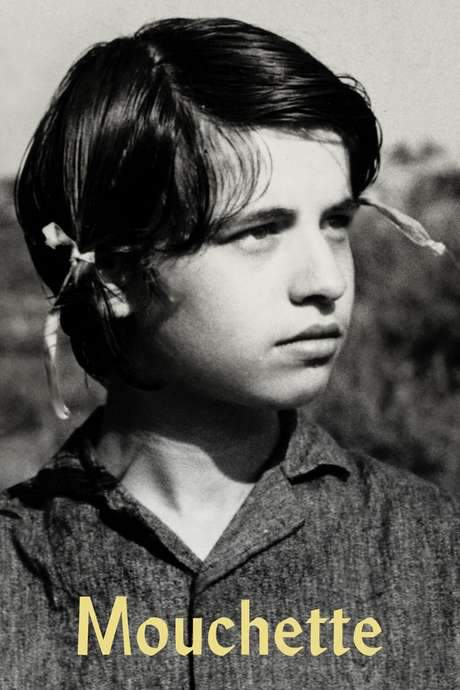
Mouchette (1967) movie poster

Plot Summary

Mouchette (1967) Plot Summary Explained

Release, runtime and language
1967 · 81 mins · French
Loading streaming availability…
Directed by
Robert Bresson
Starring
Paul Hébert, Jean Vimenet, Jean-Claude Guilbert, Nadine Nortier, Marie Cardinal, Marine Trichet

A young girl living in the French countryside suffers constant indignities at the hand of alcoholism and her fellow man.

On this page (7)
  1. 1 Where to watch
  2. 2 What happens: full plot
  3. 3 Plot questions answered
  4. 4 The book behind the movie
  5. 5 Movie threads
  6. 6 Movies like Mouchette
  7. 7 Every angle
Loading streaming availability…

Full plot summary · contains spoilers

What Happens in Mouchette: Full Plot Summary

The whole story of Mouchette (1967) explained, from the opening scene to the final frame: every key event, every twist and what it all adds up to. Read it as a quick recap before the sequel, to check a scene you missed, or to finally understand what really happened.

Mouchette, whose name translates to "little fly", is a young girl living in a secluded French village with her father and her bedridden, dying mother. She takes on the responsibility of caring for her infant brother and handling all the household chores. Despite her efforts, she faces social rejection at school due to her ragged clothes, and her teacher criticizes her for refusing to sing during class, highlighting her isolated and harsh existence.

Once, seeking a brief escape from her bleak reality, Mouchette visits a local fair. There, she is approached by a kind woman who buys her a token, allowing her to ride the bumper cars. During the ride, she mutually flirts with a young man, and they bump into each other’s cars, creating a fleeting moment of innocence and joy. Unfortunately, before she can speak with him afterward, her father intervenes and takes her away, preventing her from pursuing any further connection.

Her daily life takes a darker turn when she is walking home from school during a rainstorm. Lost in the woods, she encounters Arsène, an alcoholic, epileptic poacher. Arsène finds her and takes her to his hut, where he is worried about having possibly killed a man in a previous fight. He tries to use Mouchette as an alibi to clear himself. During this tense encounter, Arsène suffers a seizure, and Mouchette displays a gentle, caring attitude as she tends to him. When he regains consciousness and admits to having wounded and possibly killed the gamekeeper, Mouchette urges him to leave and escape the situation. However, Arsène captures her and rapes her, an act that leaves a permanent scar on her young life. She manages to escape by dawn, proceeding home to tend to her crying, hungry baby brother with care and tenderness, following her weak and dying mother’s instructions.

Later, she wakes to find her mother has passed away, and her verbally abusive father returns. On her way to fetch milk, a kind shopkeeper offers her a free coffee and croissant. When the shopkeeper notices a scratch on her chest, she appears to intentionally damage the coffee bowl, leading him to call her a "little slut", reflecting the brutal judgment she endures. Elderly women dressed in black are seen heading to church, emphasizing the somber tone of her community.

In the days that follow, Mouchette recounts her troubled experiences to Mathieu, the local gamekeeper, and his wife. She initially pretends that she spent the night at Arsène's house, claiming he is her lover, illustrating her attempt to hide the truth about her ordeal. Eventually, she is invited to the house of an elderly woman, who provides her with a dress for the funeral and a shroud for her mother. The woman talks to her about worshiping the dead and offers her three beautiful dresses that fit her perfectly. However, in her age’s characteristic harshness, Mouchette insults her and damages her carpet, revealing her inner turmoil.

She then witnesses hunters shooting rabbits, and the scene turns tragic when a wounded rabbit is left unable to hop. Mouchette’s expression reflects her shock and sadness at this cruelty. Later, she changes into a dress by the river, then begins to roll down a hill repeatedly, dirtying her clothes, until she ultimately splashes into the river, never to return. Her journey ends in a poignant silence, symbolizing her despair and longing for escape from her pain.

This story is a stark portrayal of hardship, innocence lost, and the quiet tragedy of a girl burdened by her circumstances, culminating in her quiet, tragic departure from the world.
Last updated: August 19, 2025 at 05:14

Was this helpful?

Plot questions answered

Mouchette Plot Explained: Your Questions Answered

The questions people ask most about Mouchette (1967): what happens in the confusing scenes, why the characters do what they do, the twists, hidden details and what the ending means. Each answer contains spoilers.

Q1

Why does Mouchette roll down the hill and jump into the river?

Mouchette's final act is a symbolic suicide. After experiencing relentless hardship, sexual assault, her mother's death, constant humiliation, and societal cruelty, she reaches a breaking point. Rolling down the hill soiling her dress represents her deliberate destruction of the one beautiful thing she owned (the dress given by the elderly woman). She then walks into the river, never returning, choosing death over continued suffering in a world that has offered her no kindness or escape.

Foreshadowing: Earlier scenes of her crying baby brother and caring for her dying mother foreshadow her own exhausted surrender.

  • mouchette death
  • river scene
  • suicide
  • final scene meaning
Q2

Why does Mouchette insult the elderly woman who gives her dresses?

Mouchette destroys the one moment of genuine kindness she receives. The elderly woman gives her three beautiful dresses and a shroud for her mother's funeral, flattering her and treating her with respect. However, Mouchette responds by insulting the woman and damaging her carpet. This reaction stems from her inability to accept tenderness after constant cruelty; she has been so dehumanized that kindness feels foreign and threatening, and she instinctively pushes it away.

Foreshadowing: Her earlier rejection at school and verbal abuse from her father have conditioned her to expect hostility, not generosity.

  • elderly woman
  • dresses
  • insult
  • kindness rejected
Q3

Why does Mouchette claim Arsène is her lover when speaking to Mathieu?

When confronted by gamekeeper Mathieu and his wife about her night in the woods, Mouchette lies and claims Arsène is her lover rather than reveal she was raped. This is a protective mechanism, she transforms a traumatic assault into something that suggests choice and agency, even a form of twisted maturity. By presenting herself as willing rather than victimized, she attempts to preserve what little dignity remains in a society that already condemns her.

Foreshadowing: The shopkeeper's immediate judgment when seeing a scratch on her chest shows how the village views sexualized young women.

  • arsène lover
  • mouchette lie
  • mathieu
  • cover up assault
Q4

Why does the shopkeeper call Mouchette a "little slut"?

After offering Mouchette free coffee and a croissant, the shopkeeper notices a scratch on her chest, a mark likely from her assault by Arsène. Rather than showing concern, he immediately judges her and calls her a "little slut," reflecting the brutal moral judgment of her community. This moment demonstrates how society victimizes Mouchette twice: first through the assault itself, then through contemptuous condemnation that assumes her sexual activity is shameful, regardless of how it occurred.

Foreshadowing: Her ragged clothes and social isolation at school have already marked her as an outcast in the village's eyes.

  • shopkeeper
  • slut
  • judgment
  • village cruelty
Q5

What does the name "Mouchette" mean and why is it significant?

Mouchette translates from French as "little fly", a small, insignificant insect. The name reflects her marginalized position in society: she is overlooked, swatted away, and has no power in her world. Flies are also associated with dirt and decay, matching her ragged appearance and the squalor of her home. The ironic tenderness of the name contrasts sharply with the harsh treatment she receives throughout the film.

Foreshadowing: Her social rejection at school and constant indignities establish her as someone society views as worthless.

  • name meaning
  • little fly
  • significance
  • title meaning
Q6

What is the significance of Mouchette witnessing the rabbit hunting scene?

Mouchette watches hunters shoot rabbits in the countryside, and one wounded rabbit is left unable to hop away. This scene mirrors her own vulnerable existence, she is also powerless, hunted by the cruelty of adults and her circumstances. The brutal killing of the rabbits, creatures too weak to escape, underscores the violence and indifference that surround her. Her shocked, sad expression shows she recognizes her own fate in their helplessness.

Foreshadowing: Her earlier encounter with Arsène, the poacher, establishes hunting and violence as constant threats in her world.

  • rabbits
  • hunting scene
  • symbolism
  • violence
Q7

Why does Mouchette refuse to sing in class?

Mouchette's teacher criticizes her for refusing to sing during class, using this as another example of her isolation. While the specific reason isn't given, her refusal represents her internal resistance and withdrawal from a world that already rejects her. Singing requires participation in community, but Mouchette has been excluded so thoroughly that she cannot bring herself to join in. It's a small but telling act of passive resistance against a society that offers her no warmth.

Foreshadowing: Her social ostracism at school due to ragged clothes establishes her as an outsider.

  • singing class
  • school
  • refusal
  • isolation
Q8

Why does Mouchette visit the fair and what happens there?

Mouchette seeks a brief escape from her bleak reality by visiting a local fair. There, a kind woman buys her a token for the bumper cars, giving her a moment of joy. During the ride, she shares a flirtatious, playful interaction with a young man, they bump into each other's cars in a scene of innocent青春. However, her father arrives and takes her away before she can speak with him again, crushing this brief moment of happiness and reinforcing that she is not allowed even small pleasures.

Foreshadowing: This scene establishes her constant containment, no escape is permitted, however brief.

  • fair
  • bumper cars
  • young man
  • father takes her
Q9

What happens to Arsène after he assaults Mouchette?

The film does not explicitly show Arsène's fate. After the assault, Mouchette escapes at dawn and returns home. Earlier, Arsène worried he had killed a gamekeeper in a fight and used Mouchette as a potential alibi. It's implied he may face consequences for this earlier violence, but the narrative focuses on Mouchette's trauma rather than his punishment. He remains an ominous, violent presence whose ultimate fate remains uncertain, emphasizing how Mouchette's suffering goes unaddressed.

Foreshadowing: Arsène's worry about having killed a man establishes him as a dangerous, volatile character.

  • arsène fate
  • after assault
  • gamekeeper
Q10

Why does Mouchette tend to Arsène when he has his seizure?

When Arsène suffers an epileptic seizure in his hut, Mouchette shows compassion and cares for him despite the terror of her situation. This reveals her inherent gentleness and capacity for empathy, she cannot leave a person in distress, even one who has just terrified her. Her nurturing instinct (already developed through caring for her dying mother and infant brother) drives her to help. However, this compassion is repaid with his assault, highlighting the tragic vulnerability of her kindness in a predatory world.

Foreshadowing: Her role as caregiver for her mother and brother establishes her nurturing nature.

  • arsène seizure
  • compassion
  • caring
  • tenderness
Q11

Why does Mouchette's mother ask for gin before she dies?

Mouchette's weak, dying mother requests a bottle of gin, asking Mouchette to help her end her suffering. This indicates her mother's desperate desire for escape from her own agonizing life, bedridden, powerless, watching her daughter struggle. Mouchette complies, and her mother dies, possibly from the gin. This reveals the intergenerational cycle of suffering and the impossible choices faced by those trapped in poverty, where death is seen as the only release.

Foreshadowing: The mother's weakness and bedridden state have been established from the beginning.

  • mother death
  • gin
  • request to die
  • end suffering

Movie threads

More Movies Like Mouchette, by Mood & Story

Curated lists built around what makes Mouchette tick: the same mood, the same kind of story or the same emotional payoff. Each list explains why these movies belong together.

Movies about Bleak Childhood Stories like Mouchette

Stories of innocence shattered by the harsh realities of life. Explore films similar to Mouchette that depict the harsh realities of youth. If you were moved by its unflinching portrayal of a child's suffering, you'll find other powerful and emotionally heavy movies about innocence lost to poverty, neglect, and societal cruelty.

  • despairing
  • harsh
  • somber
  • brutal
  • oppressive
  • tragic
  • Tone: bleak, despairing, harsh
  • Pacing: slow, deliberate, oppressive
Why these movies?

The story pattern: These narratives typically follow a straightforward, linear path of accumulation, where a series of traumatic events—from parental neglect to social rejection—steadily erode a young protagonist's spirit. There is rarely a redemptive arc; instead, the journey culminates in a tragic or deeply bleak conclusion that underscores the inescapable nature of their circumstances.

Why they belong together: They are grouped by their shared commitment to depicting childhood suffering without sentimentality. The similarity lies in a consistently bleak tone, slow pacing that mirrors the oppressive weight of the protagonist's life, and a thematic focus on the destruction of innocence.

Slow Paced Tragic Dramas like Mouchette

Deliberate, oppressive narratives leading to inevitable, quiet ruin. Find movies with a similar slow, oppressive pace and tragic conclusion as Mouchette. If you appreciated its methodical build-up of despair leading to a silent, devastating ending, this collection features other emotionally heavy dramas where pacing amplifies the sense of inevitable downfall.

  • oppressive
  • melancholic
  • slow burn
  • despairing
  • somber
  • tragic
  • Tone: oppressive, melancholic, bleak
  • Pacing: very slow, deliberate, accumulative
Why these movies?

The story pattern: The narrative pattern is one of accumulation rather than complex plotting. Small, indignities and major traumas pile up in a steady, unhurried rhythm, denying the character—and the viewer—any significant respite. The structure avoids twists, instead focusing on the grim certainty of the outcome, which is typically a quiet, understated act of finality.

Why they belong together: These films share a specific combination of extremely slow pacing, a bleak and oppressive tone, and a narrative drive toward a tragic, often silent, conclusion. The similarity is in the overall viewing experience: a heavy, contemplative, and emotionally draining journey that feels predetermined and inescapable.

If you liked this

Movies Like Mouchette

Similar movies to Mouchette: the same genre, themes or kind of story. Each one comes with its own plot summary, timeline and ending explained.

Browse all movie summaries

Every angle

Mouchette (1967) Explained: Plot, Timeline & Characters

Everything about Mouchette in one place: what happens in the plot summary, the timeline in chronological order, the characters and meaning and a spoiler-free summary. What's After the Movie adds the cast, box office and post-credit scenes.

Coming soon on iOS and Android

The Plot Explained Movie Summary App

Plot summaries, endings explained and timelines on your phone. Catch up on any movie in minutes, save your favorites and never miss a twist again.

Be the first to know when we launch. Your email stays private, always.

Learn more about the app