


Plot Explained Spoilers guaranteed!
Plot Explained

Browse by genre

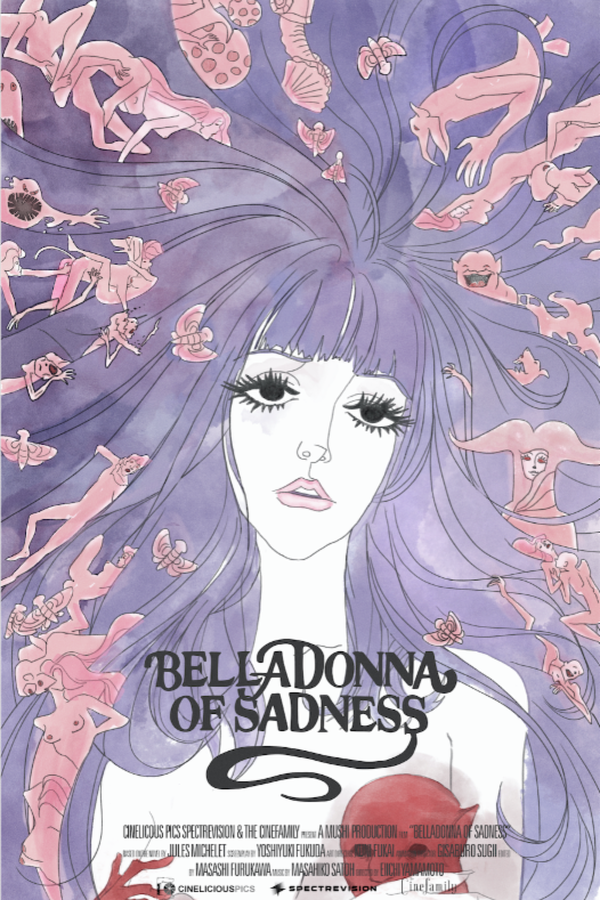
Belladonna of Sadness (1973) (2016) movie poster

Characters & Themes

Belladonna of Sadness (1973) (2016) Characters, Setting & Themes Explained

Release, runtime and language
2016 · 93 min · Japanese
Directed by
Eiichi Yamamoto

A young woman’s life is tragically disrupted on her wedding night, leading to a descent into madness and a thirst for revenge. She makes a pact with the Devil, which transforms her into a captivating and enigmatic figure. The story blends medieval imagery with eroticism, creating a dreamlike and surreal narrative that explores themes of desire, vengeance, and the blurring lines between reality and fantasy. It's a visually striking and provocative adult animated film.

On this page (7)
  1. 1 Where to watch
  2. 2 Characters explained (3)
  3. 3 Where & when it takes place
  4. 4 Themes & meaning (3)
  5. 5 Character & meaning questions
  6. 6 Movie threads
  7. 7 Every angle

Where to watch

Where to Watch Belladonna of Sadness (1973) (2016)

Where can you watch Belladonna of Sadness (1973)? Stream, rent or buy it in the US, including on Google Play Movies and YouTube: current JustWatch availability with up-to-date prices.

Streaming availability powered by JustWatch

3 main characters · contains spoilers

Belladonna of Sadness (1973) Characters Explained: Who Is Who

The main characters of Belladonna of Sadness (1973) (2016), heroes and villains: what drives them, how they change over the course of the story and what each of them reveals about the film's bigger ideas.

  • Jeanne

    Jeanne is a tragic heroine who evolves from a fearful bride into a formidable force within her village. Subjected to horror and betrayal, she ultimately embraces her power and strives for autonomy. Her resilience and ambition contrast sharply with the oppressive forces around her, making her a complex and compelling character.

    • 👸 Heroine
    • 💔 Victim
    • 🎭 Ambitious
  • Jean

    Jean is Jeanne's husband, caught in a whirlwind of emotions following the traumatic events of their wedding night. His initial intention to support Jeanne becomes overshadowed by his own despair. Ultimately, Jean's character reflects the struggle of a man confronted with overwhelming societal pressures and personal shame.

    • 👨‍🌾 Husband
    • 😢 Troubled
    • 🔗 Vulnerable
  • The Baron

    The baron epitomizes the feudal oppression that reigns over the village. He is a figure of tyranny, indulging in his power while inflicting misery on others. His jealousy toward Jeanne's rising influence exemplifies the dark nature of authority and the lengths to which he will go to maintain control.

    • 👑 Villain
    • 😠 Tyrant
    • 🔥 Powerful

Last updated: October 22, 2024 at 21:58

Was this helpful?

Setting

Where and When Does Belladonna of Sadness (1973) Take Place?

The setting of Belladonna of Sadness (1973) (2016): the year and time period, the places and locations, and how they shape the characters, the mood and the tension of the story.

Time period

Medieval Period, leading to the French Revolution

The events unfold during the medieval period, a time of social hierarchy and tumultuous political landscapes. Famine, war, and local tyrants shape the lives of common people, setting the stage for rebellion and change. The impact of Jeanne's story ultimately echoes through time, being recognized as a precursor to the French Revolution.

Location

medieval France

The movie is set in medieval France, a time characterized by feudal systems and social strife. This rural village serves as a backdrop for Jeanne and Jean's tragic story, reflecting the struggles against oppressive authorities and the rising tides of revolution. Known for its picturesque landscapes, the village is deeply affected by the overarching themes of power and injustice.

  • 🏰 Historical
  • 🌾 Rural
  • 🔥 Revolutionary

Last updated: October 22, 2024 at 21:58

Was this helpful?

3 major themes

Belladonna of Sadness (1973) Meaning: Themes & Message Explained

What is Belladonna of Sadness (1973) (2016) really about? The emotional, social and philosophical themes the film keeps returning to, its symbolism and the message beneath the surface.

  • Oppression

    Oppression is a central theme of the movie, manifesting through Jeanne's brutal experiences at the hands of the local baron and the patriarchal society. The film depicts the struggle against overpowering forces and the societal norms that allow injustice to thrive. Jeanne's journey reflects a fight not only for personal freedom but also against systemic inequality.

  • Transformation

    Transformation plays a vital role as Jeanne evolves from a victim into a powerful figure through her pact with the spirit. This metamorphosis highlights both the potential for personal empowerment as well as the darker implications of wielding such power. Her evolution signifies resilience against adversity, yet raises questions about the costs of such change.

  • Revenge

    Revenge acts as a driving force in the narrative, especially as Jeanne navigates her tumultuous relationship with the baron. Her quest for vengeance not only fuels her ambition but also leads to her eventual downfall. The theme underscores the complexities of morality and the cycle of violence that perpetuates further suffering.

Last updated: October 22, 2024 at 21:58

Was this helpful?

Character & theme questions

Belladonna of Sadness (1973) Characters & Meaning: Your Questions Answered

The questions people ask about Belladonna of Sadness (1973) (2016): who the characters really are, their relationships, what the symbols mean, where it takes place and what the movie is really about. Each answer contains spoilers.

Q1

Where is the story set?

The movie takes place in medieval France, specifically within a rural village surrounded by picturesque landscapes. This setting reflects the era's feudal systems and social strife, serving as a backdrop for the characters' struggles against oppressive authorities.

  • medieval france
  • rural village
  • setting
  • feudal
Q2

What time period does the film depict?

The story unfolds during the medieval period, a time marked by social hierarchy, famine, war, and local tyrants. The narrative explicitly connects Jeanne's tragedy to the seeds of the French Revolution, suggesting her suffering prefigures the revolutionary fervor that would later sweep through France.

  • medieval period
  • historical context
  • french revolution
  • feudal era
Q3

What does the film say about oppression?

Oppression is a central theme, depicted through Jeanne's brutal experiences at the hands of the local baron and the patriarchal society. The film portrays her struggle not only as a personal fight for freedom but also as resistance against systemic inequality and the societal norms that allow injustice to thrive.

  • oppression
  • patriarchy
  • systemic inequality
  • feudal power
Q4

Who is Jeanne in the story?

Jeanne is the tragic heroine who transforms from a fearful bride into a formidable force within her village. After experiencing horror and betrayal, she embraces supernatural power to seek autonomy and revenge, making her a complex symbol of resilience against oppressive forces.

  • jeanne
  • heroine
  • protagonist
  • transformation
Q5

Who is the Baron in the film?

The Baron represents the feudal oppression that dominates the village. He is a tyrannical figure who indulges in his power and inflicts misery on the common people. His jealousy and fear of Jeanne's growing influence demonstrate how those in authority will go to extreme lengths to maintain control.

  • baron
  • antagonist
  • feudal oppression
  • tyrant
Q6

What does transformation mean in Belladonna of Sadness?

Transformation depicts Jeanne's evolution from victim to powerful figure through her pact with a spirit. This metamorphosis represents personal empowerment but also raises questions about the costs of wielding such power. Her change symbolizes resilience against adversity while exploring the darker implications of seeking vengeance.

  • transformation
  • metamorphosis
  • power
  • pact with devil
Q7

What role does revenge play in the story?

Revenge serves as the narrative's driving force, fueling Jeanne's quest against the baron. While her pursuit of vengeance empowers her initially, it ultimately leads to her downfall. The theme explores the complexities of morality and how cycles of violence perpetuate further suffering.

  • revenge
  • vengeance
  • cycle of violence
  • morality
Q8

Who is Jean in the film?

Jean is Jeanne's husband, whose initial intention to support his wife becomes overshadowed by despair following the traumatic events of their wedding night. His character represents the struggle of an ordinary man confronting overwhelming societal pressures and personal shame.

  • jean
  • husband
  • supporting character
  • despair
Q9

What is the film's visual style?

The film employs a striking adult animated style that blends medieval imagery with eroticism, creating a dreamlike and surreal narrative. Its visually provocative approach uses symbolic imagery to explore themes of desire, vengeance, and the blurring lines between reality and fantasy.

  • animation style
  • surreal
  • symbolic imagery
  • artistic
Q10

How does the film connect to the French Revolution?

While set in the medieval period, the film suggests Jeanne's story echoes through time as a precursor to the French Revolution. Her fight against tyranny and oppression预表 the revolutionary spirit that would later emerge, giving her personal tragedy broader historical significance.

  • french revolution
  • historical significance
  • revolutionary themes
  • precursor

Movie threads

More Movies Like Belladonna of Sadness (1973), by Mood & Story

Curated lists built around what makes Belladonna of Sadness (1973) tick: the same mood, the same kind of story or the same emotional payoff. Each list explains why these movies belong together.

Surreal dramas about trauma and power like Belladonna of Sadness (1973)

Films that use dreamlike, symbolic imagery to explore the fallout of trauma and the pursuit of power. If you liked the symbolic and psychedelic visuals of Belladonna of Sadness, explore similar movies that use surrealism to delve into psychological trauma, vengeance, and the desire for control. These films share a dreamlike, often dark tone and a heavy emotional weight.

  • surreal
  • oppressive
  • tragic
  • dreamlike
  • psychologically intense
  • symbolic
  • Tone: dark, surreal, tragic
  • Pacing: variable, introspective
Why these movies?

The story pattern: Narratives in this thread often begin with a profound violation or loss that fractures the protagonist's reality. Their subsequent journey is depicted through a lens of hallucinatory symbolism, as they grapple with their trauma, often seeking empowerment or revenge through otherworldly or supernatural means. The plot is driven by the character's psychological state as much as by external events.

Why they belong together: Movies are grouped here for their shared commitment to using non-realistic, artistic visuals to convey intense psychological experiences. They connect through a dark, oppressive mood, a focus on themes of injustice and empowerment, and a willingness to confront disturbing content through a stylized, symbolic filter.
Movies about tragic pacts and revenge like Belladonna of Sadness (1973)

Stories of characters who trade their humanity for power, leading to a bittersweet reckoning. For viewers who appreciated the dark deal with the devil in Belladonna of Sadness, this list features similar movies about characters making desperate pacts for power. These stories share themes of injustice, vengeance, and the heavy price of empowerment, often ending on a tragic or bittersweet note.

  • tragic
  • vengeful
  • dark pact
  • gothic
  • melancholic
  • oppressive
  • Tone: dark, tragic, vengeful
  • Pacing: steady, building to a climax
Why these movies?

The story pattern: The narrative pattern involves a sympathetic character pushed to the brink by cruelty or oppression. They make a conscious, desperate choice to ally with a dark or supernatural force, gaining immense power at a great personal cost. Their journey of vengeance or revolution is transformative but ultimately leads to their own destruction or a pyrrhic victory, questioning the true meaning of justice.

Why they belong together: These films are connected by the core plot device of a transformative, morally ambiguous pact. They share a dark tone, high emotional intensity, and a thematic focus on the complex interplay between victimhood, power, and the cyclical nature of violence. The endings are rarely purely triumphant.

Every angle

Belladonna of Sadness (1973) (2016) Explained: Plot, Timeline & Characters

Everything about Belladonna of Sadness (1973) in one place: what happens in the plot summary, the timeline in chronological order, the characters and meaning and a spoiler-free summary. What's After the Movie adds the cast, box office and post-credit scenes.

Coming soon on iOS and Android

The Plot Explained Movie Summary App

Plot summaries, endings explained and timelines on your phone. Catch up on any movie in minutes, save your favorites and never miss a twist again.

Be the first to know when we launch. Your email stays private, always.

Learn more about the app