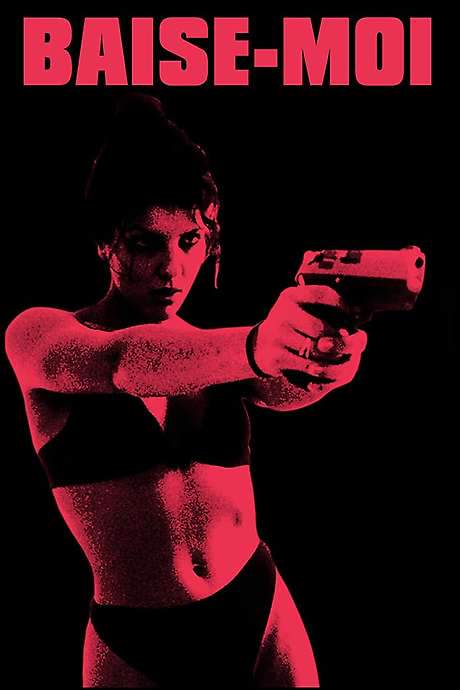
Baise-moi follows Nadine Karen Lancaume and Manu Raffaëla Anderson, two women living on the edge of a small town in southern France who feel marginalized by the society around them. The film drifts between their personal frustrations and a growing urge to push back in a brutal, unflinching way, weaving a stark story about anger, violence, and the lure of a shared escape from daily constraints.
In a park, a moment of vulnerability becomes a turning point: three men abduct Nadine and Manu, dragging them to a garage where they are gang-raped. The scene is presented with a cold, clinical tone that contrasts with the raw emotion of the act. Manu, displaying a chilling detachment, lies still and quiet while the assault unfolds, prompting one of the rapists to pause and question what he’s witnessing. Manu later explains her reaction with a stark, unsettling line that reveals a psychological shield she uses to cope, and this moment becomes a touchstone for the rest of the story. > "can't prevent anyone from penetrating her pussy."
Back home, Nadine returns to confront her own demons. A tense confrontation with her roommate escalates into murder as Nadine strangles her and leaves with the rent money. The violence continues to snowball when Nadine’s close circle is shaken: a drug-dealing best friend is shot in another town while Nadine confronts the fragility of the world she’s built around false fronts and risky schemes. The killings ripple outward, drawing Nadine and Manu into a shared sense that the only control they have over their lives is the rejection of the norms that limit them.
The two women reunite at a railway station after a missed train and quickly realize they share a burning anger that has found a common target. They strike out on a violent, sexually charged road trip that blends robbery, murder, and a dangerous thrill-seeking energy. Money becomes the fuel for their spree: they rob a shop, kill a woman at a cash machine, and steal a car, all while evading pursuit as the body count climbs. A chance encounter with a woman fleeing a police checkpoint adds another layer to their misadventure, and the pair press on with a disjointed, almost ritualistic momentum.
Their path leads them to a house where an architect waits behind a door that seems almost waiting to be entered. The plan unfolds with a cold precision as the women trick their way inside and kill the architect Marc Rioufol, marking a turning point in the scale and audacity of their actions. The spree continues into a swingers’ club, a setting that blurs line between desire and violence. There, a racist remark directed at Manu ignites a brutal reaction, and the night spirals into a high-stakes confrontation in which many of the patrons are killed. The violence is unflinching, and the film does not shy away from shocking specifics as the two women weaponize the moment to assert control over a world that has consistently failed them.
As the country buzzes with news of the duo, public opinion becomes a mirror for their own inner disarray. Some voices praise their audacity, others fear the example they set, and the news cycle fixates on the sensationalism of their actions rather than their underlying grievances. The final chapters of the spree take a brutal toll: Manu is fatally wounded in a roadside tire shop when the shop owner shoots her after witnessing the chaos, and Nadine, devastated, carries Manu’s body to a forest lake and later to a beach. She confronts her own pain with a gun in hand, but the authorities intervene before she can end her life.
In the end, the film closes on a sobering note: the two women have unleashed a tidal wave of violence that changes nothing about their core feelings or their sense of belonging. The spree dissolves into a stark question about whether rebellion against an oppressive world can ever rewrite the conditions that gave rise to such anger. Nadine survives long enough to face the consequences, while Manu’s memory lingers as a catalyst for a society that confronts itself in the wake of their actions.
- Nadine Karen Lancaume emerges as the more calculating half of the duo, driving much of the early plan and the later insistence on turning away from normalized life.
- Manu Raffaëla Anderson embodies raw impulse and a volatile brightness that pulls them toward their darkest impulses, including moments of fierce detachment and explosive violence.
- The embedded threads of accusation, desire, and defiance are tied together by moments of stark confession and brutal action, making the film a challenging meditation on marginalization, power, and what people are willing to do to feel seen.