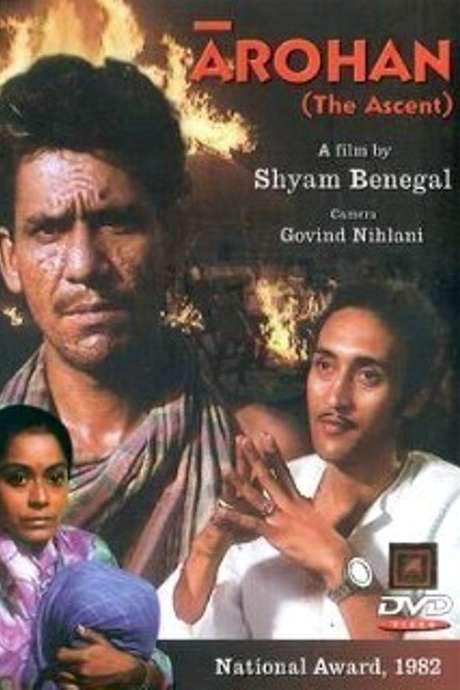
Arohan

Arohan

Year: 1983

Runtime: 144 mins

Language: Hindi

Director: Shyam Benegal

Hari Mondal (Om Puri) is a destitute farmer in the remote Bengal hamlet of Giripur, Birbhum, living with his wife, two sons, his brother, his widowed aunt Kalidashi (Gita Sen) and her daughter Panchi. Set in the mid‑1960s, the story unfolds as the Naxalbari uprising spreads across Bengal, drawing oppressed peasants into a movement led by young communists advocating a socialist republic.

Warning: spoilers below!

Haven’t seen Arohan yet? This summary contains major spoilers. Bookmark the page, watch the movie, and come back for the full breakdown. If you're ready, scroll on and relive the story!

Timeline & Setting – Arohan (1983)

Explore the full timeline and setting of Arohan (1983). Follow every major event in chronological order and see how the environment shapes the story, characters, and dramatic tension.

Time period

Mid-1960s

The story unfolds during the mid-1960s Bengal, a period of rising peasant agitation and the spread of leftist ideas. Uprisings like Naxalbari begin to mobilize farmers and youth, setting the stage for legal battles and social upheaval. The era marks a transition from feudal oppression to attempts at socialist reforms.

Location

Giripur, Birbhum district, Bengal, India

Giripur is a remote Bengal village in the Birbhum district where Bargadars till land owned by Jotdars. The landscape is rural and agrarian, with family structures tightly bound to the landlord system.

🌾 Rural setting 🏘️ Village life

Last updated: October 04, 2025 at 13:01

Was this helpful?

Main Characters – Arohan (1983)

Meet the key characters of Arohan (1983), with detailed profiles, motivations, and roles in the plot. Understand their emotional journeys and what they reveal about the film’s deeper themes.

Hari Mondal (Om Puri)

A poor farmer from Giripur trapped in a feudal system, Hari undergoes a transformation from obedient farmer to determined rights-seeker. He endures violence and betrayal while pushing for Bargadari recognition. His courage grows as he fights for dignity and a fair share of his land, even at great personal cost.

🌾 Farmer 🛡️ Oppressed ⚖️ Rights seeker 💪 Resilient

Jotdar Bibhutibhushan Ganguly (Victor Banerjee)

The young landlord who uses wealth and muscle to dominate villagers. He drives the economic and social agenda of the estate, resisting reforms that threaten his profit. His calculated cruelty exposes the brutal edge of feudal power as it collides with rising social movements.

🏛️ Landlord 💼 Power broker 🗡️ Oppressor 🤝 Calculated

Village Teacher (Pankaj Kapur)

A sympathetic village master who provides legal help and moral support to Hari. He embodies the potential for education and community leadership to counter oppression. His presence offers a practical channel for resistance within the village.

👨‍🏫 Teacher 🕊️ Ally ⚖️ Legal advocate 🧭 Guide

Senior District Magistrate Jayant Kripalani (Jayant Kripalani)

A fair-minded official who navigates the tension between justice and political pressure. He represents the law's promise of impartiality while contending with the Jotdar's power. His sympathy underscores the complexities of administering reform in a volatile era.

🏛️ Official 🗝️ Gatekeeper 💬 Mediator 🤝 Moderate

Panchi (Sreela Majumdar)

Kalidashi's daughter who moves to Calcutta and experiences a harsh, exploiting urban world. She chases luxury but pays a heavy price with pregnancy, abandonment, and eventual mental decline. Her arc illustrates the exploitation and fragility of dreams under upheaval.

💃 Victim of exploitation 🌀 Tragic arc 💔 Heartbreak

Last updated: October 04, 2025 at 13:01

Was this helpful?

Major Themes – Arohan (1983)

Explore the central themes of Arohan (1983), from psychological, social, and emotional dimensions to philosophical messages. Understand what the film is really saying beneath the surface.

⚖️ Class Struggle

The film centers on the clash between landowning Jotdars and landless Bargadars. Hari's fight to secure his Bargadari certificate highlights the systemic inequality and the use of law as a battleground. The narrative shows how poverty limits access to justice, even when the law appears on paper.

🌾 Rural Oppression

The landlord system weaponizes violence and intimidation to keep peasants subservient. Hari, Bolai, and their family endure eviction, debt, and manipulation by middlemen like Karmakar. The film paints a bleak portrait of how rural exploitation permeates daily life.

🏛️ Reform & Change

As a left-leaning government emerges, political change offers a glimmer of justice. The village Panchayat elections, the shifting power dynamics, and Hari's ultimate win reflect the potential for systemic reform. Yet the cost is high, with personal losses and broken lives illustrating the human toll of upheaval.

Last updated: October 04, 2025 at 13:01

Was this helpful?

Arohan (1983) Character & Theme Questions Answered – Info FAQ

Browse frequently asked questions about Arohan (1983) focused on characters, relationships, themes, symbols, setting, and story context. This movie info FAQ gives spoiler-aware explanations for character arcs, world details, and thematic interpretation so readers can better understand what the film is really about.

Q1

Where is the movie Arohan set?

A.

Arohan is set in Giripur, a remote village in the Birbhum district of Bengal, India. The film takes place in a rural, agrarian community where landless farmers (Bargadars) work on land owned by wealthy landlords (Jotdars). This setting reflects the feudal system that dominates village life and creates the tension central to the story.

giripurbirbhumbengalrural villagesetting
Q2

What time period does Arohan depict?

A.

The story unfolds in mid-1960s Bengal, during a period of intense peasant agitation and the rise of leftist movements across the region. This era follows the Naxalbari uprising, which inspired widespread mobilization of farmers and rural poor seeking land reforms and social justice.

1960smid-1960snaxalbaribengalhistorical period
Q3

What was the Naxalbari uprising in Arohan?

A.

The Naxalbari uprising was a peasant rebellion that began in 1967 in West Bengal, inspired by communist revolutionary ideology. In Arohan, the movement spreads across Bengal, drawing oppressed peasants into a push for a socialist republic. This political context provides the backdrop for Hari's fight for his land rights and illustrates how revolutionary ideas gained traction among rural communities facing exploitation.

naxalbaripeasant rebellioncommunistsocialistuprising
Q4

What is Bargadari and why does it matter in the film?

A.

Bargadari refers to the legal rights of sharecroppers to till land they work on behalf of landowners. In Arohan, Hari Mondal fights to obtain his Bargadari certificate, which would grant him legal recognition and protection as a tiller of the land. The film highlights how the landlord system uses manipulation and violence to prevent Bargadars from claiming their rights, making the certificate a symbol of dignity and justice.

bargadarisharecroppingland rightscertificatelegal battle
Q5

How does Arohan portray class struggle?

A.

The film centers on the clash between landowning Jotdars and landless Bargadars in rural Bengal. Hari's fight to secure his Bargadari certificate exposes the systemic inequality where poverty limits access to justice, even when the law theoretically supports the oppressed. The narrative shows how the feudal class structure maintains power through economic control and intimidation.

class strugglefeudalismlandownersfarmersinequality
Q6

What does Arohan say about rural oppression?

A.

Arohan depicts how the landlord system weaponizes violence and intimidation to keep peasants subservient. Characters like Hari, his brother Bolai, and their family endure eviction, debt traps, and manipulation by middlemen like Karmakar. The film paints a bleak portrait of how rural exploitation permeates daily life, trapping generations in poverty and dependency.

rural oppressionlandlordexploitationviolencepeasants
Q7

How does Arohan depict political reform and change?

A.

As a left-leaning government emerges in Bengal, political change offers a glimmer of hope for justice. The village Panchayat elections and shifting power dynamics allow Hari to finally win his case. However, the film illustrates that reform comes at a heavy personal cost, death, imprisonment, and broken lives show the human toll of systemic upheaval.

political reformpanchayatgovernmentchangesocial reform
Q8

Who is Hari Mondal in Arohan?

A.

Hari Mondal is the protagonist, a poor farmer from Giripur trapped in Bengal's feudal system. Played by Om Puri, he undergoes a transformation from an obedient farmer into a determined rights-seeker. Facing violence and betrayal, he pushes for Bargadari recognition, with his courage growing as he fights for dignity and a fair share of his land despite great personal cost.

hari mondalom puroprotagonistfarmerbargadar
Q9

Who is the Jotdar in Arohan?

A.

The Jotdar, Bibhutibhushan Ganguly, is the young landlord who uses wealth and physical power to dominate villagers in Giripur. Played by Victor Banerjee, he controls the economic and social agenda of the estate and resists reforms that threaten his profits. His calculated cruelty represents the brutal edge of feudal power colliding with rising social movements.

jitendarvictor banerjeelandlordlandownerantagonist
Q10

What role does the Village Teacher play in Arohan?

A.

The Village Teacher, played by Pankaj Kapur, serves as a sympathetic figure who provides legal help and moral support to Hari Mondal. He embodies how education and community leadership can counter oppression. His presence offers a practical channel for resistance within the village, showing the importance of knowledge in fighting systemic injustice.

village teacherpankaj kapureducationlegal helpmentor
Q11

Who is Panchi and what happens to her in Arohan?

A.

Panchi is the daughter of Kalidashi, Hari's widowed aunt. Played by Sreela Majumdar, she moves to Calcutta seeking a better life but instead encounters a harsh, exploitative urban world. Her storyline illustrates the vulnerability of poor rural women chasing dreams of luxury, as she suffers pregnancy, abandonment, and eventual mental decline, showing how exploitation exists in both rural and urban settings.

panchisreela majumdarcalcuttaurban exploitationwomen
Q12

What is life like in Giripur village in Arohan?

A.

Giripur is a remote Bengal village where family structures are tightly bound to the landlord system. Bargadars till land owned by Jotdars under oppressive conditions. The landscape is rural and agrarian, with daily life shaped by feudal dependence, economic vulnerability, and the constant threat of eviction or retaliation from powerful landowners.

giripurvillage liferural bengalagrarianfeudal system
Q13

What is the tone and emotional impact of Arohan?

A.

Arohan has a bleak tone that details a cascade of tragedies, death, imprisonment, mental breakdown, and ultimate defeat. The slow pacing creates a patient, nuanced portrait of rural life that emphasizes the relentless grind of injustice. The emotional weight is heavy, driven by themes of exploitation, broken families, and the high price of seeking dignity.

toneemotionalbleakheavytragedy
Mobile App Preview

Coming soon on iOS and Android

The Plot Explained Mobile App

From blockbusters to hidden gems - dive into movie stories anytime, anywhere. Save your favorites, discover plots faster, and never miss a twist again.

Sign up to be the first to know when we launch. Your email stays private, always.

Explore Movie Threads

Discover curated groups of movies connected by mood, themes, and story style. Browse collections built around emotion, atmosphere, and narrative focus to easily find films that match what you feel like watching right now.

Slow burn rural oppression movies like Arohan

Patient films about the grinding weight of poverty and injustice on rural lives.If you appreciated the patient, somber portrayal of a farmer's struggle in Arohan, you'll find similar movies here. These films focus on the slow grind of social injustice in rural settings, exploring themes of land rights, class struggle, and the heavy personal cost of resistance. Discover more movies like Arohan that capture this specific, gritty vibe.

oppressivesomberpatientgrittydesperateharshmelancholic

Narrative Summary

Stories in this thread typically follow a protagonist or community trapped in a cycle of rural poverty and exploitation. The narrative unfolds patiently, focusing on the gradual escalation of tension as characters confront an oppressive system, often leading to devastating personal losses and a bleak realization of their powerlessness.

Why These Movies?

Movies are grouped here for their shared commitment to a slow, immersive pace and a bleak tone that highlights the desperation of rural life. They share a high emotional weight and intensity, derived from themes of social injustice, and create a similarly somber, oppressive mood through their gritty realism.


Bleak political uprising stories similar to Arohan

Stories where political ideals clash with brutal reality, leaving only devastation.Fans of Arohan's depiction of the Naxalbari movement's impact on a family will find more poignant films here. These stories explore the intersection of political idealism and personal sacrifice, often ending in tragedy and despair. Find movies like Arohan that share its bleak outlook on revolutionary struggle and its devastating human cost.

tensebleakdesperatesombermelancholicgrittypolitical

Narrative Summary

The narrative pattern involves ordinary individuals being drawn into a larger political conflict, inspired by ideals of change. However, the movement is met with overwhelming force, and the story charts the protagonist's journey from hope to disillusionment, culminating in the destruction of their family, freedom, or spirit, with no redemptive outcome.

Why These Movies?

These movies are connected by a consistently bleak tone, high intensity derived from political violence and injustice, and a heavy emotional weight centered on sacrifice and defeat. They share a desperate, tense mood and explore the theme of how grand political struggles devastate individual lives.

Unlock the Full Story of Arohan

Don't stop at just watching - explore Arohan in full detail. From the complete plot summary and scene-by-scene timeline to character breakdowns, thematic analysis, and a deep dive into the ending - every page helps you truly understand what Arohan is all about. Plus, discover what's next after the movie.

Arohan Summary

Read a complete plot summary of Arohan, including all key story points, character arcs, and turning points. This in-depth recap is ideal for understanding the narrative structure or reviewing what happened in the movie.

Arohan Summary

Arohan Timeline

Track the full timeline of Arohan with every major event arranged chronologically. Perfect for decoding non-linear storytelling, flashbacks, or parallel narratives with a clear scene-by-scene breakdown.

Arohan Timeline

Arohan Spoiler-Free Summary

Get a quick, spoiler-free overview of Arohan that covers the main plot points and key details without revealing any major twists or spoilers. Perfect for those who want to know what to expect before diving in.

Arohan Spoiler-Free Summary

More About Arohan

Visit What's After the Movie to explore more about Arohan: box office results, cast and crew info, production details, post-credit scenes, and external links - all in one place for movie fans and researchers.

More About Arohan