Plot Explained Spoilers guaranteed!
Plot Explained

Browse by genre

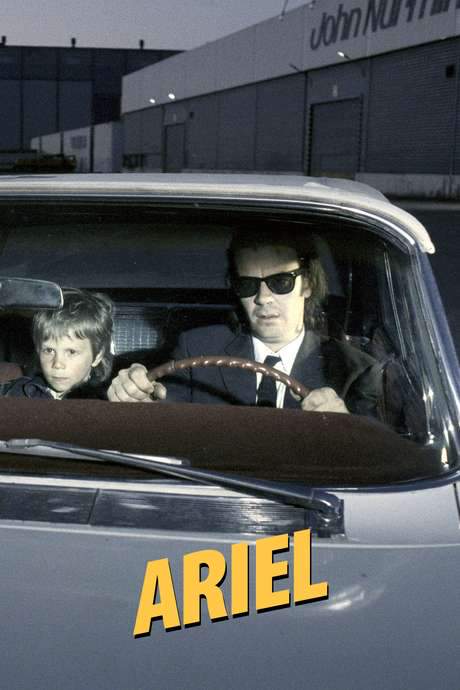
Ariel (1988) movie poster

Plot Summary

Ariel (1988) Plot Summary Explained

Release, runtime and language
1988 · 73 mins · Finnish
Directed by
Aki Kaurismäki
Starring
Juuso Hirvikangas, Sakari Kuosmanen, Olli Varja, Tomi Salmela, Matti Pellonpää, Esko Salminen

A Finnish man goes to the city to find a job after the mine where he worked is closed and his father commits suicide.

On this page (6)
  1. 1 Where to watch
  2. 2 What happens: full plot
  3. 3 Plot questions answered
  4. 4 Movie threads
  5. 5 Movies like Ariel
  6. 6 Every angle

Where to watch

Where to Watch Ariel (1988)

Where can you watch Ariel? Stream, rent or buy it in the US: current JustWatch availability with up-to-date prices.

Streaming availability powered by JustWatch

Full plot summary · contains spoilers

What Happens in Ariel: Full Plot Summary

The whole story of Ariel (1988) explained, from the opening scene to the final frame: every key event, every twist and what it all adds up to. Read it as a quick recap before the sequel, to check a scene you missed, or to finally understand what really happened.

In rural Finnish Lapland, a mining operation shutters its doors, leaving Taisto Kasurinen Turo Pajala and a slate of fellow miners suddenly without work. The withdrawal of this steady livelihood casts a pall over the region, and the film trails Kasurinen as he drifts from one precarious choice to another. In a sunlit café, the sight of a gleaming old Cadillac convertible—an echo of a vanishing era—catches his eye, and an older miner nearby offers him advice that carries a sense of fatal finality. Before Kasurinen can fully take in the gesture, the man steps into the restroom and shoots himself, leaving behind a grim instruction and a symbol of sunk costs. The Cadillac becomes a tangible dream, and Kasurinen soon finds himself in southern Finland, where luck does not follow him: he’s mugged, his life savings vanish, and the road ahead grows steeper by the day.

He finds a laboring job and a cheap bed at a nearby hostel, barely scraping by as the city hums with indifferent energy. The Cadillac remains a magnet, drawing interest from Irmeli Pihlaja Susanna Haavisto, a metermaid who is both flirtatious and perceptive. She leaves her shift early to dine with him, and their evening unfolds with a candid exchange of past hurts and stubborn resolve. In their bed, Irmeli speaks of her ex-husband, while Kasurinen opens up about his own roots in the country, and she bluntly notes, “that’s different.” The scene is intimate, rough-edged, and quietly hopeful, until the morning reveals a harsher reality.

The tranquility is shattered when Irmeli’s young son interrupts Kasurinen’s morning with a gun pressed to his face, demanding breakfast and a display of authority that unsettles the fragile trust between them. The tension peels back more layers of hardship as Kasurinen is unable to pay for his hostel bed and is forced to sleep in the car, a strip of asphalt becoming his shrinking world. Desperation grows as he sells the Cadillac to keep afloat, and he wanders through a city that feels both intimate and indifferent. In a diner, he recognizes one of his alleged tormentors from the robbery, and a chilling chase ensues. He seizes the knife the man pulls and holds him at knifepoint, but the encounter earns him an arrest for attempted armed robbery, pulling him toward a courtroom and a sentence of nearly two years.

As Kasurinen leaves the courtroom, his eyes meet Irmeli’s in a moment charged with unspoken history, a glance that threads their fates together once more. Back behind bars, his resolve hardens, and he proposes marriage to Irmeli during a prison visit; she accepts, choosing a bond that will carry him through the coming chaos. On a later visit, Irmeli brings him a birthday cake and a book with a hidden saw—a small, ominous token that foreshadows the violent turns ahead. When Kasurinen and his cellmate Mikkonen [Matti Pellonpää] escape, the two men blur the lines between crime and survival, forming a perilous alliance as they step back into the world.

Outside, Kasurinen and Mikkonen marry in name and in need, their union a quiet act of defiance against an unforgiving landscape. The two men hatch a plan to leave the country, robbing a bank to fund their escape and the future they dream of across borders. But the very promises that once offered hope—passports and safe passage—turn deadly when the men who had pledged their support stab Mikkonen in pursuit of the loot. Kasurinen shoots them dead in a brutal moment of retribution, yet the loss of Mikkonen is felt as a final, devastating cost of their journey.

The film closes on a stark, luminous image: Kasurinen, Irmeli, and her young son board a ship named Ariel, heading toward Mexico. The voyage is not a triumph but a moving away from a country and a life that offered little more than hardship, chance, and consequence. The closing frame lingers on the sea and the uncertain horizon, leaving viewers with a sense of ambiguous possibility amid the raw honesty of a man who hunted for a better future and found, instead, a difficult, stubborn truth. > thats different.

Last updated: October 09, 2025 at 14:33

Was this helpful?

Plot questions answered

Ariel Plot Explained: Your Questions Answered

The questions people ask most about Ariel (1988): what happens in the confusing scenes, why the characters do what they do, the twists, hidden details and what the ending means. Each answer contains spoilers.

Q1

Why does the older miner give Taisto the Cadillac and then kill himself?

The older miner gives Kasurinen the Cadillac as a final gesture after advising him that there's no future in mining. The man then commits suicide in the restroom, a fatalistic act that symbolizes the dead-end reality facing the miners. He leaves Kasurinen with both a tangible asset and a grim warning about the economic hopelessness gripping the region. This moment establishes the film's tone of bleak fatalism while giving Kasurinen the means to begin his journey south.

Foreshadowing: The man's advice about there being no future in mining foreshadows Kasurinen's own struggle to find stable employment throughout the film.

  • older miner
  • caddy
  • suicide
  • Finnish Lapland
  • mining closure
  • fatalism
Q2

Why does Irmeli's young son point a gun at Kasurinen in the morning?

Irmeli's son points a gun at Kasurinen to assert dominance and test his authority, demanding breakfast while positioning himself as the man of the house. The act reveals the boy's complicated relationship with the men in his mother's life and suggests a protective, almost aggressive stance toward his home. It also foreshadows the film's darker turns by introducing domestic volatility early. The scene underscores the harsh, unpredictable environment Kasurinen has entered.

Foreshadowing: This violent domestic moment foreshadows the later violence Kasurinen encounters and participates in.

  • Irmeli's son
  • gun
  • breakfast
  • test of authority
  • domestic tension
Q3

Why does Kasurinen propose marriage to Irmeli while in prison?

Kasurinen proposes marriage as an act of hope and commitment despite his circumstances. Facing nearly two years of incarceration, he clings to the relationship with Irmeli as his anchor to a future beyond prison walls. The proposal also represents his attempt to establish permanence and meaning in a life that has been defined by loss and instability. Irmeli's acceptance gives him something to survive for and a reason to maintain his humanity through the harsh prison term.

Foreshadowing: The marriage becomes a driving force that shapes his decisions during and after the escape.

  • marriage proposal
  • prison
  • Irmeli
  • hope
  • commitment
  • future
Q4

Why does Irmeli bring a saw hidden inside a book for Kasurinen?

Irmeli smuggles a saw hidden inside a birthday book as a tool for escape, demonstrating her commitment to freeing Kasurinen from prison. The gift serves a dual purpose, celebrating his birthday while providing the means for him and his cellmate Mikkonen to saw through the prison bars and escape. This act solidifies her role as an active participant in his fate rather than a passive partner waiting for his release.

Foreshadowing: The saw directly enables the escape sequence that follows, changing the entire trajectory of the story.

  • saw
  • book
  • escape
  • prison
  • Irmeli
  • birthday cake
  • smuggling
Q5

Why do Kasurinen and Mikkonen rob a bank after escaping prison?

Kasurinen and Mikkonen rob a bank to fund their plan to leave Finland and start fresh in another country. With no legal way to earn enough money quickly and with the authorities searching for escaped convicts, robbery becomes their only viable option to secure passports and passage abroad. The heist represents their descent into serious crime as a desperate measure for survival rather than greed.

Foreshadowing: The bank robbery directly leads to the violent confrontation with the passport sellers.

  • bank robbery
  • escape
  • Mikkonen
  • passports
  • funding escape
  • desperation
Q6

Why does Kasurinen kill the men who promised to help them get passports?

Kasurinen kills the passport sellers after they betray him and Mikkonen by stabbing Mikkonen to steal the stolen money. When the men attack his partner for the loot, Kasurinen shoots them in a moment of retribution and protection. The violence represents the tragic cost of their desperate escape plan, the trusted allies become fatal threats, forcing Kasurinen to kill to save himself and avenge his friend. This act marks the point of no return in his criminal trajectory.

Foreshadowing: The betrayal and murder underscore the film's theme that trust leads to devastating consequences.

  • Mikkonen
  • betrayal
  • stabbing
  • shooting
  • passport sellers
  • murder
  • revenge
Q7

What happens to Mikkonen after the bank robbery?

Mikkonen is stabbed to death by the men who promised to sell them passports after the bank robbery. When the group attempts to steal the stolen money, they attack Mikkonen, and he dies from the wounds. Kasurinen kills the attackers in retaliation, but cannot save his friend. Mikkonen's death represents the final, devastating cost of their criminal path and leaves Kasurinen to continue the journey with only Irmeli and her son.

Foreshadowing: Mikkonen's death is the climax of the film's descent into violence.

  • Mikkonen
  • death
  • stabbing
  • passport sellers
  • bank robbery
  • betrayal
Q8

Why does Kasurinen get arrested for attempted robbery when he was the victim of the mugging?

Kasurinen gets arrested because when he spots one of the men who robbed him in a diner, he chases the man and holds him at knifepoint. Despite being the original victim of the robbery, his actions, grabbing a knife and threatening the man, constitute attempted armed robbery in the eyes of the law. The police arrest him for the crime of holding the man at knifepoint, not for the earlier mugging. This ironic turn illustrates how Kasurinen's desperation pushes him into criminal behavior that mirrors his victimizers.

Foreshadowing: This arrest leads directly to his imprisonment and subsequent escape plot.

  • arrest
  • attempted robbery
  • diner
  • knife
  • mugging victim
  • police
  • irony
Q9

What does the ship named Ariel represent at the end of the film?

The ship named Ariel represents escape and uncertain renewal rather than triumphant triumph. Kasurinen, Irmeli, and her son board the vessel bound for Mexico, fleeing a country that offered them nothing but hardship, imprisonment, and loss. The ending is deliberately ambiguous, their future in Mexico is uncertain, and they've paid a devastating price in blood and trauma to get there. The ship symbolizes their desperate attempt at starting over while leaving behind a life defined by Nordic noir bleakness.

Foreshadowing: The name 'Ariel' suggests flight and liberation, but the tone remains melancholic rather than hopeful.

  • ship Ariel
  • Mexico
  • escape
  • ambiguous ending
  • renewal
  • flight
  • ending
Q10

Why does Kasurinen sell the Cadillac that was given to him?

Kasurinen is forced to sell the Cadillac because he can no longer afford to stay at the hostel after losing his money to the mugging and being unable to find stable work. With no savings and no place to sleep, selling the car becomes his only option to survive in the city. The Cadillac, which symbolized possibility and a fresh start, becomes another casualty of his economic desperation, showing how quickly his circumstances deteriorate despite his efforts.

Foreshadowing: Selling the car marks a turning point where Kasurinen loses his last symbol of hope and must resort to more desperate measures.

  • Cadillac
  • sell
  • hostel
  • money
  • desperation
  • loss
  • economic hardship

Movie threads

More Movies Like Ariel, by Mood & Story

Curated lists built around what makes Ariel tick: the same mood, the same kind of story or the same emotional payoff. Each list explains why these movies belong together.

Bleak crime stories with moral collapse like in Ariel

Gritty stories where economic despair pushes ordinary people into a criminal underworld. Explore a list of movies like Ariel, featuring gritty neo-noir tales and social realism dramas where characters are forced into crime by desperation. If you liked Ariel's raw portrayal of a man's tragic downward spiral, you'll find similar films about unemployment, fatalism, and the harsh choices of the proletariat.

  • gritty
  • bleak
  • fatalistic
  • desperate
  • raw
  • tense
  • Tone: melancholic, bleak
  • Pacing: steady, relentless
Why these movies?

The story pattern: The narrative follows a straightforward, cause-and-effect descent. A catalyst event, often economic or personal tragedy, shatters the protagonist's life. With few options, they are pulled into a world of crime, each step escalating the stakes and further corroding their morals, leading to an ambiguous or tragic conclusion.

Why they belong together: Movies are grouped here for their shared focus on social realism, the theme of economic desperation leading to crime, and a consistently melancholic and fatalistic tone. They offer a cohesive viewing experience defined by gritty atmospheres, heavy emotional weight, and a steady pacing that mirrors the inescapable nature of the protagonist's predicament.

Movies with a fatalistic melancholy atmosphere like Ariel

Character-driven journeys defined by a somber, inescapable sense of fate and loss. Discover films that share Ariel's distinct mood of somber realism and fatalism. If you were drawn to the heavy, melancholic vibe and the sense of an inevitable downward spiral, this list features similar character-driven stories with steady pacing, gritty settings, and ambiguous, emotionally resonant endings.

  • melancholic
  • fatalistic
  • somber
  • heavy
  • gritty
  • raw
  • Tone: melancholic, fatalistic, bleak
  • Pacing: steady, character-driven
Why these movies?

The story pattern: The narrative is often linear, focusing on a character grappling with forces beyond their control—be it socioeconomic circumstances, personal tragedy, or a cruel twist of fate. The journey is less about triumph and more about enduring loss, leading to an ending that feels ambiguous or bleak, reinforcing the core theme of futility.

Why they belong together: These films are connected by their dominant melancholic tone, underpinned by a fatalistic worldview. They share a specific emotional mix of sadness, tension, and rawness, delivered through a steady, character-focused pace. This creates a coherent vibe of somber reflection and emotional heaviness.

If you liked this

Movies Like Ariel

Similar movies to Ariel: the same genre, themes or kind of story. Each one comes with its own plot summary, timeline and ending explained.

Browse all movie summaries

Every angle

Ariel (1988) Explained: Plot, Timeline & Characters

Everything about Ariel in one place: what happens in the plot summary, the timeline in chronological order, the characters and meaning and a spoiler-free summary. What's After the Movie adds the cast, box office and post-credit scenes.

Coming soon on iOS and Android

The Plot Explained Movie Summary App

Plot summaries, endings explained and timelines on your phone. Catch up on any movie in minutes, save your favorites and never miss a twist again.

Be the first to know when we launch. Your email stays private, always.

Learn more about the app