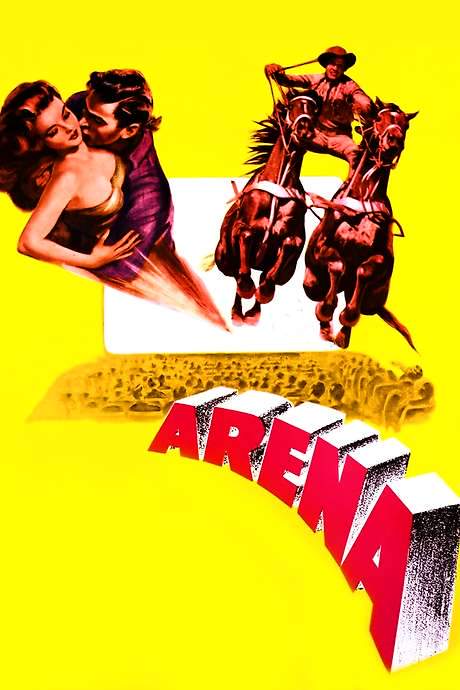
On the dusty, sunlit grounds of the Tucson rodeo, Hob Danvers (played by Gig Young) arrives with Sylvia Lorgan (played by Barbara Lawrence) in tow. Hob has been separated from his wife Ruth Danvers (played by Polly Bergen) for two years, and he doesn’t realize she intends to be there. He reconnects with old friends Lew Hutchins (played by Harry Morgan) and Meg Hutchins (played by Jean Hagen), only to learn that Lew is back in town not as a rider but as a clown after years in the spotlight. The arena hums with nostalgia, rivalry, and a fragile pride as Jackie Roach (played by Robert Horton) makes his move on Sylvia, who rebuffs him.
Hob steps into the arena for bareback riding and earns a quiet nod from Lew’s young son Teddy Hutchins (played by Lee Aaker), a moment that sparks both warmth and worry in the crowd. Lew, driven by a stubborn mix of courage and fear, arranges a risky scheme—paying a fellow rider to swap places so he can ride a bucking bronco. The gamble ends badly for Lew: he is thrown and his leg is badly injured, a blow that unsettles everyone who once believed in his comeback.
Ruth speaks bluntly, reminding the group that Lew’s rodeo days may be over and that truth is not always easy to hear. Undeterred, Lew presses on and enters the Brahma bull competition, Meg’s objections echoing in the stands. Hob goes first and is knocked off, then Lew—trying to distract the charging bull—cannot escape in time because of his compromised leg. The bull fatally gore him, ending a life built on risk and hard-won reputation.
Outside the arena, Hob walks away with Sylvia left behind, while Ruth follows, signaling a shift toward a quieter life away from the spectacle that once defined them. The story lingers on the cost of pride, loyalty, and the stubborn hope that one more show can redeem a fading past, framed by the harsh lessons of a sport where danger looms at every turn and farewells arrive when least expected.
Set against the desert wind and the roar of the crowd, the film probes aging, consequence, and what it means to choose a future over one last performance.