


Plot Explained Spoilers guaranteed!
Plot Explained

Browse by genre

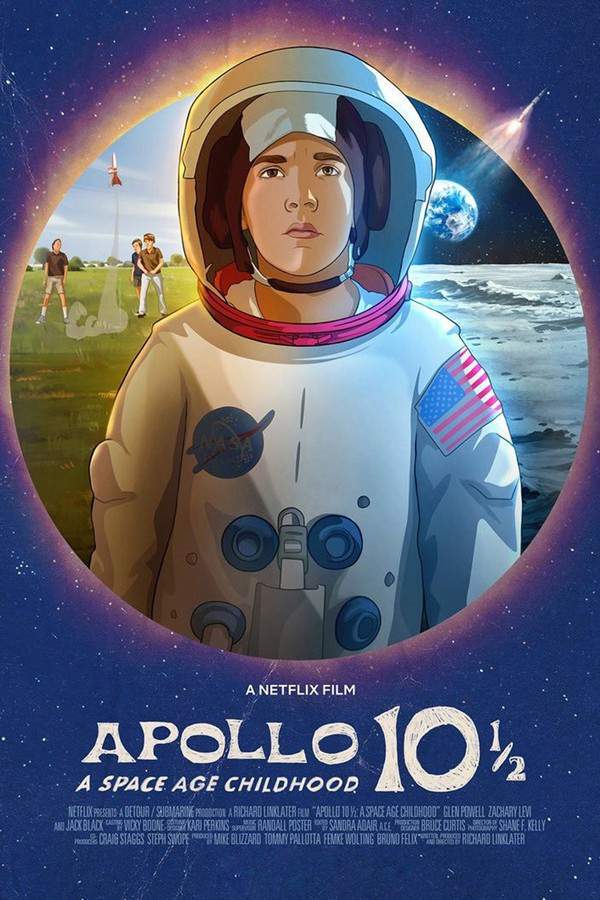
Apollo 10½: A Space Age Childhood (2022) movie poster

Ending Explained

Apollo 10½: A Space Age Childhood (2022) Ending Explained – Final Scene & Meaning

Release, runtime and language
2022 · 97 min · English
Echo score 63
JustWatch #24,167 4
Directed by
Richard Linklater
Starring
Zachary Levi, Josh Wiggins, Glen Powell, Jack Black, Bill Wise, Brian Villalobos

In 1969, as the world anticipates the Apollo 11 moon landing, a young boy growing up in Houston, Texas, experiences a childhood filled with wonder and imagination. Inspired by the space race and the bravery of the Apollo missions, he dreams of his own journey to the stars. The film blends the perspective of the astronauts with that of a boy pursuing his own ambitious dreams, offering a nostalgic look at a pivotal time in history and the excitement of a generation.

On this page (7)
  1. 1 Where to watch
  2. 2 What happens at the end
  3. 3 Final events in order
  4. 4 Ending questions answered
  5. 5 Movie threads
  6. 6 Movies like Apollo 10½: A Space Age Childhood
  7. 7 Every angle

Where to watch

Where to Watch Apollo 10½: A Space Age Childhood (2022)

Where can you watch Apollo 10½: A Space Age Childhood? Stream, rent or buy it in the US, including on Netflix and Netflix Standard: current JustWatch availability with up-to-date prices.

Streaming availability powered by JustWatch

Ending explained · contains spoilers

What Happens at the End of Apollo 10½: A Space Age Childhood?

How Apollo 10½: A Space Age Childhood (2022) ends, what the final scene means, which earlier moments set it up and how to read the ending if the film leaves it open. The full ending explained, with every spoiler.

At the end of Apollo 10½: A Space Age Childhood, we see the young protagonist, Stan, watching the historic first moon landing on television. As he struggles to stay awake, his parents help him to bed, and a tender conversation follows. His mother comments that even if he's asleep during the broadcast, someday he'll believe he witnessed it himself, highlighting how memories and perception shape our understanding of history. His father emphasizes that “we all did it," suggesting that participating in these monumental moments becomes a collective experience that connects everyone to history. The film concludes with this touching scene to underscore the central theme: that witnessing history, even in childhood, makes us a part of it. This blending of nostalgia, innocence, and wonder reflects how personal memories and shared history intertwine—showing that the events that shape our world also shape our sense of identity and hope for the future. The ending emphasizes that through childhood's eyes, we find a sense of belonging and the idea that the future is built on the wonder and dreams of the young.

Last updated: June 25, 2025 at 08:44

Was this helpful?

The last 4 events

How Apollo 10½: A Space Age Childhood Ends: The Final Events in Order

The last events of Apollo 10½: A Space Age Childhood (2022) in chronological order, the run-up to the ending explained above. The complete timeline has all 14 events, scene by scene.

Open the full timeline
  1. The Legacy of Apollo

    The Apollo program left an indelible mark on history, showcasing human ingenuity and the spirit of exploration. The film pays tribute to this legacy, celebrating the collective dreams and aspirations that inspired the mission and the impact it had on individuals like Stanley.

  2. Contrasts in Culture

    While the moon landing captivates countless viewers, sentiments among Stanley's family reflect the broader societal issues of the time. The conflict between idealism and paranoia shapes their local culture, highlighting the contrasting perspectives surrounding major historical events.

  3. Stanley's Reflections

    In the wake of the moon landing, Stanley reflects on his own experiences and training. The event ignites his dreams anew, intertwining his youthful hopes with the triumph of humanity's exploration of the cosmos.

  4. Final Thoughts

    Ultimately, the film encapsulates the significance of the moon landing not just as an achievement of NASA but as a poignant moment in the lives of ordinary people. It honors the aspirations and dreams of a young boy like Stanley, who dared to dream beyond the stars.

Ending questions answered

Apollo 10½: A Space Age Childhood Ending: Your Questions Answered

The questions people ask most about the ending of Apollo 10½: A Space Age Childhood (2022): what the final scene means, how the twist works, what happens to each character and how to read the ending. Each answer contains spoilers.

Q1

Does Stan stay awake for the moon landing in Apollo 10½?

No, Stan falls asleep before Neil Armstrong takes his first steps on the moon. He struggles to keep his eyes open while watching the broadcast, and his parents carry him to bed. However, his mother assures him that someday he'll believe he witnessed it himself, suggesting that the memory of that night will become just as real to him as the actual event.

Foreshadowing: Earlier scenes show Stan's vivid imagination and his strong desire to be part of the space program, making his ultimate absence from the live moment poignant.

  • Stan
  • moon landing
  • asleep
  • television
  • ending
Q2

What does Stan's mother mean when she says he'll think he saw the moon landing?

Stan's mother is commenting on how childhood memories work, she suggests that even though he was asleep, the experience of that night will become woven into his personal narrative. She implies that the feeling of being present during a historic moment is often enough to make someone truly believe they witnessed it, blurring the line between actual memory and perceived memory.

Foreshadowing: The film frequently blurs reality and imagination through Stan's fantasy space mission, reinforcing the theme that perception shapes our personal histories.

  • memory
  • perception
  • mother
  • childhood
  • moon landing
Q3

What does "we all did it" mean in Apollo 10½?

Stan's father says "we all did it" to emphasize that the Apollo 11 moon landing was a collective achievement, not just for the astronauts, but for every American who watched, cheered, and felt connected to the moment. This line reinforces the film's theme that witnessing history, even as a child, makes us part of it. The space program represented a unified national effort, and every person who lived through that era became part of that shared accomplishment.

Foreshadowing: Throughout the film, the community in Houston is shown celebrating and supporting the Apollo missions, establishing the collective spirit the ending celebrates.

  • father
  • collective experience
  • Apollo 11
  • history
  • America
Q4

Is Stan's space mission in Apollo 10½ real or a fantasy?

Stan is a young boy in 1969 who never actually goes to space. His mission to the moon is a fantasy that he imagines throughout the film, inspired by his father's work at NASA and his own childhood dreams of adventure. The film blends this imaginative storyline with the real historical events of the Apollo program, using his fantasy as a lens to experience the excitement of the era from a child's perspective.

Foreshadowing: The film introduces Stan's space mission as an imaginative scenario from the start, with no indication that it actually occurs in the story's reality.

  • Stan
  • fantasy
  • imagination
  • NASA
  • space mission
Q5

Why does the Apollo 10½ ending focus on memory and perception?

The ending focuses on memory and perception because the film is ultimately about how we experience and remember history as children. The director uses Stan's story to show that being present during monumental moments, regardless of whether we fully understand them or remember them clearly, shapes our identity. The ending suggests that the wonder and innocence of childhood create lasting impressions that connect us to larger historical events.

Foreshadowing: The entire film is told through the lens of adult recollection, establishing from the start that the story is about how we perceive and remember the past.

  • memory
  • perception
  • childhood
  • history
  • identity
Q6

What happens to Stan at the end of Apollo 10½?

At the end of Apollo 10½, young Stan falls asleep while watching the Apollo 11 moon landing on television. His parents carry him to bed, where a tender conversation about the significance of the moment takes place. The film then shifts to an older Stan (voiced by Jack Black), suggesting this is a reflective memory from adulthood about that pivotal night in 1969.

  • Stan
  • final scene
  • asleep
  • parents
  • moon landing
Q7

What is the thematic meaning of the ending in Apollo 10½?

The ending conveys that witnessing history, even as a child who falls asleep, connects us to something larger than ourselves. It emphasizes that childhood wonder and dreams are the foundation of future achievements. The film argues that the Apollo program succeeded not just because of astronauts, but because of an entire generation of children who dreamed of space and believed they could be part of something greater.

Foreshadowing: The film's dual narrative structure, interweaving Stan's imaginary space mission with the real Apollo program, establishes this theme of childhood dreams fueling historical achievement.

  • theme
  • childhood dreams
  • history
  • wonder
  • future
Q8

Why does the film end with Stan falling asleep?

The film ends with Stan falling asleep because it illustrates that being present during historic moments matters more than fully understanding them. Children often miss the significance of events they witness, but those experiences still shape who they become. By having Stan asleep during the actual moon landing while his parents assure him he'll remember it anyway, the film suggests that the feeling of being part of history is just as meaningful as witnessing it directly.

  • falling asleep
  • moon landing
  • childhood
  • significance

Movie threads

More Movies Like Apollo 10½: A Space Age Childhood, by Mood & Story

Curated lists built around what makes Apollo 10½: A Space Age Childhood tick: the same mood, the same kind of story or the same emotional payoff. Each list explains why these movies belong together.

Movies with Nostalgic Childhood Fantasies like Apollo 10½: A Space Age Childhood

Stories where a child's imagination blends with real-world events. If you liked the nostalgic, imaginative feel of Apollo 10½, you'll enjoy these movies. They blend a child's perspective with larger-than-life fantasies, often set against a backdrop of real historical events or family life, creating a warm and wistful viewing experience.

  • nostalgic
  • imaginative
  • wistful
  • dreamlike
  • reflective
  • childlike
  • Tone: whimsical, nostalgic
  • Pacing: variable, reflective
Why these movies?

The story pattern: These narratives often follow a child protagonist whose rich inner life provides an escape or a unique way of processing their surroundings. The plot alternates between grounded, episodic slices of life and flights of fancy, ultimately leading to a reflective understanding of memory and growing up.

Why they belong together: They are grouped by their shared focus on the magic of a child's viewpoint, a gentle pacing that allows for reflection, and a tone that is both whimsical and deeply nostalgic. The emotional core is typically light but tinged with the bittersweetness of time passing.

Movies with Bittersweet Historical Whimsy like Apollo 10½: A Space Age Childhood

Whimsical stories set against the backdrop of pivotal historical moments. Discover movies similar to Apollo 10½ that combine historical settings with a whimsical tone. These films often use animation or a unique visual style to explore major events through a personal, nostalgic lens, resulting in stories that are both educational and emotionally resonant.

  • historical
  • whimsical
  • bittersweet
  • nostalgic
  • hopeful
  • reflective
  • Tone: whimsical, bittersweet
  • Pacing: steady, variable
Why these movies?

The story pattern: The narrative pattern involves anchoring a personal, often fictional story within a well-known historical context. The grandeur of the historical event is filtered through an intimate perspective, creating a unique blend of awe and everyday humanity, usually culminating in a bittersweet reflection on progress and change.

Why they belong together: They share a specific mood: the excitement and wonder of a historical period, viewed with a sense of nostalgia. The tone is consistently whimsical or hopeful, even when touching on complex topics, and the pacing allows for both historical suspense and personal reflection.

If you liked this

Movies Like Apollo 10½: A Space Age Childhood

Similar movies to Apollo 10½: A Space Age Childhood: the same genre, themes or kind of story. Each one comes with its own plot summary, timeline and ending explained.

Browse all movie summaries

Every angle

Apollo 10½: A Space Age Childhood (2022) Explained: Plot, Ending, Timeline & Characters

Everything about Apollo 10½: A Space Age Childhood in one place: what happens in the plot summary, the timeline in chronological order, the characters and meaning, the ending explained and a spoiler-free summary. What's After the Movie adds the cast, box office and post-credit scenes.

Coming soon on iOS and Android

The Plot Explained Movie Summary App

Plot summaries, endings explained and timelines on your phone. Catch up on any movie in minutes, save your favorites and never miss a twist again.

Be the first to know when we launch. Your email stays private, always.

Learn more about the app