Plot Explained Spoilers guaranteed!
Plot Explained

Browse by genre

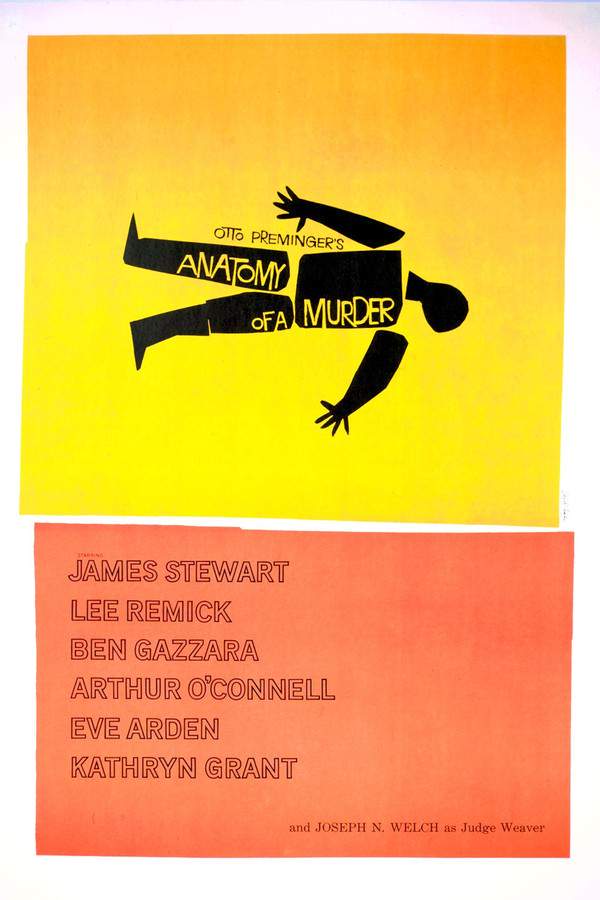
Anatomy of a Murder (1959) movie poster

Timeline

Anatomy of a Murder (1959) Timeline Explained – Every Event in Order

Release, runtime and language
1959 · 160 min · English
Loading streaming availability…
Directed by
Otto Preminger
Starring
George C. Scott, Murray Hamilton, James Stewart, Lee Remick, Arthur O'Connell, Ben Gazzara

A seasoned lawyer, Paul Biegler, takes on the defense of Army Lieutenant Manion, who is accused of murder and claims self-defense. The case centers around an alleged rape of Manion's wife by the victim. During the intense courtroom proceedings, Biegler confronts a complex web of conflicting testimonies and hidden agendas. He must unravel the truth to determine whether his client acted in self-defense, while also uncovering a surprising revelation that challenges everything he thought he knew.

On this page (7)
  1. 1 Where to watch
  2. 2 Events in order (15)
  3. 3 Timeline questions answered
  4. 4 The book behind the movie
  5. 5 Movie threads
  6. 6 Movies like Anatomy of a Murder
  7. 7 Every angle
Loading streaming availability…

15 events in order · contains spoilers

Anatomy of a Murder Timeline: Events in Chronological Order

Every key event of Anatomy of a Murder (1959) in order, scene by scene, with when and where it takes place. Use it to untangle flashbacks, time jumps and parallel storylines, to refresh your memory before the sequel or to find the exact scene you are thinking of.

  1. Introduction of Paul Biegler

    In the Upper Peninsula of Michigan, we meet small-town lawyer Paul Biegler, portrayed by James Stewart. A former district attorney, Biegler now finds solace in fishing, music, and spending time with his alcoholic friend and sardonic secretary.

    Where
    Upper Peninsula, Michigan
  2. Laura Manion Seeks Help

    One day, Paul is approached by Laura Manion, the distressed wife of US Army Lieutenant Frederick 'Manny' Manion. She seeks Biegler's legal assistance as her husband has been charged with the first-degree murder of innkeeper Bernard 'Barney' Quill.

  3. Murder Charges and Defense Strategy

    Although Manny does not deny killing Quill, he claims it was a response to an assault on Laura. As a result, Biegler contemplates a defense based on irresistible impulse, acknowledging the challenges posed by Manny's hazy recollection of events.

  4. Challenges Arise in Court

    Biegler faces significant hurdles in court as he confronts formidable prosecution led by Claude Dancer. Dancer employs aggressive tactics that complicate Biegler's efforts to construct a robust defense for Manny.

  5. Investigation into Quill’s Past

    Details emerge regarding Barney Quill's past as an ex-boxer and his time in federal prison. Biegler delves into Quill's history to unravel the truth behind the murder and its motivations.

    Where
    Federal prison
  6. Laura and Biegler's Complicated Dynamic

    Biegler spends time with Laura to clarify her story, but her flirtatiousness adds a layer of complexity to their relationship. The situation escalates when Manny begins to suspect an affair between Laura and Biegler.

  7. Revealing Quill's Personal Life

    The investigation uncovers that Mary Pilant, manager of Quill's bar, may have been intimately involved with him. This revelation raises questions about Quill's character and potential motivations behind the assault on Laura.

  8. Confrontation at the Jazz Club

    Biegler confronts Laura about her behavior during a night out at a jazz club, stressing the importance of maintaining her image as a model wife during the trial. He warns that her actions could jeopardize the case.

    Where
    Jazz club
  9. Trial Proceedings Begin

    Throughout the trial, the prosecution attempts to silence any references to Manny's motive for the murder. Biegler counters by trying to introduce evidence of Laura's assault, leading to intense cross-examinations.

  10. Conflicting Psychiatric Testimonies

    Psychiatrists present clashing opinions regarding Manny's mental state at the time of the murder. Meanwhile, Dancer questions whether Quill's behavior could even be classified as assault, further complicating the defense.

  11. Shocking Family Secrets Unveiled

    During the trial, it is revealed that Mary Pilant is actually Quill's daughter, a shocking secret that she desperately wanted to keep hidden. The truth emerges when she is called to testify about Laura's allegations.

  12. Verdict: Not Guilty by Reason of Insanity

    The trial culminates in a dramatic conclusion as Manny is declared not guilty by reason of insanity. This verdict leaves Biegler both relieved and pondering the implications of the case.

  13. Aftermath and New Beginnings

    After the trial, Biegler decides to start a new practice with a rejuvenated McCarthy, who has finally decided to get sober. They attempt to visit the Manions for a loan signature but discover the couple has mysteriously fled.

  14. Reflection on Irresistible Impulse

    Upon finding a note left by Laura referring to his courtroom argument about irresistible impulse, Biegler reflects on the case's complexities. It appears that the case and its players will continue to haunt him.

  15. New Case on the Horizon

    In a twist of fate, Biegler learns that Mary Pilant has hired him to manage Quill's estate. This new opportunity presents both challenges and a sense of poetic justice, as Biegler's life takes yet another turn.

Last updated: November 04, 2024 at 03:11

Was this helpful?

Timeline questions answered

Anatomy of a Murder Timeline Explained: Your Questions Answered

When does it happen, and why in that order? The questions people ask about the chronology of Anatomy of a Murder (1959): time jumps, flashbacks, cause and effect between scenes and the correct order of events, each answered with spoilers.

Q1

Why was Manion found not guilty by reason of insanity instead of self-defense?

The defense used the "irresistible impulse" argument, which is a form of temporary insanity. Even though Manion claimed self-defense, his hazy memory of the incident made a traditional self-defense claim difficult to prove. The jury ultimately accepted that Manion acted in a state of temporary insanity rather than calculated self-defense, leading to the "not guilty by reason of insanity" verdict.

Foreshadowing: Earlier in the film, Biegler explains to Parnell that Manny's hazy recollection makes the insanity defense the most viable option.

  • manion
  • verdict
  • insanity defense
  • self-defense
  • irresistible impulse
Q2

What is the "irresistible impulse" defense used in the movie?

The "irresistible impulse" defense is a legal concept representing a form of temporary insanity where a person cannot control their actions due to a mental defect. In the movie, Biegler uses this defense because Manny's memory of the night is hazy, making it difficult to prove he acted in deliberate self-defense. The defense argues that the alleged assault on Laura drove Manny to an uncontrollable rage that negated criminal intent.

  • irresistible impulse
  • legal defense
  • insanity
  • temporary insanity
  • mansion defense
Q3

Why did the Manions flee at the end of the movie?

The Manions mysteriously disappear after the trial, leaving only a note for Biegler. The note references his courtroom argument about "irresistible impulse," which suggests Laura may have been testing whether Manny truly had no control over his actions or was simply using the defense as a convenient excuse. Their sudden flight raises questions about the authenticity of their entire narrative and leaves the case's true nature ambiguous.

Foreshadowing: The note's reference to the insanity defense directly echoes Biegler's earlier courtroom arguments.

  • manions flee
  • note
  • trailer
  • missing
  • irresistible impulse
Q4

Who is Mary Pilant and why is her secret important?

Mary Pilant is revealed to be Barney Quill's daughter, not just his bar manager. She had been secretly managing his bar and stood to inherit his wealth. Her hidden parentage is crucial because it means she had strong motives to protect her father's reputation and estate, making her testimony about Laura's alleged assault highly suspect. The revelation shocks everyone in the courtroom and undermines the prosecution's case.

Foreshadowing: Earlier, the investigation reveals Pilant may have been Quill's mistress, hinting at a deeper connection.

  • mary pilant
  • quill
  • daughter
  • secret
  • inheritance
Q5

Why did the prosecution try to suppress evidence of the assault on Laura?

Prosecutor Claude Dancer worked to silence any mention of Manion's motive for the murder. By suppressing evidence of the alleged assault, the prosecution could argue that Manny had no justification for killing Quill and that the murder was premeditated. This tactical approach forced Biegler to fight harder to introduce Laura's account of the assault into the proceedings.

  • prosecution
  • evidence
  • assault
  • motive
  • quill
Q6

What did Laura's note to Biegler mean?

Laura's note references Biegler's courtroom argument about "irresistible impulse." The note suggests she may have been manipulating the situation all along, using the claim of assault to justify Manny's actions. By referencing the legal defense Biegler crafted, she leaves ambiguity about whether the assault actually occurred or was merely a narrative constructed for the trial.

Foreshadowing: The note echoes the earlier tension between Laura's flirtatious behavior and the need to maintain her credibility as a witness.

  • laura note
  • message
  • biegler
  • irresistible impulse
  • meaning
Q7

Why did Biegler confront Laura at the jazz club?

Biegler confronted Laura about her behavior at the jazz club because he needed her to remain a "model wife" throughout the trial. Her flirtatious demeanor could undermine the defense's credibility and give the prosecution ammunition to discredit her account of the assault. Biegler understood that the jury's perception of Laura's character would significantly impact the case.

Foreshadowing: This confrontation foreshadows the later cross-examination where Dancer uses Laura's flirtatious nature against her credibility.

  • biegler
  • laura
  • jazz club
  • confrontation
  • model wife
Q8

Why did Manny become suspicious of an affair between Laura and Biegler?

Manny began suspecting an affair because Biegler spent considerable time with Laura to clarify her story for the defense. Combined with Laura's flirtatious behavior and the intimate nature of their meetings, Manny's jealousy grew. This suspicion became a significant point in the prosecution's case, as they highlighted a pattern of jealousy exhibited by Manny to suggest other motivations for the murder.

Foreshadowing: The timeline shows Laura and Biegler's complicated dynamic intensifies before Manny's jealousy surfaces.

  • manny
  • laura
  • biegler
  • jealousy
  • suspicion
  • affair
Q9

What was Barney Quill's background and why did it matter?

Barney Quill was revealed to be an ex-boxer who had served time in federal prison. This background was significant because it painted Quill as a potentially violent man, supporting the defense's claim that he could have assaulted Laura. The revelation of his criminal past helped Biegler build a case that Quill was capable of the alleged attack.

  • barney quill
  • ex-boxer
  • federal prison
  • background
  • criminal past
Q10

Why did the prosecutor challenge whether Quill's actions constituted assault?

Claude Dancer challenged whether Quill's actions could legally be classified as assault to undermine the defense's core argument. If the jury believed Quill's behavior did not meet the legal definition of assault, then Manion had no justification for the murder, and the entire self-defense claim would collapse. This tactic was part of the prosecution's broader strategy to suppress any mention of motive.

  • prosecutor
  • dancer
  • assault
  • classification
  • legal definition
Q11

Why did Biegler agree to take on Manion's difficult case?

Biegler was drawn to the case because it represented a complex legal challenge that would allow him to showcase his courtroom skills. Though his career had declined after losing his re-election bid as district attorney, this high-profile murder case offered him an opportunity to prove himself again. Additionally, the case's moral complexity intrigued him, as he worked to determine whether his client genuinely acted in self-defense.

Foreshadowing: The opening scenes establish Biegler's diminished circumstances and his desire for a meaningful legal challenge.

  • biegler
  • case
  • motivation
  • career
  • legal challenge

Movie threads

More Movies Like Anatomy of a Murder, by Mood & Story

Curated lists built around what makes Anatomy of a Murder tick: the same mood, the same kind of story or the same emotional payoff. Each list explains why these movies belong together.

Ambiguous Courtroom Dramas like Anatomy of a Murder

Legal thrillers where the truth is obscured by strategy and doubt. If you liked the complex legal maneuvering and moral uncertainty of Anatomy of a Murder, explore these movies like it. This thread gathers similar courtroom dramas and legal thrillers where the truth is elusive and the emotional weight is heavy.

  • courtroom
  • suspenseful
  • methodical
  • cynical
  • thought-provoking
  • tense
  • Tone: tense, cynical, thought-provoking
  • Pacing: methodical, variable
Why these movies?

The story pattern: These narratives are propelled by a central trial or investigation that serves as a battleground for competing truths. The plot unfolds through witness testimony, legal strategy, and the revelation of hidden motives, often culminating in a verdict that provides legal resolution but leaves profound moral questions unanswered.

Why they belong together: Movies are grouped here based on their shared focus on the legal process as a source of tension and intellectual challenge. They feature complex character motivations, a methodical pacing that builds suspense, and an ending that prioritizes thought-provoking ambiguity over clear-cut resolution.

Methodical Psychological Thrillers like Anatomy of a Murder

Stories where tension builds through a careful, unsettling dissection of facts. Fans of the careful, suspenseful dissection of truth in Anatomy of a Murder will enjoy these similar movies. This collection features psychological thrillers and dramas with a methodical pace, complex characters, and a heavy, thought-provoking atmosphere.

  • methodical
  • psychological
  • suspenseful
  • unsettling
  • atmospheric
  • gritty
  • Tone: tense, gritty, atmospheric
  • Pacing: variable, deliberate
Why these movies?

The story pattern: The journey in these films is one of gradual discovery. Rather than action, the conflict is driven by dialogue, deduction, and the psychological pressure applied between characters. The pacing is often variable, alternating between slow, reflective moments and intense, revelatory sequences, leading to a climax that recontextualizes everything that came before.

Why they belong together: These films are connected by their shared approach to suspense-building. They prioritize a gritty, atmospheric mood, a complex narrative structure, and a heavy emotional weight derived from psychologically dense characters and morally ambiguous situations.

If you liked this

Movies Like Anatomy of a Murder

Similar movies to Anatomy of a Murder: the same genre, themes or kind of story. Each one comes with its own plot summary, timeline and ending explained.

Browse all movie summaries

Every angle

Anatomy of a Murder (1959) Explained: Plot, Timeline & Characters

Everything about Anatomy of a Murder in one place: what happens in the plot summary, the timeline in chronological order, the characters and meaning and a spoiler-free summary. What's After the Movie adds the cast, box office and post-credit scenes.

Coming soon on iOS and Android

The Plot Explained Movie Summary App

Plot summaries, endings explained and timelines on your phone. Catch up on any movie in minutes, save your favorites and never miss a twist again.

Be the first to know when we launch. Your email stays private, always.

Learn more about the app