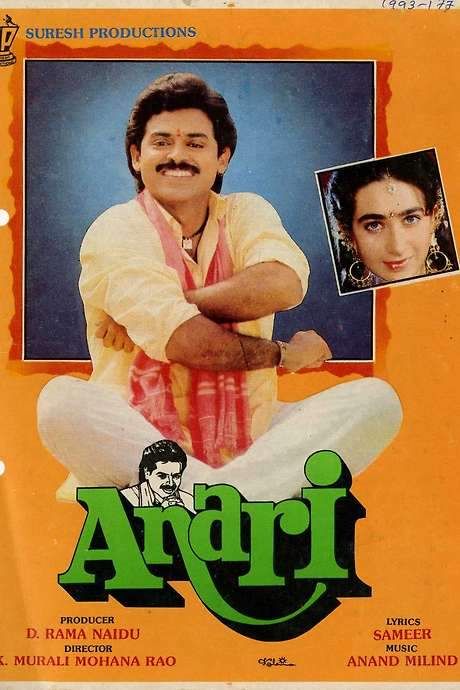
In a rural village ruled by powerful Zamindars, a baby girl named Raj Nandini is born and instantly becomes the center of a lavish celebration by her three brothers. The family’s world is tightly bound by tradition and caste, where the landowner’s word is law and the villagers are expected to toe the line. An astrologer visits the newborn and delivers a prophecy: this child will bring immense happiness to the family, but her future marriage must be her own choice, not dictated by her elder brothers. Fearing this, the men lock her away from the outside world, keep her homeschooled, and warn everyone that merely laying eyes on her could bring dire trouble. The house becomes a fortress for her, a place where she can be seen but not free, and her early years are spent under careful, watchful care.
As Raj Nandini enters puberty, the world outside remains strictly off-limits. The few men allowed near her are members of the household staff and her bodyguards. Into this guarded life steps Rama, a young man who grows up under the care of his widowed mother, Savitri. Rama is gentle, guileless, and kind-hearted, with a voice that can lift the spirits of the village. Rama, played by the actor Rama, embodies a pure, uncomplicated goodness that catches the eye of those around him, including Raj Nandini. Rama’s upbringing by his mother, the resilient Savitri, shapes a tenderness in him that contrasts with the rigid expectations of the zamindari world.
The brothers, noticing Rama’s strength and simplicity, hire him to serve as Raj Nandini’s bodyguard and orderly. This arrangement compounds Raj Nandini’s sense of confinement, but it also awakens something new inside her—a curiosity about a life beyond the courtyard walls. The young woman’s longing for freedom becomes a spark, and she dares to glimpse the village beyond the estate with Rama as the reluctant guide. The act triggers a chain of events: Raj Nandini falls gravely ill after the excursion, and Rama is blamed for neglecting his duties. The fault lies not in carelessness but in the brittle code that pits protection against curiosity. This misjudgment drives a wedge between Rama and the men who control Raj Nandini’s world, and the guilt weighs heavily on her.
As illness lingers, a bond begins to form between Raj Nandini and Rama—an unspoken understanding that grows from shared moments and quiet empathy. Raj Nandini’s illness and Rama’s refusal to abandon her illuminate a tenderness that goes beyond duty. A boy named Chanti, who has always cared for Raj Nandini in small ways, also plays a part in this developing closeness, underscoring the human need for care in a life otherwise defined by rigid rules. It is in this space of growing emotional closeness that Raj Nandini discovers she is in love with Rama, a revelation that threatens the delicate balance of power in the family.
A crisis erupts when a factory worker is punished for ogling Raj Nandini at the inauguration of her brothers’ new factory. The worker’s actions trigger a fatalistic plan to harm Raj Nandini, and Rama overhears the plot. In a desperate bid to save her, he acts without thought for consequences and, in a moment of impulsive bravery, reaches out to protect her in public. The incident roils the brothers, who erupt in anger and nearly strike Rama to death. Raj Nandini, torn between loyalty to her protective guard and the escalating violence of her home, steps in to defend Rama by asking for an explanation instead of immediate punishment. Rama explains the misreadings and the brothers’ pride falters, casting a shadow over the trust that once existed between the family and the man who safeguarded Raj Nandini.
Rama, shaken by the confrontation, chooses to quit his job rather than subject himself to further mistreatment. He walks away, and Raj Nandini, in a quiet, hopeful moment, follows him to offer an apology and a plea for him to return. She recognizes that her brothers’ violent temper is not something Rama should endure, and she asks him to consider their union as a shield against harm. In response, Rama agrees, though he remains largely unaware of the deeper significance of the mangalsutra Raj Nandini ties around his neck—an act he performs without fully understanding its sacred meaning. The moment signals a shift: the bond between Raj Nandini and Rama has become a quiet, unspoken marriage, and Rama’s return to work earns him a renewed, if wary, respect from the brothers.
Back inside the household, Raj Nandini begins to imitate the rituals of the in-laws by tending to her husband and managing the household in a more traditional way. The family suggests arranging a formal marriage to cement alliances and quiet the growing anxiety, but Raj Nandini’s defiance and Rama’s reluctance to accept a life defined by fear complicate matters. Rama, unable to fully grasp the gravity of the christened vows he appears to have taken, seeks solace with his mother, who senses the danger in the escalating power of Raj Nandini’s brothers. She intervenes, guiding him away from the predatory dynamic and toward a safer, more honest life.
The brothers, whose pride has been bruised, attempt to rekindle control over Raj Nandini by pressing for a conventional marriage that would restore their authority. They attempt to humiliate Rama’s mother to reveal his whereabouts, but the family’s resilience is tested by the protective bond between Rama and Raj Nandini. When Raj Nandini learns of her brothers’ torturous acts, she is driven to a desperate edge, and the film’s tension peaks as she teeters on self-destruction. In a crucial, redemptive moment, Rama returns to protect her, and the two are finally reunited in a display of loyalty and devotion that strengthens their bond against the cruelty of the family’s power dynamics.
The final act closes with Rama racing to Raj Nandini’s side as she begins to recover from the emotional and physical strain of the ordeal. The lovers’ endurance, born of love and a shared desire for freedom, prevails over oppression, and Raj Nandini’s recovery marks a quiet triumph of resilience over patriarchal constraint. The story ends with a hopeful note: a pair who found each other in a world meant to keep them apart have carved out a space of mutual respect, love, and the opportunity to live life on their own terms, outside the shadows of the zamindari system.