


Plot Explained Spoilers guaranteed!
Plot Explained

Browse by genre

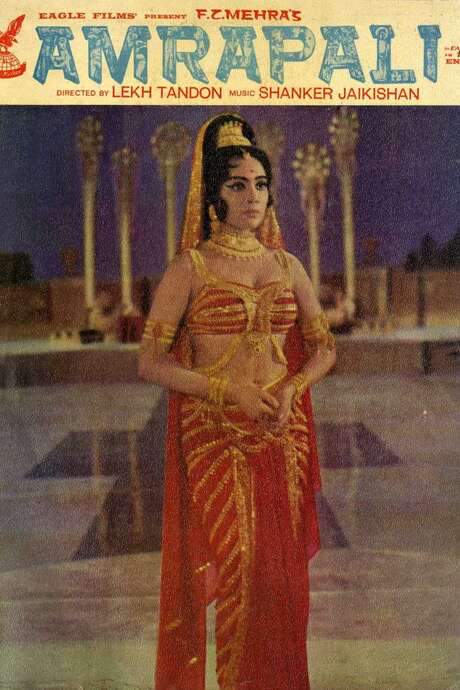
Amrapali (1966) movie poster

Characters & Themes

Amrapali (1966) Characters, Setting & Themes Explained

Release, runtime and language
1966 · 121 mins · Hindi
JustWatch #31,283
Directed by
Lekh Tandon
Starring
Sunil Dutt, Narendra Nath, Premnath Malhotra, Gajanan Jagirdar, K.N. Singh, Ruby Myers

Following a disastrous campaign, Emperor Ajaatshatru disguises himself as a footsoldier within the enemy ranks, hoping to sabotage them from within. While undercover, he becomes enamored with Amrapali, a celebrated royal courtesan, forcing him to weigh his political ambitions against his newfound love.

On this page (7)
  1. 1 Where to watch
  2. 2 Characters explained (10)
  3. 3 Where & when it takes place
  4. 4 Themes & meaning (3)
  5. 5 Character & meaning questions
  6. 6 Movie threads
  7. 7 Every angle

Where to watch

Where to Watch Amrapali (1966)

Where can you watch Amrapali? Stream, rent or buy it in the US, including on Netflix and Netflix Standard: current JustWatch availability with up-to-date prices.

Streaming availability powered by JustWatch

10 main characters · contains spoilers

Amrapali Characters Explained: Who Is Who

The main characters of Amrapali (1966), heroes and villains: what drives them, how they change over the course of the story and what each of them reveals about the film's bigger ideas.

  • Ajatashatru (Sunil Dutt)

    Magadha's ambitious king who cannot rest after victories, he pursues conquest despite warnings and the harm it causes. He disguises himself as a Vaishali soldier to seek refuge and becomes emotionally entangled with Amrapali, fueling the rivalries between the two cities. His ruthless pursuit of power leads to a brutal siege and ultimately a surrender to Gautama Buddha.

    • ⚔️ Ambitious ruler
    • 🧠 Cunning strategist
    • 🔥 War-driven
  • Amrapali (Vyjayanthimala)

    Vaishali's celebrated Rajnarthaki and a symbol of patriotism, she rises through the ranks by winning a dance competition. She falls in love with Ajatashatru, but breaks off the relationship to protect Vaishali, facing political pressure and accusations of treachery. Witnessing the bloodshed, she ultimately seeks a moral resolution by surrendering to Buddha.

    • 💃 Talented dancer
    • 🎖️ Patriot
    • 💔 Conflicted
  • Gautama Buddha (Narendra Nath)

    A moral anchor in the narrative, Buddha accepts the surrender of Ajatashatru and Amrapali, guiding them toward redemption rather than revenge. His presence provides a counterpoint to political violence and introduces themes of restraint and spiritual reckoning.

    • 🙏 Spiritual guide
    • ⚖️ Moral center
    • 🌟 Compassionate sage
  • Senapati Veer of Magadh (Prem Nath Malhotra)

    played by Premnath Malhotra

    Magadha's general who counsels rest for the tired army and later aligns with Ajatashatru to execute a plan against Vaishali. His strategic mind and willingness to employ calculated ruses illustrate the ruthless pragmatism of war.

    • ⚔️ Military mind
    • 🧠 Strategist
    • 🤝 Ally
  • Kulpati Mahanam (Gajanan Jagirdar)

    A senior Magadhan court official who coordinates military and administrative efforts, helping to implement the empire's broader strategy of conquest.

    • 🛡️ Senior official
    • 🧭 Strategist
    • ⚙️ Bureaucrat
  • Balbadra Singh (K.N. Singh)

    A trusted Magadhan noble and ally to Ajatashatru, instrumental in plotting the plan to demoralize Vaishali’s defenses and undermine its morale through subterfuge and intrigue.

    • 🗡️ Conspirator
    • 🧠 Strategist
    • 🔥 Power broker
  • Vaishali's Empress (Ruby Myers)

    A regal figure within Vaishali's court who embodies the city's dignity and supports its leadership amid rising tensions with Magadha.

    • 👑 Royal consort
    • 🗳️ Political actor
    • 🛡️ Defender
  • Vaishali's Samrat (Bipin Gupta)

    The ruler of Vaishali who leads the city during crisis, ultimately passing judgment on Amrapali and guiding the state's response to Magadhan aggression.

    • 👑 Royal ruler
    • 🏛️ Judicial authority
    • ⚖️ Stern justice
  • In the song Neel Gagan Ki (Baburao Pendharkar)

    An on-screen performer featured in the musical number 'Neel Gagan Ki', illustrating the cultural and festive aspects of Vaishali’s life amid political turmoil.

    • 🎶 Musical performer
    • 🎤 Song sequence
    • 💫 Visual spectacle
  • Raj Mata (Ajaat Shatru's Mother) (Mridula Rani)

    Ajatashatru's mother, a matriarch who advocates caution and seeks to shield the realm from needless bloodshed. Her influence underscores the tension between dynastic ambition and maternal concern.

    • 🧓 Matriarch
    • 🎭 Influence
    • ⚖️ Moral compass

Last updated: October 04, 2025 at 15:37

Was this helpful?

Setting

Where and When Does Amrapali Take Place?

The setting of Amrapali (1966): the year and time period, the places and locations, and how they shape the characters, the mood and the tension of the story.

Time period

Ancient India

Set in the era of the Mahajanapadas, the tale blends imperial ambition with emerging spiritual dynamics. The narrative moves from the Magadhan court to Vaishali’s streets, capturing a period of intense rivalry and fraught diplomacy. The presence of Gautama Buddha anchors a counterpoint to the violence of conquest, signaling a moral pivot within the historical conflict.

Location

Magadha, Vaishali

The story unfolds between the Magadhan capital of Magadha and the fortified city of Vaishali, highlighting two rival power centers. Vaishali is depicted as a proud republic with its own army and political structure, while Magadha pursues expansion through force. The film paints a world of royal courts, strategists, and looming sieges that set the stage for political and military intrigue.

  • 🏛️ Ancient kingdoms
  • 🗺️ Vaishali vs Magadha
  • ⚔️ War and politics
  • 👑 Royal courts

Last updated: October 04, 2025 at 15:37

Was this helpful?

3 major themes

Amrapali Meaning: Themes & Message Explained

What is Amrapali (1966) really about? The emotional, social and philosophical themes the film keeps returning to, its symbolism and the message beneath the surface.

  • Conquest

    Ajatashatru's relentless hunger for victory drives the central conflict, pushing Magadha toward war with Vaishali. The film showcases how ambition, political scheming, and military might reshape destinies. It also explores the human cost of imperial expansion, including betrayal and bloodshed.

  • Love

    Ajeetashatru and Amrapali's romance tests loyalties and political loyalties within their worlds. Amrapali, a celebrated patriot and dancer, must navigate her personal feelings against the fate of Vaishali. Their relationship becomes a catalyst for dramatic choices and moral reckoning as consequences unfold.

  • Redemption

    Following the devastation, Ajatashatru and Amrapali surrender to Gautama Buddha, framing a path toward forgiveness rather than vengeance. The narrative uses this spiritual engagement to contrast power with restraint. Buddha’s presence offers a hopeful counterpoint to the violence of conquest and the lure of revenge.

Last updated: October 04, 2025 at 15:37

Was this helpful?

Character & theme questions

Amrapali Characters & Meaning: Your Questions Answered

The questions people ask about Amrapali (1966): who the characters really are, their relationships, what the symbols mean, where it takes place and what the movie is really about. Each answer contains spoilers.

Q1

What is the historical setting of the movie?

The movie is set in Ancient India during the era of the Mahajanapadas, a period of rival kingdoms and city-states. The narrative unfolds between Magadha and Vaishali, two powerful entities competing for dominance in the Ganges valley.

Foreshadowing: The time period establishes the moral framework of dharma and ahimsa that later becomes central to the characters' spiritual journey.

  • ancient india
  • mahajanapadas
  • historical setting
  • magadha
  • vaishali
Q2

What is the conflict between Vaishali and Magadha?

Vaishali is depicted as a proud republican city-state with its own army and political independence, while Magadha pursues expansion through military conquest. The film portrays a world of royal courts, strategic scheming, and looming sieges where imperial ambition clashes with republic freedom.

Foreshadowing: This political rivalry forms the backdrop for the personal conflict between Ajatashatru and Amrapali.

  • vaishali
  • magadha
  • kingdom conflict
  • war
  • conquest
Q3

What makes Vaishali different from other kingdoms in the film?

Vaishali is portrayed as a republic with its own political structure and elected governance, distinct from the monarchical rule of Magadha. The city takes great pride in its independence and maintains a strong army to defend its sovereignty.

Foreshadowing: Vaishali's republican values contrast with Magadha's imperial ambitions, setting up the moral tension of the story.

  • vaishali republic
  • independence
  • monarchy vs republic
Q4

What does the movie say about conquest and ambition?

The film explores how Ajatashatru's relentless hunger for victory drives Magadha toward war with Vaishali. It showcases how political scheming and military might reshape destinies while exploring the human cost of imperial expansion, including betrayal and bloodshed.

Foreshadowing: Ajatashatru's ruthless pursuit of power directly leads to the devastating siege that defines the film's climax.

  • conquest
  • ambition
  • imperialism
  • power
  • war cost
Q5

How does the film portray the conflict between love and loyalty?

The romance between Ajatashatru and Amrapali tests their loyalties to their respective worlds. As a celebrated patriot of Vaishali, Amrapali must weigh her personal feelings against the fate of her city. Their relationship becomes a catalyst for dramatic choices and moral reckoning as consequences unfold.

Foreshadowing: Their love story directly threatens both characters' political identities and allegiances.

  • love
  • loyalty
  • patriotism
  • romance conflict
Q6

What role does redemption play in the story?

Following the devastation of war, Ajatashatru and Amrapali surrender to Gautama Buddha, choosing forgiveness over vengeance. The narrative uses this spiritual engagement to contrast power with restraint, offering a hopeful counterpoint to the violence of conquest and the lure of revenge.

Foreshadowing: Buddha's presence throughout the film foreshadows the spiritual resolution available to those who choose non-violence.

  • redemption
  • buddha
  • forgiveness
  • surrender
  • spiritual awakening
Q7

Who is Ajatashatru and what drives him?

Ajatashatru is Magadha's ambitious king who cannot rest after victories, continuously pursuing conquest despite warnings about the harm it causes. He disguises himself as a Vaishali soldier to gather intelligence and becomes emotionally entangled with Amrapali, fueling the rivalry between the two cities.

Foreshadowing: His ruthless pursuit of power leads directly to the brutal siege of Vaishali.

  • ajatashatru
  • king magadha
  • ambition
  • disguise
Q8

Who is Amrapali and what is her role in Vaishali?

Amrapali is Vaishali's celebrated royal courtesan and a symbol of patriotism, known for her extraordinary dancing. She rises through the ranks by winning a prestigious dance competition. Though she falls in love with Ajatashatru, she breaks off the relationship to protect Vaishali, facing political pressure and accusations of treachery.

Foreshadowing: Her position as both artist and patriot creates the central moral dilemma of the film.

  • amrapali
  • courtesan
  • dancer
  • vaishali
  • patriot
Q9

What is Gautama Buddha's role in the film?

Gautama Buddha appears as a moral anchor in the narrative, accepting the surrender of Ajatashatru and Amrapali after the war's devastation. He guides them toward redemption rather than revenge, offering a spiritual counterpoint to the political violence and introducing themes of restraint and spiritual reckoning.

Foreshadowing: Buddha's presence throughout the film foreshadows the path of non-violence the characters will ultimately choose.

  • gautama buddha
  • spiritual guide
  • redemption
  • moral anchor
Q10

What is the emotional tone of the film?

The film has a melancholic tone dominated by a profound sense of loss for both city and relationship. Despite the presence of a central romance, the ending is bittersweet, victory is hollow, love is transformed by suffering, and resolution is found not in triumph but in spiritual surrender and humility.

Foreshadowing: Even from the early romantic scenes, an undercurrent of impending loss shadows the characters.

  • melancholy
  • bittersweet
  • emotional tone
  • sacrifice
  • loss

Movie threads

More Movies Like Amrapali, by Mood & Story

Curated lists built around what makes Amrapali tick: the same mood, the same kind of story or the same emotional payoff. Each list explains why these movies belong together.

Epic historical romance stories of love versus duty like in Amrapali

Passionate romances tested by political ambition and the heavy weight of responsibility. Find more movies like Amrapali, where grand-scale historical dramas center on the powerful conflict between passionate, forbidden love and overwhelming political or moral duty. These stories feature intense emotional choices set against the backdrop of war and empire.

  • romantic
  • tragic
  • grand
  • conflicted
  • somber
  • epic
  • Tone: melancholic, romantic, tragic
  • Pacing: variable, building from steady to intense
Why these movies?

The story pattern: The narrative typically follows a high-stakes romantic entanglement that threatens a character's position, loyalties, or a nation's fate. The central conflict forces a choice between personal happiness and a greater cause, often leading to immense personal sacrifice and a bittersweet resolution.

Why they belong together: These movies are grouped by their central theme of a love affair that is both intensified and threatened by external forces of duty, war, or political ambition, creating a heavy emotional weight and a somber, reflective tone.

Movies about tragic redemption and spiritual awakening like in Amrapali

Characters find a deeper meaning and spiritual peace only after suffering profound loss. If you liked the spiritual conclusion of Amrapali, explore other films where characters endure great tragedy and loss, leading to a powerful transformation and a quiet, reflective state of redemption rather than a conventional happy ending.

  • spiritual
  • somber
  • tragic
  • redemptive
  • contemplative
  • melancholic
  • Tone: somber, spiritual, melancholic
  • Pacing: variable, contemplative finale
Why these movies?

The story pattern: The journey begins with worldly pursuits—power, love, revenge—that lead to catastrophic failure or moral collapse. The climax is not a victory but a surrender, where the protagonist sheds their ego and ambition, finding a new, more profound purpose through humility and suffering.

Why they belong together: These films share a specific emotional arc: a descent into tragedy that paradoxically opens the door to spiritual clarity and redemption. They are united by a melancholic tone, heavy emotional weight, and a focus on inner transformation over external success.

Every angle

Amrapali (1966) Explained: Plot, Timeline & Characters

Everything about Amrapali in one place: what happens in the plot summary, the timeline in chronological order, the characters and meaning and a spoiler-free summary. What's After the Movie adds the cast, box office and post-credit scenes.

Coming soon on iOS and Android

The Plot Explained Movie Summary App

Plot summaries, endings explained and timelines on your phone. Catch up on any movie in minutes, save your favorites and never miss a twist again.

Be the first to know when we launch. Your email stays private, always.

Learn more about the app