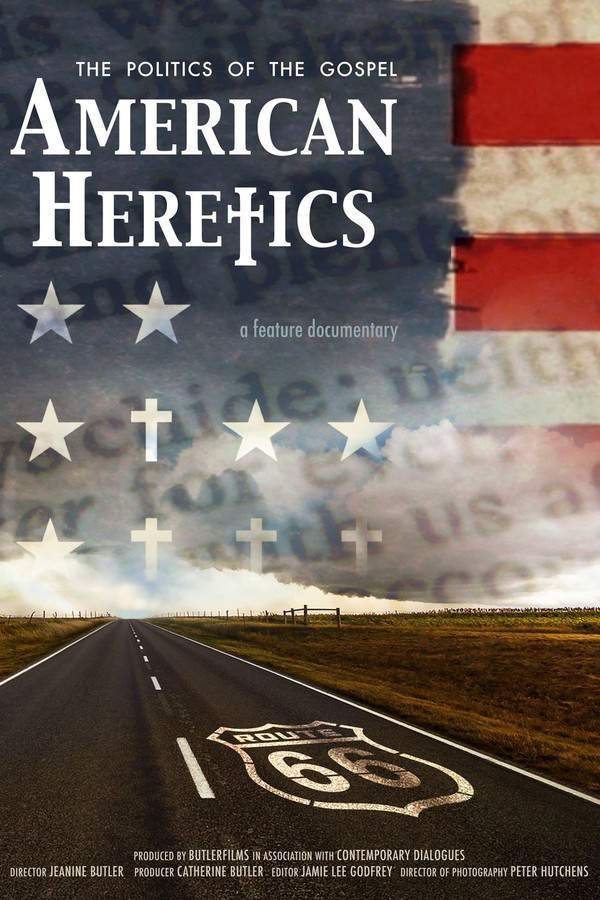
American Heretics: The Politics of the Gospel

American Heretics: The Politics of the Gospel

JustWatch#26,8973

Year: 2019

Runtime: 85 min

Language: English

Director: Jeanine Isabel Butler

Echo Score: 62
Documentary

Within the Bible Belt, a group in Oklahoma challenges traditional, fundamentalist Christian beliefs. They are labeled "heretics" for advocating an unconventional faith centered on social justice. This movement seeks to counter nationalism and discrimination by promoting compassion and equality, redefining the role of faith in their community and sparking a quiet revolution.

Where to Watch American Heretics: The Politics of the Gospel?

Find where to stream, rent, or buy American Heretics: The Politics of the Gospel (2019) in the US with current JustWatch availability, up-to-date pricing, and platform listings for subscription, rental, and digital purchase options.

Warning: spoilers below!

Haven’t seen American Heretics: The Politics of the Gospel yet? This summary contains major spoilers. Bookmark the page, watch the movie, and come back for the full breakdown. If you're ready, scroll on and relive the story!

Timeline – American Heretics: The Politics of the Gospel (2019)

Trace every key event in American Heretics: The Politics of the Gospel (2019) with our detailed, chronological timeline. Perfect for unpacking nonlinear stories, spotting hidden connections, and understanding how each scene builds toward the film’s climax. Whether you're revisiting or decoding for the first time, this timeline gives you the full picture.

1

Introduction of the Issue

The documentary begins by addressing the complex relationship between church and state in contemporary society. It highlights how negative partisanship has divided people into distinct camps often defined by race and religion.

2

Expert Commentary

Dr. Robert Jones, a prominent figure from the Public Religion Research Institute, shares insights about the exploitation of race and religion in American politics. His commentary underlines how these elements have become entwined with partisan identities, affecting public discourse and individual beliefs.

3

The Bible Belt Setting

Viewers are taken deep into the heart of the Bible Belt, a region known for its strong fundamentalist Christian beliefs. This setting serves as a backdrop for uncovering the realities faced by those who challenge traditional doctrines.

Bible Belt, USA
4

Emergence of Progressive Beliefs

The narrative introduces a brave assembly of ministers and community leaders who advocate for a Gospel of Inclusion. These individuals often find themselves labeled as 'heretics' due to their progressive beliefs that challenge established norms.

5

Confronting Fundamentalism

The so-called 'heretics' confront entrenched fundamentalist doctrines, emphasizing a more inclusive interpretation of the Bible. Their efforts reflect a deep commitment to civil rights and social justice, resisting interpretations that fuel division.

6

Resistance to Literalism

The documentary highlights the refusal of these leaders to accept literal interpretations of the Bible that legitimize nationalism and undermine civil rights. This critical perspective promotes a more compassionate and inclusive theology.

7

Focus on Civil Rights

The community leaders actively address issues that disproportionately affect marginalized groups. Their initiatives aim to promote the rights of women, minorities, immigrants, and LGBTQ individuals, drawing attention to the need for social change within their communities.

8

Reconsidering Perceptions

As the narrative unfolds, viewers are invited to reconsider their perceptions of the Christian heartland. The film challenges stereotypes and provides a more nuanced understanding of the intersection of faith, race, and politics.

9

Intimate Portraits

Through intimate interviews and personal stories, the documentary paints a vivid portrait of the heretics. Their collective experiences underscore the challenges they face as they work to redefine faith in a rapidly changing societal landscape.

10

Struggle Against Oppression

The heretics articulate their resistance to societal issues such as poverty and discrimination. They frame their struggle as a moral imperative, striving to uplift those who are most vulnerable.

11

The Insidious Hell

The documentary concludes with a compelling argument that the 'insidious hell' is characterized by systemic inequality. The heretics work diligently to combat nationalism and discrimination, striving for a future where all individuals are valued.

12

Call to Action

The film ends with a powerful call to action, encouraging viewers to reflect on their beliefs and engage in dialogue. It emphasizes the need for collective efforts to promote a Gospel of Inclusion that transcends partisan divides.

Last updated: October 25, 2024 at 10:58

Was this helpful?

American Heretics: The Politics of the Gospel (2019) Timeline Questions Answered – Chronology FAQ

Find frequently asked questions about the American Heretics: The Politics of the Gospel (2019) timeline, including chronological order, nonlinear jumps, cause-and-effect links, and scene sequence clarifications. This timeline FAQ helps explain when key events happen, how moments connect, and why the story unfolds in that specific order.

Q1

What is the Gospel of Inclusion that the documentary discusses

A.

The Gospel of Inclusion refers to a progressive interpretation of Christian faith advocated by the ministers and community leaders featured in the documentary. It emphasizes compassion, equality, and social justice over literal Biblical interpretations that they believe have been used to justify nationalism and discrimination. This approach seeks to welcome marginalized groups including women, minorities, immigrants, and LGBTQ individuals into religious communities.

gospel of inclusionprogressive Christianitysocial justice faith
Q2

Why are the leaders in the documentary called heretics

A.

These ministers and community leaders are labeled 'heretics' by traditional fundamentalist Christians because they reject literal interpretations of the Bible and advocate for progressive beliefs that challenge established doctrinal norms. Their willingness to reinterpret scripture to support civil rights, social equality, and inclusivity puts them at odds with more conservative theological positions in the Bible Belt.

hereticsprogressive Christiansfundamentalist backlash
Q3

What is negative partisanship according to Dr. Robert Jones

A.

Dr. Robert Jones, leader of the Public Religion Research Institute, explains negative partisanship as a political dynamic where voters define themselves more by what they oppose rather than what they support. He argues that race and religion have been exploited by political parties and locked into partisan identities, creating deep divisions where people's sense of belonging to a political camp is shaped more by opposition to the other side than by positive policy beliefs.

negative partisanshipRobert Jonespolitical divisionreligion politics
Q4

What does the documentary mean by the 'insidious hell'

A.

The 'insidious hell' the documentary describes refers to the real-world consequences of poverty, discrimination, and nationalism that the heretics believe are enabled by harmful religious interpretations. Rather than focusing on afterlife theology, the documentary argues that literalist interpretations of faith create a living hell on earth for marginalized people, particularly women, minorities, immigrants, and LGBTQ individuals, by justifying systems that oppress them.

insidious hellpovertydiscriminationnationalismoppression
Q5

Why is the documentary set in the Bible Belt specifically

A.

The Bible Belt is featured because it represents the heart of traditional, fundamentalist Christian belief in America. By focusing on this region, the documentary challenges the assumption that progressive faith and social justice are incompatible with Christian heartland values. The setting highlights the courage of those who face being labeled 'heretics' within their own communities while advocating for change.

Bible BeltChristian heartlandOklahomareligious geography
Q6

How does the documentary address the relationship between church and state

A.

The documentary examines how Christian identity has become deeply entangled with political partisanship in America. It explores how certain interpretations of faith have been weaponized to legitimize specific political positions, and how this intersection has created divisiveness. The featured heretics seek to reclaim their faith from what they see as hijacked political purposes.

church and statefaith politicsChristian nationalismreligious freedom
Q7

What civil rights issues does the documentary focus on

A.

The documentary highlights civil rights challenges facing women, minorities, immigrants, and LGBTQ individuals. The featured leaders work on initiatives addressing these systemic inequalities, arguing that their faith compels them to advocate for those who face discrimination. The film connects these contemporary struggles to broader questions of religious interpretation and social justice.

civil rightswomen's rightsLGBTQ rightsimmigrant rightsracial justice
Q8

What does the documentary mean by a 'quiet revolution'

A.

The 'quiet revolution' refers to the gradual, grassroots efforts of progressive faith leaders to transform their communities from within. Unlike loud, visible political movements, this revolution unfolds through patient community organizing, inclusive theological reinterpretation, and persistent advocacy for marginalized groups, creating lasting change without relying on confrontational tactics.

quiet revolutiongrassroots movementfaith activismcommunity organizing
Q9

How do the heretics challenge traditional fundamentalist doctrines

A.

The heretics challenge fundamentalist doctrines by rejecting literal Bible interpretations that they believe improperly legitimize nationalism and undermine civil rights advancements. They advocate for a more compassionate, metaphorical reading of scripture that aligns with values of equality and social justice. Their approach prioritizes the humanitarian impact of religious teachings over strict adherence to traditional doctrinal positions.

fundamentalismliteral Bible interpretationtheological debateChristian doctrine
Q10

How does the documentary redefine the role of faith in community

A.

The documentary presents faith as a tool for social good rather than division. The heretics demonstrate how religious belief can actively promote compassion, equality, and community support for marginalized populations. This reframing positions faith as a unifying force that addresses real-world problems like poverty and discrimination rather than as a source of political conflict.

faith and communityprogressive faithreligious compassionsocial justice
Mobile App Preview

Coming soon on iOS and Android

The Plot Explained Mobile App

From blockbusters to hidden gems - dive into movie stories anytime, anywhere. Save your favorites, discover plots faster, and never miss a twist again.

Sign up to be the first to know when we launch. Your email stays private, always.

Explore Movie Threads

Discover curated groups of movies connected by mood, themes, and story style. Browse collections built around emotion, atmosphere, and narrative focus to easily find films that match what you feel like watching right now.

Intimate Portraits of Grassroots Movements like American Heretics: The Politics of the Gospel

Close-up documentaries following everyday people building a better world from the ground up.If you were inspired by American Heretics, explore more movies like it that offer intimate access to grassroots activism. These documentaries and dramas focus on the personal stories of changemakers, capturing the hopeful and courageous energy of building a better world from within a community.

hopefulcourageousintimateurgentinspiringthought-provokingcontemplative

Narrative Summary

Stories in this thread typically follow a linear, character-driven path, documenting the genesis and growth of a movement against significant opposition. The narrative focuses on personal conviction, community-building efforts, and the small but significant victories that fuel a larger cause.

Why These Movies?

Movies are grouped here because they share an intimate, hopeful, and character-focused lens on activism. They prioritize the human experience of creating change, balancing serious subject matter with an uplifting tone that highlights resilience and compassion.

Movies about Progressive Faith like American Heretics: The Politics of the Gospel

Stories of individuals and communities redefining faith through compassion and social justice.For viewers who liked American Heretics: The Politics of the Gospel, this list features similar movies about challenging religious dogma. Discover documentaries and dramas that explore faith reimagined through social justice, compassion, and inclusion, often involving quiet revolutions within communities.
thought-provokinghopefulcontemplativecourageousintimateurgentinspiring

Narrative Summary

The narrative pattern centers on a ideological conflict between progressive and traditional views within a faith community. The journey involves deconstructing old beliefs, building new interpretations centered on love and justice, and facing the social consequences of being labeled a 'heretic'.

Why These Movies?

These films are grouped by their shared exploration of modern faith crises and reform. They delve into the intersection of religion with social issues like justice and equality, presenting a thought-provoking and ultimately hopeful look at the evolution of belief.

Unlock the Full Story of American Heretics: The Politics of the Gospel

Don't stop at just watching - explore American Heretics: The Politics of the Gospel in full detail. From the complete plot summary and scene-by-scene timeline to character breakdowns, thematic analysis, and a deep dive into the ending - every page helps you truly understand what American Heretics: The Politics of the Gospel is all about. Plus, discover what's next after the movie.

American Heretics: The Politics of the Gospel Summary

Read a complete plot summary of American Heretics: The Politics of the Gospel, including all key story points, character arcs, and turning points. This in-depth recap is ideal for understanding the narrative structure or reviewing what happened in the movie.

American Heretics: The Politics of the Gospel Summary

Characters, Settings & Themes in American Heretics: The Politics of the Gospel

Discover the characters, locations, and core themes that shape American Heretics: The Politics of the Gospel. Get insights into symbolic elements, setting significance, and deeper narrative meaning - ideal for thematic analysis and movie breakdowns.

Characters, Settings & Themes in American Heretics: The Politics of the Gospel

American Heretics: The Politics of the Gospel Spoiler-Free Summary

Get a quick, spoiler-free overview of American Heretics: The Politics of the Gospel that covers the main plot points and key details without revealing any major twists or spoilers. Perfect for those who want to know what to expect before diving in.

American Heretics: The Politics of the Gospel Spoiler-Free Summary

More About American Heretics: The Politics of the Gospel

Visit What's After the Movie to explore more about American Heretics: The Politics of the Gospel: box office results, cast and crew info, production details, post-credit scenes, and external links - all in one place for movie fans and researchers.

More About American Heretics: The Politics of the Gospel