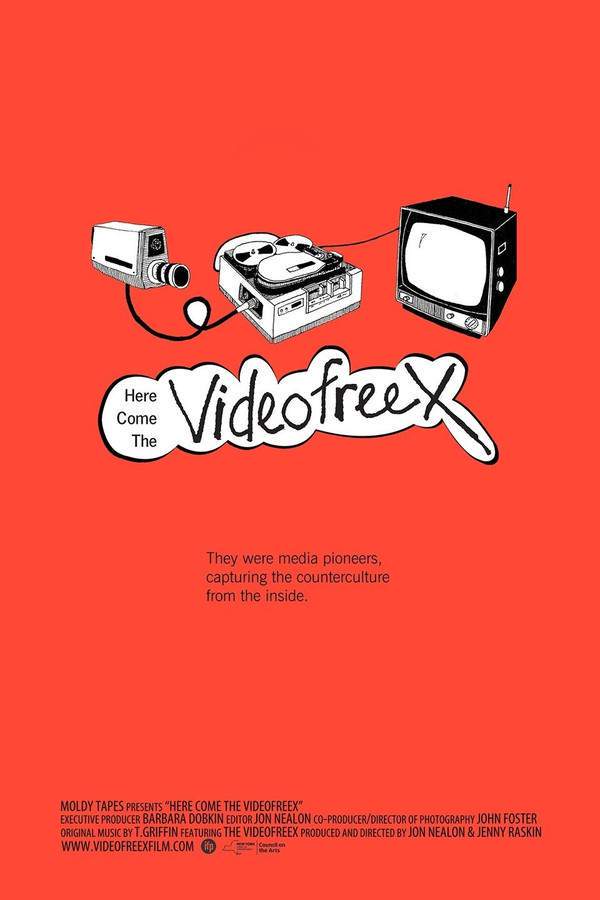
Year: 2016
Runtime: 79 min
Language: English
Directors: Jenny Raskin, Jon Nealon
This documentary explores the story of the Videofreex, a groundbreaking video collective active in the 1960s and 1970s. They conducted radical experiments with video technology, pushing boundaries and challenging conventional media. The film chronicles their work capturing counterculture movements and artistic expression, blurring the lines between art, activism, and social commentary as they redefined the possibilities of video.
Find where to stream, rent, or buy Here Come the Videofreex (2016) in the US with current JustWatch availability, up-to-date pricing, and platform listings for subscription, rental, and digital purchase options.
Warning: spoilers below!
Haven’t seen Here Come the Videofreex yet? This summary contains major spoilers. Bookmark the page, watch the movie, and come back for the full breakdown. If you're ready, scroll on and relive the story!
Trace every key event in Here Come the Videofreex (2016) with our detailed, chronological timeline. Perfect for unpacking nonlinear stories, spotting hidden connections, and understanding how each scene builds toward the film’s climax. Whether you're revisiting or decoding for the first time, this timeline gives you the full picture.
Last updated: May 12, 2025 at 07:04
Find frequently asked questions about the Here Come the Videofreex (2016) timeline, including chronological order, nonlinear jumps, cause-and-effect links, and scene sequence clarifications. This timeline FAQ helps explain when key events happen, how moments connect, and why the story unfolds in that specific order.
The Videofreex left CBS News because their vision for journalism became too bold and independent for the network's editorial constraints. As they covered counterculture movements, they began to align more closely with the radical perspectives of their subjects, which created increasing tension with CBS management. This ideological rupture forced them to choose between maintaining their unconventional approach to storytelling or adhering to mainstream broadcast standards.
Earlier in their CBS assignments, the Videofreex were already capturing content that challenged traditional journalistic boundaries, foreshadowing their eventual departure.
After leaving CBS, the Videofreex established a pirate television station in upstate New York as an alternative media platform. This station broadcast content that mainstream media ignored or misrepresented, including underground culture, art, music, and political activism. It represented a radical attempt to democratize media access and give voice to marginalized communities that were excluded from commercial television.
Their earlier work with CBS already showed their commitment to covering underrepresented voices, making the pirate station a natural evolution.
The Videofreex revolutionized journalism by being among the first to use portable handheld video cameras for reporting. This technology allowed them to capture events in real-time with unprecedented accessibility, breaking down the barriers between journalist and subject. Their grassroots approach demonstrated that independent voices could challenge corporate media narratives, laying the foundation for citizen journalism and the democratized media landscape that exists today.
Their early adoption of handheld video technology positioned them to fundamentally alter how stories could be captured and shared.
The Videofreex tapes were preserved in storage for decades until documentary directors Jon Nealon and Jenny Raskin discovered and restored them in the 2000s. This restoration effort uncovered a vital historical record of a transformative period in American media and culture. The restored footage became the foundation for the 2016 documentary, providing firsthand accounts of significant historical moments that might otherwise have been lost.
The group's meticulous documentation practices ensured their legacy would survive beyond their active years.
The Videofreex interview with Fred Hampton is significant because it captures the Black Panther leader's perspective shortly before his death in 1969. As a slain activist, Hampton's words carry immense historical weight, and the Videofreex footage provides a rare firsthand record of his vision for social justice and community organizing. This interview represents the kind of voices the Videofreex sought to preserve that mainstream media often overlooked.
The Videofreex's commitment to interviewing radical figures like Abbie Hoffman and Fred Hampton showed their willingness to document perspectives mainstream outlets avoided.
The Videofreex legacy remains relevant because their pioneering work directly influenced the rise of accessible media tools and independent voices. Their belief that anyone can document and share stories anticipated today's social media landscape, user-generated content, and independent journalism. The documentary emphasizes how their grassroots approach continues to inspire contemporary media activists and demonstrates the lasting power of democratized storytelling.
The film explicitly connects the Videofreex's mission to today's all-access media environment, showing their vision has been realized.
The Videofreex were among the earliest adopters of the first handheld video cameras, which were revolutionary at the time because they were portable and relatively affordable compared to traditional broadcast equipment. This technology enabled them to document events in real-time without the logistical constraints of larger camera setups, fundamentally changing how journalists could capture and report on events as they unfolded.
Their adoption of this cutting-edge technology positioned them ahead of mainstream media in capturing authentic moments.
The documentary was made in 2016 to preserve and share the Videofreex's historical significance at a time when questions about media ownership and independent voices were increasingly relevant. Directors Jon Nealon and Jenny Raskin recognized that their archive provided crucial context for understanding the evolution of media democracy. The film premiered at the Full Frame Documentary Film Festival and BAMcinemaFest, highlighting its cultural and historical importance.
The restoration of the tapes in the 2000s set the stage for the documentary to be created when interest in media history was growing.
Discover curated groups of movies connected by mood, themes, and story style. Browse collections built around emotion, atmosphere, and narrative focus to easily find films that match what you feel like watching right now.
Documentaries about passionate collectives who challenged the system and changed the world.If you liked Here Come the Videofreex and its story of a pioneering video collective, you'll enjoy these movies. They feature similar real-life stories of passionate groups and activists who used art, technology, or direct action to challenge the status quo and create meaningful social change.
Stories in this thread often follow a linear historical path, from the formation of a passionate group to their ambitious actions and eventual legacy. The narrative focuses on collective effort, ideological passion, and the tangible outcomes of their work, resulting in an energizing and empowering journey.
These movies are grouped together because they share a hopeful, energetic tone and focus on the power of collective action. They offer an inspiring look at how small groups can make a big impact, combining historical detail with a sense of revolutionary spirit and optimistic empowerment.
Stories capturing the vibrant intersection of art, technology, and counterculture movements.For viewers who enjoyed the counterculture vibes and focus on artistic innovation in Here Come the Videofreex, this section highlights similar movies. Discover stories that capture the essence of a cultural era, where new art forms and technologies blossomed from grassroots movements and changed how we see the world.
The narrative pattern centers on a pivotal time of cultural and technological shift. Characters or subjects are pioneers exploring the potential of new forms of expression, often blurring the lines between art, activism, and social commentary. The journey is one of discovery, experimentation, and redefining possibilities.
These films are connected by their nostalgic yet energetic exploration of a defining cultural period. They share a focus on artistic and technological democratization, a hopeful tone about creative potential, and a deep connection to the revolutionary spirit of their time.
Don't stop at just watching - explore Here Come the Videofreex in full detail. From the complete plot summary and scene-by-scene timeline to character breakdowns, thematic analysis, and a deep dive into the ending - every page helps you truly understand what Here Come the Videofreex is all about. Plus, discover what's next after the movie.
Read a complete plot summary of Here Come the Videofreex, including all key story points, character arcs, and turning points. This in-depth recap is ideal for understanding the narrative structure or reviewing what happened in the movie.
Discover the characters, locations, and core themes that shape Here Come the Videofreex. Get insights into symbolic elements, setting significance, and deeper narrative meaning - ideal for thematic analysis and movie breakdowns.
Discover movies like Here Come the Videofreex that share similar genres, themes, and storytelling elements. Whether you’re drawn to the atmosphere, character arcs, or plot structure, these curated recommendations will help you explore more films you’ll love.
Here Come the Videofreex (2016) Plot Summary & Movie Recap
Here Come the Videofreex (2016) Scene-by-Scene Movie Timeline
Here Come the Videofreex (2016) Spoiler-Free Summary & Key Flow
Movies Like Here Come the Videofreex – Similar Titles You’ll Enjoy
Videocracy (2010) Movie Recap & Themes
!Women Art Revolution (2011) Plot Summary & Ending Explained
Splice Here: A Projected Odyssey (2024) Complete Plot Breakdown
Videoman (2018) Plot Summary & Ending Explained
Survival of the Film Freaks (2018) Story Summary & Characters
VHS Lives 2: Undead Format (2017) Full Movie Breakdown
Visualist-Those Who See Beyond (2019) Film Overview & Timeline
VHS Massacre: Cult Films and the Decline of Physical Media (2016) Full Summary & Key Details
Vampyres (2007) Film Overview & Timeline
Cult Of VHS (2022) Film Overview & Timeline
Videotape Study No. 3 (1967) Complete Plot Breakdown
Freaks, Nerds & Weirdos (1994) Story Summary & Characters
Something’s Happening (1967) Detailed Story Recap
Here and Elsewhere (1976) Film Overview & Timeline
It’s a Revolution Mother (1969) Full Movie Breakdown