Year: 1988
Runtime: 85 mins
Language: Polish
Director: Krzysztof Kieślowski
Jacek climbs into the taxi driven by Waldemar, tells him to drive to a remote location, then brutally strangles him, seemingly without motive.
Warning: spoilers below!
Haven’t seen A Short Film About Killing yet? This summary contains major spoilers. Bookmark the page, watch the movie, and come back for the full breakdown. If you're ready, scroll on and relive the story!
Trace every key event in A Short Film About Killing (1988) with our detailed, chronological timeline. Perfect for unpacking nonlinear stories, spotting hidden connections, and understanding how each scene builds toward the film’s climax. Whether you're revisiting or decoding for the first time, this timeline gives you the full picture.
Last updated: October 09, 2025 at 14:35
Find frequently asked questions about the A Short Film About Killing (1988) timeline, including chronological order, nonlinear jumps, cause-and-effect links, and scene sequence clarifications. This timeline FAQ helps explain when key events happen, how moments connect, and why the story unfolds in that specific order.
Jacek kills the taxi driver Waldemar as a seemingly motiveless act of violence. However, the film reveals that Jacek is deeply traumatized by the death of his younger sister in a tractor accident caused by his drunken friend. This unresolved trauma has left him with a capacity for senseless cruelty and violence against strangers, which he demonstrates throughout the film through various acts of malice before the murder itself.
Earlier in the film, Jacek is shown causing random harm to strangers, throwing a man into urinals, dropping stones to cause accidents, demonstrating his escalating capacity for violence.
Jacek is caught, tried, and sentenced to death by hanging. Despite his lawyer Piotr's passionate defense against the death penalty, the court upholds the sentence. On the day of execution, Jacek is hanged in prison, and the film ends with Piotr driving away and breaking down in tears at an empty field, symbolizing the destruction of both the victim and the perpetrator.
The trial scene establishes that the evidence against Jacek is overwhelming, making the death sentence inevitable despite Piotr's efforts.
Jacek's sister died in a tractor accident caused by his drunken friend, an event that occurred when Jacek was young. This trauma is the key to understanding his psychological state. Before his execution, Jacek reveals this memory to Piotr, explaining that he never recovered from that night. The trauma appears to have hollowed out his capacity for empathy, leading him to commit acts of random violence.
Jacek's disturbing behavior throughout the film, his casual cruelty to strangers, hints at deeper psychological damage that the sister's death explains.
Piotr, the young idealistic lawyer, breaks down because the case has destroyed his faith in the justice system. Despite mounting a strong defense against the death penalty, he could not save his client. The execution represents not just Jacek's death, but also the death of Piotr's belief that the law serves justice. He becomes another victim of a system that forces him to participate in state-sanctioned killing.
Piotr's idealism is established early in the film, making his eventual breakdown a tragic arc of disillusionment.
Jacek's request for a non-filter cigarette before his execution is a moment of human dignity amid the machinery of state killing. It shows him asserting some small measure of choice in his final moments. The executioner lights it for him, and he takes deliberate puffs before it is extinguished, another small act of control in an entirely controlled process.
This detail humanizes Jacek in his final moments, contrasting with the clinical nature of the execution.
In Poland in 1988, when the film is set, the death penalty was still legal and actively used for violent crimes including murder. Despite Piotr's argument against capital punishment, which the judge later says was one of the strongest he has heard, Jacek is found guilty and sentenced to death. The film uses this harsh punishment to explore the moral ambiguities of state execution.
The trial scene establishes the overwhelming evidence against Jacek, making the verdict and sentence clear early in the proceedings.
Jacek carries a rope and stick in his bag while sitting at the cafe, foreshadowing the murder weapon he will later use. He puts them away when he sees young girls playing, momentarily suppressing his darker intentions. The rope becomes the primary tool of strangulation, connecting the preparation to the crime.
The cafe scene explicitly shows Jacek handling the murder weapons before putting them away, creating deliberate suspense.
Jacek specifically requests that Waldemar drive to a remote, secluded area on the outskirts of the city, insisting on a longer route. This ensures the murder will occur in a location where no one can intervene or witness the crime, demonstrating premeditation despite the seemingly random nature of the killing.
This request occurs early in the taxi ride, establishing Jacek's calculated intent despite his outward casualness.
The film presents a dark critique of capital punishment by showing two deaths: the brutal murder of Waldemar and the state execution of Jacek. Both are acts of violence, one individual, one systemic. By showing the execution in clinical detail and depicting Piotr's emotional destruction, the film argues that capital punishment creates another victim and fails to deliver true justice.
The judge's private conversation with Piotr acknowledges Piotr's strong arguments against the death penalty, yet the law still carries it out.
The title deliberately emphasizes 'killing' rather than 'murder' to encompass both the criminal act and the state execution. The word 'short' refers to the film's concise exploration of the entire arc, from crime to punishment, showing how brief the journey from violence to death really is. The title challenges viewers to consider both killings as equally significant.
Discover curated groups of movies connected by mood, themes, and story style. Browse collections built around emotion, atmosphere, and narrative focus to easily find films that match what you feel like watching right now.
Stories that coldly dissect the brutal logic and human cost of legal and social systems.If you were impacted by the harsh examination of capital punishment in 'A Short Film About Killing', explore these movies that similarly dissect flawed legal systems and institutional failures. These films share a serious tone and a heavy emotional weight, often concluding with a starkly pessimistic view of justice.
Narratives in this thread often follow a procedural structure, tracing a character's journey through an uncaring system. The conflict is not between individuals, but between the individual and the institution. The arc is typically one of defeat or destruction for the protagonist, serving to highlight the system's inherent flaws rather than celebrating individual triumph.
These films are grouped by their shared thematic focus on systemic critique, their consistently bleak tone, and their use of a straightforward, often procedural narrative to deliver a powerful, intellectually challenging, and emotionally devastating message about society.
Deliberately paced journeys where characters are consumed by violence and existential despair.For viewers who appreciated the slow, grim build-up and heavy atmosphere of 'A Short Film About Killing', this list features movies with a similar pacing and tone. These are intense, psychologically dense stories where a sense of hopelessness and moral ambiguity grows with each scene.
The narrative pattern involves a gradual accumulation of grim details and psychological pressure, leading to a violent climax or a bleak conclusion. Character development is centered on their internal conflict or desensitization, rather than external goals. The structure emphasizes atmosphere and mood over complex plotting, making the eventual tragic outcome feel fated.
These films share a potent combination of a slow, meditative pace and a dark, oppressive tone. They prioritize mood and psychological depth over action, creating a consistent feeling of unease and building towards emotionally heavy conclusions centered on violence and despair.
Don't stop at just watching - explore A Short Film About Killing in full detail. From the complete plot summary and scene-by-scene timeline to character breakdowns, thematic analysis, and a deep dive into the ending - every page helps you truly understand what A Short Film About Killing is all about. Plus, discover what's next after the movie.
Read a complete plot summary of A Short Film About Killing, including all key story points, character arcs, and turning points. This in-depth recap is ideal for understanding the narrative structure or reviewing what happened in the movie.
Discover the characters, locations, and core themes that shape A Short Film About Killing. Get insights into symbolic elements, setting significance, and deeper narrative meaning - ideal for thematic analysis and movie breakdowns.
Discover movies like A Short Film About Killing that share similar genres, themes, and storytelling elements. Whether you’re drawn to the atmosphere, character arcs, or plot structure, these curated recommendations will help you explore more films you’ll love.
A Short Film About Killing (1988) Plot Summary & Movie Recap
A Short Film About Killing (1988) Scene-by-Scene Movie Timeline
A Short Film About Killing (1988) Spoiler-Free Summary & Key Flow
Movies Like A Short Film About Killing – Similar Titles You’ll Enjoy
Killing Them Softly (2012) Spoiler-Packed Plot Recap
Killing Me Softly (2002) Full Movie Breakdown
Killing Words (2003) Detailed Story Recap
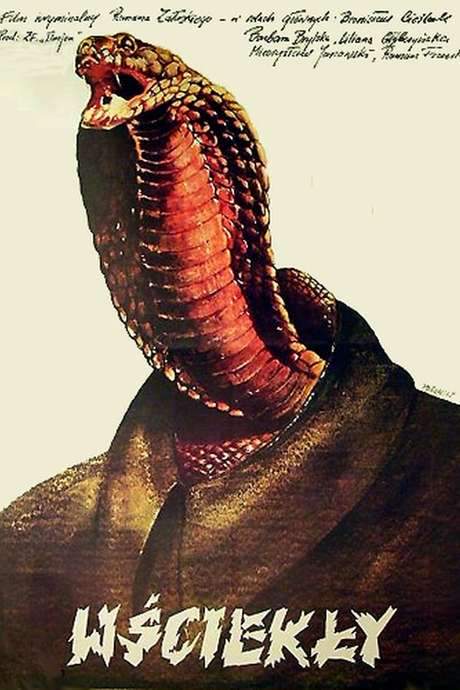
Wściekły (1980) Full Movie Breakdown
The Art of Dying (1991) Complete Plot Breakdown
Killing Machine (1984) Complete Plot Breakdown
The Executioner (1990) Full Movie Breakdown
Fresh Kill (1988) Story Summary & Characters
The Killer (1989) Complete Plot Breakdown
Watch Me When I Kill (1977) Full Summary & Key Details
In Cold Blood (1967) Full Summary & Key Details
Born to Kill (1947) Ending Explained & Film Insights
Killing Car (1993) Detailed Story Recap
Die Watching (1993) Plot Summary & Ending Explained
Death of Hitch-Hikers (1979) Complete Plot Breakdown