Plot Explained Spoilers guaranteed!
Plot Explained

Browse by genre

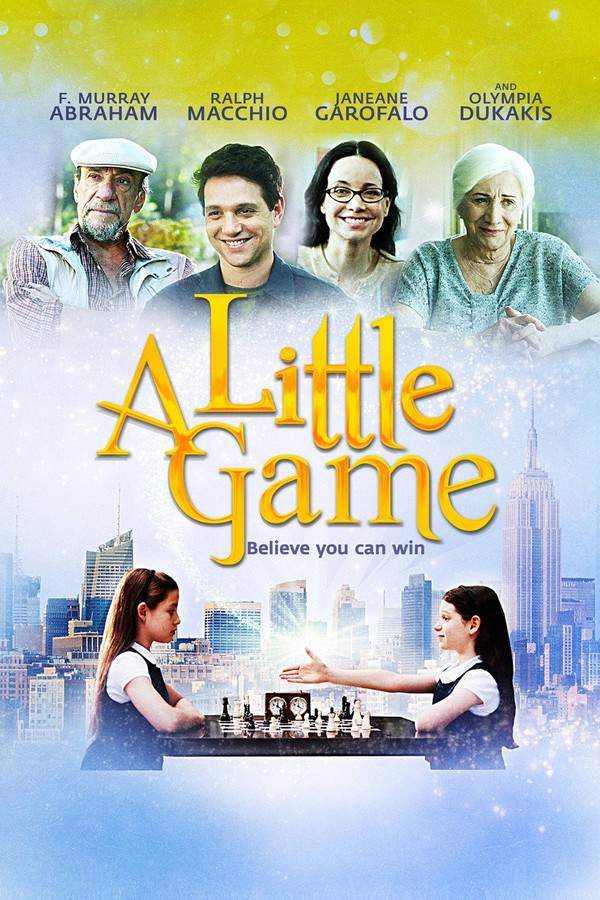
A Little Game (2014) movie poster

Plot Summary

A Little Game (2014) Plot Summary Explained

Release, runtime and language
2014 · 92 min · English
Loading streaming availability…
Directed by
Evan Oppenheimer

When 10-year-old Maxine Kuftinec transfers from public school to the elite Blackstone Academy, she finds it difficult to adjust. Struggling to fit in with her new classmates, Maxine finds an unexpected friendship with Norman, an experienced chess player. He guides her in learning the game, helping her not only master chess but also navigate the challenges of her new environment and find her place.

On this page (7)
  1. 1 Where to watch
  2. 2 What happens: full plot
  3. 3 Plot questions answered
  4. 4 Movie threads
  5. 5 Movies like A Little Game
  6. 6 Categories
  7. 7 Every angle
Loading streaming availability…

Full plot summary · contains spoilers

What Happens in A Little Game: Full Plot Summary

The whole story of A Little Game (2014) explained, from the opening scene to the final frame: every key event, every twist and what it all adds up to. Read it as a quick recap before the sequel, to check a scene you missed, or to finally understand what really happened.

Max, a bright 10-year-old girl living in Manhattan, finds herself navigating two very different worlds. Her move from a local public school to a rigorous private school on the Upper West Side pushes her into a new daily routine, with her mother Sarah working longer hours to manage the change. To get there, Max hops the subway each day, balancing the pull of home in lower Manhattan with the promise of a more challenging academic path.

One afternoon, after joining the chess team at school, Max blasts through a detour through Washington Square Park and witnesses groups of people playing the game with focus and ease. The next day, she tracks down Norman, a retired fellow New Yorker she had noticed with a chessboard, and asks him to teach her. Norman is cautious at first, unsure if Max’s enthusiasm can translate into real skill, but her unwavering determination slowly wins him over.

Over many days, Norman hands her small, seemingly simple tasks that might seem meaningless at first glance. He teaches through careful comparisons between the pieces and people in the city, showing Max that chess mirrors life in surprising ways. He explains that a pawn, like a small, cautious child, needs friends by its side to move forward and eventually can become a queen with patience and support. He emphasizes that a chess player must adapt to every turn, just as life constantly reshapes plans with each move.

As the lessons unfold, Norman describes the rook as moving in straight lines—much like a procession through a church aisle—while the knight’s leaps embody different possibilities. With each piece understood, Norman begins guiding Max through focused practice: first a handful of moves, then a larger sequence, building her confidence and strategic thinking. She quietly tests herself against her school rival, a challenge that makes Norman uneasy, yet Max insists it’s time for her to decide her own path.

The story reaches its quiet, powerful hinge on timing. Norman’s final lesson ties a chess match to the rhythms of life, reminding Max that change is inevitable and to “enjoy it while it’s here.” She studies the park’s energy, letting the surrounding people and sheer street life inform her choices as she positions herself to win. In a moment that feels both decisive and reflective, she sees a three-move finish but chooses to forfeit the game, opting to return to her former life and school with a transformed sense of purpose.

The tale closes with a simple, resonant metaphor about growth: sometimes an old pizza place closes so that a new one can open. It’s a quiet reminder that endings can clear the way for fresh beginnings, a philosophy that Max carries with her as she steps back into her daily life, now tempered by the chess wisdom she has earned and the deeper understanding that life, like the game, is about improvisation, resilience, and the courage to choose one’s own path.
Last updated: October 09, 2025 at 16:14

Was this helpful?

Plot questions answered

A Little Game Plot Explained: Your Questions Answered

The questions people ask most about A Little Game (2014): what happens in the confusing scenes, why the characters do what they do, the twists, hidden details and what the ending means. Each answer contains spoilers.

Q1

Why does Max choose to forfeit the game when she can win?

Max forfeits the game despite having a guaranteed three-move victory because she has internalized Norman's final lesson about timing and change. She realizes that winning isn't the only measure of success, she values the journey and the growth she's experienced over the competitive victory. Her choice represents choosing personal fulfillment and balance over external achievement.

Foreshadowing: Earlier, Norman teaches that change is inevitable and one should enjoy the moment while it lasts, foreshadowing Max's decision to embrace change rather than chase a win.

  • max forfeits game
  • chess match ending
  • why max loses
  • winnning vs growth
Q2

Why does Max decide to go back to her old school?

Max returns to her old school because she realizes that her growth doesn't require abandoning her original path. The private school experience, combined with her chess lessons, gave her confidence and perspective. She understands that she can carry the lessons she's learned, whether in chess or life, back into her original environment without needing to stay in the more prestigious school.

Foreshadowing: Norman's lesson about the pawn needing friends to move forward hints that Max's original community matters for her development.

  • max returns old school
  • private school vs public school
  • max character choice
Q3

What is the relationship between Max and Norman?

Norman becomes Max's mentor and chess coach after she persistently asks him to teach her. Their relationship evolves from initial skepticism on Norman's part, he doubts a young girl can learn, to a genuine bond where he uses chess metaphors to teach her about life. He sees potential in her determination and gradually opens up to guiding her.

Foreshadowing: When Max first approaches Norman, he initially discourages her, but her unwavering determination slowly wins him over.

  • norman mentor
  • max and norman relationship
  • chess coach
Q4

Why does Norman finally agree to coach Max?

Norman agrees to coach Max because her persistence and genuine determination impress him. Initially, he doubts her commitment, questioning whether a young girl can truly grasp chess. However, Max's unwavering enthusiasm and repeated visits to ask for lessons eventually convince him to take her on as a student.

Foreshadowing: Max's determination is established early when she seeks out Norman in the park after watching chess players, showing she won't give up easily.

  • norman teaches max
  • why norman helps max
  • chess mentor
Q5

What do the chess piece metaphors mean in the story?

Norman uses chess pieces as metaphors for life: the pawn represents a small, cautious child that needs friends to advance and can eventually become a queen with patience. The rook moves in straight lines like a church procession, while the knight's L-shaped jumps represent different possibilities. These lessons teach Max that chess strategy mirrors navigating life's challenges, adaptability, patience, and using available resources wisely.

Foreshadowing: Norman emphasizes early on that a pawn needs companions to move forward, paralleling Max's need for support in her new environment.

  • chess metaphors life
  • pawn becomes queen
  • chess piece meanings
Q6

What does the pizza place closing metaphor mean at the end?

The closing metaphor compares life to a pizza place shutting down to make room for a new one. It illustrates that endings create space for new beginnings. Max understands that closing one chapter, such as leaving the elite school or ending her intensive chess training, doesn't mean loss, but rather room for new opportunities and growth.

Foreshadowing: Norman's lesson about enjoying change while it lasts directly connects to this idea of embracing new beginnings.

  • pizza place metaphor
  • new beginnings ending
  • change and growth
Q7

How does Max change from the beginning to the end of the movie?

Max transforms from a shy, uncertain girl struggling to fit into a new environment into a confident young person who understands her own worth. Through chess, she learns strategic thinking, patience, and ultimately autonomy, making her own decisions rather than following others' expectations. She becomes secure enough to choose her own path rather than chasing external validation.

Foreshadowing: Early scenes show Max struggling with her new school and commute, establishing her initial lack of confidence.

  • max character development
  • growth journey
  • max confidence
Q8

Why does Max decide to join the chess team at her new school?

Max joins the chess team because she feels drawn to the game after seeing people play with focus and ease in Washington Square Park. Despite not knowing how to play, she's intrigued by the strategic nature of chess. Her parents encourage the challenge hoping it will help her adjust to her new environment and spark personal growth.

Foreshadowing: The moment Max witnesses chess players in the park creates the initial spark of curiosity that leads to her decision.

  • max joins chess team
  • why max learns chess
  • chess team private school
Q9

Why does Max find the subway commute difficult?

Max faces a challenging daily subway commute from Lower Manhattan to the Upper West Side because her parents enrolled her in a private school with a scholarship. This transition means her mother works longer hours to support the change, and Max must navigate the city alone. The commute represents her broader adjustment to a world of greater academic challenge and social uncertainty.

Foreshadowing: The story establishes early that Max is balancing two different worlds, her home in lower Manhattan and her new school environment.

  • subway commute max
  • manhattan private school
  • max new school adjustment

Movie threads

More Movies Like A Little Game, by Mood & Story

Curated lists built around what makes A Little Game tick: the same mood, the same kind of story or the same emotional payoff. Each list explains why these movies belong together.

Gentle mentorship stories like A Little Game

Quiet stories where an unexpected guide helps a character find their way. If you liked the friendship between Maxine and Norman in A Little Game, you'll enjoy these movies about quiet mentorship. Discover other films where an older, wiser character guides a younger one through life's challenges, focusing on personal growth and subtle, heartfelt connections.

  • uplifting
  • thoughtful
  • hopeful
  • gentle
  • quiet
  • inspiring
  • Tone: hopeful, reflective
  • Pacing: slow, character-driven
Why these movies?

The story pattern: The narrative follows a protagonist, often young or at a crossroads, who forms a bond with an experienced mentor. Through this relationship, they learn a specific skill or gain wisdom that helps them navigate personal challenges. The story unfolds at a gentle pace, emphasizing character development and the emotional resonance of the connection over high-stakes plot.

Why they belong together: Movies in this thread share a focus on the transformative power of a quiet, guiding relationship. They are united by a hopeful tone, low intensity, and a central theme of personal growth achieved through mentorship, making the viewing experience reflective and uplifting.

Quiet coming-of-age movies like A Little Game

Character-driven stories about the small, meaningful steps of growing up. Fans of A Little Game's gentle take on a young girl's adjustment to a new school will appreciate these similar coming-of-age stories. These movies focus on internal growth, subtle challenges, and heartfelt friendships, offering a reflective and hopeful look at the process of growing up.

  • reflective
  • hopeful
  • gentle
  • thoughtful
  • quiet
  • uplifting
  • Tone: hopeful, bittersweet
  • Pacing: slow, reflective
Why these movies?

The story pattern: The narrative follows a young protagonist navigating a significant but non-traumatic life change, such as a new school or a new hobby. Conflict is often internal, centered on feelings of alienation and the struggle to fit in. Resolution comes through personal insight, the support of a friend, and small but significant acts of self-definition, often leading to a bittersweet but hopeful conclusion.

Why they belong together: These films are grouped by their gentle handling of the coming-of-age theme. They share a low intensity, straightforward complexity, and a light emotional weight, creating a coherent vibe of thoughtful, hopeful reflection on the challenges and triumphs of youth.

If you liked this

Movies Like A Little Game

Similar movies to A Little Game: the same genre, themes or kind of story. Each one comes with its own plot summary, timeline and ending explained.

Browse all movie summaries

Categories

Movie Lists Featuring A Little Game

A Little Game appears in these hand-built movie categories. Each one groups movies by a specific mood, theme or story type, with their plot summaries and endings explained.

View all movie categories

Every angle

A Little Game (2014) Explained: Plot, Timeline & Characters

Everything about A Little Game in one place: what happens in the plot summary, the timeline in chronological order, the characters and meaning and a spoiler-free summary. What's After the Movie adds the cast, box office and post-credit scenes.

Coming soon on iOS and Android

The Plot Explained Movie Summary App

Plot summaries, endings explained and timelines on your phone. Catch up on any movie in minutes, save your favorites and never miss a twist again.

Be the first to know when we launch. Your email stays private, always.

Learn more about the app