










#23,459 10 Year: 2020
Runtime: 96 mins
Language: English
Directors: David Morris, Jacqui Morris
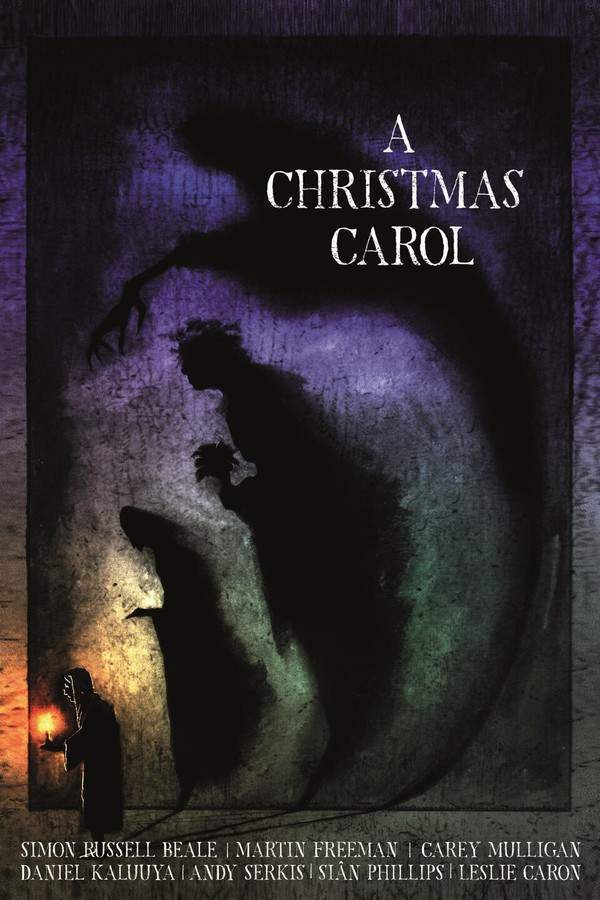
Echo Score: 66This reimagining of Dickens’ classic explores the original story’s powerful commentary on social inequality and the damaging effects of greed. The production brings a fresh perspective by incorporating stunning modern dance sequences, enhancing the lyricism of the text and offering a visually striking interpretation of the timeless tale.
Find where to stream, rent, or buy A Christmas Carol (2020) in the US with current JustWatch availability, up-to-date pricing, and platform listings for subscription, rental, and digital purchase options.
Warning: spoilers below!
Haven’t seen A Christmas Carol yet? This summary contains major spoilers. Bookmark the page, watch the movie, and come back for the full breakdown. If you're ready, scroll on and relive the story!
Trace every key event in A Christmas Carol (2020) with our detailed, chronological timeline. Perfect for unpacking nonlinear stories, spotting hidden connections, and understanding how each scene builds toward the film’s climax. Whether you're revisiting or decoding for the first time, this timeline gives you the full picture.
Last updated: February 10, 2026 at 08:33
Find frequently asked questions about the A Christmas Carol (2020) timeline, including chronological order, nonlinear jumps, cause-and-effect links, and scene sequence clarifications. This timeline FAQ helps explain when key events happen, how moments connect, and why the story unfolds in that specific order.
Marley is bound in heavy chains and money boxes because he spent his lifetime being greedy and selfish. In the story, the chains represent the weight of his moral failures, he literally forged his own chains through a lifetime of prioritizing wealth over compassion. The ghost explains that he is tethered to earth, unable to move on, as a warning to Scrooge that he will suffer the same fate if he does not change.
The chains foreshadow the heavier chains Scrooge himself will carry if he refuses to listen to the spirits.
Belle ended her engagement to Scrooge because she realized he loved money more than he loved her. When the Ghost of Christmas Past shows Scrooge this moment, Belle tells him plainly that she cannot marry someone who values wealth over love. She later marries another man and has a large, happy family, which contrasts sharply with Scrooge's lonely, miserly life.
This scene foreshadows the emotional cost of Scrooge's choices, his obsession with wealth cost him personal happiness.
Ignorance and Want are two emaciated children that the Ghost of Christmas Present reveals to Scrooge as a warning. They symbolize the consequences of social neglect and poverty, Ignorance representing lack of education and moral development, and Want representing extreme material deprivation. The ghost warns Scrooge to fear these children, implying they will grow and overrun society if the rich continue to ignore the poor.
The spirits reveal these children to Scrooge to show what will happen if he does not change his ways and help those in need.
Yes, the Ghost of Christmas Yet to Come shows Scrooge that Tiny Tim will die if nothing changes. The spirit reveals that Tiny Tim's illness, described as frail and worsening, will become fatal without intervention. This vision is a key turning point that motivates Scrooge to change, as he realizes his greed indirectly contributes to the boy's fate.
The Ghost of Christmas Past foreshadows Tiny Tim's fate by showing his fragile condition and hinting at the family's financial struggles.
The grave with Scrooge's own name on it represents his ultimate fate if he continues on his current path, death alone, unmourned, and forgotten. The Ghost of Christmas Yet to Show this grim vision to break Scrooge's denial. The tombstone is neglected and overgrown, symbolizing that his life of greed will leave no positive legacy, only indifference from those he could have helped.
This devastating image is the climax of the future spirit's lesson, showing Scrooge the concrete consequences of his selfishness.
Scrooge transforms quickly because the three spirits directly confront him with the emotional weight of his choices. Seeing his lonely past, the suffering present, and his own death forces him to recognize that his greed has real consequences for real people. The cumulative emotional impact, his lost love, Tiny Tim's fate, his own grave, breaks through his denial and compels immediate action.
Each spirit builds on the last: the past creates guilt, the present creates empathy, and the future creates fear, culminating in his decisive change.
The Ghost of Christmas Yet to Come shows Scrooge his own death to demonstrate the ultimate futility of his greedy life. The vision reveals that when he dies, no one truly mourns him, businessmen only attend his funeral for free lunch, and a poor couple actually celebrates because his death relieves their debt. This stark picture of being unloved and unmissed finally breaks Scrooge's resistance.
The ghost's silence and ominous presence build toward this devastating revelation as the final motivation for Scrooge to change.
Marley warns Scrooge that he will be visited by three spirits, the Ghosts of Christmas Past, Present, and Yet to Come, and that Scrooge must listen to them or be doomed to carry even heavier chains than Marley himself bears. The chains represent the burden of a lifetime spent on greed, and Marley tells Scrooge this is his one chance to change his fate before it's too late.
Marley's appearance and warning set up the entire structure of the story, establishing the stakes if Scrooge refuses to change.
Scrooge's sister Fan appears in his memories as a symbol of lost innocence and familial love. The Ghost of Christmas Past shows Scrooge that Fan, his only shown family member, died at some point before the present day. Her death represents another human connection Scrooge lost due to his isolation and obsession with wealth. The memory of her warmth contrasts sharply with his cold, miserly present.
Fan's death explains some of Scrooge's emotional isolation and hints at the personal losses that hardened his heart over time.
Belle asks the Ghost of Christmas Past to remove Scrooge from her home because she now views him with pity rather than anger or resentment. When the ghost shows Scrooge her present-day life, a happy marriage with children, Belle speaks of him with compassion, saying he deserves pity more than criticism. Her request to remove him is both an act of mercy and a final closure to their past relationship.
This moment represents the ultimate emotional climax of the past spirit's visit, showing Scrooge how completely he has been forgotten by those he once loved.
Scrooge hates Christmas because he views it as a wasteful holiday that encourages generosity rather than profit. His miserly worldview sees no value in celebrating generosity or community. The film establishes this through his refusal to attend his nephew Fred's dinner, his dismissal of charity collectors, and his resentment of giving Bob Cratchit even a single day off with pay.
Scrooge's bitter attitude toward Christmas sets up the dramatic contrast with his later transformation into a generous, joyful man.
Discover curated groups of movies connected by mood, themes, and story style. Browse collections built around emotion, atmosphere, and narrative focus to easily find films that match what you feel like watching right now.
Bitter protagonists guided through a haunting spiritual audit of their lives. Explore more movies like A Christmas Carol where characters undergo a powerful spiritual redemption. These films use magical or haunting elements to guide protagonists through a transformative journey of regret and hope, leading to a heartfelt conclusion.
Stories in this thread follow a predictable yet powerful three-act structure: establishment of a flawed life, a guided tour of personal failures and their consequences, and a final, hopeful resolution where the character chooses change. The journey is the catalyst, forcing introspection and leading to a clear moral and emotional payoff.
These movies are grouped together because they share a core narrative of spiritual awakening achieved through an external, often mystical, intervention. The tone blends melancholy with hope, the pacing is steady and deliberate to allow for reflection, and the emotional journey consistently moves from isolation to connection.
Visually striking stories that critique social inequality through allegory. Find more atmospheric movies like A Christmas Carol that blend fantasy with a powerful social message. These visually striking fables explore themes of greed, poverty, and inequality through compelling character journeys, offering a unique and reflective viewing experience.
These films typically center on a protagonist who embodies or confronts a societal ill. The narrative uses a symbolic or magical realist framework to expose the consequences of these issues, guiding both the character and the audience toward a greater understanding and a call for compassion and change.
Movies in this thread share a commitment to using storytelling as a vehicle for social commentary. They balance a serious thematic core with a distinctive visual or atmospheric style, creating a cohesive experience that is both engaging and intellectually stimulating, often leaving the viewer with a sense of hope for human improvement.
Don't stop at just watching - explore A Christmas Carol in full detail. From the complete plot summary and scene-by-scene timeline to character breakdowns, thematic analysis, and a deep dive into the ending - every page helps you truly understand what A Christmas Carol is all about. Plus, discover what's next after the movie.
Read a complete plot summary of A Christmas Carol, including all key story points, character arcs, and turning points. This in-depth recap is ideal for understanding the narrative structure or reviewing what happened in the movie.
Discover the characters, locations, and core themes that shape A Christmas Carol. Get insights into symbolic elements, setting significance, and deeper narrative meaning - ideal for thematic analysis and movie breakdowns.
Discover movies like A Christmas Carol that share similar genres, themes, and storytelling elements. Whether you’re drawn to the atmosphere, character arcs, or plot structure, these curated recommendations will help you explore more films you’ll love.
A Christmas Carol (2020) Plot Summary & Movie Recap
A Christmas Carol (2020) Scene-by-Scene Movie Timeline
A Christmas Carol (2020) Spoiler-Free Summary & Key Flow
Movies Like A Christmas Carol – Similar Titles You’ll Enjoy
Scrooge: A Christmas Carol (2022) Story Summary & Characters
A Christmas Carol (2009) Complete Plot Breakdown
A Christmas Carol (1938) Movie Recap & Themes
Christmas Carol: The Movie (2001) Full Summary & Key Details
A Christmas Carol (2018) Detailed Story Recap
A Carol Christmas (2003) Movie Recap & Themes
A Christmas Carol (2019) Ending Explained & Film Insights
A Christmas Carol (1984) Film Overview & Timeline
A Christmas Carol (1982) Plot Summary & Ending Explained
A Christmas Carol (1910) Detailed Story Recap
A Christmas Carol (1971) Film Overview & Timeline
A Christmas Carol (1954) Full Movie Breakdown
A Christmas Carol (1977) Story Summary & Characters
A Christmas Carol (1969) Plot Summary & Ending Explained
A Christmas Carol (1997) Detailed Story Recap