Plot Explained Spoilers guaranteed!
Plot Explained

Browse by genre

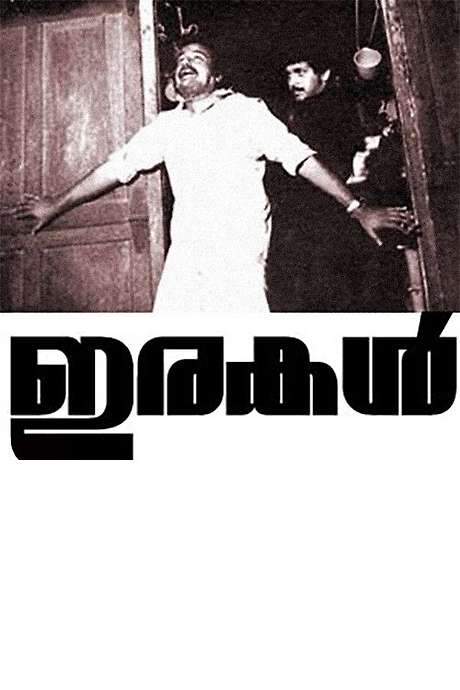
Irakal (1985) movie poster

Plot Summary

Irakal (1985) Plot Summary Explained

Release, runtime and language
1985 · 137 mins · Malayalam
Loading streaming availability…
Directed by
K. G. George
Starring
Shammi Thilakan, Innocent, Thilakan, K. B. Ganesh Kumar, Ashokan, Nedumudi Venu

An intense study of the psychology of violence, the film follows Mathews, a ruthless rubber baron entangled in criminal pursuits, whose son Baby absorbs the brutal environment and spirals into aggression. Witnessing his child's descent, Mathews is forced to confront his sins and seek repentance for his deeds.

On this page (5)
  1. 1 Where to watch
  2. 2 What happens: full plot
  3. 3 Plot questions answered
  4. 4 Movie threads
  5. 5 Every angle
Loading streaming availability…

Full plot summary · contains spoilers

What Happens in Irakal: Full Plot Summary

The whole story of Irakal (1985) explained, from the opening scene to the final frame: every key event, every twist and what it all adds up to. Read it as a quick recap before the sequel, to check a scene you missed, or to finally understand what really happened.

Mathews aka Mathukutty [Thilakan] builds an empire as a ruthless Syrian Christian rubber baron, turning sharp business sense into power and weaving a web of favors with cops and labor leaders to secure his grip. His operations span rubber, marijuana, and hooch, creating a sprawling, self-protective machine where profit and fear go hand in hand. The foundation of this world rests on calculated decisions, quiet coercion, and a willingness to bluntly punish anyone who strays from the path of control. In this harsh landscape, Mathukutty’s reach extends into his own family, shaping destinies from the shadows of his success. His eldest son, Koshy [K. B. Ganesh Kumar], serves as the second-in-command, a mirror of his father in ruthlessness and a steady hand for the violent undertakings that keep the business running. Koshy’s presence underscores the dangerous coupling of family loyalty with criminal enterprise, a combination that makes dissent a liability and obedience a necessity.

Sunny Mathews [Sukumaran], the younger son, is introduced as a more troubled, but seemingly milder, presence—a drinker who reels against the suffocating gravity of his father’s empire. He is a regular appetite for rebellion, yet his resolve often dissolves into passivity, leaving him stuck in a system that prizes power over personal freedom. The family’s inner circle is completed by Annie [Srividya], Mathukutty’s daughter, whose life is marked by conflict and excess. Described as a nymphomaniac, she shows little warmth for her husband Andrews [Nedumudi Venu] or their child, and she moves through her marriage with a chilling detachment. Each month, under the pretense of a quarrel with Andrews, Annie returns to her maternal family’s fold to pursue an affair with Unnunni [Mohan Jose], a rubber employee who becomes part of the family’s tangled web. This pattern remains a secret from Mathukutty and Koshy, who assume Annie’s husband bears the blame for family strife and chastise him for supposed faults in the marriage.

Meanwhile, Baby, the youngest son and an engineering student, enters the story with a disturbing curiosity about murder and blood. He displays early antisocial tendencies, a sign that grows clearer as the narrative unfolds. In a brutal initiation of college life, he raggs a junior and uses an electric wire to strangle him, an act that lands him in suspension and drives him back to his home with a heavy, unspoken burden. The junior’s injuries are reported in the headlines as a ragging incident gone too far, a simplification that the family accepts as the price of keeping up appearances. Baby clutches the electric wire as a memento of that moment, and his uncle, a bishop, senses something deeply wrong but finds it hard to reach the troubled boy. The atmosphere inside Mathukutty’s household becomes a dangerous echo chamber for Baby’s growing darkness.

The plot thickens as Baby uncovers Annie’s ongoing affair with Unnunni and decides to act on his visceral anger. In a brutal night scene, he strangles Unnunni in the tools shed where they meet, and then stages the death as a suicide. The family, pressed by fear of police and scandal, disposes of the body to wipe away any trace of foul play, maintaining the appearance of a tragedy rather than a crime. Baby’s paranoia and appetite for violence intensify, feeding frightening dreams and a persistent impulse to murder those around him. He also harbors feelings for Nirmala [Radha], a village girl from a poor family who loves him but understands the crushing weight of caste and class divides that separate them. Nirmala’s affection is real, but her social reality complicates any possibility of a future with Baby.

Nirmala’s life takes a turn when she ends her relationship with Baby after becoming engaged to Balan [Venu Nagavalli], a man from the same neighborhood who represents a different, more stable path. The shift unsettles Baby, who cannot easily let go of what he has with Nirmala. The story then follows Nirmala’s mother as she fixes her daughter’s wedding to Raghavan [Ashokan], a rubber tapper who is also a friend of Baby. Baby makes another violent bid by attempting to strangle Raghavan, but his plan is thwarted when Raghavan recognizes him and alerts the police. The net closes around Baby as law enforcement closes in and the family confronts the consequences of their choices.

As tensions mount, Baby disappears into hiding, only to reappear with a revolver in hand. In a chaotic confrontation, he shoots at Koshy and, when his father shouts at him to stop, at Mathukutty as well. Mathukutty narrowly avoids the fatal shot, but Koshy is struck—injured, not fatally—during the ensuing struggle. In a final, devastating turn, Mathukutty shoots Baby with his own rifle, ending the violent arc of his son and sealing a grim end to a family built on wealth, deceit, and moral compromise. The family’s relentless pursuit of money has blinded them to the danger that lurks within their own ranks, culminating in a tragedy that underscores the corrosive power of greed and the fragility of human ties.
Last updated: December 03, 2025 at 23:58

Was this helpful?

Plot questions answered

Irakal Plot Explained: Your Questions Answered

The questions people ask most about Irakal (1985): what happens in the confusing scenes, why the characters do what they do, the twists, hidden details and what the ending means. Each answer contains spoilers.

Q1

Why does Baby become violent and start killing people?

Baby's violence stems from growing up in a household dominated by his father Mathukutty's criminal empire, where power, control, and ruthless behavior are normalized. As an engineering student, he shows early antisocial tendencies - he rags a college junior and strangles him with an electric wire, getting suspended. His uncle, a bishop, senses something deeply wrong but cannot reach him. The family environment, combined with what appears to be underlying psychological issues, transforms his curiosity about violence into actual murder.

Foreshadowing: The incident with the college junior and his fascination with the electric wire hint at his violent tendencies early on.

  • baby violence
  • psychology
  • murder
  • family corruption
Q2

Why does Baby kill Unnunni?

Baby discovers his sister Annie's secret affair with Unnunni, a rubber employee. Rather than expose the scandal that would shame the family, Baby decides to eliminate Unnunni permanently. He lures him to a tools shed, strangles him with an electric wire, and stages the death as a suicide. The family helps dispose of the body to avoid police scrutiny and protect their reputation.

Foreshadowing: Annie's monthly visits to her maternal family under the pretense of marital quarrels establishes the affair that Baby later uncovers.

  • baby kills unnunni
  • affair
  • murder coverup
Q3

Why does Mathukutty's family help cover up Baby's crimes?

The family prioritizes maintaining their reputation and avoiding police involvement. Mathukutty has built his empire through corruption and criminal activities, so any scandal could expose his business and destroy what he has built. When Baby kills Unnunni, the family collectively decides to stage it as suicide and dispose of the body, believing this protects the family honor more than exposing the truth would.

Foreshadowing: Mathukutty's method of maintaining control through favors with police and labor leaders shows he prioritizes avoiding legal trouble.

  • family coverup
  • dispose body
  • protect reputation
Q4

Why does Baby kill Balan the shop owner?

Baby becomes obsessed with Nirmala, a village girl from a poor family who loves him despite caste and class barriers. When Nirmala ends her relationship with Baby and gets engaged to Balan, a local shop owner, Baby murders Balan in a fit of jealousy. He strangles Balan with the same electric wire used in his earlier murders and stages it as a robbery gone wrong.

Foreshadowing: Nirmala's love for Baby and her awareness of the caste barriers between them establishes the emotional tension that drives this murder.

  • baby kills balan
  • nirmala
  • jealousy
  • murder
Q5

Why does Annie keep having an affair while married?

Annie is depicted as a nymphomaniac who shows no affection for her husband Andrews or their child. Each month, under the pretense of fighting with Andrews, she returns to her maternal family and pursues her affair with Unnunni. The arrangement allows her to maintain her marriage facade while living freely according to her desires. Mathukutty and Koshy remain unaware of the true situation, blaming Andrews for marital problems.

Foreshadowing: Annie is introduced with explicit description of her lack of warmth for her husband, establishing her detachment from conventional marriage.

  • annie affair
  • unnuini
  • marriage problems
Q6

Why does Mathukutty shoot his own son Baby?

Baby returns home with a revolver and shoots at Koshy, who confronts him. When Mathukutty shouts at Baby to stop, Baby turns the gun on his father. Mathukutty narrowly avoids the shot, but Koshy is injured. In the ensuing struggle, Mathukutty grabs his rifle and shoots Baby dead in an act of self-defense and protection of the family. This marks the tragic culmination of the violence that originated from within their own household.

Foreshadowing: Baby's earlier attempt to kill Raghavan with a knife and his escalating dreams of murder show his violence was turning inward toward family.

  • mathukutty kills baby
  • patricide
  • final confrontation
Q7

Why does Baby try to kill Raghavan?

After Nirmala ends her relationship with Baby and gets engaged to Raghavan, a rubber tapper and Baby's friend, Baby cannot accept losing her. He attempts to strangle Raghavan using the same method he used before. However, Raghavan recognizes Baby during the attack and fights back, alerting the police. This attempt marks Baby's third murder attempt and directly leads to the police manhunt.

Foreshadowing: Baby's murder of Balan and his inability to let go of Nirmala foreshadow his continued violence against her future suitors.

  • baby attacks raghavan
  • nirmala
  • police hunt
Q8

Why is Baby obsessed with Nirmala despite their caste differences?

Nirmala genuinely loves Baby and represents something pure in his dark world. However, their relationship is complicated by caste and class barriers - Nirmala comes from a poor family while Baby is from a wealthy, powerful household. Nirmala understands the crushing weight of these social divisions and ultimately ends her relationship with Baby, choosing to marry Raghavan who represents a more stable, acceptable path. Baby's obsession turns violent because he cannot accept rejection or the loss of what he desired.

Foreshadowing: The story establishes early that Nirmala understands 'the crushing weight of caste and class divides that separate them.'

  • baby nirmala
  • caste barriers
  • love obsession
Q9

How does Baby avoid arrest after killing Balan?

Baby stages Balan's murder as a robbery gone wrong, making it appear as if a thief killed him during a burglary attempt. This cover-up is convincing enough to initially mislead police. However, his subsequent attempt to kill Raghavan fails when Raghavan recognizes him and reports the attack to police, beginning the manhunt that eventually forces Baby into hiding.

Foreshadowing: Baby's earlier successful cover-up of Unnunni's murder as suicide gives him confidence in his ability to mislead investigation.

  • baby escapes arrest
  • cover up
  • murder investigation
Q10

Why does Baby shoot Koshy first during the final confrontation?

Koshy serves as Mathukutty's second-in-command and mirrors his father's ruthlessness. He represents the violent enforcer side of the family business that Baby has grown to resent. During the confrontation, Koshy is the one who directly confronts Baby, making him the immediate target. Baby's violence ultimately extends to the entire family structure he blame for his corruption, shooting at both Koshy and his father.

Foreshadowing: Koshy's role as the ruthless second-in-command who handles 'violent undertakings' establishes him as embodying the family violence Baby despises.

  • baby shoots koshy
  • family violence
  • confrontation
Q11

Why does Sunny not stop the family's descent into violence?

Sunny is described as a rebellious drinker who resists his father's suffocating grip but whose resolve often dissolves into passivity. He represents the family's failed rebellion - someone who sees the problems but lacks the strength or will to truly break away. He remains stuck within the system, unable to effectively oppose Mathukutty or prevent the tragedy. His inaction reflects the family's broader paralysis in the face of corruption.

Foreshadowing: Sunny is introduced as someone who 'reels against the suffocating gravity of his father's empire' but whose 'resolve often dissolves into passivity.'

  • sunny rebellion
  • passivity
  • family dysfunction
Q12

Why can't Baby's uncle, the bishop, help him?

Baby's uncle, a bishop, senses something deeply wrong with the boy and tries to reach him, but fails. The bishop represents moral authority in the family, but his influence is powerless against the family's entrenched corruption and Baby's psychological deterioration. The household's environment of violence and crime, combined with Baby's isolation, creates a darkness the bishop cannot penetrate. This failure underscores the family's complete moral collapse.

Foreshadowing: The bishop's sensing that 'something is wrong' with Baby early in the story highlights his awareness but helplessness.

  • bishop uncle
  • family morality
  • spiritual failure

Movie threads

More Movies Like Irakal, by Mood & Story

Curated lists built around what makes Irakal tick: the same mood, the same kind of story or the same emotional payoff. Each list explains why these movies belong together.

Movies about a descent into madness like Irakal

Stories where characters spiral into violence, inheriting or creating their own darkness. If you were captivated by the psychological unraveling in Irakal, this thread features similar movies about characters spiraling into violence and madness. These films share a dark tone, heavy emotional weight, and a focus on the tragic consequences of inherited sin and a brutal environment.

  • psychological
  • descent into madness
  • violent
  • tragic
  • unsettling
  • brutal
  • Tone: dark, tragic, unsettling
  • Pacing: steady, methodical
Why these movies?

The story pattern: These narratives often follow a linear but devastating progression. A character, susceptible due to environment or psychology, absorbs brutality around them. Their aggression escalates methodically, leading to a climax of violence and a tragic ending where redemption is impossible, forcing a confrontation with the sins that created them.

Why they belong together: Movies are grouped here for their intense focus on a single character's psychological collapse into violence. They share a dark, oppressive mood, a steady pacing that builds dread, and a heavy emotional weight derived from themes of family dysfunction, inherited criminality, and the absence of hope.

Grim crime family dramas similar to Irakal

Grim stories where criminal empires corrupt the family unit from within. For viewers who appreciated the exploration of a criminal family's moral collapse in Irakal, this list features movies with similar oppressive family dynamics in a crime setting. These stories depict how violence and dysfunction are passed down, creating a claustrophobic and tragic atmosphere.

  • family dysfunction
  • criminal empire
  • claustrophobic
  • oppressive
  • tragic
  • moral decay
  • Tone: dark, oppressive, claustrophobic
  • Pacing: steady, character-driven
Why these movies?

The story pattern: The narrative pattern centers on a patriarch or matriarch figure ruling a criminal enterprise. Their children are raised in this brutal environment, internalizing its values or rebelling against them. The story unfolds as the younger generation's actions force a reckoning, exposing the rot at the family's core and resulting in a devastating conclusion for all involved.

Why they belong together: These films are united by their setting within a morally bankrupt family dynasty. They create a specific, claustrophobic vibe where the home is a prison. The similarity comes from the blend of crime genre elements with intense family drama, a steady, dreadful pacing, and a consistently dark, oppressive tone.

Every angle

Irakal (1985) Explained: Plot, Timeline & Characters

Everything about Irakal in one place: what happens in the plot summary, the timeline in chronological order, the characters and meaning and a spoiler-free summary. What's After the Movie adds the cast, box office and post-credit scenes.

Coming soon on iOS and Android

The Plot Explained Movie Summary App

Plot summaries, endings explained and timelines on your phone. Catch up on any movie in minutes, save your favorites and never miss a twist again.

Be the first to know when we launch. Your email stays private, always.

Learn more about the app