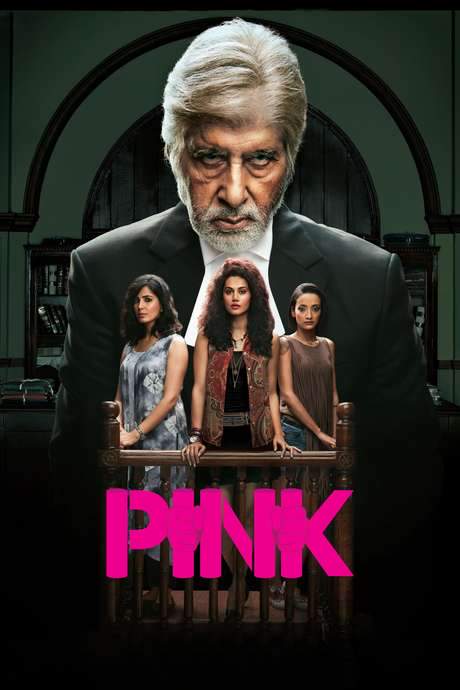
Pink
Year: 2016
Runtime: 136 mins
Language: Hindi
Director: Aniruddha Roy Chowdhury
A sexual assault victim, unjustly tried for the attempted murder of her attacker, is defended by a retired lawyer who challenges India’s rape culture.
Where to Watch Pink?
Find where to stream, rent, or buy Pink (2016) in the US with current JustWatch availability, up-to-date pricing, and platform listings for subscription, rental, and digital purchase options.










Warning: spoilers below!
Haven’t seen Pink yet? This summary contains major spoilers. Bookmark the page, watch the movie, and come back for the full breakdown. If you're ready, scroll on and relive the story!
Timeline & Setting – Pink (2016)
Explore the full timeline and setting of Pink (2016). Follow every major event in chronological order and see how the environment shapes the story, characters, and dramatic tension.
Last updated: October 04, 2025 at 07:52
Main Characters – Pink (2016)
Meet the key characters of Pink (2016), with detailed profiles, motivations, and roles in the plot. Understand their emotional journeys and what they reveal about the film’s deeper themes.
Last updated: October 04, 2025 at 07:52
Major Themes – Pink (2016)
Explore the central themes of Pink (2016), from psychological, social, and emotional dimensions to philosophical messages. Understand what the film is really saying beneath the surface.
Last updated: October 04, 2025 at 07:52
Pink (2016) Character & Theme Questions Answered – Info FAQ
Browse frequently asked questions about Pink (2016) focused on characters, relationships, themes, symbols, setting, and story context. This movie info FAQ gives spoiler-aware explanations for character arcs, world details, and thematic interpretation so readers can better understand what the film is really about.
Where is the movie Pink set?
Pink is set in New Delhi, the capital city of India. The story unfolds in a bustling urban environment where political power, media scrutiny, and daily life intersect. Key locations include the apartment shared by the women, hospitals, offices, and the courtroom where the legal battle takes place.
When does Pink take place?
Pink is set in present-day Delhi during the 2010s, an era of smartphones and social media. This contemporary setting is integral to the story, as social media becomes a weapon that can ruin careers and stigmatize victims. The timeline follows a night-out incident through to a high-profile court verdict.
What does Pink say about consent?
Consent is the central theme of Pink. The film asserts that a woman's boundaries must be respected and that 'No' is final and non-negotiable. The narrative challenges victim-blaming and emphasizes female autonomy against regressive attitudes. Through courtroom arguments and personal testimonies, the film defends personal agency in intimate encounters.
What is the message about justice in Pink?
Pink explores how legal processes can empower marginalized voices. The courtroom drama demonstrates how evidence, credibility, and narrative control affect outcomes in a biased system. The film argues for accountability and due process in the face of patriarchal norms, showing how the women's acquittal contrasts with the power dynamics that initially favored the accused.
What role does solidarity play in Pink?
Solidarity is a central theme as the women form a supportive network that transforms fear into collective action. Andrea, Falak, and Minal illustrate practical solidarity through legal maneuvering and mutual support. Deepak Sehgal's mentorship embodies intergenerational advocacy. This female friendship serves as a catalyst for empowerment against oppression.
How does Pink portray media and social media?
Pink critiques how social media can be weaponized to ruin careers and stigmatize victims. Trolls and public pressure threaten personal and professional lives, as seen when Falak loses her job. The story highlights how sensationalism can distort truth and influence legal and social judgments, arguing that truth and justice should transcend online narratives.
Who is Deepak Sehgal in Pink?
Deepak Sehgal, played by Amitabh Bachchan, is a retired, respected lawyer who becomes Minal's advocate. He brings sharp legal insight and moral clarity, using his experience to challenge regressive social norms. His belief in justice drives the courtroom battle, and he serves as a mentor figure advocating for the women's rights.
Who is Minal Arora in Pink?
Minal Arora, played by Taapsee Pannu, is the protagonist and a determined, independent woman who faces trauma after a night out. She relentlessly seeks justice, challenging stereotypes and standing up in court. Her courage anchors the narrative and drives the fight for accountability.
Who is Rajveer Singh in Pink?
Rajveer Singh, played by Angad Bedi, is a privileged and aggressive antagonist who uses his social connections to control the case. He embodies the patriarchal entitlement the film critiques, resisting accountability and attempting to manipulate the narrative. His actions represent the abuse of power that the movie challenges.
Who is Falak Ali in Pink?
Falak Ali, played by Kirti Kulhari, is one of the central women and a professional who faces consequences when a social-media storm hits her life. She embodies resilience and loyalty, supporting her friends while navigating personal and career challenges. Her experiences illustrate the collateral impact of gendered violence and online harassment.
Who is Andrea in Pink?
Andrea, played by Andrea Tariang, is a steadfast friend who stands with Minal and Falak throughout their legal battle. She contributes practical support and moral strength, helping with bail and advocacy. Her perspective reinforces how female friendship can sustain a difficult legal battle.

Explore Movie Threads
Discover curated groups of movies connected by mood, themes, and story style. Browse collections built around emotion, atmosphere, and narrative focus to easily find films that match what you feel like watching right now.
Courtroom crusades against injustice like in Pink
Gripping legal dramas where the courtroom becomes a battleground for social change.If you liked Pink, explore movies where legal battles become powerful fights for social justice. These films capture the tense, high-stakes atmosphere of the courtroom while tackling heavy themes like systemic prejudice, victim advocacy, and the struggle for truth against overwhelming odds.










Narrative Summary
Stories typically follow a legal team or a lone lawyer taking on a seemingly unwinnable case that exposes a deep-seated societal flaw. The narrative builds methodically through investigation and trial, facing intense opposition, but culminates in a cathartic verdict that delivers justice and sends a broader message.
Why These Movies?
These movies are grouped by their shared focus on using the legal system as a vehicle for social commentary. They blend the tense structure of a courtroom procedural with the emotional gravity of a cause-driven drama, creating a gripping and often cathartic experience.
Cathartic victories after immense pressure like in Pink
Stories where characters endure extreme oppression to achieve a hard-won, uplifting triumph.Find movies like Pink where characters withstand extreme psychological and societal pressure to eventually secure a powerful, uplifting victory. These emotionally heavy stories are tense and gripping, but they provide a deeply satisfying and cathartic payoff for the characters' resilience.














Narrative Summary
The narrative pattern involves protagonists being pushed to their limits by an oppressive force—be it a corrupt system, public opinion, or powerful adversaries. The journey is marked by escalating tension and moments of despair, but perseverance and truth ultimately lead to a clear, happy ending that feels earned and transformative.
Why These Movies?
These films are connected by their specific emotional arc: starting with a sense of injustice and anxiety, building through relentless pressure, and concluding with a resonant, hopeful victory. This creates a powerful, unflinching yet ultimately uplifting viewing experience.
Unlock the Full Story of Pink
Don't stop at just watching - explore Pink in full detail. From the complete plot summary and scene-by-scene timeline to character breakdowns, thematic analysis, and a deep dive into the ending - every page helps you truly understand what Pink is all about. Plus, discover what's next after the movie.
Pink Summary
Read a complete plot summary of Pink, including all key story points, character arcs, and turning points. This in-depth recap is ideal for understanding the narrative structure or reviewing what happened in the movie.

Pink Timeline
Track the full timeline of Pink with every major event arranged chronologically. Perfect for decoding non-linear storytelling, flashbacks, or parallel narratives with a clear scene-by-scene breakdown.


