

Plot Explained Spoilers guaranteed!
Plot Explained

Browse by genre

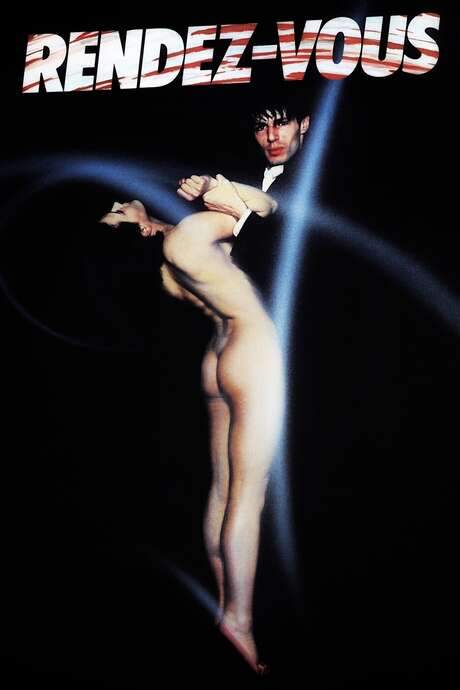
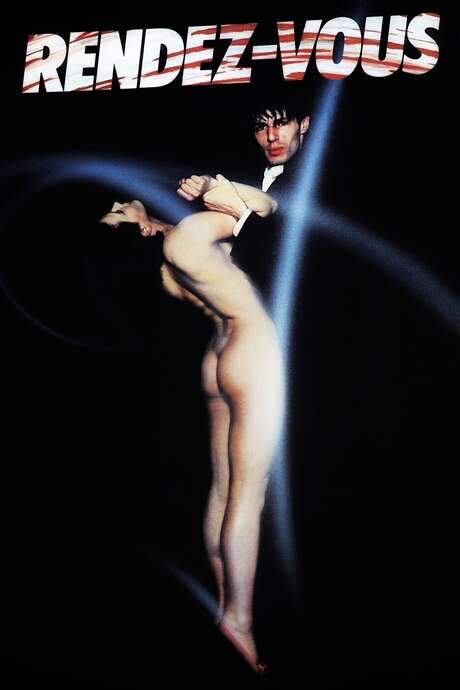
Rendez-vous (1985) movie poster

Timeline

Rendez-vous (1985) Timeline Explained – Every Event in Order

Release, runtime and language
1985 · 82 mins · French
JustWatch #32,147 6
Directed by
André Téchiné
Starring
Lambert Wilson, Juliette Binoche, Anne Wiazemsky, Jacques Nolot, Dominique Lavanant, Michèle Moretti

Nina, a young actress, arrives in Paris seeking her big break. She becomes embroiled in the city's on‑ and off‑stage drama, caught with three men: a real‑estate agent offering stability, a reckless actor living on the edge, and a theatre director who casts her as Juliet in “Romeo and Juliet.” As opening night nears, the highs and lows of her love life intensify her performance.

On this page (6)
  1. 1 Where to watch
  2. 2 Events in order (12)
  3. 3 Timeline questions answered
  4. 4 Movie threads
  5. 5 Movies like Rendez-vous
  6. 6 Every angle

Where to watch

Where to Watch Rendez-vous (1985)

Where can you watch Rendez-vous? Stream, rent or buy it in the US: current JustWatch availability with up-to-date prices.

Streaming availability powered by JustWatch

12 events in order · contains spoilers

Rendez-vous Timeline: Events in Chronological Order

Every key event of Rendez-vous (1985) in order, scene by scene, with when and where it takes place. Use it to untangle flashbacks, time jumps and parallel storylines, to refresh your memory before the sequel or to find the exact scene you are thinking of.

  1. Nina arrives in Paris and meets Paulot at the realtor's office

    Nina travels from Toulouse to Paris in pursuit of acting success. She stops at a realtor's office where Paulot, a timid clerk, is immediately smitten with her. This encounter plants the seed of a complicated pursuit as she searches for her own place in the city.

    When
    early
    Where
    Paris
  2. Nina invites Paulot to see her perform; dinner with Fred ends their relationship

    She invites Paulot to watch her in a small role as a maid in a boulevard comedy. After the show, Nina takes him to dinner with her current boyfriend Fred. A major row erupts, and Nina and Fred break up. The evening marks the start of a tangled triangle between Nina, Paulot, and Quentin.

    When
    after the performance
    Where
    Paris
  3. Paulot invites Nina to stay; Quentin refuses; they end up at a hotel

    Paulot offers Nina a place to stay at his apartment, but his roommate Quentin refuses to share his space. They end up settling for a hotel room for the night. The awkward arrangement foreshadows the later entanglements.

    When
    night
    Where
    Paulot's apartment / hotel
  4. Nina confesses her past during a long walk with Paulot

    During a lengthy walk through the city, Nina admits she has slept with nearly every man she has met. She complains about being used for easy sex and asks Paulot to leave her alone. The conversation reveals her vulnerability beneath a confident exterior.

    When
    evening
    Where
    Paris streets
  5. Quentin follows them to the hotel and begins a dangerous liaison with Nina

    Quentin, Paulot's roommate, follows them to the hotel and forces his attentions on Nina. The two begin an intense, volatile affair, with Quentin's unpredictable nature looming over Nina's choices. Nina is drawn to his danger even as it unsettles her relationship with Paulot.

    When
    night
    Where
    Hotel room in Paris
  6. Nina wavers between Paulot and Quentin as Paulot's affection grows

    Nina cycles between the gentle Paulot and the dangerous Quentin, while she negotiates her own feelings. Paulot learns that Nina slept with Quentin, and his calm manners give way to jealousy. He still craves her, complicating their bond and decisions.

    When
    following confession
    Where
    Paris
  7. Quentin dies in a car accident and his funeral reveals a past pact

    Quentin is run down by a car in what seems like a suicide. At the funeral, Scrutzler (the elderly theater director) keeps vigil and later explains Quentin's past pact with Scrutzler's daughter in London, which adds a sombre secret to the tragedy. Nina learns more about the people around her.

    When
    after accident
    Where
    Funeral
  8. Scrutzler casts Nina as Juliet during Romeo and Juliet auditions

    During castings for Romeo and Juliet, Scrutzler recognizes Nina's talent and casts her as Juliet. She battles self-doubt and is haunted by Quentin's ghostly memory while preparing for the role. The casting marks a new level of professional commitment for Nina.

    When
    during casting
    Where
    Theatre casting room
  9. Paulot confronts Scrutzler and decides to leave Nina

    Paulot confronts Scrutzler about his interest in Nina, but the director insists it is paternal, not romantic. Despite assurances, Paulot's jealousy and longing lead him to leave Nina. The relationship shifts again as Nina focuses on her career.

    When
    after confrontation
    Where
    Scrutzler's space
  10. Nina and Paulot reconnect sexually; he tears up the opening-night ticket

    Nina seeks Paulot out at his work and entices him to make love. They have sex in a raw, intense scene, and afterwards she gives him a ticket for the coming opening night. He leaves her, tears up the ticket, and reaffirms his decision to distance himself.

    When
    late night
    Where
    Paulot's workplace
  11. Nina's stage fright surfaces; Scrutzler leaves for London

    As opening night nears, Nina grapples with stage fright, aided briefly by Scrutzler's calming presence. The director then departs for London, deciding she must continue on her own. Nina steels herself to face the role without his guidance.

    When
    before opening night
    Where
    Backstage
  12. Opening night approaches; Nina stands alone in the wings

    The film ends with Nina alone in the stage wings as the opening night is about to begin. The audience, the role of Juliet, and the ghost of Quentin hover as she prepares to step into the spotlight. Her future remains uncertain, but she is poised to perform.

    When
    opening night
    Where
    Stage wings

Last updated: December 03, 2025 at 23:58

Was this helpful?

Timeline questions answered

Rendez-vous Timeline Explained: Your Questions Answered

When does it happen, and why in that order? The questions people ask about the chronology of Rendez-vous (1985): time jumps, flashbacks, cause and effect between scenes and the correct order of events, each answered with spoilers.

Q1

Why does Nina choose Quentin over Paulot despite his stability?

Nina is drawn to Quentin's dangerous intensity because she feels used by the many men she's slept with in the past. While Paulot represents safety and predictability, Quentin offers the raw, unpredictable passion that Nina craves, even though it ultimately leads to her emotional destruction. Her confession to Paulot about being tired of being used reveals her vulnerability, but she's magnetically attracted to the very type of man who treats her that way.

Foreshadowing: During their long walk, Nina admits she has slept with nearly every man she's met, hinting at her self-destructive pattern of choosing dangerous men.

  • Nina
  • Quentin
  • Paulot
  • love triangle
  • attraction
  • self-destruction
Q2

How does Quentin die and was it suicide?

Quentin is run over by a car in what appears to be a deliberate act. The film presents his death as suicide, consistent with the tragic pattern established by his past suicide pact with Scrutzler's daughter in London. His reckless lifestyle and emotional volatility make this ending feel inevitable rather than accidental.

Foreshadowing: Scrutzler reveals at the funeral that Quentin previously survived a suicide pact with his daughter, establishing his history with self-destructive behavior.

  • Quentin
  • death
  • suicide
  • car accident
  • tragedy
Q3

What was the secret pact between Quentin and Scrutzler's daughter?

In London, Quentin had a passionate love affair with Scrutzler's daughter, and together they made a suicide pact. Quentin survived while the daughter did not, which explains why Scrutzler later cast Quentin as Romeo and why Quentin withdrew from the production. This tragic backstory connects the two men and adds psychological depth to Scrutzler's interest in Nina.

Foreshadowing: Scrutzler explains at Quentin's funeral that he had cast Quentin as Romeo in London, only for Quentin to withdraw after surviving the suicide pact.

  • Quentin
  • Scrutzler
  • London
  • suicide pact
  • daughter
  • backstory
Q4

Why does Paulot leave Nina after they finally sleep together?

After their intense sexual encounter, Paulot tears up the opening night ticket Nina gives him and walks away. His departure signals that he has finally accepted Nina cannot reciprocate his steady love, and he's choosing to free himself from the emotional turmoil of their complicated relationship. The-sex was raw and consuming for both, but it didn't transform his status from caretaker to equal partner in Nina's eyes.

Foreshadowing: Throughout the film, Paulot offers to take care of Nina while she remains emotionally distant, never fully committing to him until this final moment, yet it's too late for him.

  • Paulot
  • Nina
  • leaves
  • sex
  • opening night ticket
  • rejection
Q5

Why does Scrutzler cast Nina as Juliet in Romeo and Juliet?

Scrutzler recognizes Nina's raw talent during the auditions and sees in her the emotional intensity required for Juliet. His interest appears paternal at first, he tells Paulot it's not romantic, but his casting choice also reflects his fascination with damaged, passionate women, perhaps connecting to his daughter's memory. The role becomes transformative for Nina, forcing her to confront her own emotional chaos through Juliet's journey.

Foreshadowing: Scrutzler kept vigil at Quentin's funeral, showing his connection to people trapped in destructive passion, which mirrors the tragic lovers in his production.

  • Scrutzler
  • Nina
  • Juliet
  • casting
  • Romeo and Juliet
  • theatre
Q6

What triggers Nina to realize she loves Paulot?

After Paulot leaves her, Nina is alone in the apartment and has an emotional reckoning. She's haunted by Quentin's ghost and overwhelmed by self-doubt about the Juliet role. This moment of solitude makes her recognize that Paulot's steady presence was what she actually needed, not the dangerous excitement of Quentin. She goes to his workplace and initiates sex, but her realization comes too late to save their relationship.

Foreshadowing: Nina has repeatedly rejected Paulot's offers to take care of her throughout the film, but his absence forces her to understand what she lost.

  • Nina
  • Paulot
  • realization
  • love
  • self-doubt
  • rehearsal
Q7

Why does Nina sleep with Quentin so quickly after meeting him?

Quentin follows Nina and Paulot to the hotel and forces his attentions on her. The encounter is not a mutual choice but a volatile initiation into an intense, destructive liaison. Nina is drawn to his unpredictability despite knowing little about him, reflecting her pattern of seeking intense, often unhealthy connections. This sexual encounter sets the triangle in motion and triggers Paulot's jealousy.

Foreshadowing: Nina's earlier confession about sleeping with nearly every man she meets establishes her pattern of rapid, emotionally shallow connections.

  • Nina
  • Quentin
  • sex
  • hotel
  • attraction
  • intensity
Q8

Why does Paulot become jealous of Scrutzler's attention to Nina?

Paulot notices Scrutzler's interest in Nina during rehearsals and fears she's replacing him with another older, powerful man. He confronts Scrutzler directly, demanding to know his intentions. When Scrutzler insists his interest is paternal, Paulot struggles to believe him. His jealousy stems from years of watching Nina choose dangerous, unpredictable men over steady, loving partners like himself.

Foreshadowing: Paulot already knows Nina slept with Quentin, his own roommate, so his suspicion of Scrutzler follows the pattern of men in her life.

  • Paulot
  • Scrutzler
  • jealousy
  • Nina
  • confrontation
  • paternal interest
Q9

What does Nina's confession about sleeping with many men reveal about her?

During a long walk through Paris, Nina admits she's slept with nearly every man she's met and is tired of being used for easy sex. This confession reveals her deep insecurity and self-loathing despite her confident exterior. She sees herself as objectified and wants something more meaningful, yet she continues gravitating toward men like Quentin who mirror the behavior she claims to reject.

Foreshadowing: This vulnerability sets up her later choices, seeking validation through dangerous relationships while pushing away the safe love Paulot offers.

  • Nina
  • confession
  • past men
  • vulnerability
  • self-worth
  • objectification
Q10

Why does Nina have stage fright before her Juliet performance?

Nina battles severe self-doubt as opening night approaches, haunted by Quentin's memory and terrified of failing in this major role. She's internalized the trauma of losing Quentin, the complicated dynamics with Paulot, and the weight of Scrutzler's faith in her. The stage fright represents her broader fear of vulnerability, of stepping into the spotlight and risking failure after so much emotional chaos.

Foreshadowing: Scrutzler's departure for London leaves her alone to face her fears without his guidance, intensifying her anxiety.

  • Nina
  • stage fright
  • Juliet
  • opening night
  • fear
  • performance
  • Scrutzler
Q11

What happens when Nina gives Paulot the opening night ticket?

After their intense sexual encounter, Nina hands Paulot a ticket to opening night, hoping to reconnect through her professional triumph. Instead, Paulot tears it up and walks away, refusing to be part of her life even as her star rises. The gesture represents her late recognition of his importance, but his rejection confirms he's chosen to move on from their complicated relationship.

Foreshadowing: This moment mirrors earlier scenes where Paulot offered to stay by her side, only to be repeatedly rejected, now the roles are reversed.

  • Paulot
  • ticket
  • opening night
  • tears up
  • rejection
  • Nina
Q12

What does the ending mean with Nina standing alone in the wings?

The film ends with Nina alone in the stage wings, poised to step into Juliet's world as the curtain rises. This ambiguous ending leaves her success uncertain, she could triumph or fail spectacularly. She's physically alone but emotionally transformed by her experiences. The threshold symbolizes her transition from a lost provincial girl to a woman facing her most challenging moment with no safety net.

Foreshadowing: The entire film has built toward this moment of Nina facing her fears without the men who defined her journey, Scrutzler in London, Paulot gone, Quentin dead.

  • Nina
  • ending
  • wings
  • Juliet
  • opening night
  • transformation
  • ambiguous
Q13

Why does Nina break up with Fred after inviting Paulot to dinner?

Nina brings Paulot to dinner with her current boyfriend Fred, which triggers a major argument that ends her relationship with Fred. This bold move signals her willingness to disrupt her life for a new connection, even though she barely knows Paulot. The breakup establishes her pattern of pursuing intensity over stability and sets the stage for the love triangle.

Foreshadowing: This pattern repeats throughout, Nina choosing dangerous novelty over established relationships, as she later does with Quentin.

  • Nina
  • Fred
  • break up
  • dinner
  • Paulot
  • argument

Movie threads

More Movies Like Rendez-vous, by Mood & Story

Curated lists built around what makes Rendez-vous tick: the same mood, the same kind of story or the same emotional payoff. Each list explains why these movies belong together.

Movies with tragic artistic triangles like Rendez-vous

Stories where romantic entanglements fuel and destroy creative passion. If you liked the volatile mix of love and artistic obsession in Rendez-vous, you'll find similar stories here. These films explore tragic love triangles set within creative worlds, where personal drama fuels and often destroys artistic ambition, featuring heavy emotional weight and dark, ambiguous endings.

  • obsessive
  • tragic
  • sensual
  • volatile
  • melancholic
  • unsettling
  • Tone: dark, tragic, sensual
  • Pacing: steady, character-driven
Why these movies?

The story pattern: These films typically follow a protagonist, often an artist or performer, caught between multiple lovers who represent different facets of their life and ambition. The narrative escalates as these relationships become increasingly obsessive and destructive, with the creative process mirroring the personal chaos, often leading to a tragic or ambiguous conclusion.

Why they belong together: They are grouped by their core focus on how romantic obsession intertwines with the creative drive, creating a specific, intense mood of emotional volatility, sensual tension, and tragic inevitability that feels both raw and psychologically complex.

Gritty urban descent stories like Rendez-vous

Character studies of emotional collapse within intense city environments. For viewers who appreciated the raw portrayal of Parisian life and existential crisis in Rendez-vous. These movies feature protagonists navigating volatile relationships and self-destruction in intense city settings, sharing a steady pace, high emotional intensity, and a dark, complex narrative feel.

  • gritty
  • anxious
  • melancholic
  • unsettling
  • volatile
  • raw
  • Tone: dark, melancholic, anxious
  • Pacing: steady, methodical
Why these movies?

The story pattern: The narrative follows a character, often new to a city or unmoored within it, as they navigate a series of intense, destabilizing encounters. The city's energy fuels their downward spiral or existential quest, with the pacing methodically building a sense of inescapable loneliness and emotional fragmentation.

Why they belong together: They share a specific atmospheric blend: a gritty, sensual urban setting that mirrors the protagonist's internal turmoil, a steady pace that builds dread, and a dominant tone of melancholic anxiety focused on themes of alienation and self-destruction.

If you liked this

Movies Like Rendez-vous

Similar movies to Rendez-vous: the same genre, themes or kind of story. Each one comes with its own plot summary, timeline and ending explained.

Browse all movie summaries

Every angle

Rendez-vous (1985) Explained: Plot, Timeline & Characters

Everything about Rendez-vous in one place: what happens in the plot summary, the timeline in chronological order, the characters and meaning and a spoiler-free summary. What's After the Movie adds the cast, box office and post-credit scenes.

Coming soon on iOS and Android

The Plot Explained Movie Summary App

Plot summaries, endings explained and timelines on your phone. Catch up on any movie in minutes, save your favorites and never miss a twist again.

Be the first to know when we launch. Your email stays private, always.

Learn more about the app