#17621 Year: 2026
Runtime: 1 h 49 m
Language: english
Director: Nia DaCosta
Echo Score: 80Budget: $63M
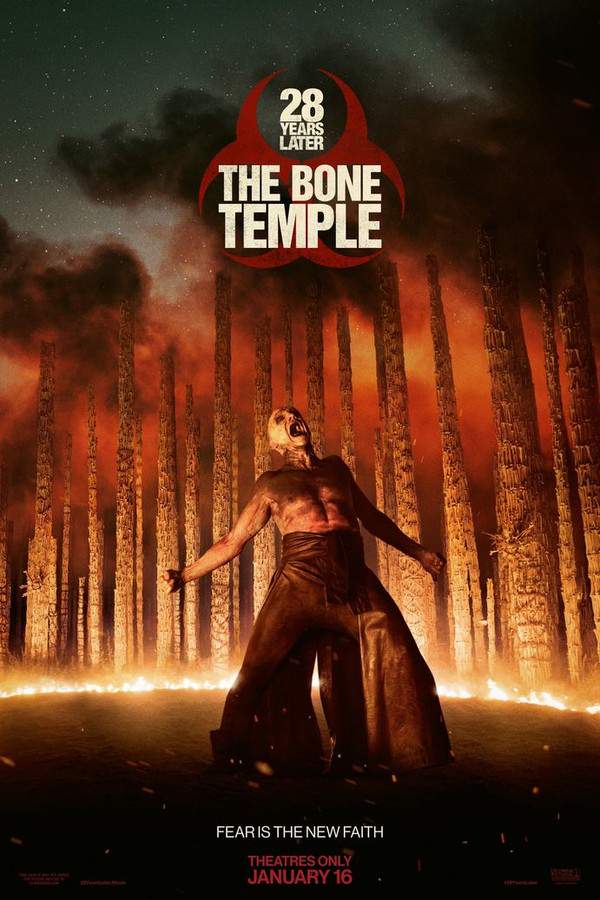
Dr. Kelson (Ralph Fiennes) is thrust into a shocking new alliance whose repercussions could reshape the world, while Spike (Alfie Williams) confronts Jimmy Crystal (Jack O'Connell) in a nightmare he cannot flee. In the Bone Temple’s universe, the infected are no longer the primary danger, forcing survivors to battle a far more insidious threat.
Find where to stream, rent, or buy 28 Years Later: The Bone Temple (2026) in the US with current JustWatch availability, up-to-date pricing, and platform listings for subscription, rental, and digital purchase options.
Warning: spoilers below!
Haven’t seen 28 Years Later: The Bone Temple yet? This summary contains major spoilers. Bookmark the page, watch the movie, and come back for the full breakdown. If you're ready, scroll on and relive the story!
Still thinking about how 28 Years Later: The Bone Temple (2026) ended? Here’s a full breakdown of the ending, key final moments, major twists, and the deeper meaning behind the film’s conclusion.
In the bleak ruins of the Bone Temple, Dr. Kel son finally proves that the Rage virus is not incurable. After nursing the infected Alpha, Samson, back from a hallucinatory psychosis, Kel son combines a cocktail of antibiotics, anti‑inflammatories and a viral‑targeting serum. The treatment takes a few hours to act, but when it does Samson’s mind clears: he recognizes his former allies, calls Kel son by name even as the doctor lies dying, and retains the monstrous strength that made him a weapon. Crucially, the cure does not erase Samson’s new physique, and he appears immune to re‑infection, hinting that a true antidote may exist.
Kel son’s triumph is short‑lived. When Sir Jimmy’s cult forces him to endorse a massacre, Kel son pretends compliance but, spotting Spike among the followers, chooses to protect the younger survivor. A violent clash erupts, killing most of the film’s cast—including Kel son, whose last act is to hide his research in the bunker before he succumbs. Only Spike, the newly‑named Jimmy Ink, and the now‑cured Samson emerge from the carnage.
The final moments pull the story back to the original outbreak. The camera pans away from the devastated temple to a remote house where Jim, the courier who survived the first infection, sits with his young daughter. Their presence confirms that Jim and his former love, Selena, managed to build a family after the chaos; Selena’s whereabouts remain ambiguous, but the daughter’s age matches Spike’s, setting up a generational bridge. Jim’s quiet resolve to “save Spike and the former Jimmy Ink” foreshadows a confrontation that will reunite the world‑ending events of the first film with the new survivors.
Thus the ending ties together three threads: the hope of a cure embodied by Samson, the moral legacy of Kel son’s compassion that lives on in Spike, and the return of the original hero Jim, whose next move promises to link the past and future of the Rage‑scarred world.
Last updated: February 09, 2026 at 14:29
Read frequently asked questions about the ending of 28 Years Later: The Bone Temple (2026), including final-scene interpretation, twist explanations, character outcomes, and the deeper meaning behind the conclusion. This ending explained FAQ is designed for viewers searching for clear spoiler-heavy answers and ending breakdown insights.
Dr. Kelson dies in the final confrontation. After successfully curing Samson of the Rage virus, he pretends to comply with Sir Jimmy's cult but chooses to protect Spike instead. A violent clash erupts, killing most of the cast including Kelson. His final act is hiding his research in the bunker before succumbing to his injuries.
Earlier scenes establish Kelson's moral conflict between his scientific mission and the cult's demands.
Yes, Samson is successfully cured. Dr. Kelson combines antibiotics, anti-inflammatories, and a viral-targeting serum to reverse Samson's hallucinatory psychosis. After the treatment takes effect, Samson regains his sanity, recognizes his former allies, calls Kelson by name, and retains his monstrous strength while becoming immune to re-infection.
Kelson's earlier experiments with the infected Alpha hinted at his determination to find a cure.
Only three characters survive: Spike, the newly-named Jimmy Ink, and the cured Samson. Nearly all other characters die in the violent clash between Kelson's faction and Sir Jimmy's cult forces, including Dr. Kelson himself.
The escalating tension between Kelson and Sir Jimmy foreshadows the deadly confrontation.
Kelson chooses to protect Spike after spotting him among Sir Jimmy's followers. Rather than endorsing the cult's planned massacre, Kelson pretends compliance but ultimately decides to save the younger survivor, sacrificing his own life in the process. This reflects Kelson's moral legacy of compassion that the film establishes throughout.
Kelson's character is built on compassion, making his choice consistent with his values.
"Jimmy Ink" represents Spike's transformation and new identity after surviving the Bone Temple massacre. The name appears to connect him to the legacy of Jimmy, the original hero from the first film, creating a symbolic bridge between the original outbreak and this new generation of survivors.
Spike's arc throughout the film builds toward his initiation and transformation.
The ending returns to Jim, the courier who survived the original infection in the first film. His presence with a young daughter confirms he and Selena built a family after the initial chaos. The daughter's age matches Spike's, establishing a generational bridge. Jim's final line about saving Spike and Jimmy Ink foreshadows a future confrontation that will reconnect the original narrative with the new survivors.
The film periodically references Jim's unresolved story throughout, building to this return.
Yes, the ending confirms a functional cure exists. Dr. Kelson's treatment successfully cures Samson, who retains his enhanced strength while becoming immune to re-infection. Though Kelson dies, his research is hidden in the bunker, suggesting the possibility of producing the antidote and potentially saving humanity from the Rage virus.
Kelson's entire motivation revolves around proving the virus is curable.
Sir Jimmy's cult is largely destroyed in the violent confrontation with Kelson's group. While the specific fate of Sir Jimmy himself isn't detailed, the cult forces are decimated during the clash, and the surviving characters emerge from the carnage changed. The cult's influence appears broken, though the world remains dangerous.
The cult's escalating demands and violent rituals build toward this confrontation.
The ending directly reconnects to the original by bringing back Jim, the protagonist of the first film. His appearance with a daughter establishes a generational timeline, and his stated intention to "save Spike and the former Jimmy Ink" promises to reunite the past and future of the Rage-scarred world, creating narrative closure while setting up potential future stories.
References to the original outbreak and Jim's story appear throughout the film.
The ending presents a mixed but cautiously optimistic conclusion. While the world remains scarred by violence and the Rage virus, three threads offer hope: the successful cure proves the virus is beatable, Kelson's compassion lives on through Spike, and Jim's return suggests the original hero may help reunite the fragmented survivors. The future remains uncertain but not hopeless.
Kelson's persistent belief in a cure and his compassion toward the infected build this thematic thread.
Discover curated groups of movies connected by mood, themes, and story style. Browse collections built around emotion, atmosphere, and narrative focus to easily find films that match what you feel like watching right now.
Groups fighting for survival against fanatical cults in broken worlds.If you liked 28 Years Later: The Bone Temple, you'll enjoy these films featuring survivors battling fanatical cults in post-catastrophe worlds where humanity's darkness becomes the real danger.
These narratives follow characters navigating worlds where societal collapse has allowed fanatical groups to rise. The primary conflict shifts from external threats to internal human corruption, with protagonists facing moral degradation and systematic cruelty.
Movies in this thread share the core theme of survival against organized human fanaticism rather than just monsters or disasters, creating intense psychological horror with heavy moral themes.
Grueling survival stories with constant threats and minimal respite.Fans of 28 Years Later: The Bone Temple will appreciate these relentless horror films featuring constant threats, high-stakes survival scenarios, and minimal moments of safety or recovery.
These stories maintain a breakneck pace with characters jumping from one immediate threat to another, creating a sense of sustained tension and desperation where survival feels constantly precarious.
Grouped by their unrelenting pacing and high-stakes survival scenarios, these films create immersive experiences where viewers feel the same constant pressure and desperation as the characters.
Don't stop at just watching - explore 28 Years Later: The Bone Temple in full detail. From the complete plot summary and scene-by-scene timeline to character breakdowns, thematic analysis, and a deep dive into the ending - every page helps you truly understand what 28 Years Later: The Bone Temple is all about. Plus, discover what's next after the movie.
Read a complete plot summary of 28 Years Later: The Bone Temple, including all key story points, character arcs, and turning points. This in-depth recap is ideal for understanding the narrative structure or reviewing what happened in the movie.
Track the full timeline of 28 Years Later: The Bone Temple with every major event arranged chronologically. Perfect for decoding non-linear storytelling, flashbacks, or parallel narratives with a clear scene-by-scene breakdown.
Discover the characters, locations, and core themes that shape 28 Years Later: The Bone Temple. Get insights into symbolic elements, setting significance, and deeper narrative meaning - ideal for thematic analysis and movie breakdowns.