



Plot Explained Spoilers guaranteed!
Plot Explained

Browse by genre

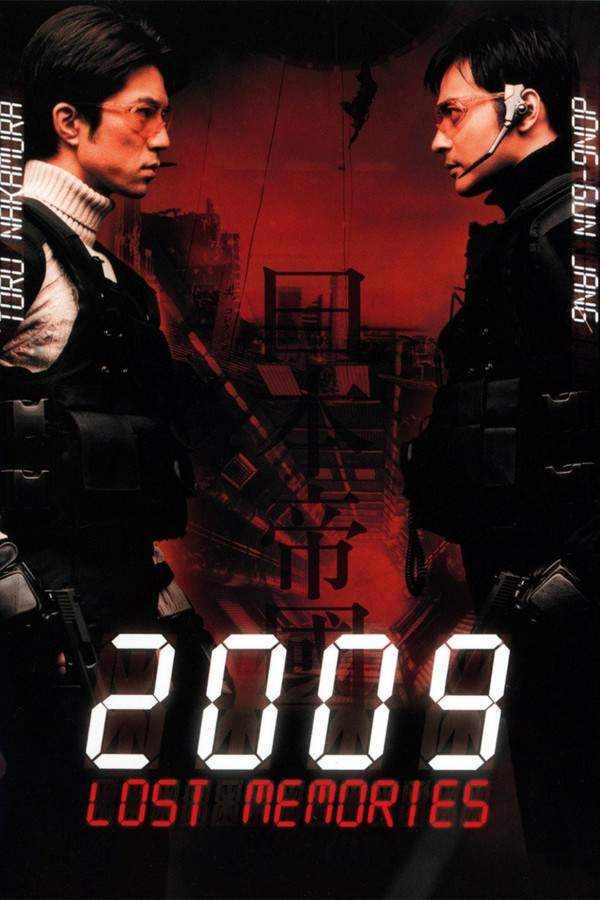
2009: Lost Memories (2005) movie poster

Characters & Themes

2009: Lost Memories (2005) Characters, Setting & Themes Explained

Release, runtime and language
2005 · 136 min · Korean
Directed by
Si-myung Lee

A catastrophic event looms, threatening to erase Korea's future and its history. Two rival agents, pulled from different points in time, are forced to work together to avert the disaster and protect their homeland. As they confront the dangers of manipulating time, they must question their loyalties and face the unforeseen consequences of altering the course of destiny in this action-packed thriller.

On this page (7)
  1. 1 Where to watch
  2. 2 Characters explained (3)
  3. 3 Where & when it takes place
  4. 4 Themes & meaning (3)
  5. 5 Character & meaning questions
  6. 6 Movie threads
  7. 7 Every angle

Where to watch

Where to Watch 2009: Lost Memories (2005)

Where can you watch 2009: Lost Memories? Stream, rent or buy it in the US, including on Amazon Video, Apple TV Store and Google Play Movies: current JustWatch availability with up-to-date prices.

Streaming availability powered by JustWatch

3 main characters · contains spoilers

2009: Lost Memories Characters Explained: Who Is Who

The main characters of 2009: Lost Memories (2005), heroes and villains: what drives them, how they change over the course of the story and what each of them reveals about the film's bigger ideas.

  • Masayuki Sakamoto

    Sakamoto is a distinguished agent from the Japanese Bureau of Investigation, marked by a strong sense of duty and an unyielding commitment to uncovering the truth. His traumatic past, particularly the execution of his father, fuels his drive, yet complicates his mission. He transitions from an obedient agent to a rogue operative, ultimately challenging the moral implications of history itself.

    • 🔍 Investigator
    • ⚔️ Determined
    • 📜 Troubled Past
  • Shojiro Saigo

    Saigo starts as Sakamoto's ally but morphs into an adversary driven by conflicting loyalties. His character embodies the struggle between personal connections and the rigid demands of duty. Saigo's emotional turmoil regarding his wife's family illuminates the tragic costs of his choices, ultimately placing him at odds with Sakamoto.

    • 💔 Loyal
    • ❓ Conflicted
    • 🔄 Adversary
  • Oh Hye-rin

    Hye-rin is a passionate and determined Korean researcher, fiercely motivated by the desire to right historical wrongs. Her alliance with Sakamoto highlights her commitment to restoring the original timeline, despite the personal risks involved. Her tragic fate serves as a catalyst for Sakamoto's final decisions, marking her as a significant figure in the story.

    • 📚 Researcher
    • 🚺 Brave
    • ⚔️ Tragic Hero

Last updated: October 22, 2024 at 22:18

Was this helpful?

Setting

Where and When Does 2009: Lost Memories Take Place?

The setting of 2009: Lost Memories (2005): the year and time period, the places and locations, and how they shape the characters, the mood and the tension of the story.

Time period

2009, 1909

The main action takes place in 2009, a year marked by Japan's militaristic dominance over Korea. Flashbacks to 1909 are critical, as they highlight a significant assassination attempt on Resident-General Itō Hirobumi, which alters the course of history. The manipulation of time not only affects the characters’ fates but also reshapes global events, particularly during World War II.

Location

Imperial Japan, Korean Peninsula, Keijo museum, Inoue Foundation, Vladivostok, Harbin, Berlin, Independence Hall

The movie is set in Imperial Japan, with a strong focus on the Korean Peninsula during an oppressive era. Key locations include the Keijo museum, significant for its collection of artifacts, and the Inoue Foundation, which plays a pivotal role in the historical narrative. Harbin is also crucial, serving as a backdrop for time manipulation and exploration of an alternate timeline.

  • 🏙️ Locations
  • 🏛️ Historical Sites
  • 🗺️ Geography

Last updated: October 22, 2024 at 22:18

Was this helpful?

3 major themes

2009: Lost Memories Meaning: Themes & Message Explained

What is 2009: Lost Memories (2005) really about? The emotional, social and philosophical themes the film keeps returning to, its symbolism and the message beneath the surface.

  • Time Manipulation

    A central theme revolves around time manipulation and its consequences. The discovery of a temple stone capable of altering time permeates the narrative, leading to events that impact history on a grand scale. Characters grapple with the morality of changing the past, highlighting the complexities of causality and destiny.

  • Sacrifice

    Sacrifice is a poignant theme, explored through the characters' choices and their emotional burdens. Sakamoto endures personal loss and betrayal, making significant sacrifices to protect not only his destiny but also the integrity of the timeline. The tragic fate of Hye-rin underscores the depth of these sacrifices and the emotional toll they reap.

  • Loyalty and Betrayal

    The theme of loyalty and betrayal is intricately woven into the characters' relationships. Sakamoto's trust in his mentor is shattered by betrayal, while alliances shift dramatically as personal motives come to light. The emotional weight of these dynamics drives the plot, challenging characters to choose between duty and personal ties.

Last updated: October 22, 2024 at 22:18

Was this helpful?

Character & theme questions

2009: Lost Memories Characters & Meaning: Your Questions Answered

The questions people ask about 2009: Lost Memories (2005): who the characters really are, their relationships, what the symbols mean, where it takes place and what the movie is really about. Each answer contains spoilers.

Q1

Where is the movie set?

The movie is set primarily in Imperial Japan during its occupation of the Korean Peninsula. Key locations include the Keijo museum, the Inoue Foundation, and the city of Harbin, which serves as a crucial backdrop for the time manipulation elements.

  • imperial japan
  • korean peninsula
  • keijo
  • harbin
  • locations
Q2

What time period does the story take place in?

The main narrative unfolds in 2009, a fictional timeline where Japan maintains militaristic dominance over Korea. The story also features significant flashbacks to 1909, centered around a pivotal assassination attempt on Resident-General Itō Hirobumi.

  • 2009
  • 1909
  • time period
  • imperial japan
  • history
Q3

Why is 1909 significant in the movie?

The year 1909 marks a critical historical turning point in the film, a failed assassination attempt on Resident-General Itō Hirobumi. This event becomes central to the time manipulation plot, as characters attempt to alter this moment to reshape the course of history, particularly regarding Korea's fate.

  • 1909
  • itō hirobumi
  • assassination
  • history
  • korea
Q4

What is the time manipulation theme about?

The movie centers on a temple stone capable of altering time, discovered and used by characters to change historical events. This theme explores the moral complexities of changing the past, the unintended consequences of tampering with causality, and whether altering history can ever truly be justified.

  • time manipulation
  • temple stone
  • causality
  • alternate history
  • time travel
Q5

How is sacrifice explored in the movie?

Sacrifice is a core theme, shown through characters who endure personal loss and betrayal to protect timelines and histories. Sakamoto faces devastating choices that test his commitment to duty versus personal destiny, while Hye-rin's tragic fate exemplifies the profound emotional costs of altering history.

  • sacrifice
  • loss
  • emotional cost
  • characters choices
  • destiny
Q6

How does loyalty and betrayal drive the story?

The theme of loyalty and betrayal creates tension throughout the film, particularly in Sakamoto's relationship with his mentor, which ends in betrayal. Characters must constantly choose between duty and personal connections, with alliances shifting as hidden motives emerge.

  • loyalty
  • betrayal
  • alliances
  • mentor
  • characters relationships
Q7

Who is Masayuki Sakamoto?

Masayuki Sakamoto is a distinguished agent from the Japanese Bureau of Investigation driven by a traumatic past, his father's execution. His journey transforms him from an obedient agent into a rogue operative who questions the moral implications of history itself, making him the film's central figure.

  • masayuki sakamoto
  • protagonist
  • agent
  • bureau of investigation
  • father execution
Q8

What is Shojiro Saigo's role in the story?

Shojiro Saigo begins as Sakamoto's ally but evolves into an adversary torn between personal connections and duty. His emotional conflict regarding his wife's family highlights the tragic costs of his choices, ultimately placing him at odds with Sakamoto as their motives clash.

  • shojiro saigo
  • ally
  • adversary
  • loyalty conflict
  • characters
Q9

Who is Oh Hye-rin and what is her significance?

Oh Hye-rin is a passionate Korean researcher motivated by correcting historical wrongs. She allies with Sakamoto to restore the original timeline, and her tragic fate becomes a catalyst for his final decisions, making her a pivotal figure despite her limited screen time.

  • oh hye-rin
  • korean researcher
  • historical wrongs
  • alliance
  • tragic fate
Q10

What is the Inoue Foundation's significance?

The Inoue Foundation plays a pivotal role in the historical narrative of the film, serving as a key institution connected to the time manipulation plot. It is one of the central locations where critical events unfold, linking the present-day action to the historical stakes.

  • inoue foundation
  • location
  • historical narrative
  • time manipulation
Q11

What is the alternate timeline concept in the movie?

The movie explores an alternate timeline concept where time manipulation creates parallel realities. Harbin serves as the backdrop for this exploration, showing how changes to historical events reshape not just personal fates but global outcomes, particularly during World War II.

  • alternate timeline
  • parallel universes
  • harbin
  • world war ii
  • time changes
Q12

What historical consequences does the movie explore?

The film examines how altering key historical moments, like the 1909 assassination attempt, could reshape global events and Korea's fate under Japanese occupation. It raises questions about whether changing history would truly prevent suffering or simply create different tragedies.

  • historical consequences
  • korea occupation
  • world war ii
  • destiny
  • history change

Movie threads

More Movies Like 2009: Lost Memories, by Mood & Story

Curated lists built around what makes 2009: Lost Memories tick: the same mood, the same kind of story or the same emotional payoff. Each list explains why these movies belong together.

Alternate History Thrillers like 2009: Lost Memories

High-stakes espionage and conspiracy in a world where history was rewritten. If you enjoyed the high-concept conspiracy and historical revision of 2009: Lost Memories, explore these movies where the past is a weapon and the present is a fragile construct. Find similar action-packed sci-fi thrillers with complex political plots and mind-bending premises.

  • mind-bending
  • tense
  • conspiracy
  • political
  • thrilling
  • investigative
  • Tone: tense, paranoid
  • Pacing: fast, plot-driven
Why these movies?

The story pattern: These narratives typically begin with the revelation of an altered timeline, forcing a protagonist to investigate the powerful forces behind the change. The plot involves uncovering secrets, high-level betrayals, and often a race to either preserve the new reality or restore the original one, leading to complex moral choices.

Why they belong together: They are grouped by their shared core premise of an alternate history, which fuels a tense, politically-charged thriller narrative. The experience combines the intellectual puzzle of a 'what if' scenario with the adrenaline of action and espionage.

Bitterswapet Sci-Fi Action Movies like 2009: Lost Memories

Action-packed journeys where victory comes at a profound personal cost. For viewers who liked the intense action and emotional weight of 2009: Lost Memories, this list features similar sci-fi stories. Discover films that blend fast-paced thrills with complex themes, leading to victories that feel earned yet are shadowed by melancholy and sacrifice.

  • heavy
  • melancholic
  • thrilling
  • action-packed
  • sacrifice
  • poignant
  • Tone: bittersweet, heavy
  • Pacing: fast, with emotional pauses
Why these movies?

The story pattern: The journey is characterized by high-stakes conflict and relentless pacing, but the emotional arc focuses on sacrifice. Characters lose allies, question their actions, and bear the burden of their choices. The climax resolves the central conflict, but the denouement emphasizes the personal toll, creating a somber, reflective conclusion.

Why they belong together: These films share a specific tonal blend: the excitement of a sci-fi action thriller combined with the emotional depth of a heavy drama. They deliver on spectacle while ensuring the ending resonates on a human level, leaving a lasting impression.

Every angle

2009: Lost Memories (2005) Explained: Plot, Timeline & Characters

Everything about 2009: Lost Memories in one place: what happens in the plot summary, the timeline in chronological order, the characters and meaning and a spoiler-free summary. What's After the Movie adds the cast, box office and post-credit scenes.

Coming soon on iOS and Android

The Plot Explained Movie Summary App

Plot summaries, endings explained and timelines on your phone. Catch up on any movie in minutes, save your favorites and never miss a twist again.

Be the first to know when we launch. Your email stays private, always.

Learn more about the app