



Plot Explained Spoilers guaranteed!
Plot Explained

Browse by genre

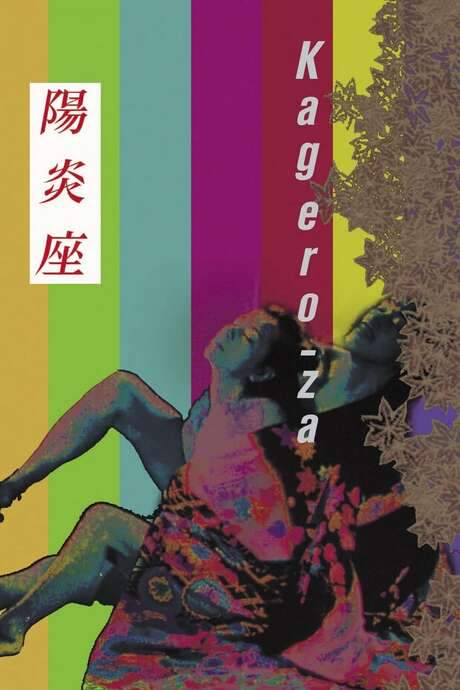
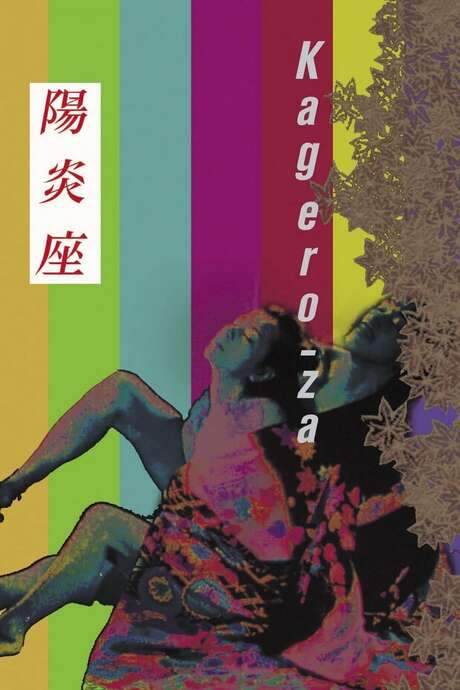
Kagero-za (1981) movie poster

Timeline

Kagero-za (1981) Timeline Explained – Every Event in Order

Release, runtime and language
1981 · 139 mins · Japanese
JustWatch #24,563
Directed by
Seijun Suzuki
Starring
Katsuo Nakamura, Yûsaku Matsuda, Michiyo Yasuda, Hyôe Enoki, Akaji Maro, Mariko Kaga

A 1920s playwright meets a beautiful woman who may be the ghost of his patron’s deceased wife.

On this page (6)
  1. 1 Where to watch
  2. 2 Events in order (10)
  3. 3 Timeline questions answered
  4. 4 Movie threads
  5. 5 Movies like Kagero-za
  6. 6 Every angle

Where to watch

Where to Watch Kagero-za (1981)

Where can you watch Kagero-za? Stream, rent or buy it in the US, including on ARROW, Google Play Movies and YouTube: current JustWatch availability with up-to-date prices.

Streaming availability powered by JustWatch

10 events in order · contains spoilers

Kagero-za Timeline: Events in Chronological Order

Every key event of Kagero-za (1981) in order, scene by scene, with when and where it takes place. Use it to untangle flashbacks, time jumps and parallel storylines, to refresh your memory before the sequel or to find the exact scene you are thinking of.

  1. Chance encounters and a secret room

    In 1926 Tokyo, Matsuzaki, a Shinpa playwright, meets a beautiful married woman. After two more chance encounters, they spend the night together. He is shocked to learn that the room she’s staying in belongs to Shinako, the wife of his patron, Baron Tamawaki.

    When
    1926
    Where
    Tokyo, Japan
  2. Revelation of Tamawaki's two wives

    Matsuzaki learns that Tamawaki has two wives: Irene, a German woman who was made to dye her hair and become Ine, and Shinako, a count's daughter who was won over with money. The revelation exposes the power dynamics and hidden sacrifices behind Tamawaki's marriages.

    When
    early timeline
    Where
    Tamawaki's circle
  3. Ine on the hospital stairs

    Matsuzaki meets Ine on the stairs in front of a hospital and speaks with her. By that time, Ine is near death in her hospital room. The encounter underscores the tragedies surrounding the main characters.

    When
    late in Ine's life
    Where
    Hospital stairs
  4. Shinako's Kanazawa letter

    Matsuzaki receives a letter from Shinako saying she will wait for him in Kanazawa. He hurries to the specified inn, knowing their fourth rendezvous would be life-risking. Meanwhile, Tamawaki heads to Kanazawa and urges Matsuzaki to commit suicide with Shinako.

    When
    on the way to Kanazawa
    Where
    Kanazawa
  5. Escape to the Kageroza Theatre

    Matsuzaki escapes and arrives at the strange theater called Kageroza. Shinako and Iwaki follow him, while villagers prepare for the performance. The theater becomes a place where reality and desire blur.

    When
    night
    Where
    Kageroza Theatre
  6. The monster play mirrors Irene and Shinako's tale

    Children perform on the Kagerouza stage as a monster play unfolds. The story begins to mirror Irene’s plight of being forced into the shadows rather than becoming a wife. Shinako steps on stage and confesses her resentment at being a second wife and recounts an affair with Matsuzaki as revenge.

    When
    during the show
    Where
    Kageroza Theatre stage
  7. The theatre collapses and a double suicide is revealed

    The Kagerouza Theatre collapses, and villagers cry out as a body is found in the pond following a double suicide. The victims are Iwaki and Shinako. Matsuzaki believes Shinako may still be alive, beyond what the crowd can see.

    When
    end of performance
    Where
    Kageroza Theatre and surrounding pond
  8. Matsuzaki doubts Shinako's death

    Even amid tragedy, Matsuzaki believes Shinako is not dead. The festival music swells as he clings to the belief of finding her again.

    When
    immediately after collapse
    Where
    The festival area around Kageroza
  9. A mysterious room and a final bow

    Matsuzaki finally finds Shinako in a mysterious room and bows to his real-world self. He sits back-to-back with Shinako, suggesting a fusion of personal truth and stage illusion. The ending leaves a haunting sense of unresolved longing.

    When
    final act
    Where
    Mysterious room
  10. Conclusion: desire, power, and illusion

    The intertwined stories reveal how wealth, desire, and social roles drive people to conceal the truth and pursue revenge. The narrative blurs the line between theatre and life, leaving Matsuzaki and Shinako to confront what is real.

    When
    throughout

Last updated: December 03, 2025 at 23:58

Was this helpful?

Timeline questions answered

Kagero-za Timeline Explained: Your Questions Answered

When does it happen, and why in that order? The questions people ask about the chronology of Kagero-za (1981): time jumps, flashbacks, cause and effect between scenes and the correct order of events, each answered with spoilers.

Q1

Why does Matsuzaki meet Ine on the hospital stairs when she should already be dead?

Matsuzaki encounters Ine on the hospital stairs shortly before she dies in her hospital room. This meeting establishes the film's central ambiguity about identity and reality. Ine is the German woman Irene whom Tamawaki forced to dye her blonde hair black and assume a Japanese identity. The encounter suggests Ine exists somewhere between life and death, possibly as a ghost or memory, blurring the line between reality and Matsuzaki's perception.

Foreshadowing: Earlier scenes establish that Ine has been living in the shadows of Tamawaki's household, her true identity hidden.

  • Ine
  • Irene
  • hospital stairs
  • ghost
  • identity
Q2

What is the Kageroza theater and why does it blur reality and performance?

Kageroza is a strange, surreal theater where the boundaries between onstage and offstage collapse. Matsuzaki escapes there after being pressured to commit suicide, and the venue becomes a space where characters' inner desires and hidden truths manifest as theatrical performance. The theater represents the film's exploration of how identity is performative and how personal memories replay like staged dramas.

Foreshadowing: The film's title itself references the theater, hinting at the meta-theatrical nature of the story.

  • Kageroza
  • theater
  • reality
  • performance
  • surreal
Q3

Did Shinako actually die in the double suicide at the theater?

The film presents the double suicide of Shinako and Iwaki as ambiguous. Villagers claim to find a body in the pond after the theater collapses, but Matsuzaki refuses to accept Shinako's death. In the final scene, he discovers her alive in a mysterious room, suggesting the reported suicide may have been staged, imagined, or part of the theatrical illusion that permeates the film.

Foreshadowing: The earlier mention that their fourth rendezvous would be life-risking hints at this dangerous confrontation.

  • Shinako
  • double suicide
  • death
  • ambiguous ending
  • Iwaki
Q4

Why did Baron Tamawaki force Irene to become Ine and dye her hair black?

Tamawaki forced his German wife Irene to dye her blonde hair black and adopt the Japanese name Ine because Japanese society in the 1920s would not accept a foreign woman as his wife. He wanted to bring her back to Japan while maintaining his social standing, so he erased her identity and forced her to conceal her true self. This reveals how social expectations and status shape Tamawaki's decisions throughout the film.

Foreshadowing: The opening reveals how money and status shape choices in Tamawaki's circle.

  • Tamawaki
  • Irene
  • Ine
  • identity
  • forced assimilation
Q5

What does the monster play performed at Kageroza represent?

The monster play staged at Kageroza directly mirrors Irene/Ine's tragedy, a woman tormented by a future she never chose and by the limits placed on her life. Children perform as monsters, symbolizing how societal constraints transform people into something monstrous. Shinako steps onto the stage and confesses her resentment at being forced into a second wife position, using the play as a vehicle to voice truths she cannot speak in reality.

Foreshadowing: The theatrical setting has been established as a space where reality and performance merge.

  • monster play
  • theater
  • Irene
  • Shinako
  • symbolism
Q6

Why does Tamawaki urge Matsuzaki to commit suicide with Shinako?

Tamawaki travels to Kanazawa and pressures Matsuzaki to commit double suicide with Shinako. This coercive plot serves multiple purposes: it removes the scandal of their affair, maintains Tamawaki's honor, and forces Matsuzaki into loyalty despite his desires. The demand reflects how private desires collide with public duties in Tamawaki's world, where relationships are governed by social expectations rather than genuine emotion.

Foreshadowing: The earlier revelation shows how Tamawaki's marriages were shaped by money and status rather than love.

  • Tamawaki
  • suicide
  • Shinako
  • coercion
  • honor
Q7

What is the significance of Matsuzaki bowing to himself in the final scene?

In the final scene, Matsuzaki finds Shinako in a mysterious room and bows to his real-world self, then sits back-to-back with Shinako. This gesture suggests a fusion of personal truth and stage illusion, possibly indicating that Matsuzaki has merged his theatrical and real identities, or that he is acknowledging the split between his public and private selves. The ending leaves whether this meeting is real or imagined deliberately unresolved.

Foreshadowing: The entire film has been building toward this convergence of reality and theatrical performance.

  • Matsuzaki
  • bow
  • final scene
  • identity
  • fusion
Q8

Who is Iwaki and what is his role in the story?

Iwaki appears as a character who follows Matsuzaki to the Kageroza theater and is later identified as one of the victims in the reported double suicide with Shinako. His presence adds to the mystery surrounding Shinako's fate and suggests he may have been another participant in or witness to the events at the theater. The exact nature of his relationship to Shinako remains unclear, contributing to the film's ambiguity.

Foreshadowing: Iwaki's appearance at the theater sets up his involvement in the final tragedy.

  • Iwaki
  • Shinako
  • double suicide
  • victim
Q9

Why is the fourth rendezvous between Matsuzaki and Shinako described as life-risking?

Shinako's letter specifies that their fourth meeting would be life-risking, and Matsuzaki hurries to Kanazawa knowing this. The danger stems from several factors: their affair is scandalous, Tamawaki has discovered their relationship, and Tamawaki himself travels to Kanazawa with the intent of forcing a double suicide. The meeting represents a point of no return where personal desire conflicts directly with social consequences.

Foreshadowing: The earlier secret encounters have been building toward this dangerous confrontation.

  • fourth rendezvous
  • Kanazawa
  • life-risking
  • affair
Q10

How are Ine and Shinako connected beyond being Tamawaki's wives?

Ine and Shinako are both women trapped by Tamawaki's control and social expectations, though their situations differ. Ine (formerly Irene) was forced to abandon her identity entirely to satisfy societal norms, while Shinako was won over with money as a count's daughter. Both women resent the system that denies them autonomy, which is why Shinako's stage confession echoes Ine's tragic story. They represent different facets of how women were constrained in 1920s Japan.

Foreshadowing: The revelation of Tamawaki's two wives exposes the power dynamics affecting both women.

  • Ine
  • Shinako
  • Tamawaki
  • wives
  • connection

Movie threads

More Movies Like Kagero-za, by Mood & Story

Curated lists built around what makes Kagero-za tick: the same mood, the same kind of story or the same emotional payoff. Each list explains why these movies belong together.

Movies about ghostly obsession like Kagero-za

Stories where romantic desire blurs the line between the living and the dead. If you liked the haunting and uncertain romance in Kagero-za, you'll find similar movies here. This selection features stories of obsessive love intertwined with the supernatural, where characters grapple with mysterious lovers, blurred realities, and a pervasive sense of melancholic longing.

  • haunting
  • romantic obsession
  • supernatural mystery
  • atmospheric
  • unsettling
  • melancholic
  • Tone: melancholic, mysterious, haunting
  • Pacing: slow, deliberate, atmospheric
Why these movies?

The story pattern: Narratives in this thread often follow a protagonist, frequently an artist or someone haunted by the past, who becomes entangled with an enigmatic and possibly supernatural lover. The plot unfolds through a series of ambiguous encounters, building a dreamlike mystery around the lover's true nature, leading to an ending that questions the very nature of the relationship and reality itself.

Why they belong together: Movies are grouped here for their shared focus on the theme of romantic obsession with a ghostly or illusory figure. They create a specific mood that blends sensuality with existential unease, using a slow, deliberate pace to immerse the viewer in a world where memory, desire, and reality become indistinguishable.

Surreal psychological dramas like Kagero-za

Journeys into fragmented psyches where reality and fantasy become one. For viewers who appreciated the dreamlike and complex narrative of Kagero-za, this section offers similar movies that challenge perception. These films feature ambiguous stories, unreliable narrators, and a blending of fantasy and reality, creating a uniquely atmospheric and intellectually engaging experience.

  • dreamlike
  • psychological
  • unreliable narrator
  • atmospheric
  • reflective
  • complex narrative
  • Tone: dreamlike, melancholic, unsettling
  • Pacing: slow, hallucinatory, deliberate
Why these movies?

The story pattern: The narrative pattern involves a protagonist, often an artist or intellectual, navigating a world that seems to operate on dream logic. The plot is less about external events and more about the internal unraveling of the character's mind, filled with doubles, deceptive identities, and surreal sequences that deliberately obscure a clear truth.

Why they belong together: These films are grouped by their shared commitment to a complex, non-linear structure and a dreamlike atmosphere. The similarity lies in the feeling of being untethered from objective reality, experiencing the story through a haze of melancholy and mystery, with a pacing that allows the unsettling mood to fully saturate the narrative.

If you liked this

Movies Like Kagero-za

Similar movies to Kagero-za: the same genre, themes or kind of story. Each one comes with its own plot summary, timeline and ending explained.

Browse all movie summaries

Every angle

Kagero-za (1981) Explained: Plot, Timeline & Characters

Everything about Kagero-za in one place: what happens in the plot summary, the timeline in chronological order, the characters and meaning and a spoiler-free summary. What's After the Movie adds the cast, box office and post-credit scenes.

Coming soon on iOS and Android

The Plot Explained Movie Summary App

Plot summaries, endings explained and timelines on your phone. Catch up on any movie in minutes, save your favorites and never miss a twist again.

Be the first to know when we launch. Your email stays private, always.

Learn more about the app