Year: 1997
Runtime: 108 mins
Language: Japanese
Following three friends during their first year after high school, the film shows how a daring robbery of their teacher on the final school day sets divergent paths. Ryoko takes a job at a hair salon, while the two boys turn to work as enforcers and protectors, navigating the early struggles of adulthood together.
Warning: spoilers below!
Haven’t seen Young Thugs: Innocent Blood yet? This summary contains major spoilers. Bookmark the page, watch the movie, and come back for the full breakdown. If you're ready, scroll on and relive the story!
Read the complete plot breakdown of Young Thugs: Innocent Blood (1997), including all key story events, major twists, and the ending explained in detail. Discover what really happened—and what it all means.
Riichi Riichi Nakaba, Yūji, Kotetsu, and Ryōko Sarina Suzuki have just graduated from high school in Kishiwada, and they head into a summer that will test friendships, pride, and the thin line between mischief and danger. This is a story that unfolds with a quiet, creeping intensity as the four friends drift from carefree pranks into the harsher rhythms of loyalty and survival. The film opens with a reckless prank: Ryōko lures a teacher behind a building with a provocative offer, and Riichi and Yūji seal the moment by tipping a potted plant onto his head while Ryōko snaps photos. It’s a small act that foreshadows a pattern where impulse hardens into consequence.
Ryōko moves forward with her own plans, landing a job at a hair salon, while Kotetsu finds work behind a bar. Riichi and Yūji, meanwhile, are drawn into the grim world of gang enforcers, their days filled with a mixture of bravado and looming threats. The tension thickens when Riichi starts an affair with Nahomi. In a moment of jealousy and retaliation, Ryōko pours tomato juice over Riichi’s head and arranges for Masae to trim Ryōko’s hair to shoulder length. As the memories of their youth collide with the pressures of adulthood, Ryōko gathers all the photos of herself and Riichi into a garbage bag and entrusts it to Yūji to burn. Yūji, in turn, returns the bag to Riichi, who initially reacts with hesitation but eventually burns the images. The drama intensifies as Masae confronts Riichi for making Ryōko cry, and she begins to spend more time with Yūji, soon becoming his girlfriend.
When Riichi moves in with Nahomi, she pleads with him not to fight back against rival gang members. He follows that plea by letting himself be beaten and locked in a batting cage during an arcade assault. He drags himself home, bloodied, while Nahomi apologizes and asks him to wait for her. Riichi’s boss later tells him Nahomi asked him to pull Riichi from work entirely, prompting Riichi to end the relationship and return to his mother’s house. A visit to Yūji reveals him with Masae, and Riichi then spots Kotetsu driving a borrowed Isami. Frustrated by his own stagnation, Riichi confronts a pack of eight youths, delivering a fierce beating that sends them fleeing and makes his longing for change feel even more urgent.
The trio—Riichi, Yūji, and Kotetsu—decide to hit the road for a sea-side road trip, with Riichi trying to project a calmer, less combative image even when Sada, an old rival, challenges him. Meanwhile, Yūji’s mother’s surgery succeeds, and Isami lends Kotetsu a different car for the journey. The trip intensifies when a flashy red car overtakes them, igniting a reckless race that ends in disaster: brakes fail, steering falters, and the trio nearly collides with construction equipment. Yūji soils himself, seeking relief in the freezing water, and, as he climbs out, grabs a metal stepladder moments before it is struck by lightning, killing him in a split-second of sudden, violent fate.
Back in Kishiwada, Ryōko and Nahomi support Masae, whose only memento of Yūji is a protractor that Yūji once found on the ground—something he used to measure a perfect 67-degree angle. The protractor’s original owner, a young schoolboy named Tomoda, reappears and asks for it back. Nahomi offers to buy him a new one, and Masae contemplates buying a hundred more, but Tomoda decides to keep it—believing the protractor is happier with Masae. Riichi then reveals to Ryōko that he did not burn one photo after all—the image of Ryōko’s teacher, dirt and a flower on his head—leaving a trace of memory intact amid the ruins.
After they part ways, Riichi tries to hurry back to Ryōko, only to find her already on the roof of her building, unreachable. A group of children below releases a red balloon into the summer sky, and Ryōko leans over the railing, unable to grasp it. As the season of festivals returns, Riichi faces his old rival Sada with his fist raised, a quiet sign that the conflicts of the past echo into a future that remains uncertain and unsettled. In the end, the film lingers on the ache of what is left behind and the stubborn pull of a horizon that promises both danger and possibility.
Last Updated: October 09, 2025 at 11:10
Discover curated groups of movies connected by mood, themes, and story style. Browse collections built around emotion, atmosphere, and narrative focus to easily find films that match what you feel like watching right now.
Stories where the transition to adulthood shatters childhood camaraderie.Explore movies like Young Thugs: Innocent Blood where youthful friendships are tested and fractured by the harsh transition into adulthood. If you enjoyed the melancholic story of friends drifting apart, find similar coming-of-age crime dramas here.
These narratives typically follow a group of young friends—often from a working-class or disadvantaged background—immediately after a pivotal life event like high school graduation. The central conflict arises from divergent paths: one character may seek a straight life, while others are pulled into crime, leading to loyalty tests, tragic consequences, and a profound sense of loss for their shared past.
These films are grouped by their shared emotional core: a heavy, melancholic tone centered on the irreversible loss of innocence and the bittersweet nostalgia for a simpler time. They feature steady pacing that allows the emotional weight of the characters' drift to settle, often culminating in a poignant or tragic ending.
Character-driven stories set against a raw, unforgiving city backdrop.Discover movies with a similar feel to Young Thugs: Innocent Blood—gritty urban dramas with a melancholic tone. If you liked the raw portrayal of city life and its impact on young characters, find more somber, intense crime stories here.
The narrative pattern involves characters who are products of their harsh environment. The plot is less about complex schemes and more about the day-to-day struggle for respect, money, or simple survival within a specific urban subculture. The direction is often steady and observational, building tension from the constant threat of violence and the characters' internal despair, culminating in events that feel fated by the setting itself.
These movies share a specific atmospheric blend: a high-intensity, raw feel combined with a deeply melancholic and reflective tone. The pacing is consistently steady, allowing the weight of the environment and the characters' choices to build towards a emotionally heavy, often bittersweet conclusion. The world feels authentic, dangerous, and inescapable.
Don't stop at just watching — explore Young Thugs: Innocent Blood in full detail. From the complete plot summary and scene-by-scene timeline to character breakdowns, thematic analysis, and a deep dive into the ending — every page helps you truly understand what Young Thugs: Innocent Blood is all about. Plus, discover what's next after the movie.
Track the full timeline of Young Thugs: Innocent Blood with every major event arranged chronologically. Perfect for decoding non-linear storytelling, flashbacks, or parallel narratives with a clear scene-by-scene breakdown.
Discover the characters, locations, and core themes that shape Young Thugs: Innocent Blood. Get insights into symbolic elements, setting significance, and deeper narrative meaning — ideal for thematic analysis and movie breakdowns.
Get a quick, spoiler-free overview of Young Thugs: Innocent Blood that covers the main plot points and key details without revealing any major twists or spoilers. Perfect for those who want to know what to expect before diving in.
Visit What's After the Movie to explore more about Young Thugs: Innocent Blood: box office results, cast and crew info, production details, post-credit scenes, and external links — all in one place for movie fans and researchers.
Discover movies like Young Thugs: Innocent Blood that share similar genres, themes, and storytelling elements. Whether you’re drawn to the atmosphere, character arcs, or plot structure, these curated recommendations will help you explore more films you’ll love.
Young Thugs: Innocent Blood (1997) Scene-by-Scene Movie Timeline
Young Thugs: Innocent Blood (1997) Movie Characters, Themes & Settings
Young Thugs: Innocent Blood (1997) Spoiler-Free Summary & Key Flow
Movies Like Young Thugs: Innocent Blood – Similar Titles You’ll Enjoy
Dead Kids (2019) Spoiler-Packed Plot Recap
Innocent Blood (1992) Complete Plot Breakdown
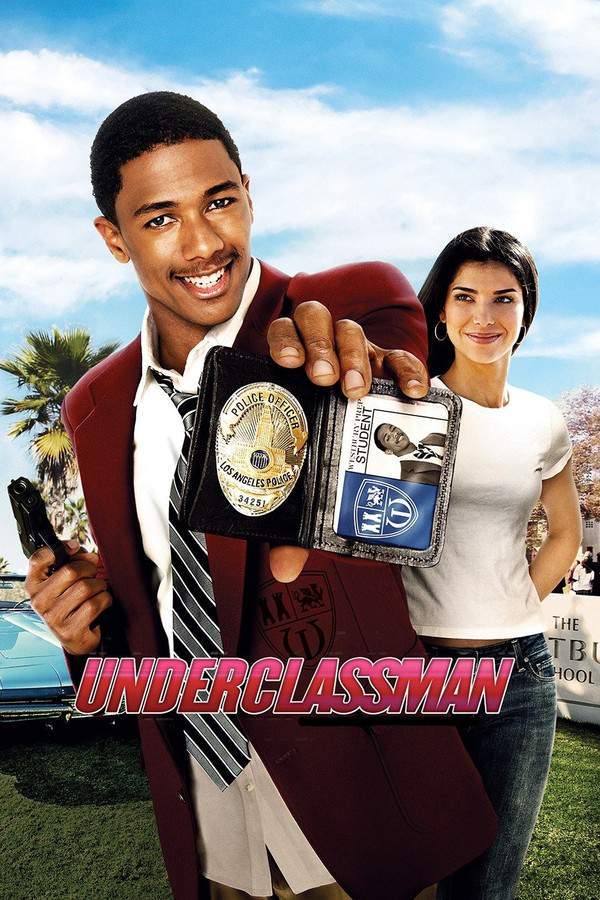
Underclassman (2005) Film Overview & Timeline
Juvenile Delinquents (2020) Film Overview & Timeline
Thugocratie (2018) Plot Summary & Ending Explained
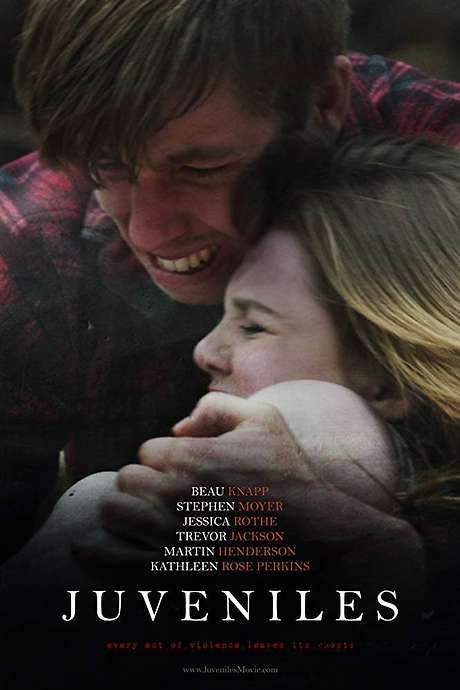
Juveniles (2018) Detailed Story Recap
Young Yakuza (2007) Full Summary & Key Details
Young Warriors (1983) Story Summary & Characters
Teen-Age Crime Wave (1955) Ending Explained & Film Insights
Teenage Yakuza (1962) Detailed Story Recap
Young and Dangerous (1996) Full Summary & Key Details
Youngblood (1978) Ending Explained & Film Insights
Kids Return (1996) Plot Summary & Ending Explained
Young and Wild (1958) Complete Plot Breakdown
Young Blood (1943) Complete Plot Breakdown