Plot Explained Spoilers guaranteed!
Plot Explained

Browse by genre

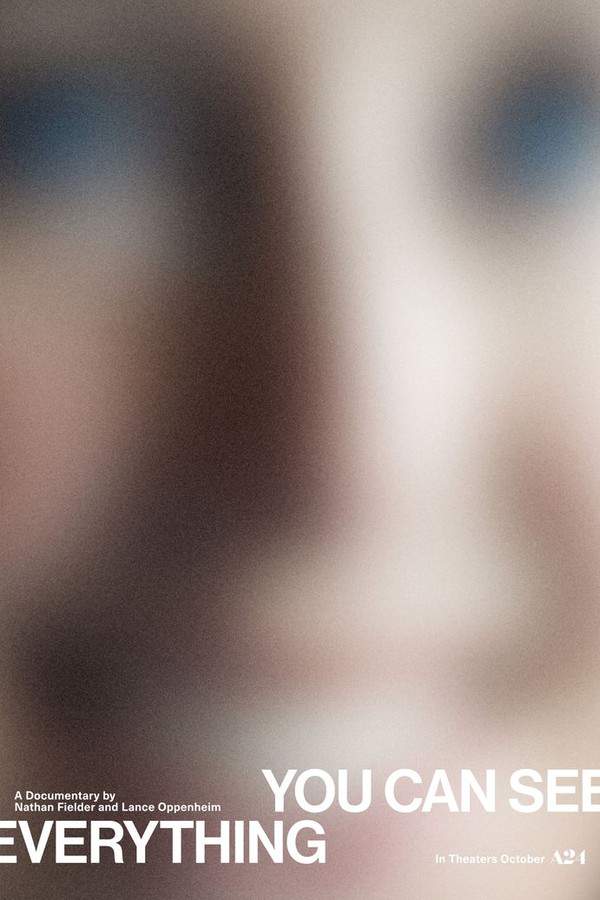
You Can See Everything (2026) movie poster

Spoiler-Free Summary

You Can See Everything (2026) Spoiler-Free Summary – What It's About

Release, runtime and language
2026 · 2 h 54 m · English
Echo score 95
Loading streaming availability…
Directed by
Lance Oppenheim
Starring
Elizabeth Holmes, Nathan Fielder, Billy Evans

Thirty-four days before a sentencing that will send her to prison, infamous Silicon Valley entrepreneur Elizabeth Holmes agrees to let a skeptical documentary crew follow her every move. What begins as an intimate portrait of the enigmatic founder expands into a mind‑bending three‑year journey into the abyss, documenting the unfolding events.

On this page (6)
  1. 1 Where to watch
  2. 2 What it is about
  3. 3 Is it worth watching?
  4. 4 After you watch
  5. 5 Movie threads
  6. 6 Every angle
Loading streaming availability…

Spoiler-free summary · safe to read

What Is You Can See Everything About? (No Spoilers)

The plot of You Can See Everything (2026) without spoilers: what it is about, who it follows and where it takes place, told without the twists or the ending. Enough to decide whether it is your next watch, not enough to ruin it.

In the days leading up to a prison sentence that will reshape her public image forever, infamous Silicon Valley entrepreneur Elizabeth Holmes opens her life to a documentary crew led by a filmmaker whose skepticism is matched only by her enigmatic charisma. What begins as an attempt to control her own narrative quickly spirals into something far stranger, as the camera captures not just a woman facing her past, but the uneasy dance between subject and observer.

The world around Elizabeth is one where fame, fall, and reinvention blur into a haze of carefully curated moments and defensive silences. Her partner, Billy Evans, stands firmly beside her, protective of the story they wish to share with the world. Yet behind the polished surfaces of their beachside life and ongoing ambitions, there is a quiet tension — questions about authenticity, loyalty, and the cost of being believed. The filmmaker, attuned to every gesture and hesitation, senses that the truth may be more slippery than anyone involved wants to admit.

As the countdown to incarceration ticks forward, the documentary becomes less about capturing a life and more about the unsettling reflections between a person and the image she has crafted. There is an almost hypnotic pull to Elizabeth's insistence that her intentions were always pure, her voice steady even as the walls close in. But the presence of the camera introduces a destabilizing element — one that suggests the version of events being offered may be just another carefully constructed layer.

Tonal and meta in texture, the film casts a curious, lingering gaze on the nature of storytelling itself, where the line between confession and performance grows thin. What unfolds is not merely a portrait of a controversial figure, but a meditation on truth, perception, and the human desire to be seen on one's own terms — even as history waits with open arms.

Last updated: October 18, 2026 at 16:53

Was this helpful?

What to expect

Is You Can See Everything Worth Watching? What It Feels Like

Is it dark, sad, slow, intense or confusing? The mood of You Can See Everything (2026) in a few tags, without a word about how it ends. Each tag opens a list of movies that feel the same.

After you watch

Seen You Can See Everything? Now Read the Spoilers

Once you have watched You Can See Everything (2026), come back for the full story: the plot summary with spoilers, the timeline in chronological order, the characters and meaning.

Movie threads

More Movies Like You Can See Everything, by Mood & Story

Curated lists built around what makes You Can See Everything tick: the same mood, the same kind of story or the same emotional payoff. Each list explains why these movies belong together.

Meta-documentaries that fracture reality like in You Can See Everything

Films that blur footage, performance, and truth until you question what you watched. Movies like You Can See Everything that blur the line between real footage, re-enactment, and performance. These cerebral, layered documentaries turn the camera back on themselves, forcing viewers to wrestle with truth, media portrayal, and the ethics of watching. If you liked the unsettling meta quality of this film, these documentaries will keep you guessing.

  • meta
  • cerebral
  • layered
  • voyeuristic
  • unsettling
  • confrontational
  • Tone: dark, cerebral, unsettling
  • Pacing: variable, shifting between slow intimacy and bursts of re-enactment
Why these movies?

The story pattern: These films often begin with a premise of access or intimacy and then quietly destabilize what documentary means. Real subjects are reconstructed by performers, filmmakers appear on screen, and time itself is collapsed or extended to serve a deeper truth. The narrative journey is less about answers and more about the slow, uncomfortable realization that every frame was a negotiation between subject, filmmaker, and audience.

Why they belong together: Movies in this thread share a cerebral, meta-aware quality and often mix high emotional weight with intellectual provocation. They tend toward complex structure, variable pacing that shifts between quiet intimacy and confrontational set pieces, and endings that refuse easy resolution. The viewer's role as witness becomes part of the story itself.


Rise and fall of a charismatic fraud like in You Can See Everything

Stories where a beloved public figure's empire of lies begins to crack and crumble. Movies like You Can See Everything that follow the downfall of larger-than-life figures whose charisma masked exploitation, fraud, and manipulation. These dark, layered documentaries and dramas trace the architecture of deception, the complicity of media and audience, and the unresolved human fallout. If you were drawn to the cynical, confrontational portrait of Silicon Valley fraud here, these stories will haunt you too.

  • dark
  • cynical
  • confrontational
  • manipulative
  • unsettling
  • intimate
  • Tone: dark, cynical, confrontational
  • Pacing: variable, mixing slow intimate scenes with bursts of revelation
Why these movies?

The story pattern: Stories in this thread often begin with access or intimacy to a charismatic figure on the brink of consequence. The narrative unfolds through a mix of public spectacle, private confession, and journalistic excavation, exposing how the lie was constructed, who profited, and who was harmed. The emotional arc moves from fascination to complicity to reckoning, and the ending is rarely clean or fully satisfying.

Why they belong together: Movies in this thread share a dark, cynical tone and an obsession with how powerful people manipulate truth, media, and relationships. They tend toward heavy emotional weight, variable pacing that mixes slow intimate moments with sharp revelations, and complex layering of public image versus private reality. Viewers can expect a confrontational, intellectually engaging experience.

Every angle

You Can See Everything (2026) Explained: Plot, Timeline & Characters

Everything about You Can See Everything in one place: what happens in the plot summary, the timeline in chronological order, the characters and meaning and a spoiler-free summary. What's After the Movie adds the cast, box office and post-credit scenes.

Coming soon on iOS and Android

The Plot Explained Movie Summary App

Plot summaries, endings explained and timelines on your phone. Catch up on any movie in minutes, save your favorites and never miss a twist again.

Be the first to know when we launch. Your email stays private, always.

Learn more about the app