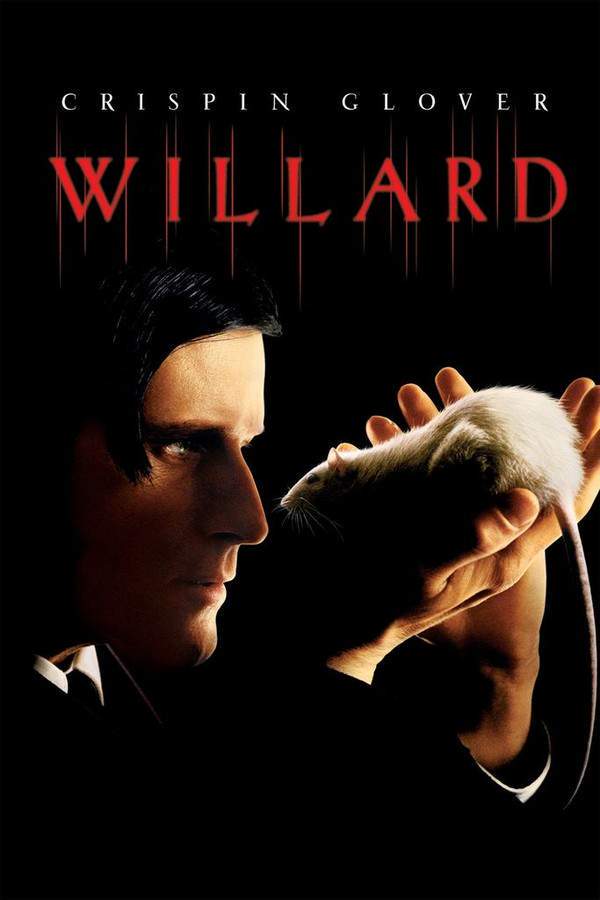
Willard

Willard

JustWatch#12,1932

Year: 2003

Runtime: 100 min

Language: English

Director: Glen Morgan

Budget: $20M

DramaThrillerHorror

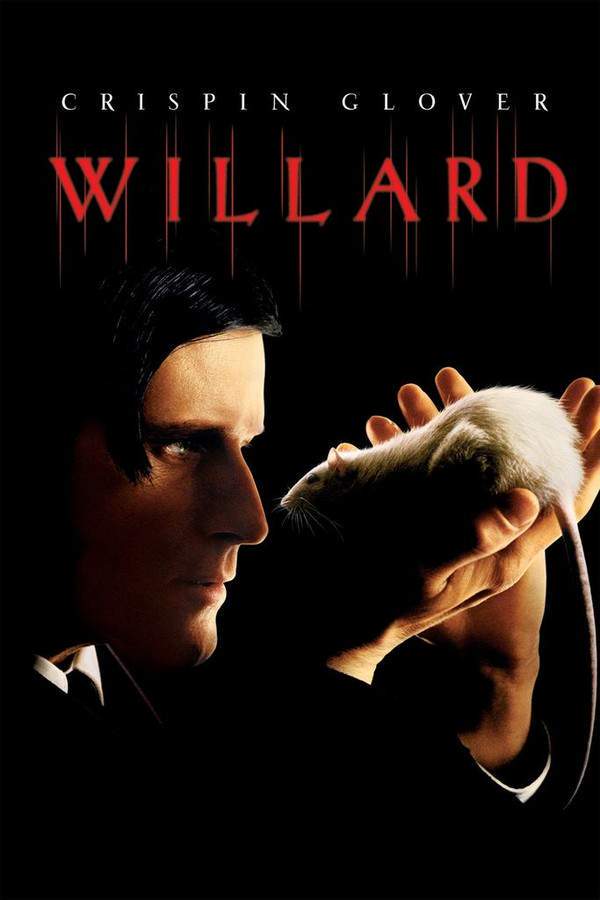
A troubled and isolated young man, Willard, finds companionship in a large group of rats. Seeking refuge from a difficult home life marked by cruelty from his mother and her partner, he develops a unique bond with the rodents. As his circumstances worsen, Willard utilizes the rats' loyalty to confront those who mistreat him, leading to a shocking and violent series of events. The film explores themes of isolation, revenge, and the unexpected power found in unlikely alliances.

Where to Watch Willard?

Find where to stream, rent, or buy Willard (2003) in the US with current JustWatch availability, up-to-date pricing, and platform listings for subscription, rental, and digital purchase options.

Warning: spoilers below!

Haven’t seen Willard yet? This summary contains major spoilers. Bookmark the page, watch the movie, and come back for the full breakdown. If you're ready, scroll on and relive the story!

Willard (2003) – Full Plot Summary & Ending Explained

Read the complete plot breakdown of Willard (2003), including all key story events, major twists, and the ending explained in detail. Discover what really happened, and what it all means.

Willard Stiles, Crispin Glover is a social misfit who cares for his ill and verbally abusive mother Henrietta in a musty old mansion, living under the constant humiliation of his ruthless boss, Frank Martin, R. Lee Ermey who took over the Stiles family company after Willard’s father Alfred died by suicide in 1995 and swore that Willard would keep his job as long as Henrietta lived. After discovering and failing to exterminate a growing rat colony in the basement, Willard befriends a white rat he names Socrates and quickly becomes consumed by this unlikely companionship.

At work, Martin locks Willard in the elevator, though his sympathetic co-worker Cathryn, Laura Harring, eventually releases him. That evening, he watches Socrates begin tearing up a newspaper, prompting him to train the now-expansive horde of rats, including Ben, a monstrously large rat who envies Willard’s favoritism toward Socrates. After training the rats sufficiently, Willard takes them to Martin’s home and orders them to chew up the tires on Martin’s new Mercedes-Benz. While Willard initially rejects bringing along Ben due to his size, the stubborn rat sneaks along anyway and chews a hole in the garage door to join the others in destroying all four tires. A dog follows Willard in his hurried exit, and he places the animal in a bag with the rats before deciding to remove it later. The next day at work, an on-time Willard gleefully watches Martin arrive late and tired. While Willard explains to the rats that they must move out, Henrietta overhears him, assuming he plans to get rid of her. Startled by noises from the basement, Willard finds her dead the next morning, the basement stairs enabling the rats to spill out from below, including a rebellious Ben. At the wake, Willard learns that Henrietta refinanced the family home to pay Alfred’s debts, resulting in the bank foreclosing on the property.

In Henrietta’s bedroom, Willard finds an envelope from the coroner’s office containing Alfred’s effects, including the still-bloody pocket knife he evidently used to kill himself. Distraught, Willard attempts suicide with the knife until Socrates stops him. Attempting to comfort Willard, Cathryn describes her own mother’s death and gives him a pet cat, with Socrates safely stowed in his pocket. In a scene set to the title song from the 1972 movie Ben, the rats, who have by now taken over the entire house, pursue and fatally overpower the cat.

Desperately lonely, Willard starts bringing Socrates to work with him. Despite a contract written by Alfred stipulating that he remain employed by the family company, Willard finds a note at his desk from Martin declaring that he is fired. While Willard pleads to keep his job, Martin’s secretary Barbara Leach discovers Socrates in the supply room, and her screams alert Martin, who fatally bludgeons Socrates to death while Willard watches helplessly. Fed up with the torment, Willard finally snaps and hatches a plan to avenge Socrates’ death with Ben. Loading the numerous rats into a company van, he confronts Martin and orders them to swarm upon Martin and kill him.

At home, Willard kills the remaining colony before ratproofing the house. Exhausted after the night’s events, he is awakened by the doorbell and finds two policemen in the hallway, terrified by the shadows. Cathryn arrives, informing Willard that Martin’s body has been found and that rumors claim he was murdered or eaten by animals. Coming face-to-face with Ben, Willard tries to leave the house but discovers that the leftover rats have chewed out his car tires. Accosted by the two officers, Willard retreats into the house and frantically attempts to prevent the rats from entering. Trapping himself in the kitchen, Willard is confronted by Ben, whom he tries to kill with a rat trap.

Believing Willard is insane, the police leave to call Bellevue Hospital and the health department. When Cathryn tries to enter the house, they warn her against it, explaining that she could be eaten alive. Ben, though severely injured, viciously attacks Willard as he tries to escape. The police and Cathryn watch as Willard, outlined in the upstairs window, kills Ben with his father’s pocket knife.

The final scene reveals Willard in a psychiatric hospital, seemingly semi-catatonic and refusing to talk. A white rat appears in his cell, crawling into Willard’s sleeve as Socrates used to. Believing that his friend has been reincarnated, Willard joyfully drops his semi-catatonic act and begins telling the rat his plans for an escape.
Last updated: November 22, 2025 at 15:58

Was this helpful?

Willard (2003) Plot Questions Answered – Summary FAQ

Explore frequently asked questions about Willard (2003) with spoiler-rich answers covering the full plot summary, major story beats, character motivations, hidden details, and ending meaning. This movie summary FAQ helps explain confusing scenes, plot twists, and narrative decisions in clear, searchable detail.

Q1

Why does Willard start befriending the rats?

A.

Willard befriends the rats because he is severely isolated in his daily life. His mother Henrietta is verbally abusive, his boss Frank Martin torments him at work, and he has no meaningful human connections. When he discovers the rat colony in the basement, the intelligent white rat Socrates becomes his first genuine companion, offering the acceptance and loyalty he desperately craves.

The film establishes Willard's isolation early through the workplace harassment and his difficult home life before he discovers the rats.

Willard ratsSocratesisolationcompanionshiploneliness
Q2

Why does Ben the rat become so violent?

A.

Ben is a large, jealous rat who resents Willard's favoritism toward Socrates. Throughout the film, Ben actively challenges Socrates for Willard's attention and attempts to assert dominance. This rivalry escalates as Ben disobeys Willard's orders, sneaks along to sabotage Martin's tires, and ultimately attacks Willard himself when he tries to leave the house.

The timeline shows Ben's jealousy emerging early, with Ben resenting the attention given to Socrates during training sessions.

Ben ratjealousyrivalSocratesrat hierarchy
Q3

How does Henrietta die in Willard?

A.

Henrietta dies after falling down the basement stairs while the rat colony has already escaped into the house. She had overheard Willard talking about getting rid of the rats, mistakenly believing he planned to abandon or kill her. The rats, now roaming freely from the basement, are present when she is found dead the next morning.

Henrietta's fear of abandonment is established when she overhears Willard arguing with the rats about them needing to leave.

Henrietta deathbasementratsfalling stairs
Q4

Why does Willard try to kill himself?

A.

Willard attempts suicide after discovering his father's bloody pocket knife among his mother's belongings. The coroner's envelope contained the knife his father Alfred used to kill himself in 1995. Overwhelmed by grief over his mother's death, guilt, and the revelation about his father's suicide, Willard tries to join them until Socrates intervenes and stops him.

The film establishes Alfred's suicide as a central family trauma early in the timeline, with Willard's job security tied to his father's death.

Willard suicidepocket knifeAlfredfather deathdespair
Q5

Why do the rats kill the cat in Willard?

A.

The rats kill the cat after Cathryn gives it to Willard as a comfort pet following his mother's death and suicide attempt. Despite Socrates being safely hidden in Willard's pocket, the rats perceive the cat as a threat to their territory and to their bond with Willard. In a scene set to the title song from the 1972 film Ben, the rat colony overwhelms and kills the cat, demonstrating their complete dominance over the household.

This violent act foreshadows the rats' willingness to attack any creature they see as competing for Willard's loyalty.

rat killing cathouse takeoverterritoryattack
Q6

Why does Willard kill Frank Martin?

A.

Willard kills Frank Martin after Martin fires him and brutally murders Socrates in the supply room. Throughout the film, Martin has tormented Willard, locking him in an elevator, threatening his job security based on his mother's life, and ultimately destroying the one thing that gave Willard purpose. The combination of losing his job and watching his beloved companion die drives Willard to exact revenge using his trained rat army.

Willard's earlier tire sabotage establishes his willingness to use the rats against those who harm him, building toward this violent payoff.

Willard kills MartinrevengeSocrates deathbossviolence
Q7

Why does Willard kill his own rats after killing Martin?

A.

After murdering Martin with the rat swarm, Willard returns home and kills the remaining colony of rats. This act represents his attempt to reclaim control over his life and sever his dependence on the creatures that enabled his violence. He ratproofs the house, suggesting he wants to close this chapter and return to a normal existence, though it proves too late.

The film's steady escalation from pet rats to weaponized army foreshadows Willard needing to destroy what he created.

Willard kills ratscleanupcontrolclosing chapter
Q8

What happens to Ben at the end of Willard?

A.

Ben attacks Willard as he tries to escape the house, severely injured from the night's violence. Willard fights back and kills Ben with his father's bloody pocket knife, the same weapon Alfred used to commit suicide. This final confrontation happens while police watch from downstairs, and the officers later describe the scene as the work of a madman.

Ben's earlier disobedience and jealousy set up this ultimate betrayal, where he turns against the only human who ever led him.

Ben diesfinal confrontationpocket knifeWillard kills Ben
Q9

What does the ending with the white rat mean?

A.

The ending shows Willard in a psychiatric hospital, appearing semi-catatonic and refusing to speak, until a white rat appears in his cell and crawls into his sleeve, just as Socrates used to do. Willard interprets this as Socrates reincarnated, and he joyfully drops his catatonic act to begin planning an escape with his new companion. This ambiguous ending suggests the cycle of his delusion and dependence on rodent companionship continues.

The entire film builds toward this cyclical conclusion, as Willard's inability to form human connections drives him back to the same pattern.

Willard hospital endingreincarnationSocrates returncycleambiguous ending
Q10

Why does Frank Martin fire Willard?

A.

Frank Martin fires Willard despite a contract written by Willard's father Alfred stating Willard would remain employed by the family company as long as Henrietta lived. With Henrietta now dead, Martin uses this as justification to terminate Willard. However, Martin also discovers Socrates in the supply room, which gives him additional reason to dismiss Willard, leading to the brutal killing of Socrates that pushes Willard over the edge.

The film establishes early on that Martin has been waiting for Henrietta's death to remove Willard from the company.

Willard firedMartincontractAlfredHenrietta death
Q11

Why does Willard bring Socrates to work?

A.

Willard brings Socrates to work because he has become desperately lonely after losing his mother and facing isolation from his coworkers. With the cat dead and the rats having taken over the house, Socrates represents his primary emotional connection. Willard cannot bear to be separated from his only friend, even during work hours, demonstrating how completely his bond with the rats has consumed his life.

This escalation from home-based companionship to workplace presence shows how Willard's obsession has leaked into every aspect of his existence.

Socrates workdesperationisolationcompanionship
Mobile App Preview

Coming soon on iOS and Android

The Plot Explained Mobile App

From blockbusters to hidden gems - dive into movie stories anytime, anywhere. Save your favorites, discover plots faster, and never miss a twist again.

Sign up to be the first to know when we launch. Your email stays private, always.

Explore Movie Threads

Discover curated groups of movies connected by mood, themes, and story style. Browse collections built around emotion, atmosphere, and narrative focus to easily find films that match what you feel like watching right now.

Movies with isolated heroes and unlikely bonds like Willard

Where loneliness finds solace in an unexpected and dangerous connection.If you were fascinated by Willard's bond with the rats, explore more movies where lonely protagonists form powerful, unexpected alliances. These similar thrillers and dramas feature characters who find dangerous companionship, leading to revenge, transformation, or psychological collapse.

lonelyunsettlingunlikely bondsvengefulmelancholictransformativeoutsider

Narrative Summary

This narrative pattern follows a deeply isolated individual, often suffering from grief or trauma, who discovers an unique and powerful bond. This alliance, while initially a refuge, becomes a tool that escalates their conflict with the world, culminating in a dramatic and often tragic confrontation that tests their sanity and morality.

Why These Movies?

Movies are grouped here for their shared focus on the emotional core of profound isolation and the transformative, dangerous power of an unexpected connection. They share a dark tone and explore how alienation can forge bonds that are both redemptive and destructive.

Claustrophobic psychological horror movies like Willard

A slow, oppressive unraveling of the mind in a confined space.For viewers who appreciated the oppressive, claustrophobic atmosphere of Willard, this list features similar horror and thriller movies about a slow descent into madness. These films share a steady pacing, high intensity, and a dark, unsettling mood that gets under your skin.

claustrophobicoppressivepsychological horrorunsettlingdescent into madnessanxiousgloomyunraveling

Narrative Summary

The narrative is a slow-burn character study set within constrained boundaries—a house, a mind, a situation—where external pressures and internal demons compound. The plot methodically charts the protagonist's psychological fracture, often using their point of view to create an unreliable and increasingly terrifying reality that culminates in a violent or ambiguous breaking point.

Why These Movies?

This thread groups films based on their overpowering atmosphere of psychological claustrophobia and their methodical pacing in depicting a mental unraveling. The shared experience is one of lingering unease and watching a character's world close in on them until they break.

Unlock the Full Story of Willard

Don't stop at just watching - explore Willard in full detail. From the complete plot summary and scene-by-scene timeline to character breakdowns, thematic analysis, and a deep dive into the ending - every page helps you truly understand what Willard is all about. Plus, discover what's next after the movie.

Willard Timeline

Track the full timeline of Willard with every major event arranged chronologically. Perfect for decoding non-linear storytelling, flashbacks, or parallel narratives with a clear scene-by-scene breakdown.

Willard Timeline

Characters, Settings & Themes in Willard

Discover the characters, locations, and core themes that shape Willard. Get insights into symbolic elements, setting significance, and deeper narrative meaning - ideal for thematic analysis and movie breakdowns.

Characters, Settings & Themes in Willard

Willard Spoiler-Free Summary

Get a quick, spoiler-free overview of Willard that covers the main plot points and key details without revealing any major twists or spoilers. Perfect for those who want to know what to expect before diving in.

Willard Spoiler-Free Summary

More About Willard

Visit What's After the Movie to explore more about Willard: box office results, cast and crew info, production details, post-credit scenes, and external links - all in one place for movie fans and researchers.

More About Willard

Similar Movies to Willard

Discover movies like Willard that share similar genres, themes, and storytelling elements. Whether you’re drawn to the atmosphere, character arcs, or plot structure, these curated recommendations will help you explore more films you’ll love.