Plot Explained Spoilers guaranteed!
Plot Explained

Browse by genre

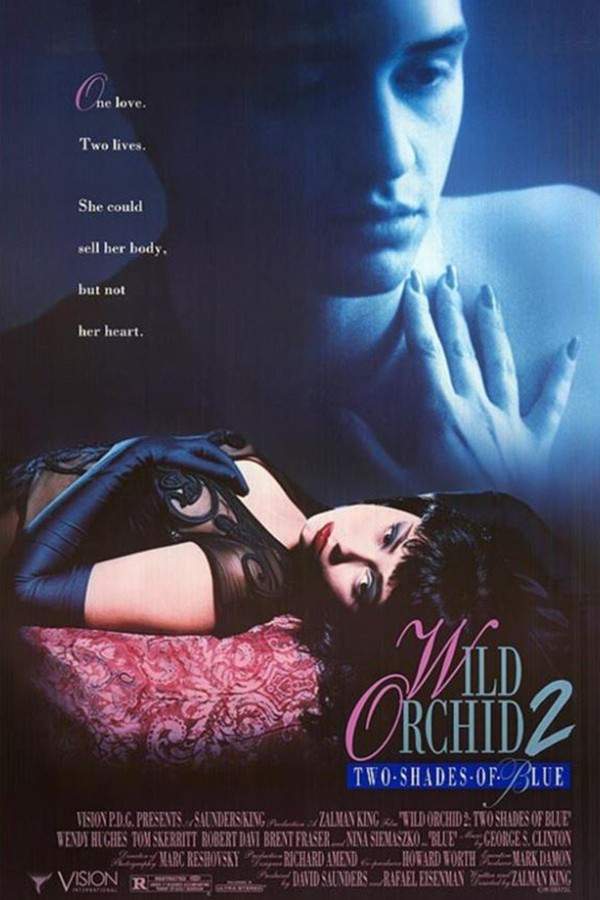
Wild Orchid II: Two Shades of Blue (1991) movie poster

Characters & Themes

Wild Orchid II: Two Shades of Blue (1991) Characters, Setting & Themes Explained

Release, runtime and language
1991 · 111 mins · English
Loading streaming availability…
Directed by
Zalman King
Starring
Tom Skerritt, Jeanne Bates, Christopher McDonald, Gloria Reuben, Wendy Hughes, Robert Davi

Blue, a teenage girl, lives with her jazz‑playing father Ham. When Ham becomes terminally ill and dies, Blue must find a way to survive. Elle, the headmistress of a brothel, convinces her to work there for shelter and money. Blue eventually decides to quit the prostitution trade and seek a normal life, but Elle is determined to keep her trapped in the business.

On this page (8)
  1. 1 Where to watch
  2. 2 Characters explained (9)
  3. 3 Where & when it takes place
  4. 4 Themes & meaning (3)
  5. 5 Character & meaning questions
  6. 6 Movie threads
  7. 7 Movies like Wild Orchid II: Two Shades of Blue
  8. 8 Every angle
Loading streaming availability…

9 main characters · contains spoilers

Wild Orchid II: Two Shades of Blue Characters Explained: Who Is Who

The main characters of Wild Orchid II: Two Shades of Blue (1991), heroes and villains: what drives them, how they change over the course of the story and what each of them reveals about the film's bigger ideas.

  • Blue McDonald (Nina Siemaszko)

    A 16-year-old girl who travels with her drug-addicted father and becomes entangled in prostitution. She shows resilience and resourcefulness, yearning to quit and start anew, even as she negotiates danger, manipulation, and shifting affections. Her arc centers on seeking safety, love, and a sense of normalcy.

    • 🎭 Protagonist
    • 💔 Trauma
    • 💪 Resilience
    • 🧭 Identity
  • Ham McDonald (Tom Skerritt)

    Blue's father, a musician battling heroin addiction. His struggles with withdrawal and dependence set off a chain of events, including his eventual death in a car crash after obtaining heroin to cope. He embodies the cycle of self-destruction and the consequences of addiction.

    • 🎷 Addict
    • ⚡ Father figure
    • 🌀 Turmoil
  • Jules (Joe Dallesandro)

    Jazz club owner who offers heroin to Blue in exchange for sex, revealing the predatory dynamic Blue faces in the nightlife underworld. His interactions with Blue illustrate how easily exploitation can be institutionalized within entertainment venues.

    • 🎭 Exploiter
    • 🕳️ Predatory
    • 🫂 Power dynamics
  • Elle (Wendy Hughes)

    A brothel madame who recruits Blue into prostitution and guides her into seduction. She wields control over Blue and orchestrates the stag film to blackmail or coerce, embodying the coercive forces behind the trade.

    • 👩‍💼 Madam
    • 🧩 Manipulator
    • 🕯️ Coercion
  • Sully Sullivan (Robert Davi)

    Elle's driver, bodyguard, and unexpected protector who helps Blue escape her past. He becomes a paternal figure, offering money and support as Blue builds a new life in a small town with a hopeful future.

    • 🛡️ Protector
    • 💵 Helper
    • 🗝️ Gatekeeper
  • Senator Dixon (Christopher McDonald)

    A powerful politician who engages Blue for sexual exploitation and uses influence to cover up the stag film. His downfall comes as his actions are confronted by Blue and Sully.

    • 🏛️ Power
    • 🔒 Corruption
    • 💼 Client
  • Joshua Winslow (Brent David Fraser)

    A young man who flirts with Blue and loses his virginity to her at her first encounter. He later becomes a romantic interest who doesn't recognize her identity immediately, revealing the complexity of their evolving relationship.

    • 💘 Love interest
    • 🧭 Amnesia
    • 🕊️ Reconciliation
  • Colonel Winslow (Stafford Morgan)

    Josh's father who brings Josh to the brothel to lose his virginity. He represents the intersecting world of the military and the sexual politics that frame Blue's experiences.

    • 🏰 Authority
    • 🧭 Family ties
    • 🐾 Consequences
  • J.J. Clark (Don Bloomfield)

    Wealthy client at the bachelor party who exudes arrogance. Blue's confrontation with him in a high-society setting highlights the abuse of power and the commodification of desire.

    • 💎 Wealth
    • 🗝️ Control
    • 🗡️ Arrogance

Last updated: October 04, 2025 at 12:54

Was this helpful?

Setting

Where and When Does Wild Orchid II: Two Shades of Blue Take Place?

The setting of Wild Orchid II: Two Shades of Blue (1991): the year and time period, the places and locations, and how they shape the characters, the mood and the tension of the story.

Time period

1958

Set in 1958 California, the film sits in a period marked by formal social mores and a burgeoning nightlife scene. Jazz clubs and street-level vice frame Blue’s experiences and the people who exploit her. The era’s attitudes toward youth, sexuality, and authority shape the actions of Jules, Elle, Dixon, and Sully as the plot unfolds.

Location

Sacramento, California, Brothel mansion outside the city, Small town California

The story unfolds across mid‑century California, with key action centered in Sacramento’s nightlife and a mansion brothel just outside town. The contrast between glamorous venues and hidden vice anchors Blue’s vulnerability and attempts to escape. Locations shift from crowded clubs to private rooms, then toward a quieter, small-town environment as her life changes.

  • 🏙️ Urban California
  • 🎷 Jazz clubs
  • 🕯️ Seedy underworld

Last updated: October 04, 2025 at 12:54

Was this helpful?

3 major themes

Wild Orchid II: Two Shades of Blue Meaning: Themes & Message Explained

What is Wild Orchid II: Two Shades of Blue (1991) really about? The emotional, social and philosophical themes the film keeps returning to, its symbolism and the message beneath the surface.

  • Exploitation

    The narrative centers on power imbalances that treat Blue as a commodity, manipulated by adults with money and influence. She is pulled into prostitution and coerced by those who control venues, clients, and the cycle of abuse. The plot exposes how institutions and individuals profit from vulnerability and control.

  • Redemption

    Blue’s desire to quit prostitution and start over with Sully drives a hopeful arc toward redemption. Her pursuit of safety, education, and autonomy shows a struggle to reclaim agency in a world built on exploitation. The story tracks her progress toward a future that rejects the past harms.

  • Identity

    Blue navigates shifting roles—from a naïve teenager to a sex worker to a student seeking a normal life—testing how appearances and labels shape who she is. The stag film and scrutiny from peers threaten her sense of self, while her choices push toward a clearer, self-defined identity. The journey is about finding consistency in a life full of conflicting pressures.

Last updated: October 04, 2025 at 12:54

Was this helpful?

Character & theme questions

Wild Orchid II: Two Shades of Blue Characters & Meaning: Your Questions Answered

The questions people ask about Wild Orchid II: Two Shades of Blue (1991): who the characters really are, their relationships, what the symbols mean, where it takes place and what the movie is really about. Each answer contains spoilers.

Q1

Where does the movie take place?

The story is set primarily in 1958 California, focusing on Sacramento's nightlife and a secluded mansion brothel. This urban underworld contrasts with the quieter small-town environment Blue seeks later in Wild Orchid II: Two Shades of Blue.

  • setting
  • sacramento
  • california
  • location
  • brothel
  • 1958
Q2

What time period does the film depict?

Set in 1958, the film captures a post-war era defined by formal social mores and a burgeoning nightlife scene. This historical context in Wild Orchid II: Two Shades of Blue shapes the attitudes toward youth and authority that drive the conflict.

  • time period
  • 1958
  • era
  • historical context
  • social mores
  • post-war
Q3

What is the central theme of the story?

Exploitation is the core theme, highlighting power imbalances where Blue is treated as a commodity by adults with money and influence. Wild Orchid II: Two Shades of Blue exposes how institutions and individuals profit from vulnerability and control.

  • theme
  • exploitation
  • power imbalance
  • vulnerability
  • control
  • message
Q4

Who is Blue McDonald?

Blue is a 16-year-old protagonist who travels with her drug-addicted father and becomes entangled in prostitution despite yearning for safety. Her arc in Wild Orchid II: Two Shades of Blue centers on seeking love and a sense of normalcy amidst danger.

  • blue mcdonald
  • protagonist
  • teenager
  • character profile
  • survival
  • identity
Q5

What role does Elle play in the narrative?

Elle serves as the brothel madame who recruits Blue into prostitution and guides her into seduction while wielding control over her. She embodies the coercive forces behind the trade in Wild Orchid II: Two Shades of Blue, orchestrating blackmail to keep Blue trapped.

  • elle
  • madame
  • antagonist
  • coercion
  • brothel
  • control
Q6

Who is Sully Sullivan?

Sully is Elle's driver and bodyguard who unexpectedly becomes Blue's protector and helps her escape her past. He acts as a paternal figure in Wild Orchid II: Two Shades of Blue, offering support as Blue builds a new life.

  • sully sullivan
  • protector
  • bodyguard
  • ally
  • redemption
  • support
Q7

How does Ham influence the story?

Ham is Blue's father and a musician battling heroin addiction whose struggles set off a chain of events leading to his death. His self-destruction in Wild Orchid II: Two Shades of Blue forces Blue to find a way to survive on her own.

  • ham mcdonald
  • father
  • addiction
  • musician
  • catalyst
  • tragedy
Q8

Is the ending hopeful or bleak?

The ending is bittersweet, as Blue escapes her past and finds love but carries profound loss and trauma from her journey. Wild Orchid II: Two Shades of Blue concludes with hope that feels earned yet fragile due to the heavy emotional weight.

  • ending
  • tone
  • bittersweet
  • hopeful
  • resolution
  • emotional weight
Q9

What does the title signify?

The title refers to Blue's shifting identity as she navigates roles from a naïve teenager to a sex worker and finally a student. In Wild Orchid II: Two Shades of Blue, the two shades represent the conflicting pressures and her quest for a self-defined identity.

  • title meaning
  • identity
  • symbolism
  • blue
  • two shades
  • interpretation
Q10

What is the social context of the era?

The 1958 setting features formal social mores alongside a street-level vice scene that frames Blue's experiences. This era's attitudes toward sexuality and authority in Wild Orchid II: Two Shades of Blue shape the actions of those who exploit her.

  • social context
  • 1950s
  • mores
  • society
  • authority
  • culture
Q11

Why is jazz music featured prominently?

Jazz connects to Blue's father Ham, a musician whose addiction drives the early plot and anchors the nightlife setting. The music in Wild Orchid II: Two Shades of Blue underscores the glamorous venues masking the hidden vice of the underworld.

  • jazz
  • music
  • soundtrack
  • atmosphere
  • ham
  • nightlife
Q12

How is redemption portrayed?

Redemption is shown through Blue's desire to quit prostitution and start over, driving a hopeful arc toward reclaiming agency. Her pursuit of safety and education in Wild Orchid II: Two Shades of Blue shows a struggle to reject past harms.

  • redemption
  • hope
  • agency
  • recovery
  • future
  • transformation

Movie threads

More Movies Like Wild Orchid II: Two Shades of Blue, by Mood & Story

Curated lists built around what makes Wild Orchid II: Two Shades of Blue tick: the same mood, the same kind of story or the same emotional payoff. Each list explains why these movies belong together.

Movies about bittersweet escapes like Wild Orchid II: Two Shades of Blue

Stories of fragile hope earned after a heavy journey through trauma. If you appreciated the hard-won, bittersweet redemption in Wild Orchid II, you'll find similar journeys here. These movies feature characters fighting for a better life after profound trauma, often in gritty dramas with heavy emotional weight and a tone that balances darkness with a glimmer of hope.

  • gritty
  • melancholic
  • hopeful
  • oppressive
  • tense
  • redemptive
  • Tone: dark, bittersweet
  • Pacing: steady, character-driven
Why these movies?

The story pattern: The narrative arc typically involves a protagonist losing their agency to a coercive system or individual. The central conflict is the struggle to reclaim autonomy. The climax is an escape or liberation, but the resolution acknowledges the lasting impact of the trauma, offering a bittersweet but hopeful new beginning.

Why they belong together: These films are grouped by their shared emotional journey: a descent into darkness followed by a difficult, imperfect climb towards light. They resonate with viewers seeking stories of resilience that feel authentic, where hope is hard-fought and the happy ending is complex and emotionally satisfying.

Gritty survival dramas similar to Wild Orchid II: Two Shades of Blue

Intense, character-driven stories about surviving in a harsh, unforgiving world. Fans of the raw, survivalist feel of Wild Orchid II will enjoy these movies. They share a high-intensity, dark tone and a steady pace that builds tension around a protagonist's fight for a normal life amidst exploitative environments and heavy themes like loss and addiction.

  • gritty
  • tense
  • oppressive
  • melancholic
  • exploitative
  • survival
  • Tone: dark, oppressive, tense
  • Pacing: steady, relentless
Why these movies?

The story pattern: Narratives are linear and steady, continually introducing new threats that test the protagonist's will. The plot is driven by a succession of crises—often involving parental loss, addiction, or coercion—forcing the character to make increasingly difficult choices just to stay afloat, with their personal growth tied directly to their survival.

Why they belong together: These movies are united by their unflinching portrayal of hardship and the primal drive to survive. They evoke a specific mood of tense, melancholic oppression, balanced with a thread of determination. The viewing experience is consistently heavy and intense, appealing to those who appreciate raw, emotional storytelling.

If you liked this

Movies Like Wild Orchid II: Two Shades of Blue

Similar movies to Wild Orchid II: Two Shades of Blue: the same genre, themes or kind of story. Each one comes with its own plot summary, timeline and ending explained.

Browse all movie summaries

Every angle

Wild Orchid II: Two Shades of Blue (1991) Explained: Plot, Timeline & Characters

Everything about Wild Orchid II: Two Shades of Blue in one place: what happens in the plot summary, the timeline in chronological order, the characters and meaning and a spoiler-free summary. What's After the Movie adds the cast, box office and post-credit scenes.

Coming soon on iOS and Android

The Plot Explained Movie Summary App

Plot summaries, endings explained and timelines on your phone. Catch up on any movie in minutes, save your favorites and never miss a twist again.

Be the first to know when we launch. Your email stays private, always.

Learn more about the app